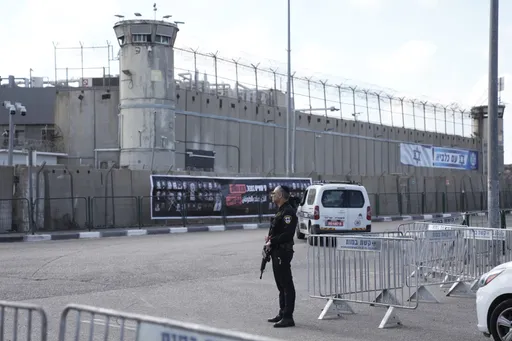
Barnard College’s library was evacuated on Wednesday after a false bomb threat disrupted a pro-Palestinian sit-in.
Police warned that anyone refusing to leave would face arrest, ultimately detaining nine people, though the charges remain unclear. No explosives were found, and it remains unclear whether the students will face disciplinary action.
The demonstration is part of a broader wave of student activism that began on April 16, 2024, when Columbia students set up a “Gaza Solidarity Camp”, protesting the university’s financial ties to companies backing Israel’s illegal occupation and war on Gaza.
Columbia University has become the epicentre of this movement.
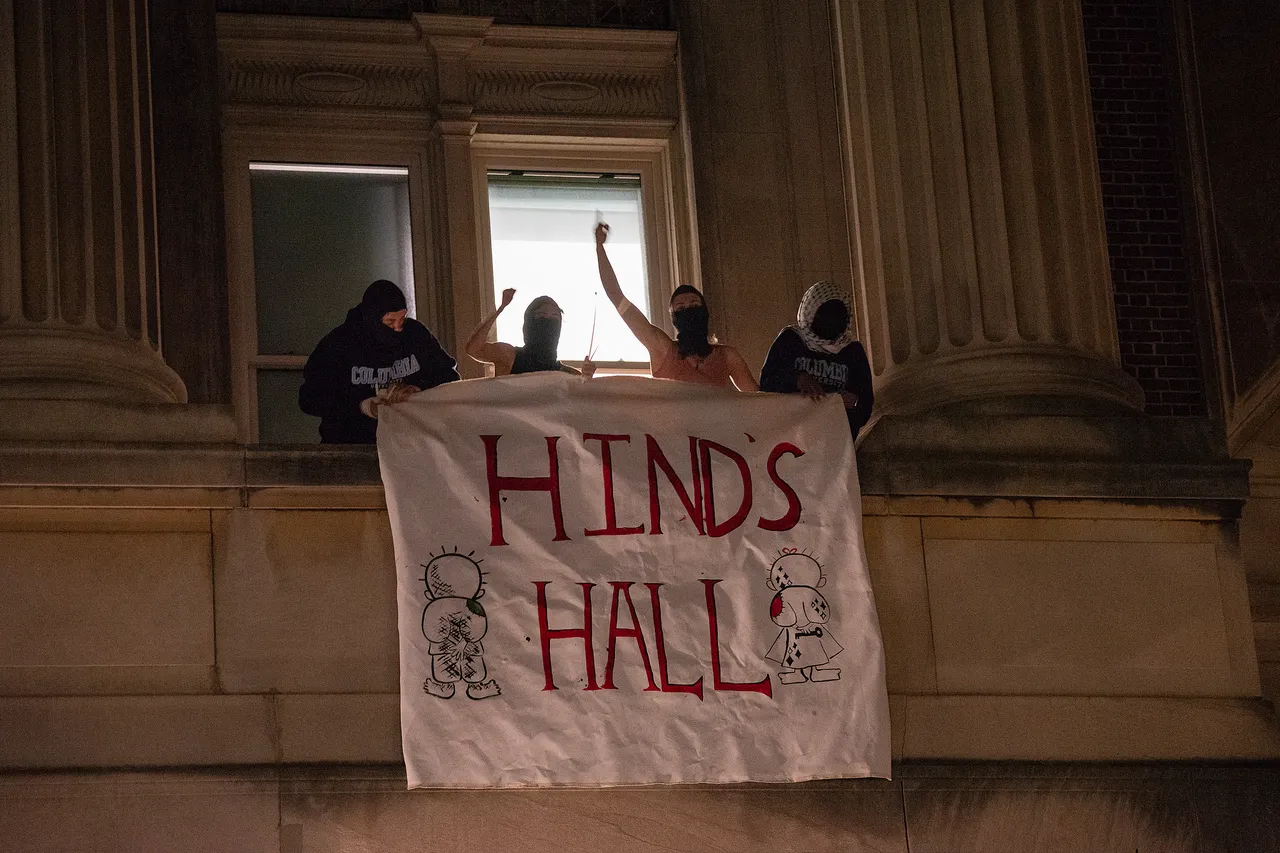
Towards the end of April 2024, students occupied Hamilton Hall, renaming it “Hind’s Hall” after Hind Rajab, a six-year-old Palestinian girl killed by Israeli forces, along with her relatives and the paramedics who tried to save her.
The move echoed past demonstrations against apartheid when protesters renamed the building “Mandela Hall,” honouring the South African leader or when in April 1968, Hamilton Hall was the first of five buildings to be taken over by students protesting against the Vietnam War.
Shortly after the pro-Palestinian protests, students demanding to divest from Israel, police raided the campus and arrested more than 100 students — a move that triggered global outrage over the university’s crackdown on dissent.
Over 2,300 students have been arrested in police raids on encampments across US universities, with many facing additional punitive measures such as suspensions and campus bans.
Protests against expulsions at Barnard College
Now, amid escalating repression, Columbia University-affiliated Barnard College has expelled three students over their involvement in pro-Palestinian activism.
Two were expelled in January and a third in February — marking the first official expulsions at the university over Israel’s war on Gaza. The names of the expelled students have not been publicly disclosed.
The expulsions sparked immediate backlash, with students seeing them as part of a broader effort to suppress pro-Palestinian activism on US campuses.
Students facing disciplinary action said the university’s crackdown has created a culture of fear, with many now wary of surveillance and increasingly careful to conceal their identities — even outside protests.
In a statement by Columbia University Apartheid Divest (CUAD), the students were expelled for “allegedly protesting the university’s investments in genocide and for allegedly participating in the occupation of Hind’s Hall.”
CUAD further condemned the expulsions as “a serious escalation in the crackdown against students advocating for disinvestment from the Israeli war machine.”
The expulsions followed a January 21 protest against a Barnard course, Modern History of Israel, which students accused of whitewashing Israeli crimes while disregarding Palestinian self-determination.
Three days later, two students were suspended and banned from campus facilities, including dorms, libraries, and dining halls.








CUAD stated that these suspensions were issued without an investigation or hearing.
Less than a month later, Barnard formally expelled the students, making it the first time a Columbia-affiliated institution had expelled students for political activism since 1960’s against apartheid and the Vietnam war.
CUAD claims that over 50 students have been suspended so far, accusing Barnard of selectively targeting pro-Palestinian activists.
Unlike typical disciplinary cases, the expulsions were handled by the newly formed Barnard Student Intervention and Success Office, which requires neither investigations nor hearings.
The students were denied legal representation and a formal appeals process, heightening fears that the administration is using opaque disciplinary measures to stifle opposition.
Despite the pressure, Columbia students have vowed to continue protesting.
On February 26, dozens staged a sit-in at Barnard’s Milbank Hall, demanding the reinstatement of expelled students and amnesty for those facing disciplinary action.
Organisers say demonstrations will continue until the administration reverses its decision.
Bowing to financial and political pressures
CUAD linked the crackdown to external political pressure.
The day before the students were notified of their expulsions, the US Department of Justice announced a task force to investigate antisemitism on ten college campuses, including Columbia and NYU.
“Rather than engage with students or divest (from Israel), Barnard has rushed to satisfy the US Department of Justice by sanctioning and expelling students,” CUAD said in a statement.
Meanwhile, House Republicans have launched their own review of Columbia’s disciplinary process, giving administrators until February 27 to turn over student disciplinary records for nearly a dozen campus incidents.
These include protests lawmakers claimed “promoted terrorism and vilified the US military,” as well as an off-campus art exhibition.
On Monday, federal agencies announced they were considering cutting $51 million in contracts to Columbia — along with billions more in potential grants — citing “ongoing inaction in the face of relentless harassment of Jewish students.”
“We are resolute that calling for, promoting, or glorifying violence or terror has no place at our university,” Columbia said in a statement following the announcement.