 Kazim Alam
With Cubans confronting one of their worst energy crises caused by US restrictions on fuel and trade, questions have arisen yet again about Havana’s capacity to withstand economic pain amid intensified US pressure.
Located about 150 kilometres from the US state of Florida, Cuba is no stranger to economic turmoil. The US has had strained relations with the island country in the Caribbean since the 1959 Cuban Revolution, which established socialist rule under Fidel Castro.
Washington’s decades-old ideological conflict with Havana has resulted in sweeping trade embargoes and financial sanctions, which Cuban officials and many international observers say have deepened economic hardship for its 10 million people.
The US has also indicted former Cuban President Raul Castro, 94, on charges of downing two small planes operated by US-based Cuban exiles in 1996.
The charges pose a “real threat”, after US forces abducted Venezuela’s former president Nicolas Maduro and his wife in January from their home in Caracas and flew them to New York to face drug charges.
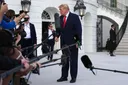
US President Donald Trump has vowed to conduct a “friendly takeover” of Cuba if it does not open its economy to US investment.
Yet, experts say that predictions about the Cuban government’s imminent collapse overlook the island's deep reserves of historical dignity and national resilience forged over more than six decades.
Alfonso Insuasty Rodriguez, director of the GIDPAD research group at Colombia’s University of San Buenaventura, tells TRT World that it is wrong to look at the crisis in Cuba through market indicators.
“Those in Washington who analyse the Cuban reality solely through indicators of consumption, supply levels or purchasing power commit a profound historical and political error. They reduce a people to the logic of a market, ignoring that a nation is also consciousness, memory and collective dignity," he says.
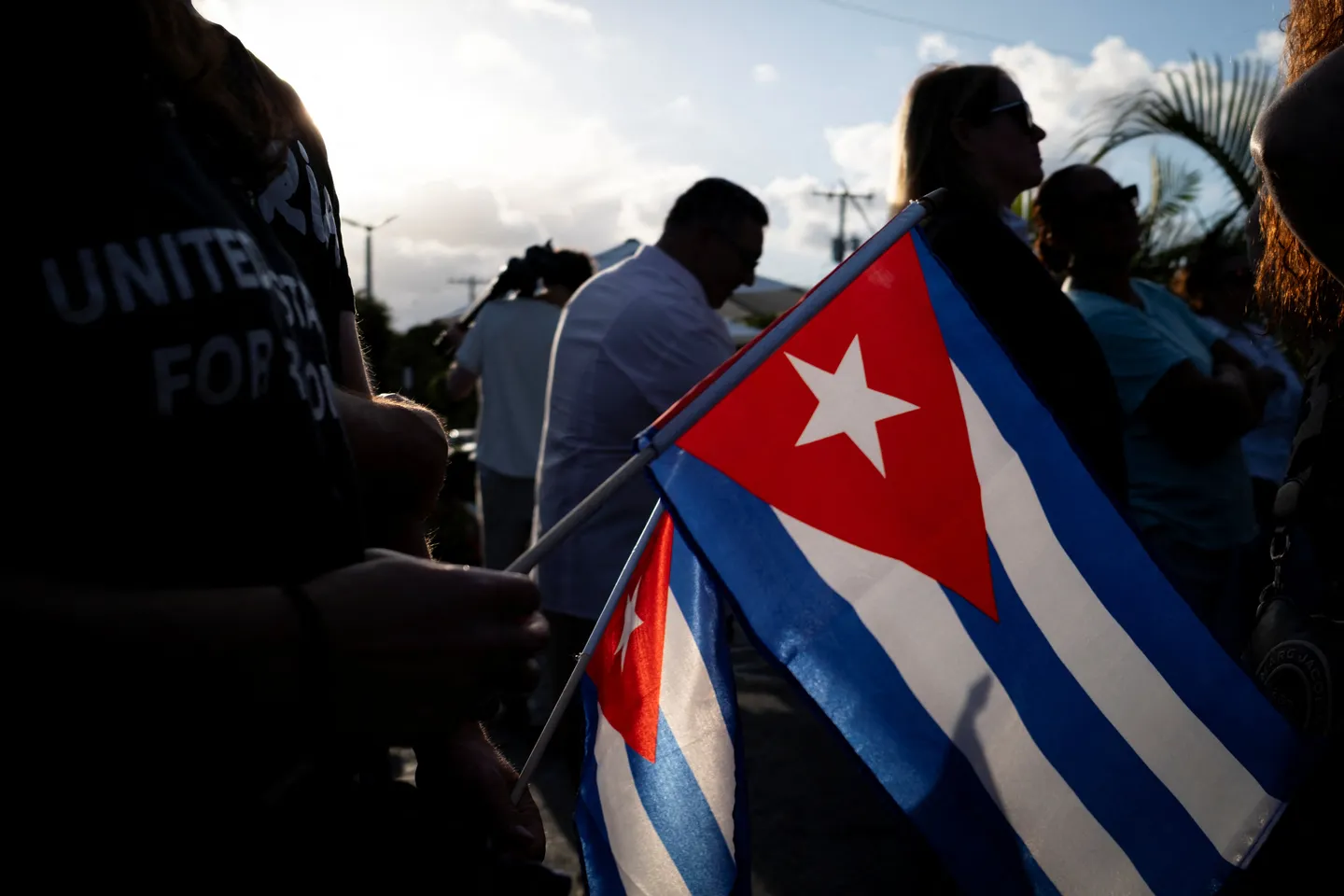
People are protesting in Havana over power outages of up to 22 hours a day. The United Nations says the US-imposed fuel blockade amounts to “energy starvation” with grave consequences for human rights.
Acknowledging the “extremely difficult situation” that Cubans face with material shortages and social exhaustion, Rodriguez emphasises that the crisis is manmade.
“Cuba is not facing a ‘natural’ crisis. It is confronting a system of economic warfare deliberately designed to produce hunger, despair and internal fracture," he says, while referring to declassified US documents from the 1960s that show US sanctions on Cuba aimed to provoke government collapse by causing economic hardship.
He describes this as “collective punishment against a civilian population” that is incompatible with international law.
The current crisis took a serious turn after the US imposed a fuel blockade in January, disrupting imports primarily from Venezuela and pressuring other suppliers through threats of tariffs.
Sebastian Schulz, a sociologist associated with Argentina’s University of La Plata, tells TRT World that the latest series of US measures has worsened food and energy shortages, access to medicines, and power blackouts.
But just like in Iran and Venezuela, such measures have the opposite effect in Cuba, he notes.
“They strengthen nationalist sentiments and resistance against foreign pressure,” he says, adding that Cubans have received aid from countries like Mexico, Brazil, Russia, and China.
Both experts downplay the likelihood of a “breaking point” that would lead to the “regime change” sought by Washington.
Rodriguez points out that the forecasters of Cuba’s collapse have been wrong for over 60 years.
“History shows that some societies collapse even amid abundance, while others withstand decades of blockade, aggression and siege because they possess something more powerful than money: historical dignity, political memory and a deep sense of sovereignty,” he says.
Even under extreme conditions, Cuba continues to maintain notable achievements in public healthcare, education, sports, scientific development, and social protection, he notes.
Schulz adds that broad sectors of Cuban society repudiate US measures and value international solidarity. Therefore, it is unlikely that tightened sanctions and a fuel blockade will generate any sympathy among Cubans for Washington’s policy towards Havana.
National resilience amid shortages
With Venezuelan supplies curtailed and backing from Russia and China constrained by geopolitics, Cuba is still left with a few alternatives, analysts say.
Rodriguez highlights Cuba’s proven capacity for survival, citing its endurance after the Soviet Union’s collapse in the early 1990s.
“Cuba will have to rely, as it has so many times throughout its history, on a combination of economic creativity, internal reorganisation, South-South cooperation and popular resilience," he says.
A realistic way forward for Cuba includes energy diversification, regional cooperation, strengthening local economies, biotechnology, sovereign tourism, solidarity-based economies, and alternative financial mechanisms beyond the US dollar, Rodriguez says.
International support is also forthcoming: China has donated solar panels and sent rice shipments, while Russia has provided oil tankers. Mexico, Brazil, and Spain have also come forward with pledges of humanitarian aid despite US pressure.
Ordinary Cubans experience exhaustion and daily hardship, Rodriguez acknowledges.
However, they also have “historical clarity”, which helps them identify the real driver of economic pain.
“The Cuban people know how to distinguish between internal shortcomings and external aggression,” he says.
Schulz points to multiple perspectives within Cuban society, shaped by social and generational conditions. A significant chunk of the Cuban population sees the solution to the crisis through an end to the embargo rather than a US-sponsored regime change, he says.
“Many Cubans do not necessarily defend a particular government, but rather national sovereignty and dignity in the face of what they consider a historical policy of interference and harassment by the US,” he says.
Can concessions ease US pressure?
Experts doubt whether Havana agreeing to political concessions will help ease US pressure.
“Historically, every time Cuba has shown willingness to engage in dialogue, the US has responded by demanding higher levels of subordination,” Rodriguez says.
Cuba can engage in dialogue between equals based on mutual respect and sovereignty, but not under blackmail, he adds.
Schulz agrees that limited concessions are unlikely to yield significant relief without a US policy shift.
The conflict involves broader geopolitics in the Caribbean and Latin America, he says.
International rejection of the embargo is clear. An overwhelming majority of nations at the UN General Assembly have voted for the lifting of sanctions, Schulz adds.
Rodriguez blames Washington for refusing to tolerate a sovereign Cuba for over 60 years.
“There is a way out of the conflict. But it requires definitively abandoning the colonial logic that conceives Latin America as a ‘backyard’ and finally accepting that the peoples of the continent have the right to build their own historical paths," he says.