 Esra Karataş Alpay
The air is thick with the smell of ripening tomatoes. On rooftops and balconies, scarlet trays glisten under the sun.
Balconies bloom with strings of peppers and eggplants, drying like garlands in the heat.
Inside kitchens, the clatter of knives, the hiss of boiling pots, and the chatter of women fill the day.
These are the sounds and scents of an old seasonal ritual: the art of preparing for winter.
For centuries, Turkish women have turned the abundance of summer into the sustenance of winter.
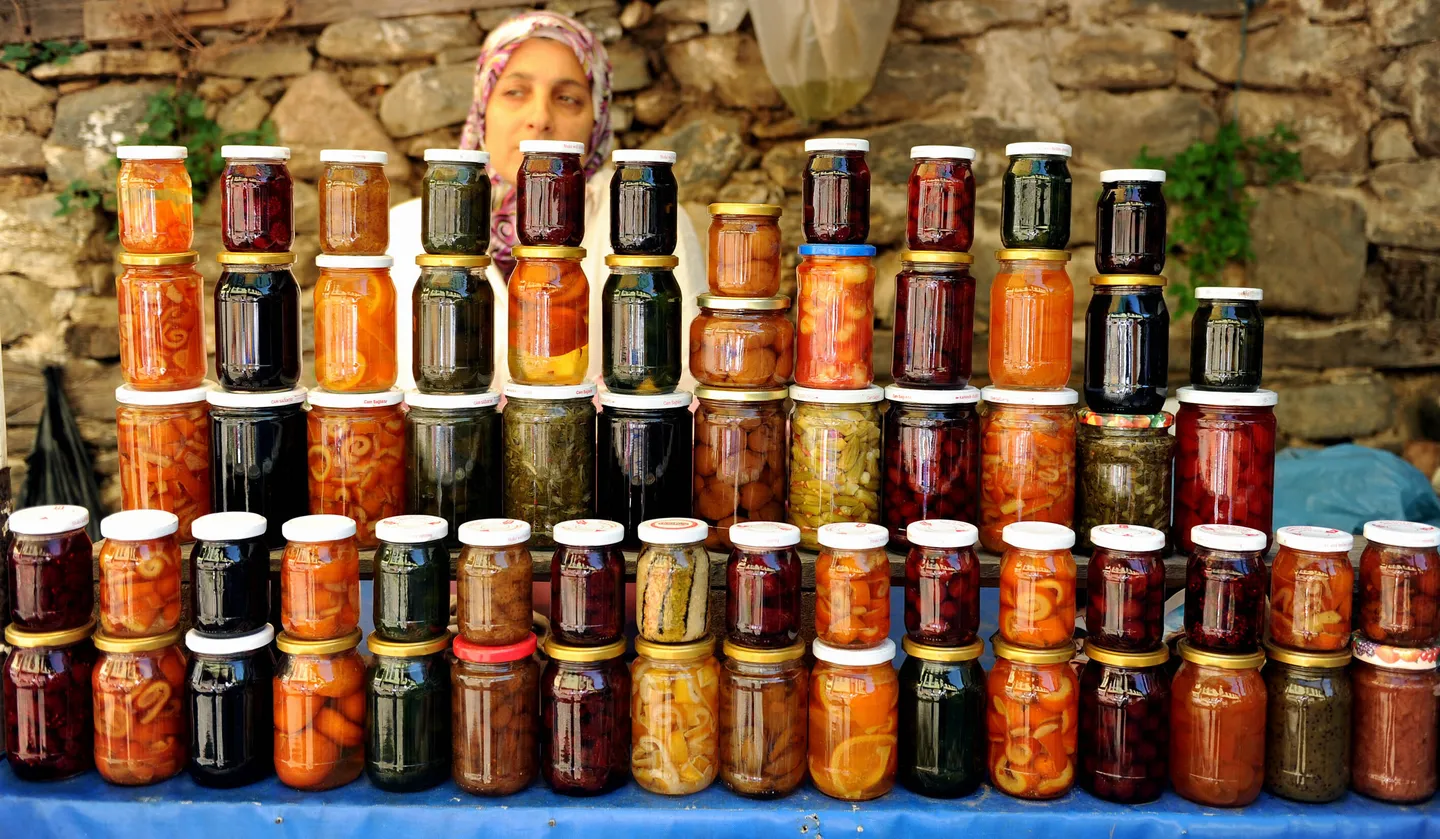
Tomato paste, dried vegetables, fruit preserves, olives, pickles, the famed ‘tarhana’ soup mix, homemade noodles, and vinegar line shelves in glass jars and cloth sacks, each one a reminder that winter is long, but summer’s sun can be preserved.
In much of Türkiye, the long and harsh winters have historically shaped the rhythms of daily life and survival strategies.
Heavy snow and freezing temperatures often cut off access to fresh fruits and vegetables for months, particularly in rural Anatolia and mountainous regions.
As a result, families developed a strong tradition of preserving food during the abundance of summer and autumn. Tomatoes were boiled into rich sauces, peppers dried in strings under the sun, beans blanched and stored, and fruits transformed into jams, marmalades, and dried snacks.
These preservation methods not only ensured nourishment throughout the winter but also created a cultural practice of communal food preparation, where entire families and neighbourhoods came together to pickle vegetables, dry herbs, and fill cellars.
Over generations, this became more than a necessity—evolving into a defining aspect of Turkish culinary heritage, linking seasonal cycles to family memory and regional identity.
Once a matter of survival, later a ritual of housewives, these traditions are reemerging in modern Türkiye—part nostalgia, part necessity, and part aversion to processed food.
Memories of a pickled childhood
For sociologist Nurhayat Kizilkan, the winter preparations are among her most cherished childhood memories.
“My mother used to make pickled eggplants,” Kizilkan tells TRT World. “She would buy the small ones, score them, and stuff them with garlic, parsley, and hot peppers. They looked so cute in the jars, lined up like little soldiers.
Her childhood kitchen was alive with the smell of vinegar, the sting of garlic and the sweetness of simmering fruits.
“We made cucumber pickles, cabbage pickles, olives cured in brine or cracked with stones. Even tarhana soup was prepared with neighbours—spread on cloth in the sun, dried, sieved into powder, and stored in jars.”
Istanbul resident Ayse Furkan Deligoz (52) still recalls the winter food prepared by her grandmother and mother.
“My grandmother always made plum jam. She would soak the plums in lime water first, remove the pits, and place almonds inside each one. She also made fig jam from unripe figs,” she tells TRT World.
“Those flavours still linger in my memory as I try to enliven them.”
Years later, she and her neighbour made tarhana – a coarse mixture of dried and ground vegetables used to make soup – this year, “just as my grandmother and mother once did”.
“In their time, they even melted butter in summer to preserve it for the winter and made ghee,” she adds.
Markets still echo with seasonal calls: “Menemenlik! Recellik! Tursuluk!” — tomatoes for stews, fruits for jam, vegetables for pickles. The labels matter.
“Summer tomatoes ripened under the Turkish sun taste completely different from winter greenhouse ones,” Nurhayat explains. “People know this, so they jar tomatoes to capture that flavour. It’s not just about saving money—it’s about saving taste.”
Kitchens as assembly lines








Preparing food for winter is labour-intensive, bordering on industrial.
“When I had visited Kahramanmaras,” Nurhayat recalls, “I saw tarhana spread thin like sheets, dried, then broken into crispy snacks eaten with walnuts. I thought it was brilliant—children may not want soup, but they’ll happily crunch on that.”
Elsewhere, women buy kilos of green beans, peas, and okra in July, blanch them lightly in their own juices — borturmek, as it is known locally—spread them on trays to cool, then portion them into freezer bags.
Even walnuts must be dried in the sun to prevent rot. Vinegar is made from apples, pears, and even scraps of peel.
Industrial food in the 1980s and 1990s nearly erased these practices.
Imported pasta, packaged jams, and mass-produced pickles flooded the shelves. Many women who had spent decades making everything from scratch felt diminished.
“Some thought, all those years kneading dough, drying noodles, making jams—was it for nothing?” says Nurhayat.
“For maybe thirty years, people stopped caring. Women even said, "Today's young women are lucky, they don’t have to do all this work.”
But the tide turned during the Covid pandemic. Confined to their homes, Turks rediscovered the kitchen. Social media turned loaves of bread and jars of jam into symbols of pride.
Cooking shows like MasterChef Türkiye made culinary skills both entertainment and an aspiration.
A return to tradition
And so, each summer, balconies bloom with scarlet peppers, families crowd around sieves and trays, and women trade recipes over steaming pots.
Daughters call grandmothers for instructions, young men boast of baking bread, YouTubers demonstrate homemade pickles, and neighbours share jars across fences.
It is, in Nurhayat’s words, “a reconciliation with roots before it is too late. A return not just to tradition, but to meaning.”
Ayse Furkan says, “This year alone, I worked through 25 kilos of tomatoes, 10 kilos of red peppers, and about 5 kilos of fresh beans. I even shelled the fresh ones from dried beans, around 5 kilos of that too. Then came the pickles—cabbage, cucumber, peppers.”
At the ripe age of 83, Istanbul resident Sukran Alkoc has seen it all, done it all. And she is still continuing.
“As every year, this summer I prepared tomato sauce, and I made all kinds of jams for my grandchildren because they love them so much,” she tells TRT World.
“I stocked the freezer with fresh vegetables too, because I always want it to be full — that way, if a guest arrives unexpectedly, I am ready."
Across Anatolia, the practices differ—figs dried on rooftops, grape molasses boiled in copper pans, fruit leathers (pestil) stretched on cloth, apple cider vinegar fermenting in cellars.
But the impulse is the same: to preserve not just the harvest, but also the knowledge.
As summer fades, the jars fill. The shelves sag with jams, pickles, and pastes. And when January arrives, each spoonful carries with it not only the taste of summer but the endurance of memory.
“In the end,” says Nurhayat, “it’s about more than survival. It’s about joy. It’s about pride. It’s about carrying forward the sun.”