Murat Sofuoglu
Arab Spring movements have rattled the Middle East by seeking the end of autocratic regimes. While they could not inflict a deadly blow to old parochial power structures, they have paved the way for possible regime change calls.
The Libyan civil war and the Egyptian military coup, which overthrew the country’s first-democratically elected government alongside its president in August 2013, are the two important products of the Arab Spring.
Egypt’s military-dominated leadership backed warlord Khalifa Haftar - who aspires to be the next Qaddafi of the country - in the bloody Libyan civil war against the UN-recognised civilian-led Government of the General Accord (GNA).
Egypt, quite like the Gulf's rich kingdoms, has long been worried about the empowerment of democratic rule in the Middle East, investing their political capitals on strongmen like Haftar and Syria’s Bashar al Assad.
But recent developments in Libya, where Turkey’s efficient deployment of its newly-developed drone technology in the service of the legitimate Tripoli government, has unexpectedly changed the political equation against Haftar’s LNA. This has unsettled the Middle East’s autocrats like Egypt’s Abdel Fattah al Sisi.
“The legitimate government succeeded to stop (Haftar’s) aggression, starting to liberate the rest of the country from military strongmen like Haftar and their allies, Egypt, Saudi Arabia and the UAE,” said Hamza Zawba, an Egyptian political analyst and journalist, the former spokesman of the Freedom and Justice Party, the political wing of Egypt’s powerful Muslim Brotherhood.
Egyptian dilemma in Libya
Zawba, who particularly wants to emphasise brotherly relations between the two North African countries, a bond that goes back centuries, thinks that Egypt could do nothing about the reversed fortunes of Haftar. The warlord’s militias have surrounded Tripoli for months, calculating that a complete victory was in their grasp.
After big losses in northwestern Libya, LNA militants are on the run as Haftar has been seen seeking support from Egypt - he visited Cairo last week to discuss the delicate political situation with Sisi.
Cairo has recently been silent as its ally was losing critical ground in the outskirts of Tripoli.
“If our military engages in a war with (the legitimate Tripoli government), I think it would be catastrophic by all means. The Egyptian military knows that it will be a big failure,” Zawba told TRT World.
Both recently, and historically, rumours have swirled that Egypt could send its military to assist Haftar. But Zawba and other experts think that it is quite unlikely, measuring Cairo’s decreasing political influence across the Middle East and its plummeting economy.
“It’s not qualified to launch a (large-scale) war in an open place, which is not our land. We have scrambled in Sinai for years,” Zawba observed, referring to the Egyptian military’s endless campaign against armed groups in desert areas.
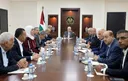
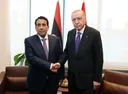

Other Egyptian experts, who are well-connected with state insiders, also suggest similar things to Zawba.
“If the army’s campaign against terrorist groups inside Sinai has taken all this time, then we can imagine the time it will take it to face them in Libya, especially when you have long and open land and sea borders with Libya, and a good concentration of extremist organisations facing it,” wrote Mohamed Abul Fadhl, a pro-government commentator.
In addition to its internal political and economic problems, Cairo also has an increasing problem with Ethiopia. At the heart of the dispute is Ethiopia’s launch of a big dam project to control the waters of the ancient Nile River, long identified with Egypt.
If the Grand Ethiopian Renaissance Dam (GERD) project, which will be Africa's biggest hydroelectric power plant on its completion, is successfully implemented, it could see Ethiopia become the main actor in the control of the flow of the Nile, Egypt’s only fresh water source, limiting Cairo’s access to it.
Sisi demands ceasefire
Zawba also sees a difference between Turkish and Egyptian interventions in Libya.
“Turkey does not send its troops to Libya. It sends technical and military experts with advanced weaponry, which is working quite well until now, to implement its task against mercenaries,” Zawba opines.
“We have had enough failures since 2013. I like to see peace, but I know that (autocratic) generals will not make peace. They want money, power and bloodshed,” he adds.
But even generals and strongmen, who have the capacity to assess that a failure is imminent, might be forced to make peace with their enemies.
Last weekend, the Egyptian President, along with his Gulf allies, sued for peace as Haftar was losing town after town in western Libya.
"This initiative calls for respecting all international efforts and initiatives by declaring a ceasefire from 6pm [16:00 GMT] Monday, June 8, 2020," said Sisi to a news conference on Saturday.
Anwar Gargash, the UAE minister of state for foreign affairs, was applauding Sisi’s ceasefire efforts.
“With the support of the United States National Security Council for the Egyptian initiative, Arab and international momentum for an immediate ceasefire, a withdrawal of foreign forces and a return to the political track is strengthened,” Gargash wrote on Twitter.
Later, Russia, another Haftar ally, also joined with Egypt and the UAE, suing for peace.
“Once you have a dead body, you need to bury it,” Zawba said, reflecting to fastly developing military conditions in Libya and the ceasefire efforts of Haftar’s allies.