 Sebahattin Sevindi
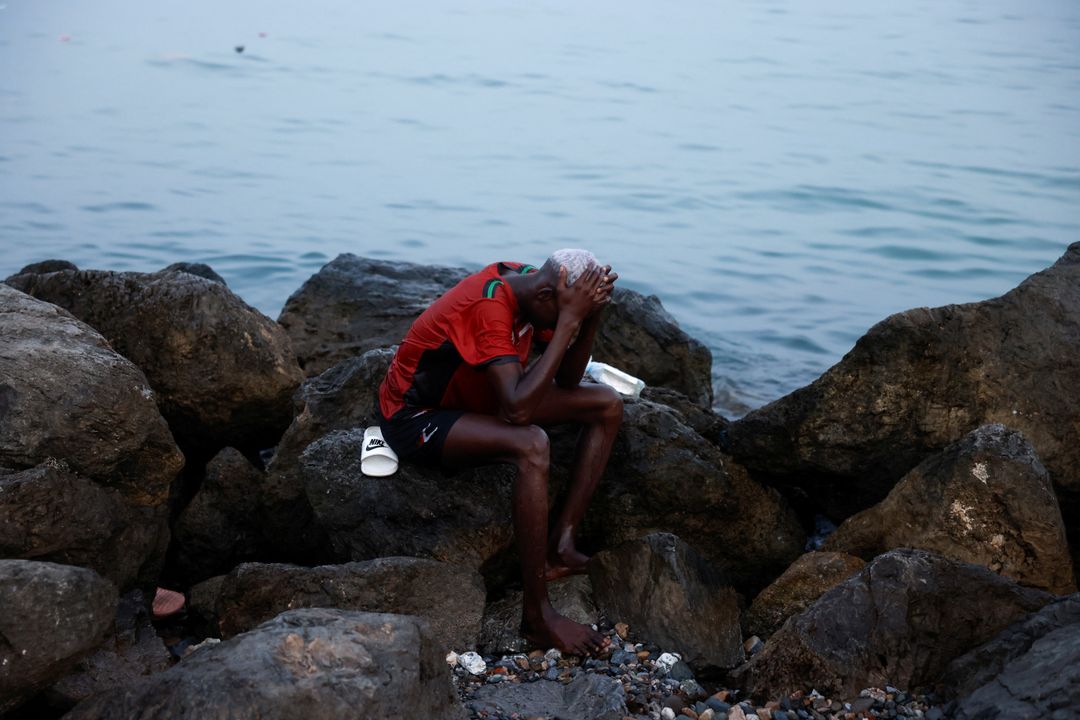
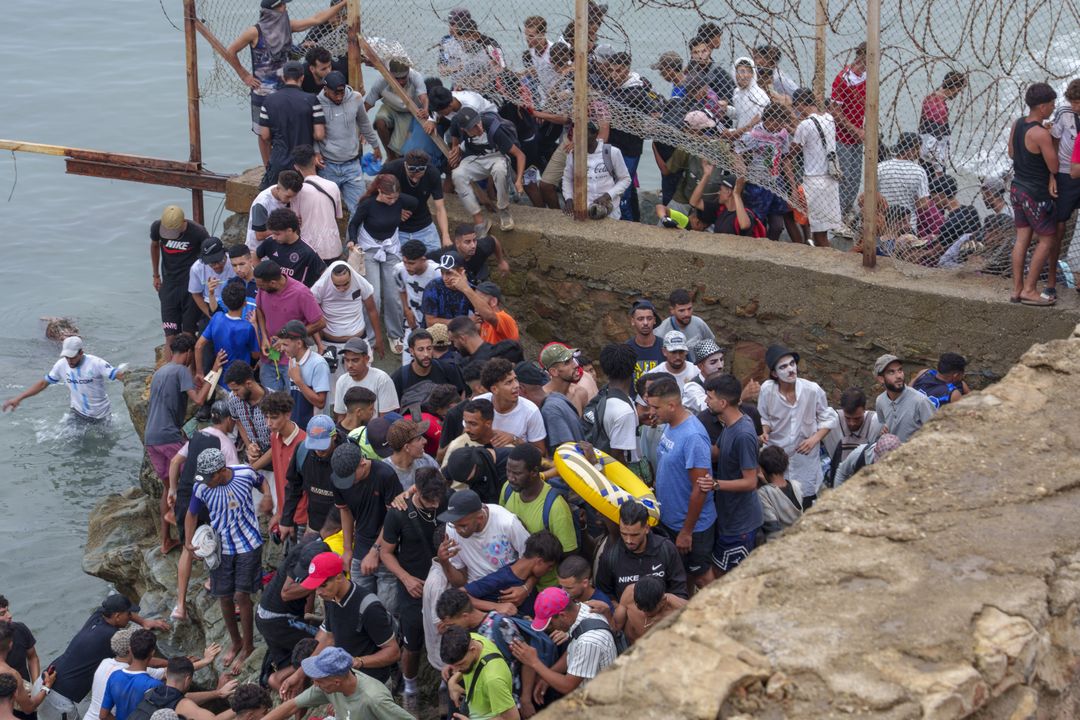
A rare visit by Spain's King Felipe VI and Queen Letizia to Ceuta earlier this month has brought renewed attention to a migration crisis that continues to strain the Spanish territory on North Africa's Mediterranean coast, nearly three months after an unprecedented influx of migrants from Morocco.
Around 70,000 people crossed into Ceuta in late July, with humanitarian organisations estimating that at least 141 people died during the crossings.
Although most migrants have since left, thousands remained in the territory in October, many sleeping rough as local authorities struggled to provide shelter and essential services.
The royal visit, the first in nearly two decades, also came amid renewed tensions between Spain and Morocco, which maintains a longstanding sovereignty claim over Ceuta.
The crisis has exposed the pressures facing one of Europe's most sensitive external borders, where migration management still relies heavily on physical deterrence, cooperation with neighbouring countries, and emergency measures.
But Ceuta is neither an isolated incident nor an exception. It raises a broader question about the European Union's approach to border management: How does the bloc control its external frontiers, and who is accountable for the machinery behind them?
Part of the answer lies in the dramatic evolution of Frontex, the Warsaw-based European Border and Coast Guard Agency.
Over the past two decades, Frontex has evolved from an agency that primarily coordinates member states' border operations into a heavily funded institution with its own armed standing corps and expanding surveillance capabilities.
Yet, this technological militarisation has not delivered structural stability.
Its expanding use of aerial surveillance and cooperation with third-country authorities have also raised concerns about indirect pushbacks at sea and the division of legal responsibility between Frontex and national authorities.
Investigations into alleged pushbacks, oversight failures, and the agency's response to maritime emergencies have intensified scrutiny of whether Europe's expanding border security system is compatible with its fundamental rights obligations.
The rise of Frontex
As European integration deepened, migration and border management increasingly became matters of security policy.
The 1992 Maastricht Treaty marked an early step towards intergovernmental cooperation on migration, while the 1997 Amsterdam Treaty established the Area of Freedom, Security and Justice (AFSJ) as a central element of EU policy.
The 1999 Tampere European Council summit subsequently laid the foundations for the Common European Asylum System (CEAS).
Population movements following the collapse of the Soviet Union, the EU's eastward enlargement and the September 11, 2001 attacks further reinforced the association between migration, terrorism and border security.
Although a 2001 German-Italian proposal for a joint border police force stalled over concerns about national sovereignty, the 2003 Thessaloniki summit agreed to establish an operational mechanism to manage the EU's external borders.
The Council subsequently established Frontex under Regulation (EC) No 2007/2004, based on Articles 62 and 66 of the EC Treaty. Headquartered in Warsaw, the agency began operations on 1 May 2005.
Initially responsible for coordinating border operations among member states, conducting risk assessments and providing training, Frontex has gradually evolved into a large operational border force with armed personnel.
Its budget, approximately €6 million in 2005, has grown to more than €900 million annually, while successive regulatory changes, notably Regulation (EU) 2016/1624 and Regulation (EU) 2019/1896, have expanded its powers.
Under the 2019 regulation, Frontex aims to reach an operational capacity of 10,000 personnel by 2027, comprising 3,000 statutory Frontex staff and 7,000 personnel contributed by member states.
Equipped with uniforms, operational equipment and the authority to carry firearms under specified conditions, the standing corps represents a significant departure from the agency's original coordinating role.
Europe's expanding border security framework
The EU's increasingly security-oriented approach to migration was further reinforced by the adoption of the New Pact on Migration and Asylum in 2024.
The pact introduced a seven-day screening procedure at the EU's external borders, along with accelerated asylum and return procedures for certain applicants.
Under the framework, some asylum seekers may be treated as not having formally entered EU territory while their applications are processed, raising concerns about access to asylum procedures and legal safeguards.
The pact also expanded the Eurodac biometric database, lowering the minimum age for collecting fingerprints and facial images from 14 to six.








Its solidarity mechanism allows member states to contribute through relocation, financial payments or other forms of support, while the broader framework places greater emphasis on cooperation with third countries in managing migration.
Yet as Frontex's operational powers have expanded, questions have persisted over who bears responsibility when alleged rights violations occur.
The agency operates alongside national border authorities, creating a complex division of responsibilities between Frontex, host member states and other participating countries.
While national authorities retain responsibility for many operational decisions, Frontex provides personnel, surveillance capabilities and intelligence support.
Critics argue that this arrangement can complicate efforts to establish responsibility for alleged violations and make it more difficult for affected individuals to seek legal redress.
Pushbacks and the accountability question
Investigations by European oversight bodies and journalists have raised serious concerns about Frontex's involvement in unlawful pushbacks and how it handles evidence of alleged rights violations.
A European Anti-Fraud Office (OLAF) investigation found that then-executive director Fabrice Leggeri and senior agency officials were aware of illegal pushbacks carried out by the Greek Coast Guard in the Aegean Sea.
The investigation documented failures to report incidents and attempts to conceal evidence of alleged violations, including deleting records and diverting surveillance flights. It also raised concerns about interference with the agency's fundamental rights monitoring mechanisms.
Leggeri resigned in April 2022. The European Parliament subsequently refused to grant discharge for Frontex's 2020 budget, citing concerns over the agency's management and accountability.
Questions about Frontex's responsibilities also emerged following the Adriana shipwreck off the coast of Greece in June 2023, in which hundreds of migrants and asylum seekers died.
An investigation by the European Ombudsman found shortcomings in Frontex's response to maritime emergencies and raised questions about its ability to act independently when vessels are in distress.
The agency detected the overcrowded vessel by aerial surveillance before it sank, but the disaster exposed gaps in communication, coordination, and responsibility between Frontex and national authorities.
Such controversies have fuelled calls for greater oversight and, in some cases, the agency's dismantling.
The Abolish Frontex movement, a coalition of civil society organisations and activists across Europe, has campaigned to abolish the agency, citing alleged rights violations, biometric surveillance, and its role in enforcing restrictive border policies.
Frontex's growing reliance on aerial and satellite surveillance, alongside its maritime operations, has raised concerns that its border-monitoring practices could facilitate interceptions that circumvent international maritime law and search-and-rescue obligations.
Operating from bases in Malta and Pantelleria, unmanned aerial vehicles developed by Israel Aerospace Industries and Elbit Systems, alongside the EU's Copernicus satellite network, are used to detect migrant boats in the Mediterranean.
Critics argue that surveillance information can be shared with the Libyan Coast Guard or Tunisian authorities rather than civilian rescue organisations, enabling third-country forces to intercept migrants and return them to countries where they may face abuse.
Because such interceptions can occur without direct physical involvement by EU personnel, questions have emerged about whether Frontex is facilitating what critics describe as “refoulement by proxy”.
Human Rights Watch has accused Frontex of complicity in abuses against migrants intercepted and returned to Libya, raising concerns about the agency's responsibilities under the principle of non-refoulement, which prohibits returning people to places where they face serious threats to their safety or fundamental rights.
The paradox of fortress Europe
Events along Ceuta’s perimeter and unmanned patrols tracing the central Mediterranean are two sides of the same coin.
On the periphery, frontline states rely on ad hoc physical barriers, bilateral appeasement of authoritarian transit regimes, and immediate pushbacks.
Meanwhile, at the institutional core in Brussels and Warsaw, billions of euros continue to pour into an autonomous surveillance and security architecture designed to insulate the European mainland from the human reality at its gates.
As Frontex marches toward its 2027 goal of a 10,000-strong armed standing corps under the codified framework of the 2024 New Pact on Migration and Asylum, the central paradox remains unresolved.
Advanced surveillance drones, automated biometric screening, and outsourced interception do not eliminate the root causes of forced displacement; they can instead shift difficult questions of legal responsibility into a fragmented jurisdictional space.
Unless subject to enforceable judicial oversight by the Court of Justice of the European Union, independent scrutiny by civil society, and uncompromising operational transparency, Frontex will remain what the Ceuta crisis so starkly laid bare: a multibillion-euro “security illusion” that continually undermines the foundational human rights norms upon which the European Union was built.