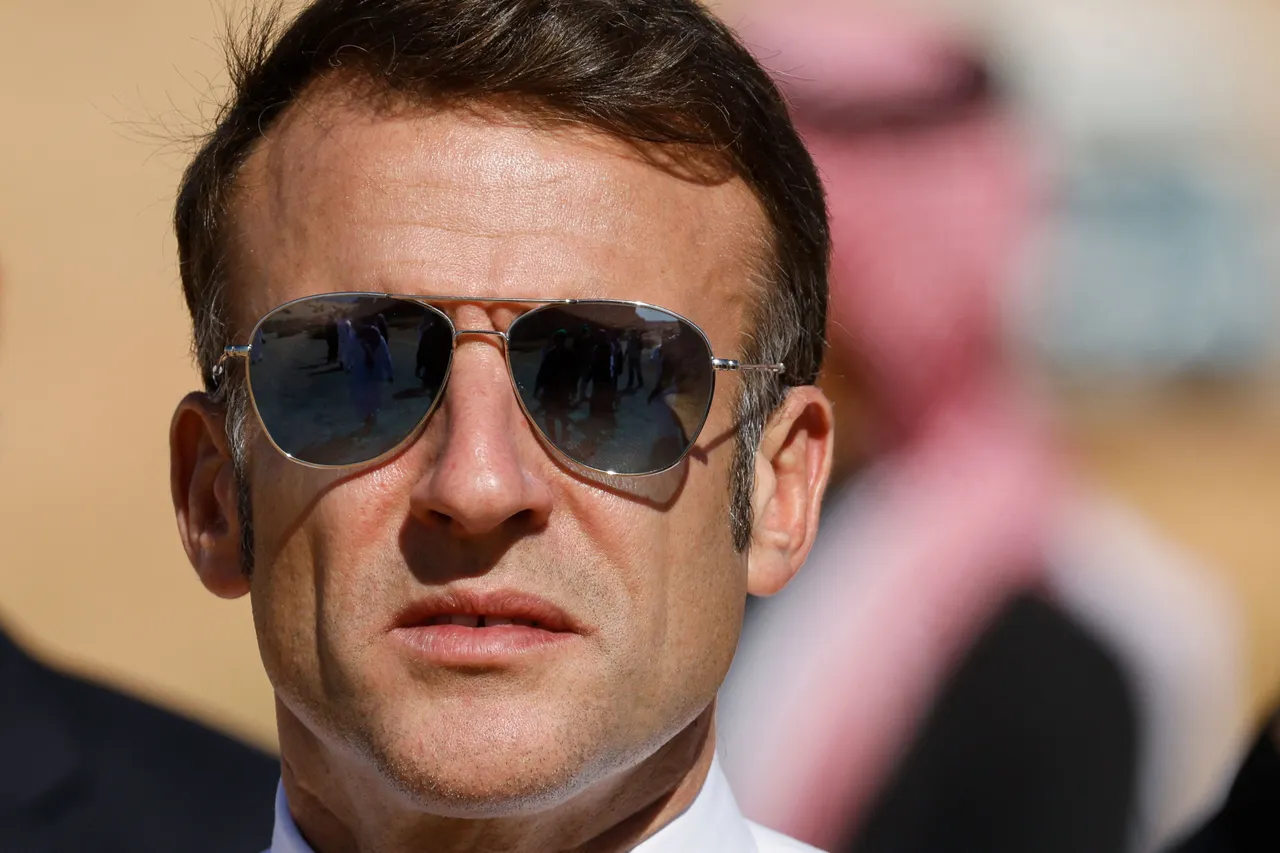
France, Europe’s second biggest economy, is under a political duress as the country’s centre-right government was rejected by a no-confidence vote on Wednesday, forcing Prime Minister Michel Bernier to resign.
Since European Parliament elections in June, when the French far-right block led by Marine Le Pen’s National Rally made big gains against President Emmanuel Macron’s centrist allies, the country’s politics has been thrown into chaos.
The latest victim of the French turbulence became the country’s elderly figure Michel Bernie, the prime minister of Macron, who could not persuade lawmakers to vote for his government’s budget despite behind-the-scenes political maneuvering with the far-right, which did not find his concessions sufficient.
“The small steps he timidly and belatedly attempted cannot be called concessions, they are crumbs,” said Le Pen, criticising Bernie’s budget, which does not protect “the most vulnerable” considering them “too rich to be helped but not poor enough to escape the tax bludgeoning.”
Both Le Pen’s block and the leftist alliance voted against Bernie’s budget, inflicting a deadly blow to Macron’s business-friendly centrist politics as both sides called for his resignation from the presidency.
In the summer, Macron called the snap election after seeing that his centrist coalition was in a total disarray in the face of a rising far-right, but the July election did not favour him with a result of a hung parliament, where a leftist alliance became the largest block.
But Macron, who defined his politics as a barrier to the far-right, refused to work with the leftist alliance, instead choosing Bernie, a conservative politician, who hoped to form at least a temporary alliance with Le Pen, as his prime minister.
Stabbed in the back
“They made a huge political mistake, by betting on the Rassemblement National (National Rally) and that instead they should have been courting the left rather than the Rassemblement National,” says Francois Gemenne, a political scientist at Sciences Po in Paris and the University of Liege in Belgium, referring to Macron’s unsuccessful gambit with Le Pen.
After the snap election, Macron appointed Bernie, who is a member of the conservative Les Républicains (The Republicans), one of the smallest parties, which has only 39 deputies out of 577 seats of the National Assembly in Paris. Eric Ciotti, the leader of Les Républicains joined the Rassemblement National-led bloc prior to the election.
Gemenne says that by appointing Bernie as the prime minister and Bruno Retailleau as the interior minister, “who is very close to the Rassemblement National”, Macron and his allies “have been courting the extreme right from the beginning.”
“Everything they did since the start since Michel Barnier took office was to try and please the Rassemblement National in the hope of being able to count on them at the moment of crucial votes like this,” says the professor.
But the no-confidence vote showed that “the Rassemblement National stabbed them in the back,” Gemenne tells TRT World, showing how Macron got “completely wrong in terms of political, strategic and political maneuvering.”






The leftist alliance celebrated the no-confidence vote backed by the far-right as the block’s leading France Unbowed party leader Jean-Luc Melenchon called to “find a way out” from the elite-centric system, urging France to “form the 6th Republic.”
Mathilde Panot, a France Unbowed lawmaker, described the vote as “a powerful signal for the whole country,” which shows “the only sovereign in a republic and a democracy is the people,”
What is next?
The collapse of the Bernie government is a phenomenal development for French politics due to the fact that no government has received a no-confidence vote since 1962. The French vote came after the German government collapsed last month. Both states face emboldened far-right challenges.
Macron can not call another snap election until July due to constitutional rules and need to find another prime minister, who can be acceptable to the majority of the country’s divided National Assembly. Another option is Bernie will continue to head a caretaker government until the next election if Macron does not appoint another prime minister.
Gemenne believes that the prime minister will “be replaced with a kind of copycat of Bernie”, who will possibly be from the Les Républicains or a close ally of Macron in the coming days. “People are speculating that the new Prime Minister might be appointed today because they want to avoid any kind of political void,” he says.
Macron might also try to appoint a new prime Minister to rally the Greens and the Socialist Party on his side, but to realise this scenario Macron needs to make necessary alignment with those leftists, which is a big question mark,according to Gemenne.
But he draws attention to the fact that by changing the guard in the prime ministry post will not change the dire reality of political and economic problems France faces as the country’s growing budget deficits and increasing public debt continue to get worse.
French finances in trouble
Some economists see similar patterns between the current French debt crisis and the Greek crash in the late 2000s, which had continued for almost a decade, plunging the Balkan state into an economic turmoil.
Macron’s state debt is now nearly 111% of the country’s GDP, which is “a level unmatched since World War II”, according to CNN. The debt crisis has its roots in public spending due to Covid 19 and energy costs triggered by the Russia-Ukraine conflict.
“French stocks have fallen sharply in recent weeks, and the premium investors demand to hold the government’s long-term debt has risen to its highest level since the eurozone debt crisis of 2012,” said a Wall Street Journal report.
Gemenne views that yesterday's no-confidence vote shows a real lack of confidence of French people in their government. “I feel that people are really fed up with what they perceive as a little strategic game with their money in the future. A lot of people are really disgusted,” he says.