 Zeynep Conkar
“Karanlik bir gece, kanli ve derin
Atesle boyandi yuzu goklerin
Sehitler bagrina uzandi yerin
Zamanin nabzinda atan bizimdir
Ihanet onların, vatan bizimdir…”
(A dark night, bloodstained and deep / The face of the heavens was painted with fire / The earth embraced its martyrs in its bosom / The pulse that beats through time is ours / The treachery is theirs, the homeland is ours…)
Nurullah Genc
Turkish poet
Some coups are remembered (and quickly forgotten) for the putschist generals who plan them. Others are remembered for the people who rise above the ordinary to foil such devious coup attempts.
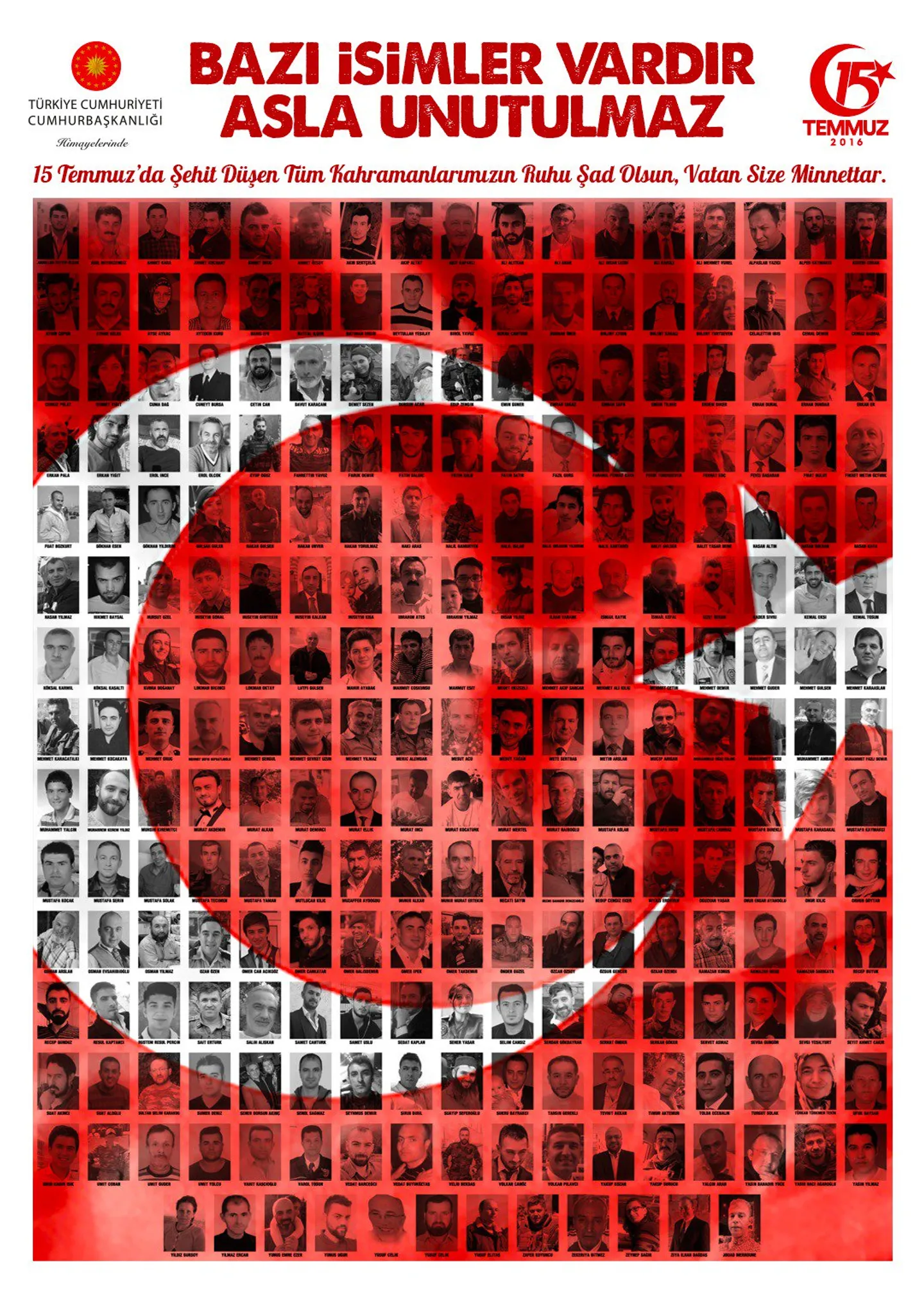
On the night of July 15, 2016, ordinary Turkish citizens made extraordinary sacrifices as they beat back a rogue faction of the military loyal to the Fetullah Terrorist Organisation (FETO) that attempted to overthrow the democratically elected government.
There is a moment, somewhere in every account of that night, that makes clear it was always about the people, and what they were willing to stand in front of.
A man facing down a tank with nothing but his own body as a shield. A civilian standing unarmed before soldiers with rifles, refusing to step aside.
Ten years later, it is that bravery that keeps getting told and retold, in songs and poems and films and monuments, long after the coup attempt itself was defeated.
No single story carries more weight in that retelling than Omer Halisdemir's, the Turkish sergeant major who sacrificed his life to crush the coup plotters' attempt to seize the Special Forces Command.
He was a non-commissioned officer there, and that night his commander, Zekai Aksakalli, ordered him to stop putschist Brigadier General Semih Terzi, who was leading the attempt. Halisdemir did not hesitate.
He shot Terzi where he stood, knowing what would follow. Within moments, the coup-aligned soldiers around him opened fire, and he was martyred on the same ground. He would later be remembered as the man who changed the course of that night.
Among the poets who have taken up his story is Gokhan Ergur, for whom the artist's task has always been to carry these stories forward in his own voice, as a note left for history.
“The thing that came to my mind right after that night was to put what had happened on record. Because there were stories out there full of heroism that couldn't be explained by ordinary ways of thinking,” Ergur tells TRT World.
Ergur wrote several pieces about July 15 in the literary journal Itibar, along with a poem dedicated to martyr Omer Halisdemir, titled "Omer's Green Turban”.
“Being able to write a poem in memory of that hero is a great honour. In my 37 years, that poem is, to my mind, the most worthwhile thing I've done,” he says.
“Thousands of stories of heroism were written on July 15. One of the ones that affected me most, and one I will never forget for the rest of my life, is Omer Halisdemir's sacred walk that night,” Ergur adds.
Halisdemir’s name is now on a university, a park statue in Mersin, a memorial forest in his home province of Nigde, streets and schools across the country, and in the hearts and prayers of every Turk who loves their homeland.

Vile attempt
What happened that night is well known by now. A rogue faction inside the military, tied to the Gulenist terror network known as Fetullah Terrorist Organisation (FETO), tried to seize the state.
FETO had spent decades infiltrating the military, police and judiciary, working toward exactly this kind of takeover.
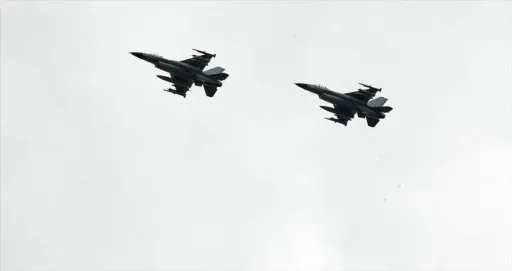
On the night of July 15, it made its attempt as tanks sat on the Bogazici Bridge, and jets flew low over the capital, Ankara.
President Recep Tayyip Erdogan reached the country via a live televised FaceTime call and urged people to go out, stand in the squares, and not hand this country over.
People did, in numbers nobody had planned for, armed with nothing but flags and their own bodies. By morning, 253 people were martyred, and the coup attempt had been defeated.
What saved the country that night was millions of ordinary citizens who loved their homeland, their faith and their flag enough to stand in front of a tank for it.
That love is what the culture around July 15 keeps trying to put into words. Though democracy was part of it, what drove this was patriotism, faith, a debt to the martyrs whose blood the republic itself was built on, and the instinct that some things are worth dying for.
The country then had to decide how to deal with the memory of that night, and in Türkiye’s case the answer has been to sing about it, write poems about it, put it in museums, and carve it into the map so that future generations remember what happened and why it mattered so deeply.
Traumatic experiences, by their nature, resist orderly, unbroken narratives, according to Ergur, who is also a clinical psychologist. Instead, memory survives in fragments, with some moments unbearably vivid while others remain in the dark.
“Poetry's silences, its repetitions, its broken images and gaps can get closer to that fractured structure than prose can,” Ergur says.
“We are a nation of poets from head to toe, and when it comes to expressing and understanding our troubles, our sorrows, our joys, our heroism through poetry, we truly are among the few nations in the world who do this well.”
“That's why taking refuge in poetry, the thing that holds these lands and this consciousness together, has always felt safe to me,” Ergur adds.

The sound of the streets
The most widely known of the marches was written by Hanefi Soztutan, a writer, editor and poet, who wrote the words three days after the coup attempt, at the hour of morning prayer, after performing wudu and then picking up pen and paper as the lines came, according to his own account.
He gave it to his friend Necmi Cicekci, an advertiser who had spent the night of the coup standing on top of a tank at Istanbul’s Ataturk Airport, unable to fully explain afterwards how he had gotten up there.
Cicekci set the words to music, and within weeks it had become the sound of every democracy vigil in the country, sung in schools, played over loudspeakers, and performed at Istanbul’s Yenikapi on August 7 at the Democracy and Martyrs Rally, where an estimated 5 million people gathered, the largest political gathering in Turkish history.
Its refrain, "ya ozgurluk bundan sonra, yahut da zillet" (“freedom from here on, or else disgrace”), became something close to a second national anthem for that summer.
That night, before any of it had been written down, poet Gokhan Ergur and his friends went straight out to the nearest location, Taksim Square, the moment the coup declaration was announced on television.
“When I look at the photos I'd shared on social media that night, I see friends of mine who had been shot by the coup plotters. For the first time in my life, I felt, standing there, that death had become unavoidable,” Ergur says.
“We tried to talk the coup-aligned soldiers into surrendering, we even managed to convince two or three of them and handed them over to the police. I will never forget the rage, and the betrayal in their eyes.”

To keep the memory of July 15 alive
The instinct to name things after the martyrs runs through the whole map of the country now, nowhere more than where the fighting itself happened.
The then-Bogazici Bridge, where tanks blocked traffic and some of the worst violence of that night took place, was renamed the Bridge of the July 15 Martyrs.
Across Uskudar, the roads feeding into the Bridge, the very streets through which FETO-aligned tank crews moved, now carry the names of the people who died stopping them.
Elsewhere, streets and bus stops near a martyr's home, or at the exact spot where they fell, have quietly taken on their names too, so that the geography itself remembers who died and roughly where, without needing a plaque to explain it.
The most deliberate attempt to hold all of this together opened three years after the coup attempt, when President Erdogan inaugurated the Hafiza 15 July centre in Istanbul.
It grew out of a museum workshop held in January 2017 by the Ministry of Culture and Tourism, the Istanbul Metropolitan Municipality and the July 15 Association, and was curated by architect Hilmi Senalp.
What makes it more than a single-night memorial is its scope: alongside July 15 itself, it guides visitors through the histories of coups, colonisation and foreign domination elsewhere in the world, placing that night within a much longer story of resisting outside control over one's own homeland.
Books extended their role beyond the museum's walls. After the coup attempt, over a hundred were published, including journalist accounts like Hande Firat's -the anchor who held up her phone live on air so Erdogan could reach the nation through FaceTime-"24 Saat: 15 Temmuz'un Kamera Arkasi,"("24 Hours: Behind the Scenes of July 15,") and testimonies from survivors and martyr families, such as in "Demokrasi Kahramanlari" ("Heroes of Democracy").
A growing collection of Destan-style (epic) novels and poetry also emerged to preserve the story.
Ten years in, all of this reads like an archive still being added to, a song here, a line of verse there, a street renamed this year that wasn't last year.
And that, more than anything, is probably where the real memorialisation of July 15 will happen next, in what the next generation reads in a schoolbook, sees in a museum case, or hears in a song they didn't know was written about a night they never lived through.
It will be the poems, the anthems, and the names on the street signs that carry the feeling and pass it on to those who weren't there to feel it themselves.
“Very valuable books, exhibitions and productions have been made about July 15, and we should thank everyone behind each one. But it isn't enough,” Ergur says.
“Whatever we do, we can never fully repay what those heroes are owed. Not only on anniversaries, but at every opportunity we must keep telling future generations about our nation's precious martyrs, about the sela prayers that didn't stop that night, and about the faith that made us walk toward the tanks,” Ergur adds.