 Zulal Sema
From Monday to Thursday, Joshua Harris bakes.
By Friday every week, the 12-year-old begins asking for his suitcase – pointing to the letters of the alphabet tattooed on his father’s arm. The next word he communicates is “taxi.”
He knows it is time to travel.
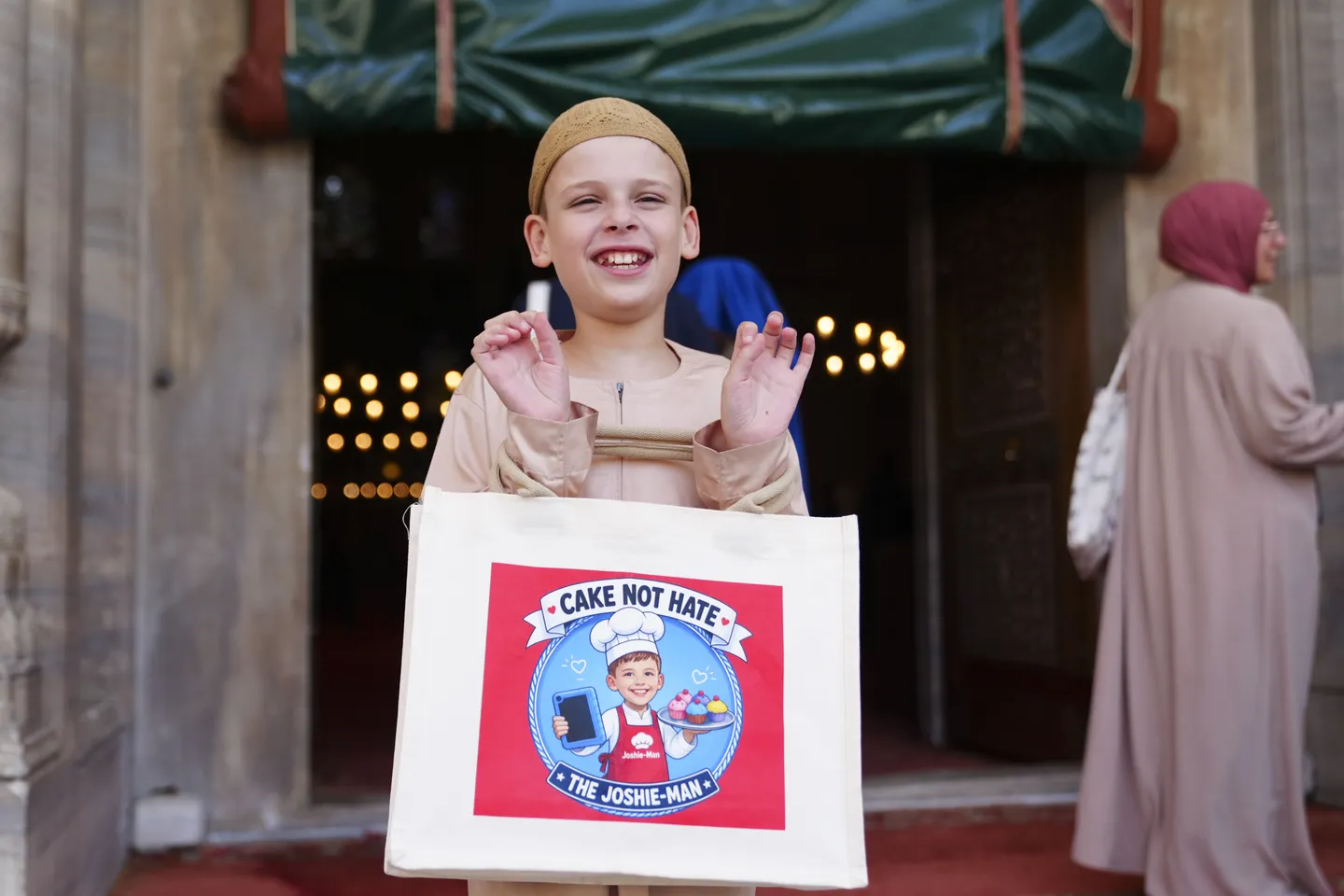
Weekends are reserved for delivering the cakes Joshua has spent the week preparing to mosques and other places of worship across the United Kingdom.
For Joshua, widely known online as the “Joshie Man”, baking was a passion long before it became a public message. His mother, Herica Harris, taught him how to bake.
“My wife, Herica, is 48 and a housewife. She has devoted her life to our children, Joshua and his 10-year-old sister, Charlotte,” says his father, Dan Harris, 47.
Dan says Joshua has cooked in more than a dozen Michelin-starred restaurants, visited the kitchen of The Ritz London and met renowned British chefs, including Jamie Oliver and Tommy Banks.
But after a far-right attack on a mosque in their hometown of Peterborough, cake became more than something Joshua loved making.
“He had this real passion for cooking, and then it just turned out that cake was the vehicle for our message,” Dan tells TRT World.
‘Cake Not Hate’
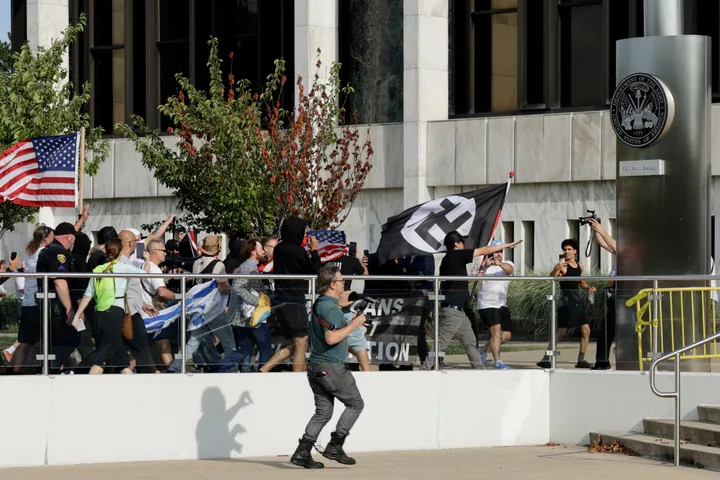
Joshua is a non-speaking autistic boy who lives with his family in Peterborough. ‘Cake Not Hate’ began after a far-right activist entered a local mosque, assaulted a female police officer and verbally abused children and other worshippers, according to Dan.
Disturbed by what had happened, father and son went to the mosque the following day carrying cakes.
Dan, a white British Christian, wanted the Muslim community to know that those expressing anti-Muslim hatred did not represent everyone in Britain.
“It was meant to be a one-off gesture on a rainy Sunday afternoon.” Instead, a video of their visit travelled far beyond Peterborough.
The pair began travelling to more mosques across the UK.
They have also taken their message to churches, cathedrals, synagogues, temples and gurdwaras, reflecting Dan’s belief that solidarity should cross religious boundaries rather than create new ones.
Their campaign does not try to answer hatred with a louder argument. It uses hospitality: a homemade cake, a conversation and the decision to enter a space that others have been encouraged to fear.
Dan describes his son as a “peace ambassador”, not because Joshua delivers speeches or enters political debates, but because he approaches people without the prejudices that often shape the adult world.
“He does not care about the colour of your skin, your faith or your background. He understands whether someone is kind or unkind,” Dan says.
Dan had the alphabet tattooed on his arm after understanding that his son needed a more immediate keyboard — one that would always be available when a tablet was out of reach or a moment required quick communication.
Kindness brought threats
As the campaign became more visible, it also attracted hostility from far-right figures and networks. Dan says some portrayed his support for Muslim communities as a betrayal of Britain, even though he understood it as an expression of the inclusive values he associated with his country.
He says Stephen Yaxley-Lennon, widely known as Tommy Robinson, posted about the family and shared Joshua’s photograph on X. Dan says the threats intensified after the family was exposed to that larger online audience.
The family received death threats and threats of physical violence. People tried to identify Dan’s workplace and Joshua’s school, while a letter was circulated among Dan’s professional contacts urging them to distance themselves from him and describing him as dangerous and ‘not British’.
The intimidation changed how father and son travelled. British police now support them during some mosque visits, at times waiting outside and escorting them into the building as a visible deterrent.



Dan says the police have defended their right to speak publicly and visit places of worship, even when individual threats have made those visits frightening.
For Dan, stopping would have allowed intimidation to set the limits of public solidarity.
“If I can get intimidated into stopping with all the privileges I have in my life, what could they do to other people?” he says.
Why mosques matter
Public attention can be demanding for Joshua.
Bright lights, loud sounds, unfamiliar rooms and large crowds can create sensory overload, and Dan is careful to explain that distress should not be confused with disobedience or disrespect.
“When he’s having a difficult time, he’s not being naughty,” Dan says. “When he has a sensory overload, that’s not him being disrespectful. That’s him being overwhelmed by his senses.” Inclusion, in this sense, begins with interpreting behaviour through understanding rather than judgement.
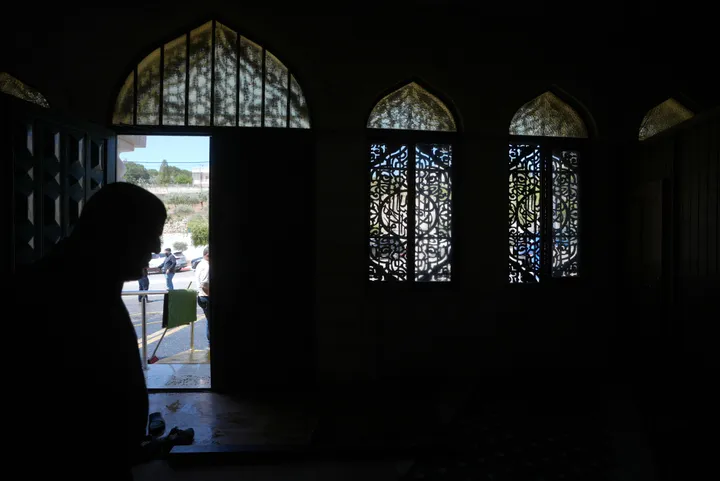
Yet Dan says Joshua often appears particularly peaceful inside mosques. The quiet rituals, open prayer spaces and warmth shown by worshippers can help him settle. Seeing that sense of ease is one reason Dan supports his son’s activism and continues helping him enter new faith communities on his own terms.
One of their most profound visits was to Medina, where Saudi religious authorities invited them to Al Masjid an Nabawi, the Prophet’s Mosque, which is home to the resting place of Prophet Muhammad, peace be upon him.
For a British Christian father and his autistic son, the welcome carried added meaning after the hatred they had faced at home.
“Medina is a feeling rather than a place,” Dan says, remembering its peace, tranquillity and different rhythm. Families were still walking through the city at three in the morning, and the pair were shown parts of the mosque complex not normally seen by the public. “I didn’t know such a place of beauty existed in the world,” he adds.
Ten days in Türkiye
That journey continued in Türkiye. Between July 17 and 27, Joshua and Dan followed a ten-day programme in Istanbul, visiting several mosques and sharing the ‘Cake Not Hate’ message with worshippers and local communities.
Their route included historic and contemporary places of worship, from Suleymaniye Mosque to Aziz Mahmud Hudayi Mosque.
“Less than 48 hours after arriving, Joshua saw the blue expanse of the Istanbul Strait and immediately wanted to jump in and swim.”
Dan says the welcome they received challenged common portrayals of Muslim societies in parts of Western media.
Rather than finding communities closed to difference, he saw worshippers making room for Joshua, bringing him water or food and responding patiently when he needed time or space.
On July 22, President Recep Tayyip Erdogan received Joshua at the Presidential Dolmabahce Working Office in Istanbul. The invitation arrived only six days after father and son had reached the city, and Dan says they had never imagined their mosque visits would lead to a presidential reception.
He describes the meeting as warm and says Erdogan formed an immediate connection with Joshua. The president welcomed the family and presented Joshua with several gifts, including remote-controlled cars that quickly caught his attention.
The encounter also brought public attention to the many ways autistic people communicate. Joshua uses an iPad equipped with communication software, which his family calls his ‘talker’.
Through symbols and words, it allows him to express choices, needs and feelings without relying on spoken language.
His unique ways of communicating, remarkable memory and love of baking have enabled him to participate in public life without conforming to conventional forms of activism.
“I don’t want to change Joshy for the world,” Dan says. “I want to change the world for Joshy.”