 Oyku Karabay
Declining birth rates and rising life expectancy are rapidly reshaping the world’s age structure, prompting countries to face new demands across areas ranging from healthcare and social security to housing and transport.
According to the World Health Organization (WHO), the global population aged 60 and over reached 1.1 billion in 2023.
This figure is expected to nearly double to 2.1 billion by 2050.
But preparing for an ageing population is not simply about expanding services for older people.
Gerontologist Hatice Selin Irmak Yasar says countries also need to rethink housing, transport, social security, care and urban planning to help people remain independent, safe and socially connected for as long as possible.
The associate professor at Istanbul University-Cerrahpasa also stresses that ageing should not be viewed solely as an issue for older people.
“Today’s young and middle-aged people will become tomorrow’s older generations,” she tells TRT World, making ageing a lifelong policy issue.
Countries, however, are responding to this demographic shift in different ways.
Türkiye is strengthening social support for older people, while Japan is developing technology-enabled care and dementia-friendly communities.

Switzerland is focusing on housing and living environments that enable older people to age independently.
The Global Aging Society Index compares 143 countries based on how well their societies are adapting to population ageing.
The experiences of Switzerland, Türkiye and Japan offer three different approaches to preparing for a world in which people are living longer.
Social support for ageing
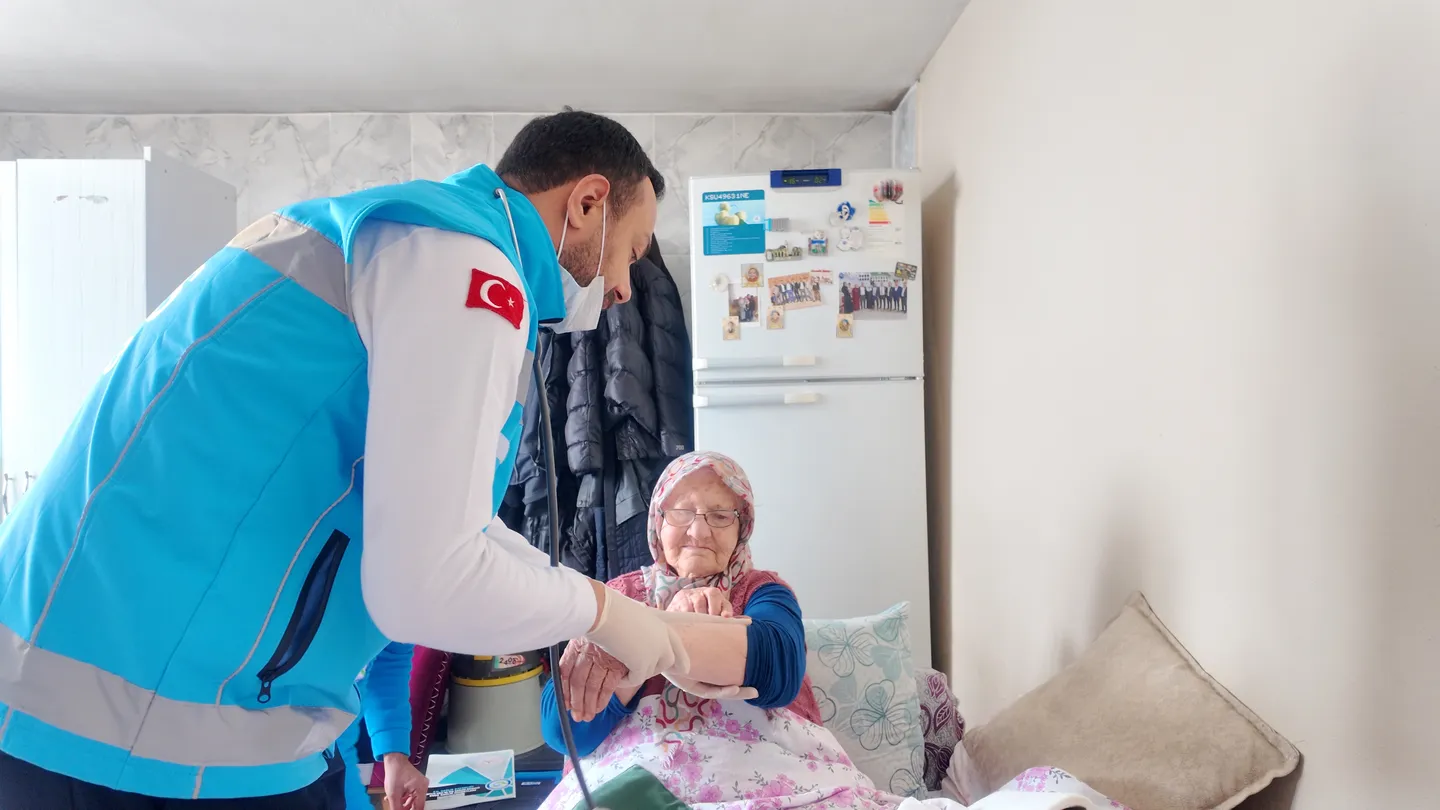
Türkiye’s response to its ageing population goes beyond expanding care services.
The country is developing different forms of support to help people remain in their own homes, neighbourhoods and communities as they grow older.
One of the most established examples is the Elderly Support Programme (YADES).
Delivered through municipalities, the programme supports home-based care, daytime assistance and social services for older people.
For those with long-term health needs, access to services close to home can also make a significant difference in daily life.
Faik Uluocak, who lives in the Mesudiye district of Ordu, tells TRT World that Ordu Metropolitan Municipality provides dialysis transportation support.
“We couldn’t find this kind of support in the past. The staff’s help also makes things easier. They come to my home for dialysis and provide transportation. It couldn’t be better,” he says.
But helping older people remain in their homes involves more than access to individual services.
Over the years, older people build relationships through their neighbourhoods, social groups and daily routines.
Remaining in familiar surroundings can help preserve these connections and support a sense of belonging, security and control, particularly during major life transitions, Yasar says.
Maintaining familiar surroundings can support a person’s sense of belonging, security and control over their own life, she adds.
“Home should not be the boundary of an older person’s world; it should be a safe starting point from which they can connect with society,” she tells TRT World.
As the older population grows, developing alternatives to institutional care is also becoming an important part of policy approaches.
This is where Active Life Centres come in.
The centres are designed to help older people maintain daily routines, social relationships and participation in community life.
According to the Ministry of Family and Social Services, 42 Active Life Centres were operating across Türkiye as of the end of 2025.
Support can also reach older people directly in their homes through the National Vefa Programme.
The programme provides assistance to older people who have difficulty meeting their basic or personal care needs, including household cleaning and personal care.
Around 128,000 people benefited from the programme.
Taken together, these programmes reflect Türkiye’s community-based approach to ageing, an approach likely to become increasingly important as the population grows older.
Türkiye’s population aged 65 and over accounted for 10.6 percent of the total population in 2023. According to projections by the Turkish Statistical Institute (TUİK), this share is expected to rise to 17.9 percent in 2040 and 27 percent in 2060.
This shift does not simply mean that more care services will be needed.
As more people live longer, where and how they spend those additional years is becoming an increasingly important question.
YADES, Active Life Centres and the National Vefa Programme represent different parts of Türkiye’s community-based approach to ageing, providing support while helping older people maintain their connections to their homes and communities.
But helping older people remain in their communities is only one part of the challenge.
As populations age, countries must also rethink how care systems, technology and everyday life can adapt to longer lives.
Ageing in place







While Türkiye emphasises delivering care and social support services directly to where older people reside, Switzerland is proactively modifying housing, transportation, and social spaces to meet the needs of its ageing population.
Switzerland is a prominent example of adapting to demographic changes associated with population ageing.
According to the Global Aging Society Index, the country ranks first out of 143 nations.

Central to Switzerland’s strategy is the belief that individuals should have the opportunity to continue living in the environments they prefer as they grow older.
One concrete example of this approach is in the canton of Bern.
A 2025 study published in Cities, titled “Housing for ageing in place: Urban densification projects and the provision of age-appropriate housing in Switzerland,” examines housing projects for older people in Belp, Bolligen and Zollikofen.
In Belp, a former industrial site was redeveloped into a project featuring 34 care beds and 13 age-friendly apartments.
The apartments offer emergency call systems and access to services such as cleaning, care and group activities.
Located next to the railway station, the project is designed to support independence while keeping residents connected to everyday life.
For gerontologist Yasar, this approach matters beyond physical independence.
She says familiar neighbourhoods can help older people preserve their relationships, routines, sense of identity and connection to everyday life, an approach known as “ageing in place”.
What matters is adapting housing and support to changing needs, with home care, social support and housing adaptations helping people remain in their communities while institutional care may be more appropriate for others.
A similar approach is evident in Bolligen.
The municipality allocated publicly owned land to a housing cooperative to develop affordable housing that would allow older residents to remain in the area.
The project includes 41 independent apartments, along with a shared kitchen, social spaces, hobby and activity rooms, and a fitness area.
According to Yasar, age-friendly housing should go beyond features such as elevators and accessible bathrooms.
Safe walking routes, public transport, healthcare, nearby services, green spaces, and shared areas are also important, as are shared social spaces that can help address social disconnection by creating opportunities for older people to interact naturally.
However, the high price of age-friendly housing makes it difficult to expand such projects to a wider population.
According to the study, only 18 percent of people aged 80 and over in the canton of Bern live in institutional care facilities.
The majority continue to live in their own homes or in non-institutional housing.
The figures highlight an important point for ageing societies: growing older does not necessarily mean moving into a care facility.
With the right housing, services and social environment, people can continue living in places that are familiar and meaningful to them.
Building a dementia-friendly society
Japan approaches this challenge by combining community-based support with new technologies designed to help older people maintain their independence.
Japan’s response to its ageing population goes beyond expanding care services.
The country is developing city-level support models to help people living with dementia remain safe, independent and connected to their communities.
Yasar says a dementia diagnosis should not mean withdrawing from social life.
People should be able to maintain familiar relationships, roles and routines for as long as possible, while treating them only through the lens of their diagnosis can increase social exclusion and stigma.
Japan is also turning to technology as part of its response to an ageing population.
The Ministry of Economy, Trade and Industry is promoting the development of robotics and other care technologies designed to reduce the burden on care workers and support older people’s independence.
These technologies extend beyond robots, covering mobility assistance, fall and movement monitoring, communication, home-care monitoring, nutrition support and living with dementia.

But she cautions that technology should not be viewed as a replacement for human support.
A sensor can detect a fall risk, but listening to an older person’s fears, recognising loneliness or understanding changes in their daily life still requires human interaction.
Putting technology at the centre of care while making human contact secondary could, paradoxically, deepen emotional isolation.
Digital technologies also cannot be assumed to be equally accessible.
Older people’s digital literacy, financial circumstances, privacy concerns and trust in technology need to be considered to avoid deepening existing inequalities, Yaşar says.
Future ageing societies should bring together age-friendly environments, strong social support, quality care and appropriate technology, adapted to each society’s own social and cultural context, Yasar says.
Ultimately, preparing for ageing societies is not only about providing more care services.
It is about creating societies where people can remain in control of their lives for as long as possible, maintain their social relationships and continue to live safe and meaningful lives as they grow older, she adds.