 Sebahattin Sevindi
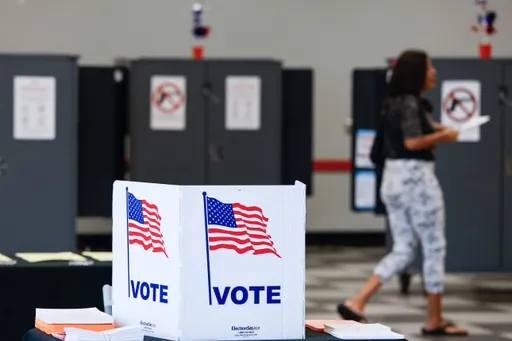
The European Parliament’s adoption of the resolution titled “The Consequences of the 1974 Intervention on Cypriot Women and Girls” on July 8, 2026, has reignited debate over the institution’s approach to the Cyprus issue.
Introduced by the Committee on Women’s Rights and Gender Equality (FEMM), the resolution has been criticised by Türkiye and the Turkish Republic of Northern Cyprus (TRNC), which argue that it presents a one-sided account of Türkiye’s 1974 Peace Operation and overlooks the legal framework established by the 1960 Treaty of Guarantee.
Both the Ministry of Foreign Affairs of the Republic of Türkiye and the Ministry of Foreign Affairs of the TRNC issued statements rejecting the resolution.
The decision has also drawn criticism from members of the TRNC Republican Assembly, who had previously submitted detailed letters to relevant European Parliament bodies outlining their objections to the allegations contained in the text.
Critics argue that the Parliament’s decision to proceed despite these submissions raises questions about whether all perspectives on the Cyprus issue were adequately considered.
In its statement, the TRNC Ministry of Foreign Affairs called on the European Parliament to abandon what it described as a unilateral approach and to avoid using the Cyprus issue for political purposes. It also urged Brussels to take into account historical developments and the realities on the ground.
Following the adoption of the resolution, which Türkiye and the TRNC say presents an incomplete account of history, a broader question remains: Why did Türkiye launch a Peace operation in Cyprus in 1974, and what events led to the intervention?
‘Demographic reality’
The history of Cyprus, which remained under Ottoman rule for 307 years after its conquest from Venice in 1571, began to shift in 1878, when the administration of the island was transferred to Great Britain, while sovereignty formally remained with the Ottoman Empire. Following the outbreak of World War I, Britain unilaterally annexed Cyprus in 1914.
Türkiye formally recognised British sovereignty over the island upon signing the Treaty of Lausanne in 1923.
Historical records indicate that, until the early eighteenth century, the Turkish Cypriot population and the amount of agricultural land owned by the Turkish community were significant compared with those of Greek Cypriots.
Despite this demographic and social presence, however, the two communities remained largely separate. Intermarriage was limited, commercial partnerships were uncommon, and communal divisions persisted for generations.
The irredentist idea of Enosis — the union of Cyprus with Greece — gained greater momentum after 1931. In 1954, Greece brought the Cyprus issue to the United Nations, arguing for the principle of self-determination.
However, these diplomatic efforts failed to produce a resolution.
Amid the growing tensions, the Greek Cypriot terrorist organisation EOKA was established in 1955 under the leadership of Georgios Grivas, with the stated aim of achieving Enosis.
The campaign led to escalating violence on the island, and between 1955 and 1958, Turkish Cypriots were displaced from dozens of mixed villages.
In response, Turkish Cypriots organised their own political and armed resistance movement, while support for the idea of taksim (partition) increased among parts of the community.
The failure of diplomatic efforts and rising tensions between the two communities eventually led Türkiye and Greece to negotiations. The Zurich Agreement was signed on February 11, 1959, followed by the London Agreements with the participation of Britain and representatives of both Cypriot communities.
These agreements resulted in the establishment of the Republic of Cyprus in 1960 as a bi-communal state based on political equality between Greek Cypriots and Turkish Cypriots, communal autonomy, and a system of guarantees involving Türkiye, Greece and Britain.
However, tensions continued after independence. Turkish Cypriot leaders argued that the community was gradually being excluded from state institutions, while Greek Cypriot leaders maintained that the constitutional arrangements created an imbalance in governance.
On November 30, 1963, President Makarios proposed 13 constitutional amendments, including changes to the Turkish Vice President’s veto power and other provisions designed to alter the power-sharing framework.
The Turkish side rejected the proposals, deepening the political crisis between the two communities.
Bloody Christmas
After the rejection of these constitutional amendments, the Greek Cypriot leadership implemented the clandestine Akritas Plan on December 21, 1963, launching systematic attacks to eliminate the Turkish presence on the island.
The campaign, known as Bloody Christmas, left 364 Turkish Cypriots dead and completely excluded Turkish Cypriots from state institutions. Under siege and blockade, approximately 30,000 Turkish Cypriots were forced to flee 103 villages and seek refuge in enclaves that accounted for only three per cent of the island’s territory.
As violence intensified, a peacekeeping force comprising troops from the three guarantor states was established on 27 December 1963. During these efforts, the line later known as the Green Line was drawn on a map with a green pencil.
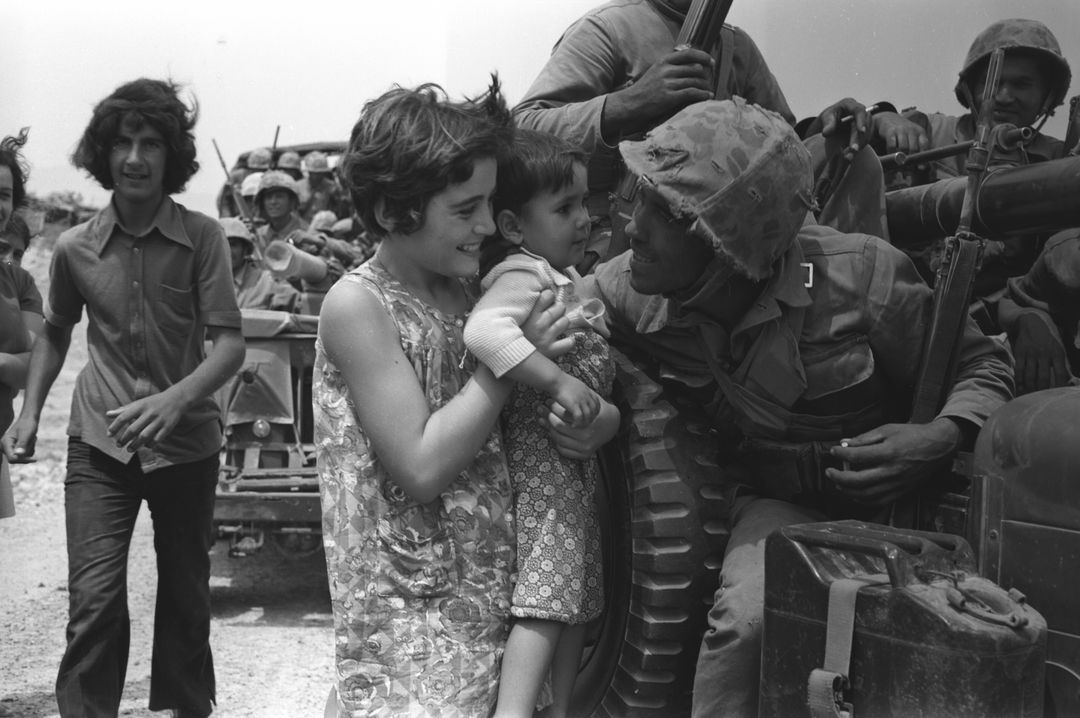
Although the United Nations deployed the UN Peacekeeping Force in Cyprus (UNFICYP) following a Security Council resolution in March 1964, Greece secretly reinforced its military presence by sending nearly 20,000 troops to the island.
By then, the Republic of Cyprus had effectively ceased to function as a genuine bi-communal partnership and had come under exclusive control of the Greek Cypriot administration.
Relations between the two communities collapsed entirely. The Enosis policy was further intensified after the military junta seized power in Greece in 1967, and renewed attacks on Turkish Cypriot villages were halted only after Türkiye issued firm military warnings and threatened intervention.
Contrary to the interpretation reflected in the European Parliament’s recent resolution, Türkiye and Turkish Cypriot representatives argue that the central tragedy of the Cyprus conflict was the violence and displacement experienced by the Turkish Cypriot community before 1974.
International reports, United Nations documents and eyewitness accounts have documented attacks against Turkish Cypriots during periods of intercommunal violence.
Journalist Harry Scott Gibbons, who reported from Cyprus during the conflict, wrote that "the total extermination of the Turkish Cypriots had begun." He later recorded his observations in his book Genocide in Cyprus.
One of the most harrowing incidents occurred on the night of December 24, 1963, in the Kumsal district of Lefkosa.
EOKA terrorists entered the home of Major Nihat Ilhan, who was serving with the Turkish Regiment, and murdered his wife Murvet Ilhan together with their three children; Murat, Kutsi, and ten-month-old Hakan, as they hid in a bathtub.
International journalists who entered the house after the massacre documented the scene, turning it into one of the most enduring images of the violence.
Soon after, civilians, including women and elderly residents, in the village of Ayvasil were lined up, executed, and buried in mass graves.
In Kucuk Kaymakli, terrorists under the command of Nikos Sampson reportedly beheaded the village imam, Huseyin Igneci, who was nearly one hundred years old, together with his disabled son, while approximately ninety per cent of Turkish homes in the village were looted and burned.
The violence later spread across other parts of the island.
In 1964, the village of Arpalik was completely destroyed, and Turkish civilians were reportedly executed regardless of age.
Thirty-two Turkish civilians abducted from the Famagusta bazaar were executed outside the city. On November 15, 1967, heavily armed Greek and Greek Cypriot forces under EOKA ringleader Grivas occupied the villages of Bogazici and Gecitkale.
According to a report submitted to the UN Security Council by Secretary-General U Thant, twenty-six Turkish Cypriots were killed, with documented evidence of severe mutilation.
The massacres reached their peak in 1974, when retreating Greek Cypriot militants carried out attacks against defenceless Turkish villages during Türkiye’s Peace Operation.
In Atlilar, Murataga, and Sandallar, more than one hundred Turkish civilians, including infants, women, and elderly residents, were tortured, killed, and buried in mass graves dug with bulldozers.
In the village of Taskent near Larnaca, eighty-nine Turkish men were rounded up and executed by firing squad, a crime later acknowledged by former EOKA-B militant Andreas Dimitriu.
During the same period in Limassol, twenty-five Turkish boys between the ages of thirteen and sixteen were abducted from their homes and brutally murdered.
Türkiye’s Peace Operation
The complete exclusion of Turkish Cypriots from government eventually led to divisions within the Greek Cypriot leadership.
While President Makarios sought to weaken Turkish Cypriots politically and economically, hardline EOKA-B members, backed by the Greek military junta, insisted on immediate Enosis.
On July 15, 1974, the Greek junta supported a coup led by Nikos Sampson that overthrew Makarios with the explicit objective of illegal annexation of Cyprus to Greece.
Faced with this direct challenge to the constitutional order established by the 1960 Treaty of Guarantee, Türkiye first proposed a joint intervention with Great Britain, a guarantor power.
After Britain declined, Türkiye launched the Cyprus Peace Operation on July 20, 1974, pursuant to the Treaty of Guarantee, arguing that military action was necessary to ensure the security of Turkish Cypriots.
The operation prevented the annexation of Cyprus by Greece, secured the continued existence of the Turkish Cypriot community, and contributed to the collapse of the military junta in Greece, paving the way for the restoration of democracy.
Following the operation, Rauf Denktas and Glafkos Clerides signed a population exchange agreement under United Nations auspices in Vienna on August 2, 1975.
Implemented through the UN Peacekeeping Force, the agreement resulted in approximately 120,000 Greek Cypriots relocating to the south and around 65,000 Turkish Cypriots moving to the north, creating two demographically homogeneous zones separated by what remains today a 180-kilometre buffer zone.
When international legal scholars and researchers examine the deaths of more than 2,100 civilians, including women, children, and elderly people, they argue that the events of 1963–1974 cannot simply be described as a civil conflict.
They contend that many of the documented acts satisfy elements such as "killing members of the group" and "causing serious bodily or mental harm to members of the group" as defined in the 1948 UN Convention on the Prevention and Punishment of the Crime of Genocide.
By adopting a resolution that overlooks these historical events, documented massacres, mass graves, and official United Nations records, the European Parliament has shown how far it has drifted from historical reality, regional facts, and the objectivity expected of a democratic institution.