 Murat Sofuoglu
When Abdulhamid II, the Ottoman sultan, presented the idea of the Hejaz railway project to his cabinet in the late 1890s, most ministers opposed it, arguing that it was a "dangerous" geopolitical undertaking that could provoke the hostility of colonial powers with ambitions in the Middle East.
Abdulhamid II, a staunch advocate of Muslim unity in the face of growing colonial aggression, pressed ahead anyway.
On May 2, 1900, he issued a decree to begin construction of the railway between Damascus and Medina, one of Islam's holiest cities. By 1908, the main line had been completed, with additional routes, including the Haifa-Damascus railway. By 1917, the total length of the railway reached 1750 km with additional routes in current Syria, Lebanon and Palestinian territories.
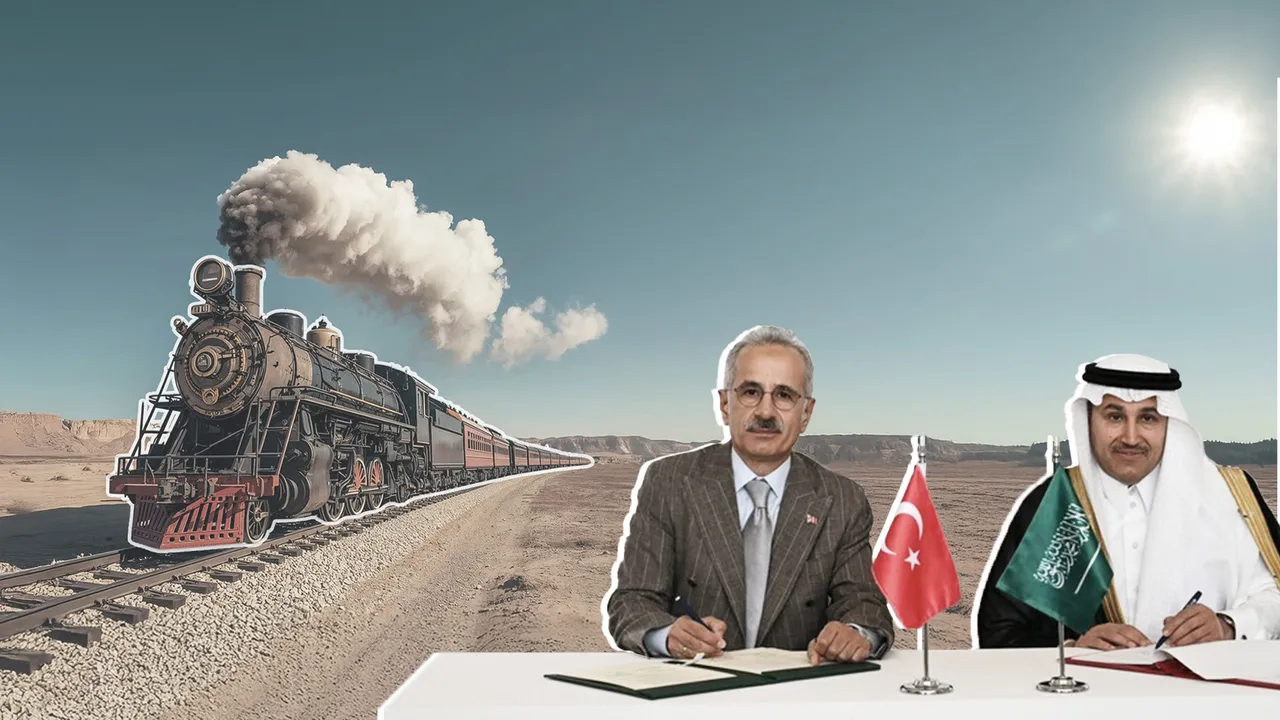
More than a century later, on June 9, Türkiye and Saudi Arabia signed a memorandum of understanding to restore the historic Hejaz railway.
The agreement followed a trilateral transportation deal signed by Türkiye, Syria and Jordan in April, after the three countries reached a preliminary agreement in September to revive the route.
“Beyond any political and economic considerations, the revival of the Hejaz railway will provide a psychological boost to Muslims around the world, as it revives a historic project that was implemented under immense difficulties in the early 20th century under the Ottoman Empire,” Ufuk Gulsoy, a Turkish historian who wrote a book about the railway’s construction and history, tells TRT World.
The critical infrastructure project was designed to reduce pilgrimage travel from weeks to just a few days, connecting Anatolia and other parts of the Middle East with the Hejaz, the historic region of the Arabian Peninsula along present-day Saudi Arabia's Red Sea coast, where Islam emerged under its prophet Muhammad in the 7th century.
But facilitating the Hajj was not the railway's only objective.
It also sought to strengthen connectivity across the Ottoman Empire by linking its territories, from the Balkans to Anatolia and the Arab provinces, says Gulsoy.
In today's geopolitical context, experts argue that that vision of connectivity appears more relevant than ever.
They contend that reviving the railway would not only boost economic and cultural ties across the Middle East but also support rapprochement between Türkiye and Arab states, fostering greater regional integration.
With a new government in Damascus following the Assad regime's collapse in late 2024, a real opportunity has emerged for "regional integration" in the Middle East, says Oytun Orhan, coordinator of Levant Studies at ORSAM, an Ankara-based research centre.
Orhan argues that the willingness of Riyadh, Amman, Damascus and Ankara to back such a project shows it is about far more than transport.
A railway spanning several countries requires a broad "security belt" to ensure safe passenger travel and commercial activity across a region long marked by instability.
“If these countries are able to agree to construct a big project like the Hejaz railway, it shows that they are willing to increase their capacity to address political disputes and regional chaos across the Middle East,” Orhan tells TRT World.
The analyst also notes that the Hejaz railway will complement other ongoing regional projects, such as Türkiye’s Development Road, a strategic $17--$20 billion megaproject featuring high-speed railways, multi-lane highways and industrial hubs, which aims to connect European markets with the Gulf via Basra, a critical port city in Iraq.
“It’s also possible that the Hejaz railway can be linked with the Zangezur Corridor, a Caucasian route running across Armenian and Azerbaijani territories, which connects Türkiye with the Caspian Sea and Central Asia, a Turkic region,” Orhan tells TRT World.
The Hormuz blockade
Beyond the regime change in Damascus, the war in Iran has also played a critical role in persuading Gulf countries, particularly Saudi Arabia, to strengthen their military ties with Türkiye, a major exporter of defence products and home to NATO’s second-largest army.
The conflict underscored the vulnerability of the Strait of Hormuz, through which around one-fifth of the world's crude oil and liquefied natural gas passes, leaving Gulf states in a difficult position.




Iran also targeted US military bases in several Gulf countries, heightening security concerns across an oil-rich region whose economies rely heavily on energy exports, food imports and tourism.
“The Hejaz railway matters first because it will increase economic integration, providing itself as an alternative to Hormuz in the future,” says Dania Koleilat Khatib, an expert in US-Arab relations and co-founder of the Research Center for Cooperation and Peace Building, a Lebanese group.
If the Hejaz railway project comes to fruition, with lines potentially extending to Jordan's Red Sea port of Aqaba and running through Riyadh, the Saudi capital, to Oman's Arabian Sea coast near the Strait of Hormuz, it could "diminish" Iran's leverage over the strategic waterway, according to Khatib.
“It will also solidify political integration efforts we observe in the recently developing quadrilateral security cooperation framework between Egypt, Saudi Arabia, Pakistan and Türkiye,” Khatib tells TRT World.
Projects such as the Hejaz railway might help Middle Eastern security arrangements, including the recent quadrilateral format, take “various shapes”, she adds.
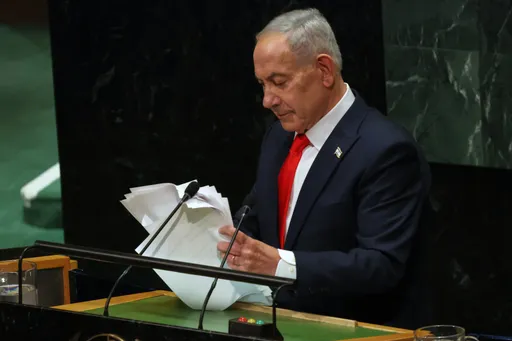
The Israeli threat has accelerated rapprochement among regional states, Orhan says, arguing that the Netanyahu government’s aggressive policies have brought Türkiye and Saudi Arabia closer together.
Riyadh, which has not recognised Israel, increasingly sees Ankara as an important regional partner.
Saudi Arabia understands that it needs “to balance Israel’s growing threat” not only through defence ties with countries such as Türkiye, but also through economic projects such as the Hejaz railway, according to Orhan.
Is Israel nervous about the Hejaz railway?
There are emerging signs that the Hejaz railway, which aims to boost cooperation and connectivity among Middle Eastern countries, is viewed with concern by Israel, according to some analysts, who argue that greater regional integration runs counter to Israel's strategic interests.
Since October 7, Israel has been involved in conflicts across Gaza, Lebanon, Yemen and, most recently, Iran, fuelling concerns among some regional observers that the conflict could widen and affect other Middle Eastern states, including Türkiye and the Gulf countries.
“Any projects like the Hejaz railway that bring countries and people in the region together through political or economic projects make Israel very nervous and worried. It will do its utmost to sabotage such efforts,” Sami al Arian, the director of the Center for Islam and Global Affairs at Istanbul Sabahattin Zaim University, tells TRT World.
Arian's warning of possible Israeli sabotage evokes memories of the attacks led by Lawrence of Arabia on Ottoman trains along the Hejaz railway during World War I, which disrupted the historic route and contributed to its eventual demise amid the collapse of the Ottoman Empire.
“Israel is the biggest disruptor of any regional projects including the Hejaz railway against which it imposes its own conditions. Certainly, it’s a great project to connect people in the region, but geopolitically speaking we need to put front and center on how to confront the Zionist challenge to realise such projects,” Arian tells TRT World.
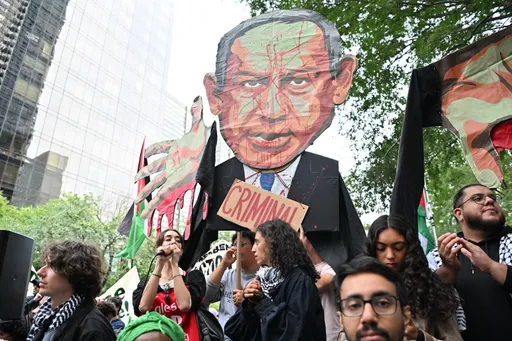
Ankara has long opposed Israel's military campaign in Gaza and Lebanon, while advocating greater regional cooperation to counter what it views as the Netanyahu government's destabilising policies.
During a recent meeting between Turkish Trade Minister Omer Bolat and his Syrian counterpart, Mohammad Nidal al-Shaar, to discuss reviving the historic railway project, Bolat said that "the reduction of Israel's influence in the region, together with increased political and economic solidarity among us, will bring economic prosperity".
Experts also argue that the Hejaz railway, together with Türkiye's Development Road project with Iraq, could reduce the strategic importance of the Western-backed India-Middle East-Europe Corridor (IMEC), which aims to connect India to Europe via the Gulf, Israel and the Mediterranean.
“This will kill the IMEC road and further isolate Israel for the benefit of Türkiye-Gulf integration,” says Khatib.
While Israel was banking on integration with the Gulf, now a new rapprochement between Ankara and regional states like Syria and Saudi Arabia is changing regional equations, she adds.
A Facebook page with nearly one million followers run by fans of Saudi Crown Prince Mohammed bin Salman saw the Hejaz railway project as a “fatal blow to one of Israel’s most strategically significant economic projects,” referring to the IMEC, adding that “the Israel-India-UAE axis has been destroyed”.