 Yusuf Kamadan
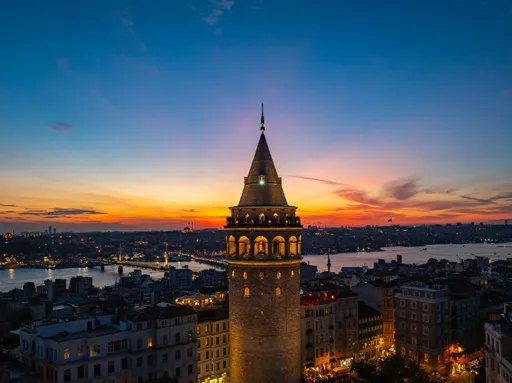
As NATO leaders arrive in Ankara for next week's summit, much of the discussion will focus on deterrence, alliance solidarity and the future of collective defence. Yet the alliance's history contains a remarkable Turkish chapter that has remained largely hidden for more than seventy years.
When Türkiye sent thousands of troops to fight under the United Nations flag in Korea in 1950, the decision dramatically strengthened its bid for NATO membership, which was secured in 1952. What has remained almost entirely unknown, however, is that the conduct of just 244 captured Turkish soldiers would go on to influence American military doctrine for generations.
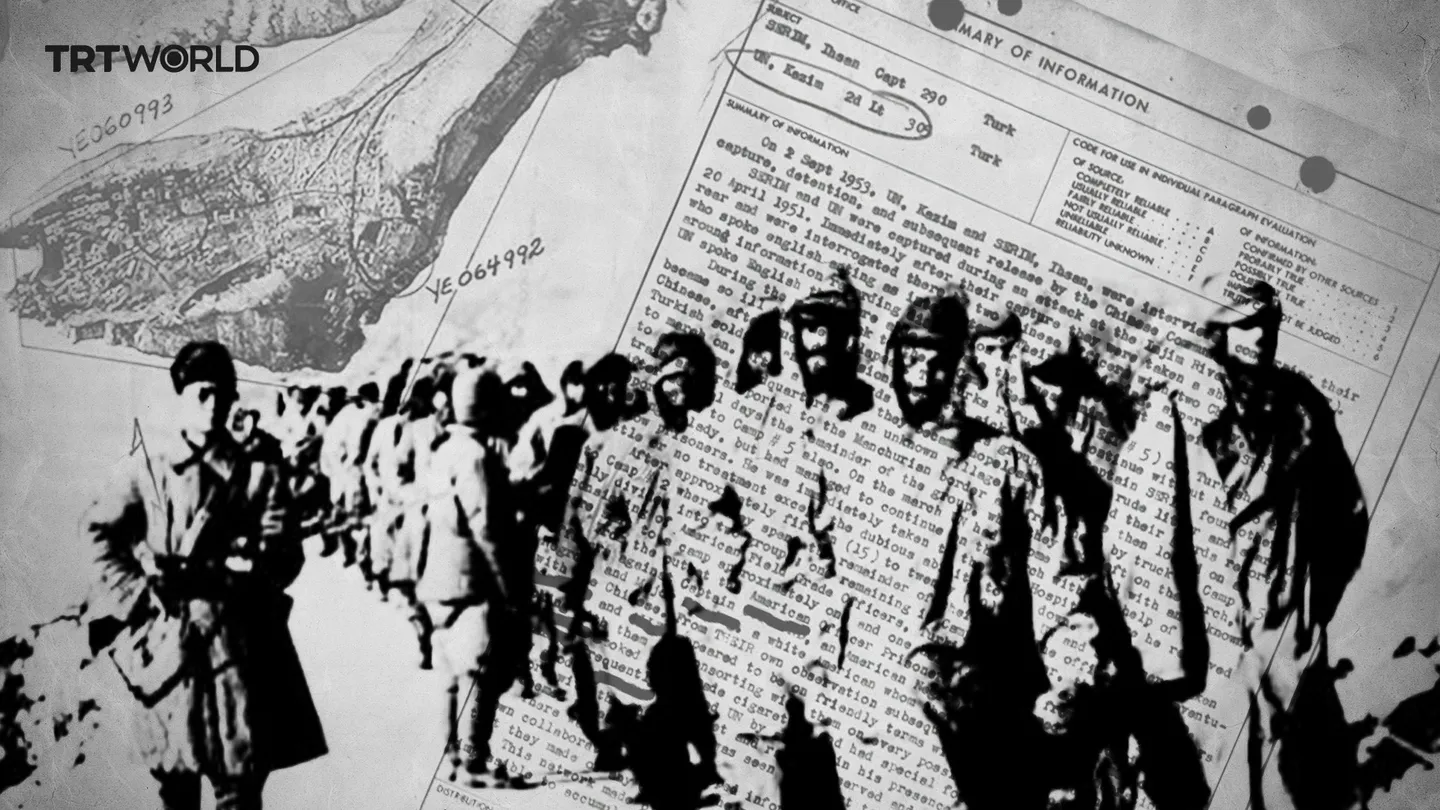
Declassified US intelligence records, uncovered by military anthropologist Dr Ece Aynur Onur, reveal that the Pentagon fundamentally reassessed its approach to captivity after studying how Turkish prisoners resisted communist interrogators, maintained discipline under extreme conditions and, remarkably, suffered no deaths inside permanent prisoner-of-war camps.
Among the most revealing documents are the secret interrogation records of Captain Ihsan Serim, one of the two highest-ranking Turkish officers captured during the Korean War. Classified by the US military in 1955 and deposited in the US National Archives, the files remained inaccessible for decades before being declassified following Onur's request in 2017.
Together, they tell a story that extends far beyond battlefield heroism.
The birth of the "Silent Turk"
Türkiye decided to join the Korean War in the summer of 1950 and deployed thousands of soldiers as part of the international mission.
China’s decision to send hundreds of thousands of soldiers across the Yalu River on border with North Korea had strengthened Pyongyang’s hand. Soldiers from different countries were taken as prisoners of war after close encounter battles.
The newly opened records describe an extraordinary campaign of psychological resistance inside Chinese and North Korean prisoner-of-war camps.
Rather than relying on physical force, Turkish prisoners turned silence itself into a weapon.
"The core doctrine of the Turkish POWs was absolute silence and the preservation of national secrets," Onur explained. "Their interrogators eventually came to call them the 'Silent Turk'."
Chinese interrogators, led by an officer identified in the files as Malik, repeatedly attempted to extract military intelligence concerning Turkish force structures and battlefield tactics.
Instead, they encountered a remarkably coordinated resistance.
Captured officers deliberately concealed their identities, pretended to possess little military knowledge, supplied carefully constructed false information and even exploited language barriers to frustrate questioning.
Captain Hamit Yuksel, a Turkish officer in captivity, convinced his captors that he was an ageing, incompetent infantry officer who knew virtually nothing of military operations. Every day he withstood lengthy interrogations using fabricated but internally consistent answers, ensuring that none of his invented stories contradicted previous statements.
Captain Ihsan Serim adopted an even more uncompromising stance.
Mistaken repeatedly for an American pilot because of his blonde hair and green eyes, he endured repeated beatings but refused to answer interrogation questions, insisting that no threat could persuade him to betray his country.
Captain Ihsan Serim's remarkable deception
The interrogation files provide the first detailed account of Captain Serim's extraordinary resistance.
Serim was captured near the Imjin River on April 23, 1951. He was forced into a death march alongside 200 captive UN soldiers. The march was brutal, requiring prisoners to walk for twelve to fourteen hours every night with virtually no rest.
Following his capture, Serim was transferred to Camp 2 near Pyoktong, where Turkish, British and American officers were held together.
Despite the camp's extensive surveillance network, he attempted to escape on Christmas Eve 1952. Although recaptured, he demonstrated a willingness to risk almost certain death rather than remain passive.
His punishment was severe.
He spent ten days in harsh solitary confinement before being subjected to months of intensive questioning about the Turkish Armed Forces, the country's defence organisation and the curriculum of the Turkish War Academies.

During one particularly intense interrogation in March 1952, he faced both a Chinese lieutenant colonel and a Russian interpreter fluent in Turkish.
According to Dr Onur, Serim responded bluntly that they could execute him if they wished, but that he would never compromise his country or reveal military secrets.
The pressure put on Serim eventually resulted in debilitating migraine attacks.
At one point, convinced he was about to be executed after refusing to cooperate, Serim was taken unconscious into surgery by Chinese doctors. He later awoke with a deep incision above his left eyebrow. Although the precise purpose of the operation remains unclear, his chronic headaches mysteriously disappeared afterwards.
Even then, the interrogations continued.
Rather than break under pressure, Serim adopted a different tactic. He began submitting entirely fictional written statements, carefully designed to mislead Chinese intelligence officers while buying himself valuable time.
"Having successfully protected his military secrets through wit and resilience, he was ultimately transferred back to the general population," Onur said.
The spirit that refused to collapse
The files also overturn long-standing assumptions about why Turkish prisoners proved so resilient.
For decades, some American scholars suggested that Turkish POWs performed exceptionally because they represented an elite volunteer force.
The declassified records show precisely the opposite.
According to Onur's research, 96 percent of the 244 Turkish prisoners were ordinary conscripts performing compulsory military service.
"Their resilience was rooted in cultural cohesion and discipline rather than specialised elite training," Onur said.
The records demonstrate that the Turkish prisoners recreated military hierarchy inside the camps regardless of communist attempts to dismantle it.
Whenever officers were removed for interrogation, another officer— or, if necessary, the most experienced enlisted soldier— immediately assumed command.
Food was distributed equally.
The wounded received priority.
Healthy prisoners accompanied sick comrades to medical facilities to ensure they received proper care.
Internal discipline remained strict.


According to American investigators, Turkish soldiers cared for their wounded "like babies", preventing the psychological collapse that devastated many other prisoner groups.
Medical Corporal Veli Atasoy emerged as one of the camp's unsung heroes.
Almost every Turkish prisoner credited him with helping achieve an astonishing statistic: not a single Turkish soldier died inside the permanent prisoner-of-war camps.
On the other hand, more than 2,500 American and around 1,184 British prisoners of war died, most of them perishing during the ‘death marches’.
Using improvised medical equipment, enforcing strict hygiene standards and introducing makeshift quarantine procedures, Atasoy prevented disease outbreaks even under freezing conditions. The outbreak of Hantavirus was first identified during that war.
‘I don’t know’
The interrogation records contain numerous examples of remarkable ingenuity.
First Lieutenant Ali Buyukkirisci spent months pretending to be an ordinary private.
To make the deception convincing, he deliberately walked barefoot after claiming to have lost his boots and completed official forms using deliberately clumsy handwriting to portray himself as uneducated.
Even after his true rank was eventually discovered, interrogators concluded he possessed little useful military knowledge.
First Lieutenant Fevzi Gurgen falsely claimed to be a personnel officer rather than an infantry officer, thereby avoiding questions concerning battlefield tactics.
Despite speaking fluent English, he concealed his language skills to strengthen the illusion that communication was impossible.
Sergeant Selahattin Girgin answered virtually every interrogation with the same response: "I don't know."
Even when an interrogator pointed a pistol directly at his head, he refused to alter his answer.
After enduring eight hours standing at bayonet point as punishment, he still refused to cooperate.
Private Mehmed Durgun adopted perhaps the simplest strategy of all.
Throughout repeated interrogations, he disclosed nothing beyond his name, rank and serial number—the minimum information required under military convention.
Even torture and repeated confinement inside brutal punishment cells failed to change his behaviour.
Eventually, interrogators abandoned further attempts to question him.
Changing American military doctrine
Perhaps the most remarkable revelation concerns what happened after the war.
American military researchers did not merely record Turkish behaviour.
They systematically studied it.
According to Onur, researchers from the Human Resources Research Office (HumRRO) and the Walter Reed Army Institute of Research concluded that Turkish prisoners survived because of unwavering discipline, strong leadership and exceptional group solidarity.
Those findings had profound consequences.
"The extraordinary resilience of Turkish POWs fundamentally reshaped American military doctrine," Onur said.
Their research directly informed the drafting of the 1955 Code of Conduct for Members of the Armed Forces of the United States, signed by President Dwight D. Eisenhower.
The code continues to define how American service personnel are expected to resist capture, conduct themselves under interrogation and survive imprisonment.
The Turkish experience also became one of the intellectual foundations of the modern SERE programme—Survival, Evasion, Resistance and Escape—which remains a cornerstone of military training across the United States and NATO today.
According to Onur, American planners concluded that excessive emphasis on individual survival had been misplaced.
Instead, they embraced principles demonstrated by Turkish prisoners: collective discipline, shared responsibility, mutual assistance and unit cohesion.
"In a historic shift, the US military re-engineered its training to mirror the Turkish approach," she said.
A forgotten legacy of Türkiye's NATO journey
The Korean War has often been remembered in Türkiye primarily as the conflict that opened the door to NATO membership.
Onur argues that this interpretation captures only part of the story.
"Türkiye did not go to Korea simply to shed blood for an alliance," she said.
"Through its unique military culture, it achieved a dual transformation—redefining both its own military capabilities and global military doctrine."
She argues that the relationship forged during Korea was far more reciprocal than is often assumed.
While Türkiye benefited from American military assistance through the Truman Doctrine and Marshall Plan, it also left a lasting doctrinal legacy that shaped American thinking on leadership, captivity, morale and military sociology.
The Korean experience modernised the Turkish Armed Forces themselves, exposing officers to modern communications, combined operations and advanced logistics while producing a generation of commanders who would shape the military for decades.
International newspapers of the period frequently described Turkish soldiers as "The Heroic Turks", an image that, according to Onur, strengthened deterrence during the Cold War by reinforcing perceptions of Turkish military resilience.
As NATO convenes once again in Ankara, these recently declassified files offer a timely reminder that Türkiye's contribution to the Alliance extended far beyond securing membership.
In the frozen prisoner-of-war camps of North Korea, a small group of Turkish soldiers quietly demonstrated that discipline, solidarity and silence could prove as strategically influential as victories won on the battlefield.