Murat Sofuoglu
Under modern Western political systems, religion and state are meant to remain separate, a principle that emerged in part from Europe’s long history of religious conflict and wars fought in the name of faith.
Yet religious language has repeatedly resurfaced in moments of geopolitical confrontation. In the aftermath of the recent US-Israel strikes on Iran, carried out during Ramadan, the Islamic holy month, some rhetoric surrounding the conflict has again invoked theological themes and apocalyptic imagery.
Reports emerged shortly after the strikes that some American military personnel had complained to human rights groups that their commanders framed the operation as part of “God’s plan,” referencing the biblical concept of Armageddon described in the Book of Revelation.
The text, which concludes the New Testament, contains end-times prophecies that place the land of Israel at the centre of an apocalyptic battle between good and evil.
“The intense religious support for Israel is grounded in a (mis)reading of the Book of Revelations,” Richard Falk, an expert on international affairs, tells TRT World, pointing to the influence of Evangelical interpretations in American political discourse.
Religious symbolism has also appeared in Israeli political rhetoric. Shortly after the strikes, Israeli Prime Minister Benjamin Netanyahu described Iran as “Amalek,” invoking a biblical enemy referenced in the Torah as a force that must be remembered and confronted.
“We read in this week’s Torah portion, ‘Remember what Amalek did to you.’ We remember – and we act,” Netanyahu said.
These references have prompted renewed debate among scholars about the role religious narratives play in shaping perceptions of the conflict.
According to Luciano Zaccara, an expert on Iran and Middle Eastern politics, the timing of the confrontation also coincided with the Jewish festival of Purim, which commemorates the survival of Jews in the Persian Empire as recounted in the Book of Esther.
In 2026, Purim began on the evening of March 2 and continued through March 3, extending into March 4 in Jerusalem. The overlap with the escalation against Iran has encouraged some commentators to frame the current confrontation through historical and biblical analogies.
Still, Zaccara warns against viewing religion as the main cause of the conflict.
“Religion is not the primary cause of the war, at least from the US side,” he tells TRT World, though he notes that religious language can help “fuel and justify” political decisions.
“It is not the first time this has happened,” he adds, recalling that former US president George W. Bush initially labelled the Afghanistan invasion “Infinite Justice,” a phrase later changed after criticism that it invoked religious symbolism.
Judeo-Christian domination?
Zaccara also highlights the language of Pete Hegseth, the Secretary of War, an advocate of Christian Zionism, who is “clearly driven by an extreme religious radical belief that affects all the narrative and justification for the war”.
During a recent show, Tucker Carlson, an American political commentator and a leading MAGA voice, who explicitly and often calls himself a Christian believer, aired a speech of Hegseth in Jerusalem in 2018.
In the video, Hegseth called the establishment of Israel, its wars with Arab states and the declaration of Jerusalem as the capital of the Zionist state “a miracle”, endorsing the building of the Third Temple in Jerusalem on the landscape of what Muslims call Haram al-Sharif (Noble Sanctuary), where Al-Aqsa, the third-holiest site in Islam, is located.
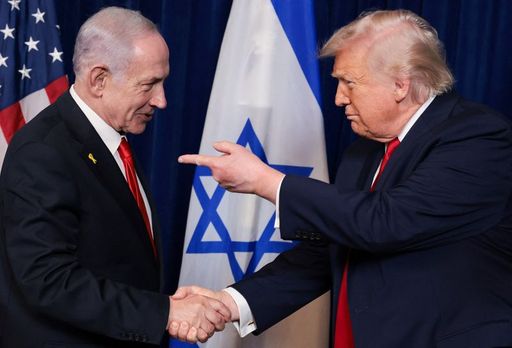
While Zaccara does not explicitly link Trump to Hegseth's positions, he notes that the US president is not “contradicting what is defined by these religious zealots because they are instrumental to his final objectives, and in line with Netanyahu's maximalist approach to the war”.
Besides Pete Hegseth, other prominent US politicians have echoed similar views, including influential pro-Israel Republican Senator Lindsey Graham and Mike Johnson, the Republican Speaker of the House of Representatives, who is second in the presidential line of succession after the vice president and would assume the presidency if the president were removed, died, or became unable to serve.

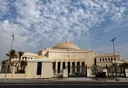
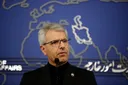
Mike Johnson described Iranians as followers of a “misguided religion,” a remark widely understood as referring to Islam, the country’s majority faith.
Meanwhile, Republican Senator Lindsey Graham characterised the confrontation as a “religious war,” arguing that Iran’s clerical leadership is driven by an ideology that seeks the destruction of Israel.
It’s considered “an expression of Islamophobia” common among the American far-right, implicating “the Christian core identity of the West,” says Falk in reference to Johnson’s “misguided religion” statement.
Many Iranians believe that religious rhetoric is just a cover-up for the West’s oil greed.
“They just cover it under the blanket of religion, it is not religion it is oil, and the threat they feel about big countries like us. They say religion so they can go with it and at least have some kind of support. At the end it is all about oil,” Fatemeh Karimkhan, a Tehran-based Iranian journalist, tells TRT World.
In another statement, Graham appeared to confirm Karimkhan's claim, saying, "When this regime goes down, we're going to have a new Middle East, we're going to make a ton of money”.
Clash of civilisations?
Regarding Johnson’s treatment of Islamic culture, Falk cites influential American scholar Samuel Huntington’s renowned thesis of 'The Clash of Civilizations and the Remaking of World Order,' which predicted that inter-civilisational warfare would ensue following a period of peaceful geopolitics after the collapse of the Soviet Union and the end of the Cold War.
“In this sense, Israel is a constituent element of the broadened vision of a Judeo-Christian West,” Falk says.
In Judeo-Christian thought, compared to Jews, Muslims are regarded as outsiders of Western civilisation.
Graham, after describing what’s happening in the Middle East as a “religious war”, also made an interesting statement, saying that what the US and Israel are currently doing against Iran “will set the course for the future of the Middle East for the next thousand years”.
“I have preferred to think of the Iran War as the extension of the inter-civilizational war that Israel has been conducting in Occupied Palestine on behalf of Zionist ambitions of regional hegemony, as well as expressive of the ideological geopolitics of the white Christian West,” Falk, the expert on international relations, tells TRT World.
Beyond the war with Iran, the divisions surrounding Israel’s genocidal war in Gaza also reflect what some scholars describe as a broader civilisational alignment, with many Western Christian-majority states backing Israel, according to Falk.
“This response to the Israeli genocide is not a matter of geography but of ethno-religious civilizational identity. How else to explain the support of Israeli genocide by such distant white Christian countries as Australia?” he says.
While many non-Western states wish to support the Palestinian cause through international law in pursuit of “a more democratic world order," they are also aware that “challenging the West by openly providing substantial military or economic assistance” to Palestinians would result in "self-destructive consequences”.
In this perspective, Iran has become a target of Western sanctions and other measures due to its anti-West stances, according to Falk.