 Sadiq S Bhat
US Treasury bonds are meant to be boring. Not anymore.
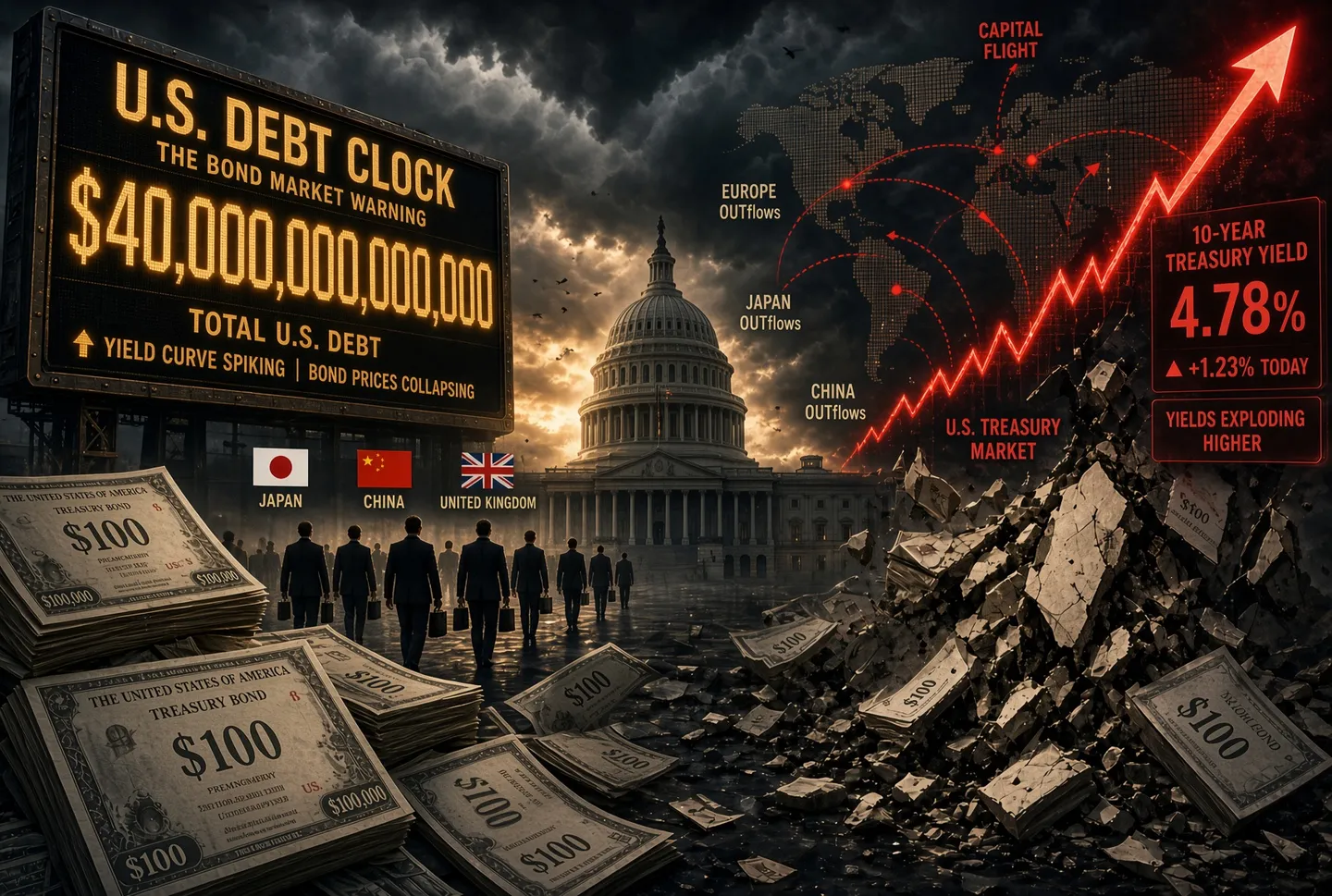
As Washington's debt climbs past a record $40T, some of America's biggest foreign creditors, Japan, China and the UK among them, have been pulling back as borrowing costs climb to their highest levels in nearly two decades.
Here's what's driving it, what the US is doing about it, and why it matters well beyond America's borders.
What are US Treasury bonds?
Treasury bonds are simply the US government's IOUs (I Owe You – a simple written acknowledgement that someone owes money, goods, or services to another).
Washington sells them to raise money it needs but doesn't have on hand, promising to repay them with interest. They come in different lengths. Bills are paid back within a year. Notes run two to 10 years. Bonds stretch out to 30.
Because the US has never missed a payment, these IOUs are considered among the safest investments on earth. That trust makes Treasuries a benchmark for global finance, influencing borrowing costs and asset prices far beyond the United States.
Pension funds, banks and central banks everywhere hold them, including in Japan, China and the UK, the three biggest foreign holders.
Here's how price and yield relate. Say a bond has a face value of $100 and pays $5 a year in interest, a yield of 5%. If investors sell that bond and its price drops to $90, the $5 payment stays the same, but it now represents a larger share of the new buyer's cost, pushing the yield up to about 5.6%.
So, when investors sell, prices fall, and yields rise. If those higher yields persist, Washington has to offer investors higher returns when it issues or refinances debt, pushing up its borrowing costs.
When investors buy, it works the other way: prices rise, and yields fall.
Why are foreign investors selling US bonds?
Foreign holdings of Treasuries fell again in June, new data show, led by Japan, the UK and China, the three biggest overseas holders. Japan and China had already sold heavily in March, offloading $47.7B and $41B, respectively.
It helps to be precise about who is actually selling, since official data groups together very different actors.
In Japan, most of the recent pullback is private money: insurers, pension funds and banks moving into Japanese government bonds now that domestic yields, after years near zero, are finally competitive with Treasuries.
The Bank of Japan is a separate story. Rising oil costs from the Iran war have widened Japan's trade gap and weakened the yen, forcing the central bank to defend the currency by drawing on its own dollar reserves, some of them parked in Treasuries, a policy decision rather than an ordinary investor's choice.
China's holdings, by contrast, are managed centrally by the state, so declines there reflect government reserve strategy rather than private investors changing their minds.
And some of the "UK" total is not British money at all: London is a global custody hub, so part of it belongs to funds based elsewhere that simply hold their Treasuries through UK accounts.
Behind the private selling sits a common driver.
As yields rose, foreign holders lost $142.1B in value on their existing Treasury holdings in March alone, a paper loss that has some investors wanting out.
Add growing unease about America's debt and inflation, and selling starts to look like the safer bet.
What is US government doing to prevent situation from escalating?
The Treasury's main tool is a bond buyback.
On August 19, US Treasury Secretary Scott Bessent said the department would more than double the size of these buybacks, from $2B to at least $4B per operation, running September 9 to November 4. The goal: buy up long-term bonds to bring yields down.
Washington has also stepped into currency markets to support the yen, which eases some pressure on Japan to sell Treasuries.
On Iran, talks continue but remain stuck on reparations demands rather than reopening the Strait of Hormuz, the real source of the oil-price problem.
Some analysts see the buyback as the Treasury doing what Fed Chair Kevin Warsh has been reluctant to: easing long-term borrowing costs.
Will Treasury's bond-buying programme be effective?
So far, not for long. Yields fell sharply right after the announcement, then crept most of the way back up within a day.
Joseph Brusuelas, chief economist at RSM US LLP, called it "a temporary salve to an open financial wound of our own making." He says the buyback can't offset America's debt, inflation and the huge borrowing needs of the AI boom, and makes the Fed's inflation fight harder.






The Treasury's own advisory panel has warned against using buybacks to manage the debt profile at all, saying new bond sales, not buybacks, should do that job.
Fixed-income manager Kelsey Berro summed it up to CNBC: lower yields "can't be sustained unless they're supported by the fundamentals." In short, it buys time, not a fix.
Is US facing the risk of bankruptcy?
Not bankruptcy in the usual sense, most economists agree.
Unlike a company, or a country that borrows in someone else's currency, the US borrows in dollars and controls the currency in which its debts are denominated. It can also raise taxes, cut spending, while the Federal Reserve can create dollar liquidity in a financial crisis. That's why a formal default is seen as unlikely.
But some experts use blunter language.
Johns Hopkins professor Steve Hanke and former US Comptroller General David Walker wrote in Fortune that America is already "insolvent," pointing to Treasury's own books: $6.06T in assets against $47.78T in liabilities.
The more realistic danger, says the Committee for a Responsible Federal Budget, isn't sudden default. It's slow decay: rising costs, shrinking options.
What factors have driven US debt?
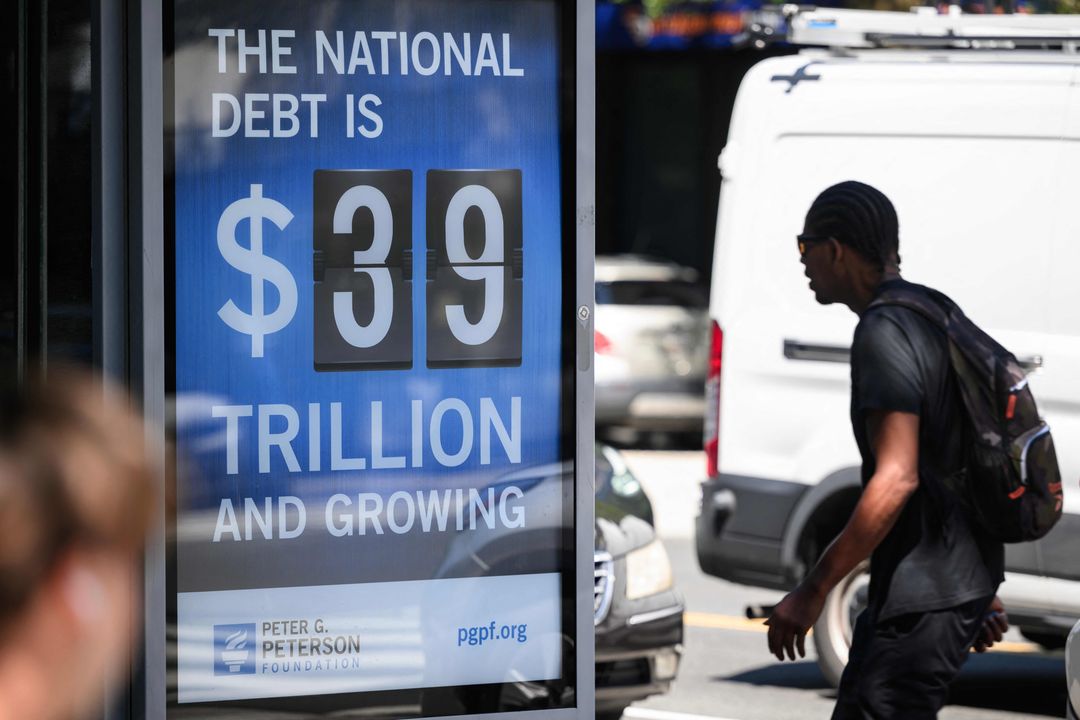
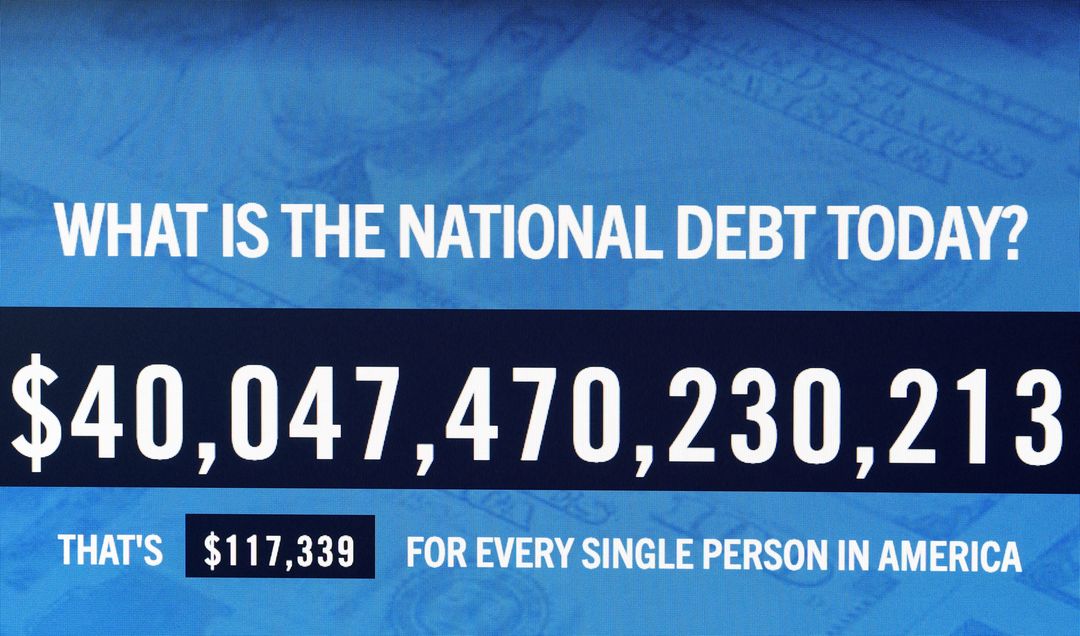
Total US debt hit $40.047T on August 18, more than double what it was in 2017. That $40T figure covers all federal debt, including money the government owes itself, for example, to the Social Security trust fund.
Strip that out and the debt actually traded in the market, the figure that matters for the sell-off, comes to roughly $32T. That's the pool of bonds investors buy, sell and price every day, the one behind the "$32T Treasury market", and the one Treasury's buyback programme is trying to support.
Four things drove the total to $40T, according to the Peterson Foundation.
Tax cuts, from the Bush years till now, have cost around $8.7T in lost revenue. Spending on wars and Medicare added roughly $7.6T since 2001.
Emergencies, the 2008 crash and Covid-19, forced trillions more in one-off spending. And an ageing population is drawing more from Social Security and Medicare every year, while interest costs climb alongside it.
That last point matters most now. Interest on the debt tops $1T a year, nearly triple what it was in 2020, and has overtaken Medicare as the government's second-biggest expense.
War spending in Iran and a wave of tariff refunds following the Supreme Court's strike-down of Trump's emergency tariffs have added more pressure. The debt could hit $63T by 2036, the CBO estimates.
Is war on Iran linked to bond sell-offs?
Yes, in a big way. When the US and Israel struck Iran on February 28, Treasury yields rose instead of falling, breaking the usual pattern where investors flee to bonds during wars.
The reason is oil. Iran threatened to block the Strait of Hormuz, through which a fifth of the world's oil passes. Prices spiked, up around 50% this year, reviving fears of inflation, which pushes yields higher.
That same oil shock hit Japan hard, widening its trade deficit and weakening the yen, adding to the pressure on Tokyo to sell Treasuries.
Yields have tracked the war's ups and downs ever since, falling on hopes of a ceasefire, rising again as reparations talks stall.
Some economists argue it's really the oil shock doing the damage, not the war itself.
How does it impact ordinary people?
Higher national debt could push up interest rates, making mortgages, student loans and borrowing for small businesses more expensive, according to a new report from the Conference Board, a nonprofit think tank.
Because Treasuries are the benchmark, this is not just a US problem. When American yields rise, they tend to pull other countries' borrowing costs up with them.
Higher US yields also pull money towards American assets and away from other markets, particularly emerging economies, which often have to raise their own interest rates or pay more to borrow simply to stop investors leaving for the US.
And since the dollar remains the world's reserve currency, any real loss of confidence in Treasuries would ripple through global trade, banking and the pricing of everything from oil to other countries' own debt.