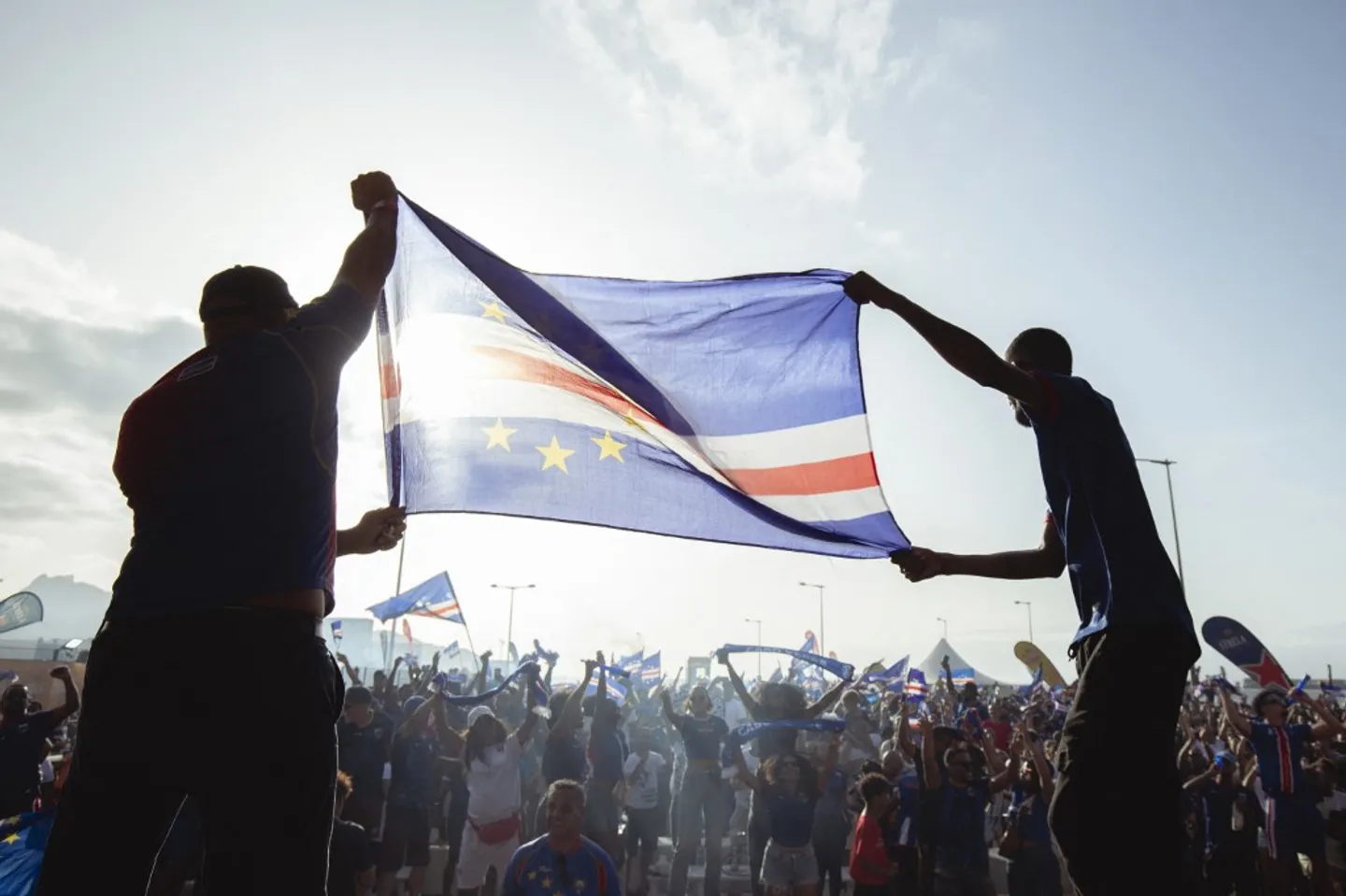
The tiny nation of Cabo Verde made footballing history on Monday when it secured a place in the FIFA World Cup 2026 – a momentous feat for a country celebrating its 50th anniversary of independence.
The Cabo Verde football team – known as the Blue Sharks – beat eSwatini 3-0 in an Africa qualifier. Following the match, the Blue Sharks coach ‘Bubista’ Brito said that "giving this happiness to these people is enormous".
An archipelago of 10 islands in the Atlantic Ocean, Cape Verde gained independence from Portugal in 1975 and first attempted to reach the 2002 World Cup in Japan and South Korea.
"It's a special moment in this celebration of the 50th anniversary of our independence," coach Bubista said.
"It's a victory for all the Cape Verdean people and, above all, a victory for those who fought for our independence."
Small is beautiful
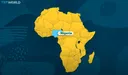
A tiny island country located in the Atlantic Ocean off the coast of West Africa, Cabo Verde takes up all of 4,033 km² in total, making it the smallest country to qualify in the history of the FIFA World Cup, dethroning Trinidad and Tobago, which had competed in 2006 in Germany. (For comparison, the Istanbul metropolitan area alone is over 5,000 km².)
As far as population goes, Cabo Verde is home to around 600,000 people, as per a 2022 census. Its victory against eSwatini has now made it the second least-populous nation at the World Cup.
Remember which was the World Cup’s least-populous nation back in 2018? If you said Iceland, you’d be correct. With a population just shy of 393,000 it is still the least-populous country that competed at the World Cup.
‘Um momento historico’
Why Portuguese? Because the archipelago was discovered by Genoese and Portuguese explorers in the mid-15th century. There were no indigenous peoples to decimate, but after the Portuguese settled on the islands, the colonisers prospered greatly from the Atlantic slave trade.
Cabo Verde citizens became frustrated with Portugal’s colonial rule that only took from the archipelago without giving much back. And even though Lisbon tried to pacify the residents by changing the islands’ status from colony to overseas province, it didn't work.

No longer a colony
In the mid-1950s, Cabo Verde and Portuguese Guyana banded together, forming the African Party for the Independence of Guinea and Cape Verde (PAIGC). PAIGC rebelled against the colonial rule of Portugal in 1961.
While Portuguese Guyana was able to declare independence in 1973 after an all-out war – with support from the then-USSR, with Portugal, it wasn’t until the end of 1974 that Cabo Verde was able to establish a transitional government and declare independence in July 1975.
Cabo Verde’s democracy ranks 38 out of 179 countries, according to V-Dem Democracy rankings (2024), making it the most democratic country in Africa.
‘No stress’: Cabo Verde motto a welcome mantra for tourists
According to a World Bank report from October 2025, “Since the 1990s, the country has made significant strides, largely due to the rapid growth of tourism, which constitutes 25% of its GDP”.
While highlighting tourism (+16.5% year-on-year on tourist arrivals) as a main source of income for the archipelago, the World Bank also mentions that "Service exports (+16.2% year-on-year) and private consumption (+7.3% year-on-year) remain the primary drivers of growth”.
According to the US State Department’s “2025 Investment Climate Statements”, Cabo Verde relies heavily on “foreign investment, imports, development aid, and remittances”.
The report notes that this is mainly because the island nation has limitations geographically: Cabo Verde suffers from a “low proportion of arable land, little rainfall, lack of natural resources, territorial discontinuity, and small population’.
Who’ll play against the Blue Sharks now?
Cabo Verde’s Blue Sharks now have to wait until December 5, to find out who their group-stage opponents will be, to be drawn in the US, one of the hosts of FIFA World Cup ‘26, along with Canada and Mexico.
FIFA President Gianni Infantino, who is Swiss-Italian, congratulated the Cabo Verde football team with a video response taped in Portuguese, calling it a “historic moment” for the archipelago’s residents.