 Johnny Ward
You might be wondering how I ended up here as your presenter. I’m Johnny Ward, from TRT World’s travel show Where To Next.
I first made my name in the travel world by visiting every single country on Earth — all 197 of them.
Along the way, I combined that with climbing the Seven Summits, including Everest, reaching both the North and South Poles, and taking on a few long-distance challenges by land and sea.
But these days, I’m happy to slow things down. And that’s what brings me to Türkiye — a country that’s easy to travel, but incredibly rich in history, culture, and everyday life.
I’m in Mugla, launching from Babadag, one of the best-known paragliding take-off points in Türkiye.
From up here, you understand immediately why this region draws people in.
The coastline is dramatic, the water is intensely blue, and just beyond the beaches there’s a depth of history and local culture that often gets missed when people only think of this area as a summer escape.
Paragliding here is also far more structured than many people might expect. Flights are booked in advance with licensed pilots.
There’s a clear system, professional facilities, and a routine that’s designed to keep things safe and predictable — even though the experience itself feels anything but predictable.
From there, it’s a short drive to Fethiye, and this is where the postcard version of the Turkish coast starts to make sense.
The sea here isn’t just “blue.” It’s a shade that looks almost unreal, and it’s one of the reasons this part of Muğla has been a holiday destination for decades.
Fethiye is also practical: it has an international airport nearby, and it’s set up for travellers.
There’s a wide range of places to stay, from private villas and boutique hotels to large resorts and quiet retreats in nature.
But what’s interesting is that, in this region, luxury doesn’t always come with noise or spectacle.
Often it’s quieter than that — thoughtful service, good design, and a sense that time is meant to slow down. The atmosphere encourages you to stop rushing, even if you arrive with a busy mind.
In the evenings, the marina becomes the natural place to wind down. There’s a soft breeze, boats settling in for the night, and that calm you only really feel in coastal towns once the heat of the day begins to lift.
I found a small local spot known for fresh orange juice — and in Mugla, that’s not a small detail. This region is famous for citrus. Oranges and lemons grow well here, and fresh juice is often offered as part of everyday hospitality, sometimes even before you’ve asked for it.
It’s simple, but it tells you something about the place: what grows locally shapes what’s served, and what’s served shapes how visitors remember it.
Alongside the juice came the kind of small plates you see all over the Turkish coast — light snacks, pickles, cheese. It’s not a formal meal, but it’s a familiar rhythm: something fresh, something salty, something that suits the pace of a warm evening by the sea.
Sitting in the marina, it’s impossible not to notice how central boats are to life here. And in Fethiye, they’re not just decoration.
Boat tourism is one of the region’s main industries. It supports local jobs — from skippers and mechanics to suppliers, cooks, and tour operators — and it brings visitors deeper into the coastline than roads can.
It’s a different way to travel — not rushing to “see everything,” but moving with the coastline, letting the sea set the pace.
And if you want to understand how locals eat in Fethiye, there’s one place that explains it better than any guidebook: the fish market.
In the evenings, the market becomes a social space. Families come here, couples come here, groups of friends come here.
You choose seafood directly from the vendors — fish, mussels, whatever looks best that day — and then nearby restaurants prepare it for you. The system is straightforward, and it keeps the connection between fishermen, sellers, and cooks very direct.
I went for mussels, along with the kind of supporting cast that turns seafood into a full coastal meal: olives, simple dips, local cheeses, and bread. And when it arrived, it tasted exactly like it should — fresh, salty, and honest.
I stopped for ice cream at a small shop that takes pride in how it’s made — using fresh ingredients, sourcing locally, and avoiding artificial syrups or fruit pastes. And on a hot coastal night, it’s exactly what you want: something cold, rich, and uncomplicated.
From Fethiye, the road continues west toward Datca, a peninsula where the Aegean and the Mediterranean feel like they meet. It’s often described as one of Mugla’s quieter corners — more rugged, less developed, and full of bays and small inlets.
Datca has also become a hotspot for water sports, especially those driven by wind — windsurfing, kitesurfing, and increasingly wing foiling.
Wing foiling is still new for many people, but the concept is simple enough: a wing in your hands, a board beneath your feet, and a hydrofoil under the water that lifts you above the surface once you gain speed.
It looks like flying, but on the sea. It takes skill, balance, and a lot of practice — and in the right conditions, it turns the water into a kind of runway.
And then there was another side of Sarp that people might not expect: cooking.
In Datca, where life is built around nature and local produce, cooking doesn’t feel like a hobby. It feels like part of the lifestyle.
But Mugla isn’t only about coastlines and summer nights. It also carries stories that are more complicated — and more human.
I also visited Kayakoy, an abandoned village near Fethiye. Walking through it is quietly unsettling. The stone houses are still there, but life is gone. And to understand why, you have to step back into early 20th-century history.
This village is closely associated with the population exchange between Greece and Türkiye in the 1920s. It’s not a place you visit for entertainment. It’s a place you visit to remember that travel can educate, not just distract.
It’s also a reminder that this coastline is layered. Yes, it has famous beaches and world-class scenery. But if you look beyond the obvious, there’s a deeper story: communities built around the sea, crafts and food shaped by local land, traditions of hospitality, and histories that still leave their mark.
Exploring Mugla’s rivers, coasts and wetlands
Water shapes everything here: the coastline, the inlets, the wetlands, the agriculture, the food, and the way people make a living.
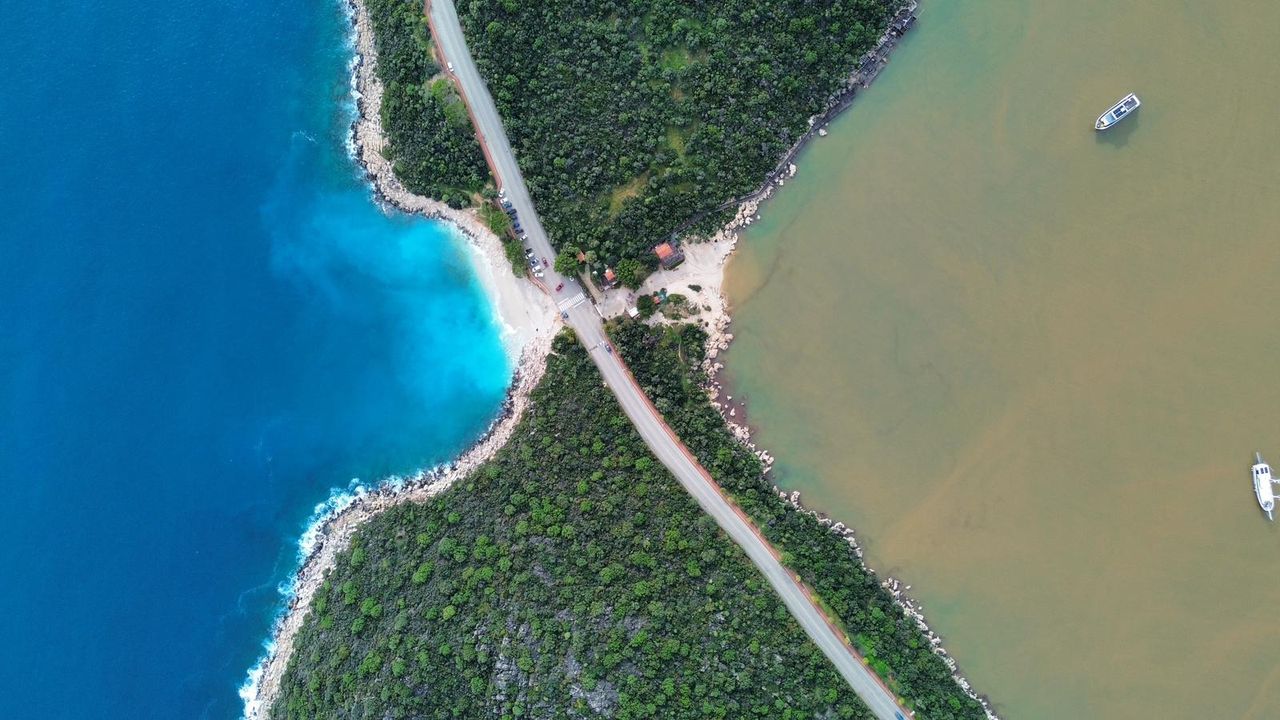
That’s why I’ve come to the Azmak River, near Akyaka. This is one of those places that locals talk about with quiet pride — a clear, spring-fed river that winds through dense greenery before opening out toward the sea.
Kayaking here is gentle but immersive. The current is calm, the water is remarkably clear, and the riverbanks are thick with trees that lean toward the water.
It’s no surprise people sometimes call this area the “Amazon” of Türkiye — not because it’s the same landscape, but because it has that feeling of being surrounded by living, breathing nature.
The paddle route is around eight kilometers and typically takes about two hours — longer if you stop, drift, and let the scenery do its job. By the time you reach the end, you’re close to Gokova Gulf, where wind and water sports are part of daily life.
Akyaka is especially known for kitesurfing, thanks to reliable winds that attract both beginners and professionals.




After the river, I head into Akcapinar, a small village nearby that’s become famous for something unexpectedly specific: local food — and, in particular, blue crab.
The blue crab is caught locally, often from the waterways behind the village, and it’s served fresh — sometimes the same day.
It’s sweet, delicate, and surprisingly light — the kind of seafood that doesn’t need anything more than careful cooking and maybe a bit of lemon.
And in a region where visitors often expect grilled meat or heavier dishes, this is a reminder that coastal Türkiye has its own culinary identity — shaped by wetlands, rivers, and the sea.
I make my way to Dalyan, about half an hour from Dalaman Airport. Dalyan is famous for its canals, its protected landscapes, and its mix of nature and ancient history — all in one small area.
I set off by boat along the river, passing through tall reeds that form a kind of natural corridor. It’s quiet in a way that feels deliberate, as if the town has agreed not to disturb its surroundings too much.
And then, suddenly, history appears.
High up on the rock face are the Lycian rock tombs, carved directly into the cliffs.
They’re often described as “king tombs,” but in reality, these were typically reserved for wealthy and powerful figures — the ruling class, people who could afford a burial site that doubled as a public statement.
What makes the tombs striking is their design. They resemble temple façades, and that style reflects the centuries-long cultural blending across this region.
The area is associated with ancient Caria, and, like much of western and southwestern Anatolia, it was influenced by Greek culture through trade, migration, and conquest — including during the period after Alexander the Great passed through the region.
Today, the tombs are protected as part of a broader archaeological landscape, and the restrictions on development are one reason Dalyan still feels relatively unspoiled compared to many coastal destinations.
From there, we head toward the ancient city of Kaunos, just across the canal from Dalyan.
Getting there involves a climb, and like many people, I accept the more comfortable option when it’s offered — because the real goal is to arrive with enough energy left to actually appreciate what you’re about to see.
Kaunos was once a major port city, and that fact is hard to imagine at first because today it sits inland. But the landscape has changed.
Over centuries, river sediment built up, the coastline shifted, and what was once a busy harbor gradually became part of a delta system. It’s one of those reminders that nature redraws maps over time, even when human history stays in stone.
Walking through Kaunos, you move across layers: remnants from the Carian period, then Roman structures, and later Byzantine traces. There are baths, walls, and churches. In some places, excavations have revealed remarkably preserved mosaics — geometric and floral patterns made with small stone pieces, still visible after nearly two millennia.
And then there’s the theatre.
Ancient theatres are often the most emotionally direct spaces in a ruined city, because you can immediately understand how they functioned. You picture the crowd, the sound, the performances, the social life. Even weathered and quiet, the structure still holds its purpose.
Leaving Kaunos, we return to the waterways — and this is where the word “Dalyan” starts to make sense in a practical way.
Along the canals, you can see traditional fish traps — fixed net systems used to catch fish as they pass through narrow channels.
It’s an old technique, tied to how people here have always lived with the wetlands. The traps aren’t just a curiosity; they represent livelihood, local knowledge, and a food culture built directly from the water.
And speaking of food, I’m reminded again that Turkish cuisine is much wider than the stereotypes.
On a hot day in Dalyan, heavy meals aren’t what you crave. So I visit a local family-run restaurant known for Aegean herbs and vegetable dishes — simple cooking that’s built around seasonality.
I meet Sidki, who helps explain what’s on the table. He tells me the focus here is the Aegean approach: wild greens, herbs, olive oil, vegetables, and straightforward techniques.
It’s his mother who cooks — and in family restaurants like this, that usually means the food carries years of experience, not trends.
One dish that stands out is stuffed courgette flowers. They’re picked early in the morning, when the blossoms are still fresh, and sold in local markets before the day gets too hot.
They’re delicate, and when cooked well, they’re the kind of food that feels both traditional and surprisingly refined.
There’s also a fried version — crisp, richer, and served with yogurt and garlic. It is balanced within a meal that mixes fresh and fried, cool and warm.
Another dish is artichoke heart cooked with orange juice and zest — a combination that sounds unusual until you taste it. The citrus lifts the artichoke, giving it a clean, tangy finish that fits the climate and the region’s love of bright flavors.
It’s food that tells you where you are: a place shaped by water, salt, herbs, and citrus.
And to understand Dalyan properly, you also have to understand what it protects.
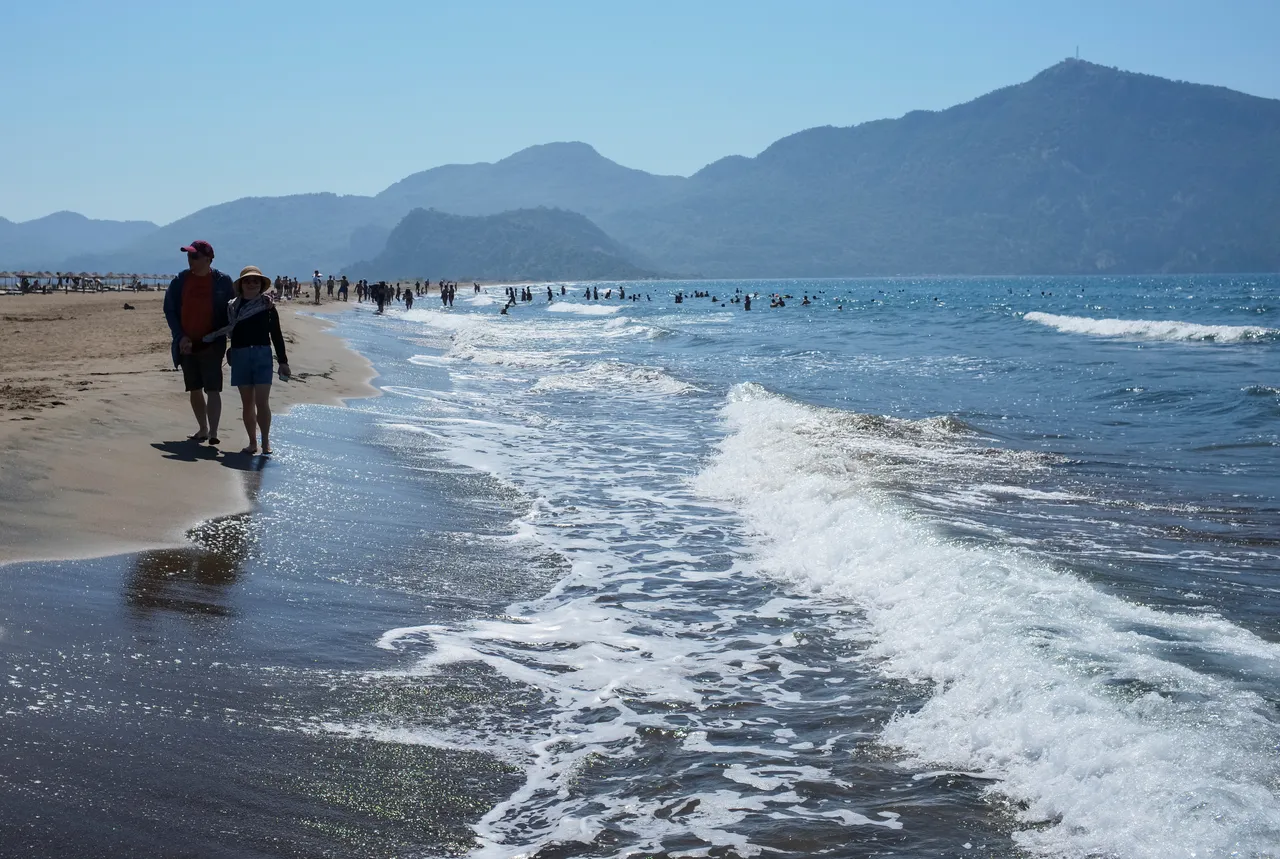
Just outside town is Iztuzu Beach, one of the most important nesting sites for loggerhead sea turtles, known as Caretta caretta. This is where the conversation shifts from travel as pleasure to travel as responsibility.
I visit the sea turtle rehabilitation and rescue center, and I meet an expert named Fatih. He explains why this coastline matters: İztuzu has been protected as a special environmental area since 1988, and that protection is one of the reasons turtles still return here.
Loggerhead turtles migrate long distances. When sea temperatures rise in summer, they come to these waters to feed, mate, and prepare for nesting.
At night, when the sand cools, female turtles come ashore, dig nests, and lay their eggs. It’s a process guided by instinct — and it’s extremely vulnerable to light, noise, and development.
Today is particularly special because a turtle rescued just days earlier is ready to return to the ocean. She had come ashore to nest but was found with a serious injury to her shell.
After imaging, treatment, and repair, she’s now strong enough to be released — and because it’s still nesting season, there’s a chance she may lay eggs again.
Moments like this put everything else into perspective. This isn’t nature as a backdrop. It’s a living system — and tourism only works here because protection comes first.
And with that, it’s time for me to say goodbye to Mugla.
These days have been shaped by water in every form — rivers, wetlands, deltas, coastlines — and by the people who live alongside them, cook from them, and protect them.
Like that turtle returning to the sea, it’s time for me to move on too.
Check out the full episode for more: