 Zulal Sema
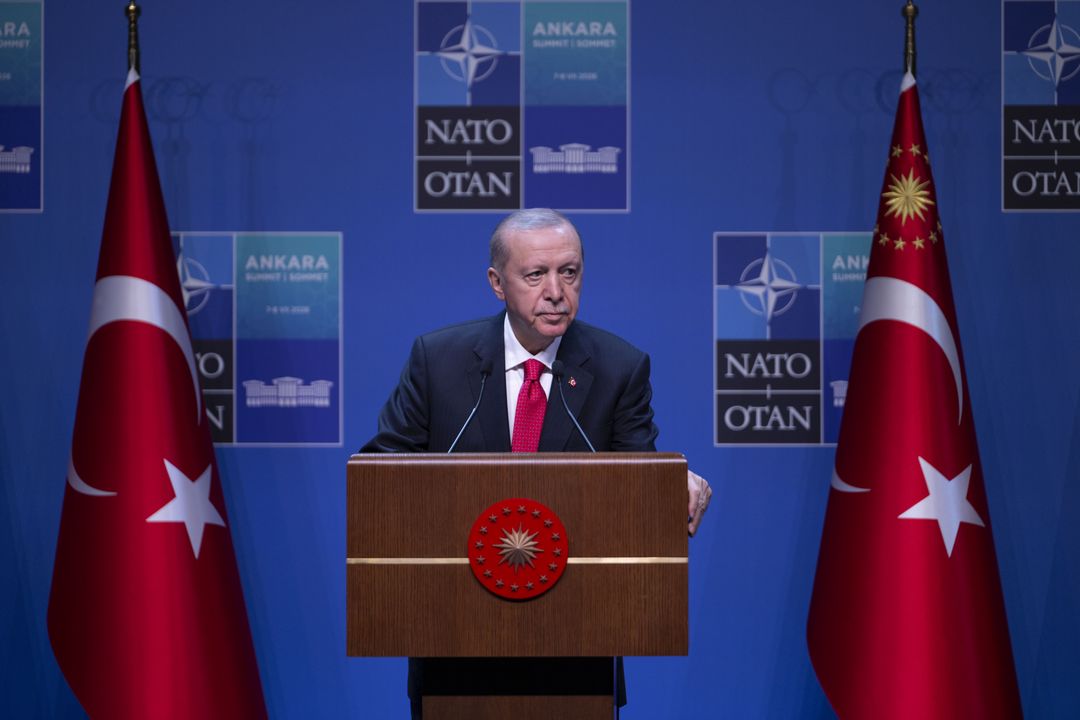
As world leaders arrived at the 2026 NATO Summit in Ankara, they were not met by an ordinary diplomatic fanfare.
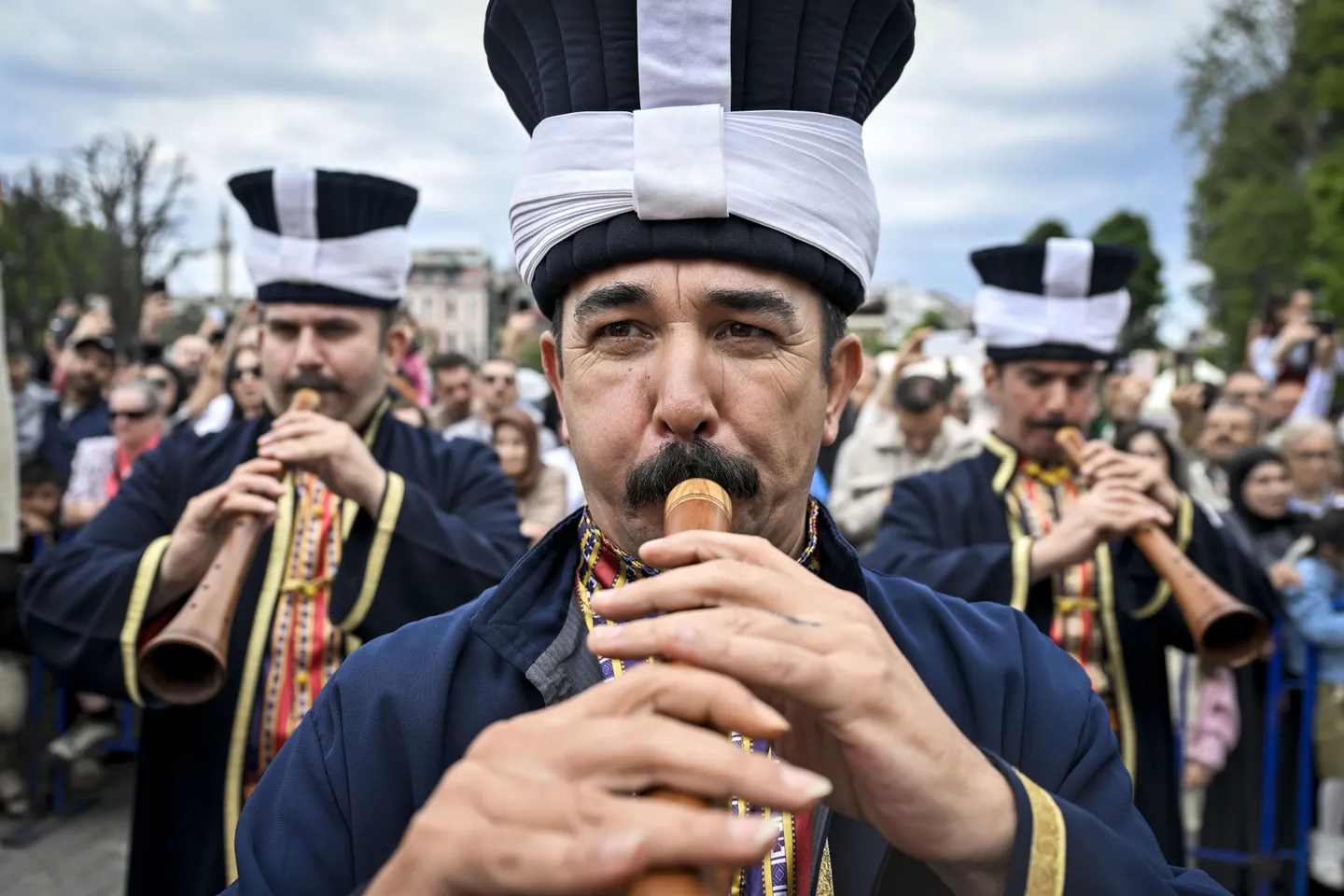
They were greeted by symbolic sounds: drums, zurna, and Mehter's ceremonial rhythm, kept alive by the Turkish Armed Forces.
Derived from the Persian word mihter, meaning “great,” “sublime,” or “elder,” the term was used in the Ottoman Empire for high-ranking servants, state officials, and musicians before it became associated with the empire’s famed military bands, also known as mehteran or mehterhane.
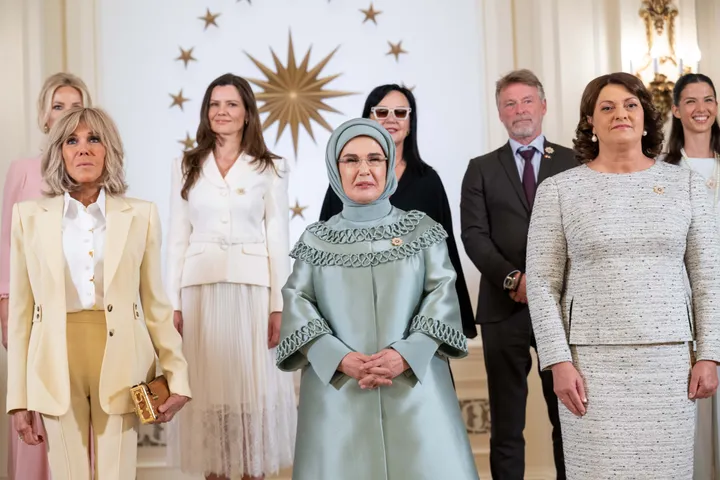
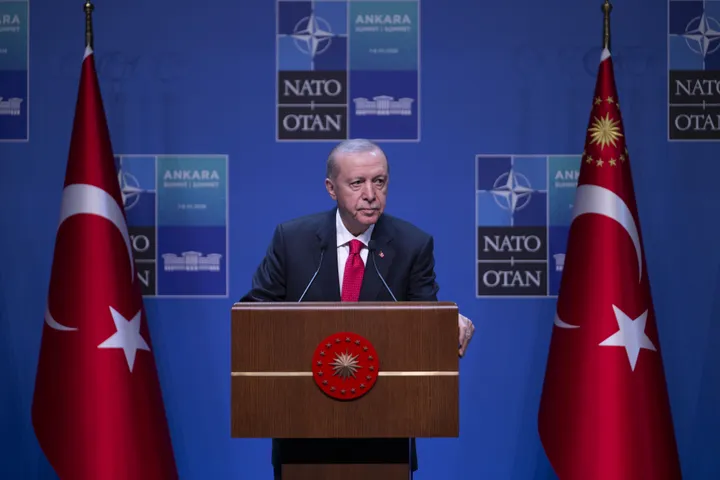
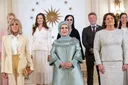
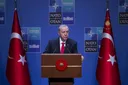
At the Presidential Complex, where President Recep Tayyip Erdogan welcomed heads of state and government from the 32-member alliance, the reception's distinctly Turkish character quickly drew online attention.
US President Donald Trump appeared to enjoy the performance, giving a thumbs-up as Mehter played.
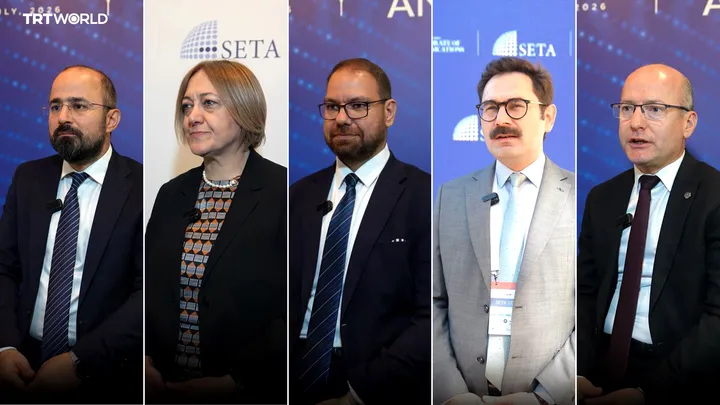
Mesut Hakki Casin, a faculty member in international law at Yeditepe University, says the ceremony’s effect was evident in Trump’s reaction.
“Trump instinctively saluted the Turkish soldiers,” Casin tells TRT World.
“I do not know whether everyone noticed it, but it was impossible not to be moved by that grandeur and majesty.”
Casin notes Trump’s remarks at NATO Summit, where he said he might not have attended if it weren't in Türkiye, hosted by his “friend' Erdogan. For Casin, these moments weren't just ceremonial.
“All of this has been achieved through Türkiye’s strategic statecraft and patience,” he says.
Another moment, when Greek Prime Minister Kyriakos Mitsotakis was reportedly welcomed with the Ottoman march “Ceddin Deden,” sparked discussion in the Greek media about the piece’s historical symbolism.
President Erdogan later said Western leaders had praised the ceremony, with some reportedly telling him during handshakes: “It was truly magnificent; we know your Janissaries.”
Symbiotic value of Mehter
“The ceremony worked because it brought together different layers of Türkiye’s military identity into a single frame,” Casin says.
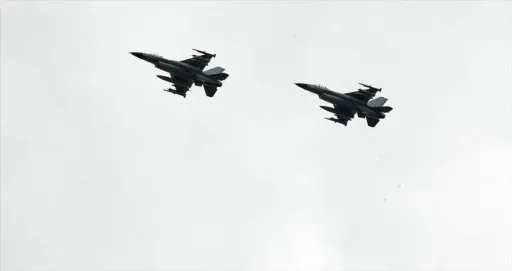
The Mehter symbolised the Ottoman military tradition; the Presidential Guard embodied the discipline of the Republic; and the cavalry unit, followed by the Turkish Stars overhead, carried the scene from imperial memory into the modern age.
“It gives our soldiers great strength and courage,” he says.
“When you bring together the Ottoman army, the Mehter and the Republican military tradition, every head of state passing through that ceremony was affected by it.”
For Ahmet Tarik Caskurlu, a military historian and PhD candidate in the Defence Studies Department at King’s College London, the roots of this tradition reach far beyond the Ottoman period in Turkic history.
“We see elements resembling Mehter as early as the Huns, in what was known as the tug ensemble,” Caskurlu tells TRT World, referring to the horsetail military standard used in early Turkic state tradition.
“Through percussion and wind instruments, they coordinated the battlefield — signalling when cavalry should charge or retreat, or which flank should advance or withdraw. It also raised the morale of their own troops while weakening that of the enemy.”
Caskurlu also points to NATO’s Atlantic Community Series, produced in the 1950s to introduce member countries to one another. Even then, he says, Türkiye’s Ottoman military heritage was part of how the alliance presented the country.
In the episode on Türkiye, the narrator says the empire is “commemorated in national museums and by groups of bandsmen and troops that revive the marches of the once-dreaded Janissaries,” adding that Türkiye’s cavalry had been “the shock troops of the empire for hundreds of years.”
For Caskurlu, the reference shows that Mehter was not revived solely for the Ankara Summit; it had already appeared in NATO’s own early visual memory of Türkiye.
Although Türkiye has been a NATO member since 1952, making it one of the alliance’s earliest members, it has often held a distinctive position within NATO as a country on the alliance’s south-eastern flank, at the intersection of Europe, Asia and the Middle East.
For some foreign observers, this may have made the ceremony appear more striking. The soldiers’ uniforms, the Ottoman ceremonial style, the disciplined formation, the music, and even details such as moustaches and grooming all contributed to a visual language rooted in Ottoman military culture.
While such a display can sometimes be interpreted through the lens of “neo-Ottomanism,” Caskurlu suggests that it can also be read differently: not as mere political performance, but as a sign of being at peace with historical roots and of treating them as a source of cultural and strategic value.
Casin adds that Mehter also carried a spiritual dimension. “It has a prayerful structure,” he says, referring in part to the gulbang — a collective prayer or invocation traditionally recited in Ottoman military and Sufi culture to seek divine support and raise morale.
“The marches conveyed love for Allah and the message that this was the army of Islam. When all these codes are considered together, Mehter is an inseparable part of the heroic Turkish army, whose history stretches back more than two millennia.”
“Every state’s culture and history are a source of pride,” Casin says, comparing Mehter to the use of bagpipes in Scottish and Irish traditions or other forms of national military music.
“The Turkish nation also has a great army rooted in history, and that army has a very historic military music tradition.”
NATO is not a cultural organisation; it is a military alliance. By choosing Mehter, Türkiye placed its own military memory inside the protocol of a contemporary security summit.
It welcomed allies, but it also reminded them that Türkiye’s defence identity did not begin in 1952, when it joined NATO. Its roots go much deeper.
“It has, first of all, a psychological and aesthetic effect,” Caskurlu says.


“It is a tremendously powerful march. Throughout history, it impressed both Turks and their enemies — positively for the Turks, negatively for their opponents — creating a sense of awe, majesty and fear.”
Designed for open spaces, armies on the move, state ceremonies and moments of confrontation, the Mehter was never meant to fade into the background. Its instruments — the kos, davul, zurna, nakkare, zil and boru — were built to be heard from afar, carrying across crowds, military camps and battlefields.
Even the rhythm many listeners recognise as “dum tek tek” carries meaning. In Turkish and Middle Eastern percussion traditions, such syllables are used to teach, remember and feel rhythm: “dum” evokes the deep, heavy beat struck at the centre of a drum, while “tek” suggests a sharper sound produced at the drum’s edge or by the clash of cymbals.
“On the battlefield, it also provided communication. It brought our side to courage and effort, while demoralising and frightening the other side,” Caskurlu tells TRT World.
Many societies used drums and instruments in battle, he notes, but Turks turned this into a moving, organised band structure. The Ottoman Empire later refined it into one of its most recognisable military institutions.
Sound beyond borders
“This is not a state that was founded after the Napoleonic revolutions with no past,” Caskurlu says.
“It is a state whose roots go back thousands of years in both Islamic and Turkish history. If soldiering is a profession, if soldiering is a way of life, this is a state that wrote the book on it.”
The summit’s timing made the symbolism even sharper.
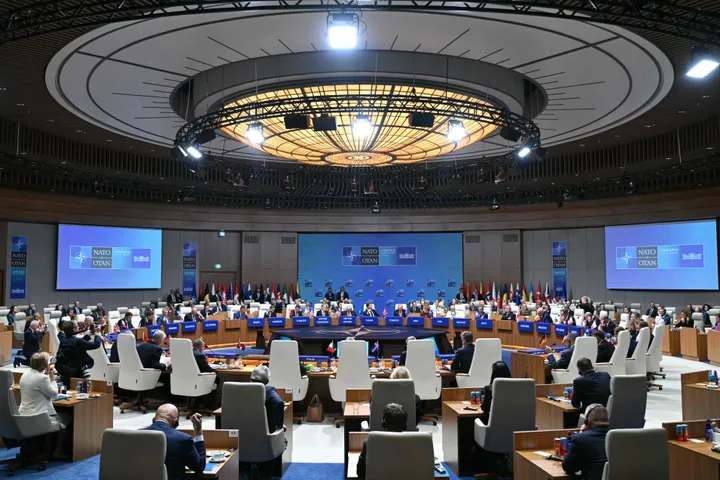
NATO leaders gathered in Ankara at a moment when the alliance was debating defence spending, military modernisation, Ukraine, European security and the future of burden-sharing.
Türkiye, positioned between Europe, Asia and the Middle East, has long emphasised its strategic role in the alliance. At this summit, that role was not expressed only through speeches and meetings. It was also expressed through sound.
Associated with the Ottoman military order, it was sidelined during the reforms of Mahmud II after the abolition of the Janissary corps and later replaced by European-style military bands.
Yet the tradition was never fully erased. It was revived in the late Ottoman period and later re-emerged in the Republican era as a powerful symbol of Turkish military heritage.
Caskurlu delves into an archival layer of this story.
The music performed today as Mehter often includes 19th-century marches composed for military bands, while the older Mehter repertoire has been preserved through scholarly and archival work.
One of the key references in this field is Haydar Sanal’s 1964 study, which documented the original repertoire in notation.
In 1978, Kudsi Erguner recorded Mehter music for UNESCO; the recording was later released in France in 1990 under the title Les Janissaires / The Janissaries: Musique Martiale de l’Empire Ottoman, performed by the Ensemble of the Army of the Republic of Türkiye.
Caskurlu notes that Türkiye has used Mehter beyond borders for cultural diplomacy. During NATO missions in Bosnia and Kosovo, Turkish military units performed Mehter concerts, showcasing it as both a military symbol and cultural bridge.
“It has been used as an element of cultural diplomacy,” he says. “Now, one could say that this has been taken to a higher level.”
There is also a European dimension to Mehter’s story. Ottoman military music shaped the European musical imagination for centuries.
The “alla turca” style, associated with the percussive power and marching rhythm of Janissary music, left its mark on European classical music and on military band traditions.
The sound travelled through instruments as much as melody. Cymbals — the Turkish zil — along with bass drums, triangles, and bell-like percussion instruments entered European orchestras and military bands through fascination with the Ottoman-Janissary sound.
Mozart used Turkish-inspired colour and percussion in works associated with the Janissary style, while later European composers drew on alla turca patterns, military rhythm and the dramatic force of marching percussion.
By the time Beethoven composed his Ninth Symphony in 1824, percussion elements once heard as “Turkish” or foreign had already been absorbed into the Western orchestral imagination.
Scholars continue to debate whether Beethoven was directly referencing Ottoman military music or a broader European military style, but the sound world of cymbals, bass drums, bells and marching rhythm had already travelled far from its Ottoman source.
Caskurlu describes Mehter as “the father” of later marching band traditions in Europe. In that sense, the sound that welcomed NATO leaders in Ankara was not only a memory of Turkish military tradition.
It was also part of Europe’s own musical history — a rhythm that had travelled through battlefields, imperial ceremonies, orchestras, military bands and, eventually, modern popular music.
This is what made the reaction to “Ceddin Deden” particularly telling. The march is one of the best-known works in the Mehter repertoire, and its title evokes ancestry and inherited strength.
For some observers, hearing it during the arrival of a Greek leader naturally carried historical echoes.
But Caskurlu suggests that such moments can also be read with a degree of humour within an alliance framework. Türkiye and Greece, after all, share centuries of intertwined musical and cultural memory.
“The power of Mehter lies precisely in that tension. It is ceremonial, but never empty. It is music, but also memory. It is performance, but also protocol.”
At the Ankara Summit, Mehter did what it has done for centuries: announced its presence. This time, the battlefield was diplomacy. The audience was NATO.
The message from Ankara was clear: Türkiye stands within the alliance with its own history, voice and rhythm.