 Murat Sofuoglu
The EU's decision to lift sanctions on two prominent Russian oligarchs has raised questions about the credibility of its sanctions regime, as the reasons for their removal bear little relation to the grounds on which the restrictions were originally imposed.
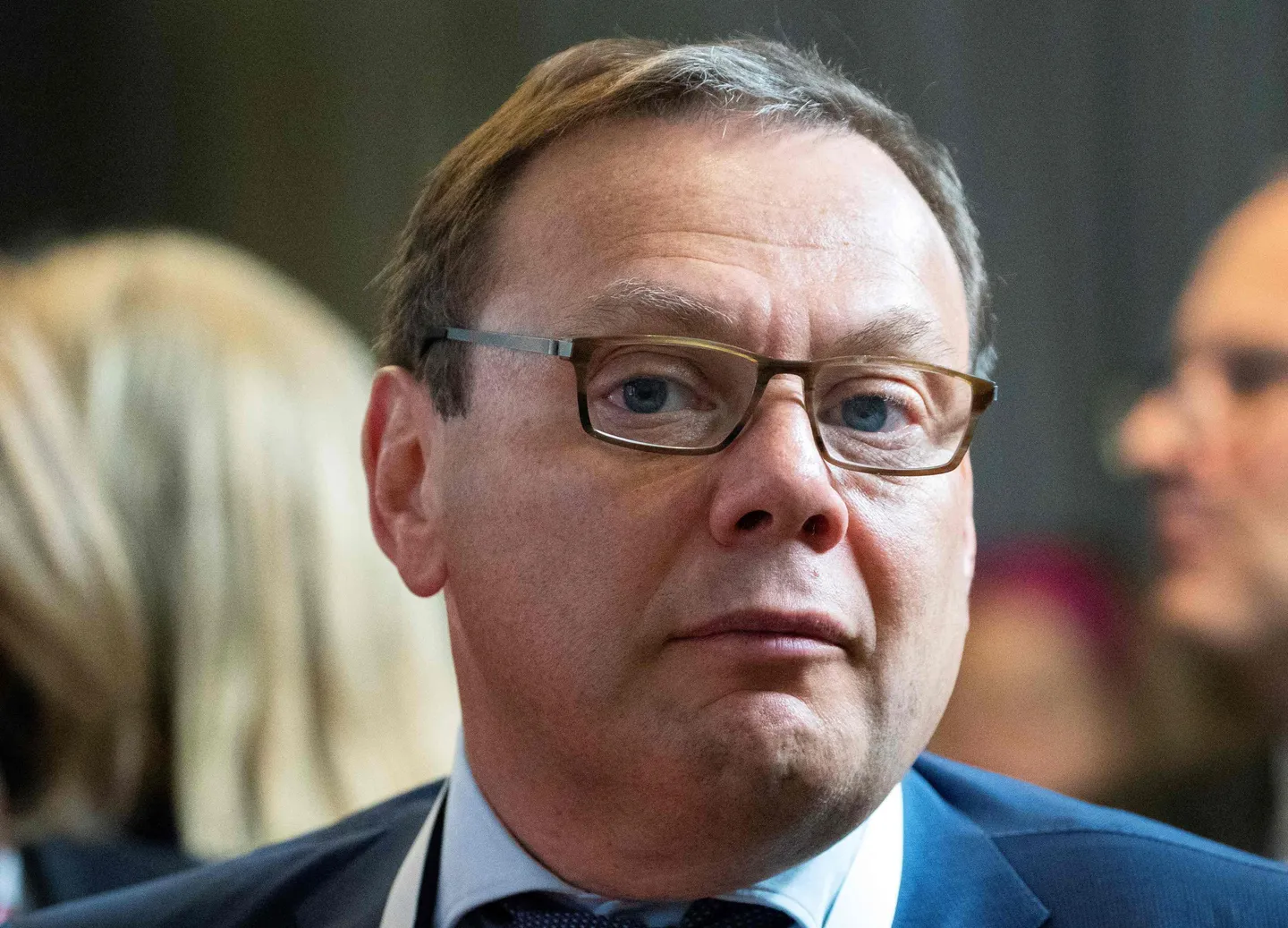
Alisher Usmanov, a Russian-Uzbek billionaire, and Mikhail Fridman, a Russian businessman with Israeli citizenship, were removed from the EU sanctions list after pressure from France and Luxembourg, even as Brussels renewed restrictions on roughly 3,000 other individuals and entities linked to Russia's war in Ukraine.
Luxembourg had sought Fridman’s delisting amid a multi-billion-dollar legal dispute over his frozen assets.
Fridman has brought a roughly $16 billion arbitration claim against Luxembourg over assets frozen under EU sanctions. Luxembourg reportedly feared that removing Usmanov while keeping Fridman sanctioned could weaken its legal position in the dispute. Slovakia also supported Fridman's removal.
With the renewal of the EU's wider Russia sanctions requiring unanimous agreement from all 27 member states, the demands became part of a broader compromise.
In return for the two delistings, the bloc secured a three-year extension of sanctions on thousands of other individuals and entities, rather than the usual six-month renewal.
The agreement preserved the wider sanctions regime but raised questions about whether individual sanctions could increasingly become bargaining chips for member states pursuing their own national interests.
The decision followed difficult negotiations among EU member states, exposing divisions over the use of sanctions in disputes unrelated to Russia's war in Ukraine.
Experts warn that France and Luxembourg's efforts to secure the delistings for their own national interests could undermine the integrity of the 27-member bloc's sanctions regime and set a precedent for similar demands in the future.
While the decision should not be "read as a broader softening of the EU position on Russia" because the sanctions regime as a whole remains in place, the more difficult question is "what kind of precedent this creates," Linas Kojala, CEO of the Geopolitics and Security Studies Centre, tells TRT World.
“When exemptions appear to be driven by political or bilateral considerations, that risks weakening the logic of the whole system. If individual sanctions start becoming bargaining chips in other disputes, then the message is that there may be political ways around the system. That is not helpful for the credibility of sanctions,” Kojala says
Ukraine, which has opposed easing sanctions on Russia and individuals linked to the Kremlin, condemned the EU's decision as "shameful and unjustifiable". Moscow, meanwhile, demanded the removal of sanctions on all Russian businessmen and citizens.
"Moscow is celebrating because it got what it wanted: a sense of impunity, the humiliation of the EU, and division among Europeans," Ukrainian Foreign Minister Andriy Sybiha said on X.
EU ‘credibility’ on the line
The EU's decision to delist the two Russian oligarchs also exposes a "broader contradiction" in Brussels' approach towards Moscow, says Kojala, as European officials and analysts increasingly warn of the possibility of a direct confrontation with Russia.
While European leaders describe Moscow as a major security threat, increase defence spending and prepare for a prolonged confrontation , the possibility of politically negotiated exemptions from Russian sanctions sends "an ambiguous message", according to Kojala.
He acknowledges that removing the two oligarchs from the sanctions list is unlikely to significantly benefit the Kremlin's finances or expand its access to European markets and technology. The bigger issue, he argues, is the EU's credibility in the eyes of both domestic and international actors.

"Sanctions matter not only because of the assets they freeze, but because they create an expectation that restrictions will remain in place as long as the reasons for imposing them remain," he says, referring to the original grounds for imposing sanctions over Russia's war in Ukraine.
At the heart of the controversy is the rationale behind the EU's decision.
Sanctions are generally lifted when the grounds for imposing them no longer apply. In the cases of Usmanov and Fridman, however, the reported reasons for their removal appear unrelated to the original sanctions criteria.
“Their delisting is unrelated to the reason the sanctions were imposed on them,” Oleg Ignatov, a senior analyst on Russia at the International Crisis Group, tells TRT World.
Like Kojala, Ignatov believes the decision could set a problematic precedent for future EU sanctions policy.
The decision also raises questions about whether well-connected oligarchs such as Usmanov and Fridman, who have influence in European capitals, can secure exemptions while others with less political leverage remain subject to sanctions.
“This sets a certain precedent—that sanctions can be lifted without strong reasons related to ending the war. But there have been various precedents like this in the past, it’s just that the figures involved here are quite prominent,” he says.
Yet the controversy also highlights the complexities of decision-making within the 27-member bloc, where competing national interests must be reconciled before sanctions can be renewed.
“Relations within the EU are complex, and decisions are made through compromise. As you can see, in this case, it took EU member states several rounds of difficult negotiations to make this decision,” says Ignatov.
Latvia initially opposed the delisting of Usmanov and Fridman but eventually withdrew its objections after the EU agreed to extend sanctions on roughly 3,000 other individuals and entities for another three years.
Despite the questions surrounding the compromise, the lengthy negotiations also demonstrate "how difficult it is to lift sanctions", according to Ignatov.
"If, for example, there is talk of exchanging some sanctions for certain steps by Russia toward a peaceful settlement, even in that case, it will be difficult to reach a decision within the EU."
While the compromise may raise concerns about the EU's credibility among outside observers, Ignatov argues that such negotiations are an unavoidable feature of the bloc's decision-making process.
"This is exactly how decision-making works in the EU, and there is no other way," he says.
"The extension of sanctions is approved by consensus, and any country can raise objections, which will require negotiations."
But does this mean that not only the delisting of oligarchs, but much of EU politics, is shaped by deals negotiated behind closed doors?
"Well, that's politics," Ignatov responds.