 Muhammed Hasanov
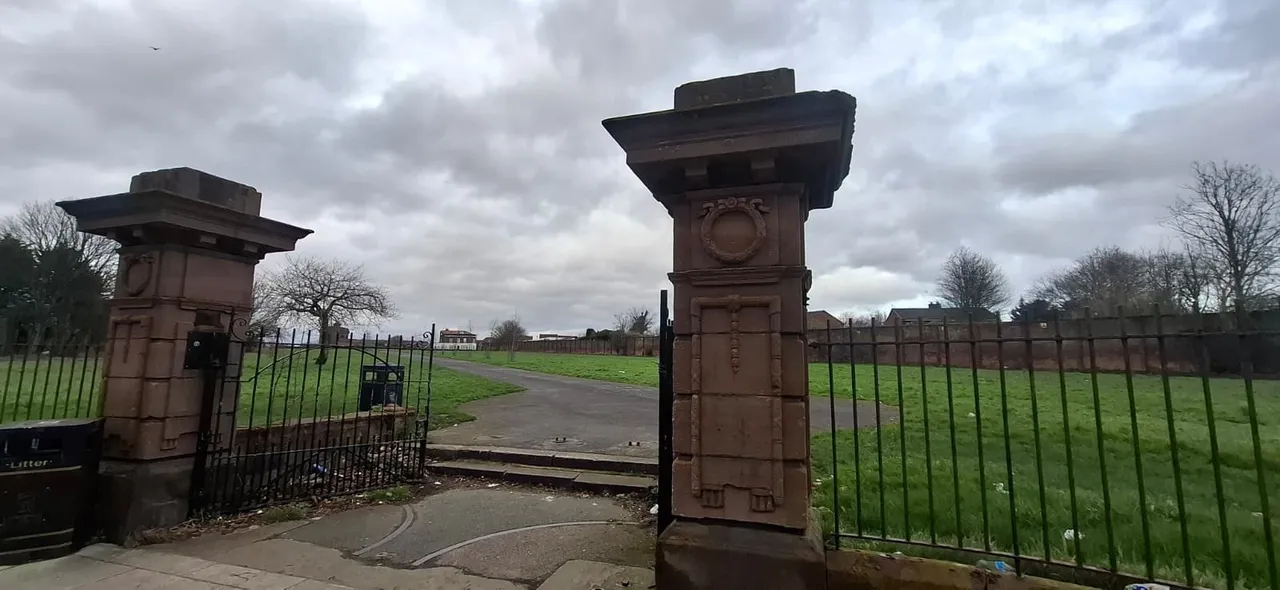
Hidden beneath the grass of Liverpool’s Grant Gardens, now a quiet public park passed daily by hundreds of locals, lies a remarkable and largely forgotten story: the graves of Ottoman sailors and the ambitious plan of a young Turkish diplomat to establish a Muslim cemetery in the British city.
And it was by chance that I stumbled upon this dusty page of history that links this city to one of the most tragic chapters of Türkiye’s past.
All of this began in 2021 during the COVID lockdown, when I was staying at home in Liverpool working on my master’s thesis.
Unable to do much during the day, I started browsing the British Newspaper Archive out of curiosity, searching for any references to Ottomans who had visited Liverpool.
During one of these searches, I came across the name of a Turkish sailor, Hasan Mehmed.
The newspaper provided a detailed account of his burial in the Liverpool necropolis. This immediately caught my attention, as I knew that Liverpool necropolis is now Grant Gardens, which was only a two-minute walk from my accommodation.
I was struck by the realisation that beneath the ground I walked on so frequently lay Ottoman sailors, yet there was no existing literature on them.
After the lockdown ended, the first thing I did was visit the Liverpool Record Office to investigate these unknown Turkish soldiers who were buried thousands of kilometres away from their homeland.
I felt a strong sense of responsibility to bring their story to the attention of both the local Muslim community and the wider Turkish public.
The story began in the mid-19th century, during the Crimean War (1853–1856), when the Ottoman Empire and Britain fought as allies against the then-Czarist Russia.
During the 1850s and 1860s, Ottoman ships frequently visited major British ports such as Liverpool, Glasgow, and Portsmouth for the installation of guns and machinery.
Among them was the frigate Geyvan-i Bahri, which arrived in Liverpool on June 19, 1856 and remained there for just under a year.
It seems that, due to the Turkish-British alliance at the time and the frigate's status as “possibly the first Turkish man-of-war that ever entered the Mersey”, Geyvan-i Bahri caught the attention of the local press, and thus comprehensive accounts of the frigate exist.
The frigate consisted of 360 sailors, including 25 naval officers, and the primary purpose of its visit was to be fitted with a screw propeller.
During its stay, the vessel faced significant hardship, as a considerable number of crew members were diagnosed with cholera.
The first casualty aboard the frigate occurred the very next day after it docked at Liverpool, when 32-year-old Hasan Mehmed died on board.
He was buried in the Liverpool necropolis at a religious ceremony attended by the frigate’s imam, the Turkish consul Pierre Mussabini, a lieutenant, and sixteen Turkish sailors.
Over the next 11 months, 28 more Ottoman soldiers died and were buried alongside Hasan Mehmed.
According to Liverpool's official burial records, the Ottoman soldiers were buried side by side in an area of approximately 20 square meters, which the Ottoman government purchased.
It is necessary here to clarify the reason for choosing Liverpool necropolis as a burial ground for these Turkish soldiers.
The necropolis was Liverpool's first purpose-built, open to all religions, and was therefore regarded as a more suitable place for memorials for civic reasons.
Furthermore, security was stronger than in other cemeteries, as a night watch was stationed on the site, surrounded by enormous walls and accessible only through an iron gate.
After the departure of the frigate on May 9, 1857, the Turkish graves were forgotten both by the locals and the Ottoman authorities until the last decade of the 19th century.
The men and their mission
The turning point occurred with the emergence of the Liverpool Muslim Institute (LMI) in 1887 under the leadership of Abdullah Quilliam, an Anglo-Muslim solicitor and reformist.
It is essential to understand that in the last quarter of the 19th century, Liverpool became one of the world's busiest ports due to the advent of steamships.
As commerce and shipping with the Middle East, India, and Africa grew, Muslims from every corner of the world visited the city in search of opportunities.
Eventually, some of these Muslims died in the city, and because their families were far away, the responsibility of their funeral was undertaken by Quilliam, and his community became sufficiently organised to undertake a number of Muslim burials.
Despite the existence of other nearby cemeteries, such as Everton and St. James’s, both within walking distance of the Muslim Institute and already containing Turkish graves, Liverpool necropolis remained the primary burial ground actively used by the LMI.
This was possibly because of its proximity to Quilliam’s mosque at 8 Brougham Terrace, opened in December 1889 and functioned as the main centre of Muslim worship in Liverpool, or due to the presence of the Turkish military graves from the Crimean War.
Quilliam became aware of the importance of the Muslim cemetery in enhancing the image of Islam in Liverpool and his reputation as the leader of Muslims in England. He subsequently planned to purchase land and establish a Muslim cemetery in the city.


With funds from Indian Muslims, he established the Crescent Printing Works at 32 Elizabeth Street in 1891.
Beginning early 1893, Quilliam used this printing house to publish a monthly journal, The Islamic World, a weekly review, The Liver, and a weekly newspaper, The Crescent.
Quilliam, through these newspapers, defended the Ottoman Empire’s image in the British press.
The efforts of Liverpool’s Muslim community to establish a dedicated burial ground coincided with the tenure of young Mehmed Kamil, who was specially appointed by the then-Sultan as Ottoman Consul General in Liverpool to establish close ties with the Muslim community there.
Kamil quickly established himself as a visible and active figure, distinguishing himself from previous Ottoman consuls by regularly attending weekly meetings and celebrations at the LMI.
He was frequently invited multiple times to Quilliam’s summer residence in Onchan, Isle of Man. Notably, he controversially issued a marriage certificate for Quilliam and his second wife, Mary Leon, despite objections from the Ottoman Embassy.
This act, which the Embassy declined to recognise, was an effort by Mehmed Kamil to legitimise the union under Islamic law and reinforce Quilliam’s loyalty to the Ottoman Empire.
Echoing his earlier actions in Batavia, where he had arranged for the children of local Muslim elites to study in Istanbul, Mehmed Kamil also encouraged Quilliam’s eldest son, Ahmed Quilliam, to pursue his education in the Ottoman capital.
In April 1899, the Sultan approved this initiative, granting Ahmed a scholarship to study at Galatasaray High School, one of the Empire’s most prestigious institutions for training future civil servants and diplomats.
What next?
In August 1899, the Liverpool necropolis was closed after the number of interments crossed the 80,000 mark, far exceeding its capacity and leading to unsanitary conditions.
Local residents lodged numerous complaints over a foul smell, which they believed was coming from the cemetery.
Due to his close personal ties with Quilliam, Mehmed Kamil was fully aware of the Liverpool Muslims’ concern over the closure of the burial ground. He had also researched well about the Turkish sailors who were buried there.
The same year, Kamil prepared a comprehensive report for the Sultan regarding the closure of the Liverpool Necropolis.
In the report, Kamil linked the establishment of a Muslim cemetery in Liverpool to both religious considerations and the political interests of the Ottoman Empire.
In terms of the religious consideration, according to Mehmed Kamil, there were “forty-four existing Muslim graves in the cemetery, more than half belong to Ottoman Navy soldiers who died as martyrs while in a foreign land, reaching the rank of martyrdom and divine forgiveness”.
After attaching religious sanctity to these deceased Turkish soldiers, Kamil also warned the Sultan that it was a well-known practice to throw unclaimed bones into a well by the municipality.
Therefore, he suggested, “acquiring a suitable piece of land nearby and turning it into a cemetery”, and transferring the remains of the aforementioned martyrs there.
Despite Kamil’s attempt to establish a Muslim cemetery, his request went to the Sultan unheeded.
The most likely explanation is financial: the Ottoman economy was strained by the capitulations and had recently suffered a significant blow from the war with Greece in 1897, which had further weakened its already fragile state.
The following year, in 1900, he followed a bureaucratic course and repeated his request to the Ottoman ambassador in London, Anthopoulos Pasha.
This time, possibly realising that the Ottoman authorities were unwilling to commit substantial funds, Kamil limited his proposal to purchasing a small piece of land outside Liverpool and transferring the graves of the deceased Ottoman soldiers there, without mentioning his original plan to establish a Muslim Cemetery in Liverpool.
In this second attempt, he succeeded in attracting the attention of the Foreign Minister Ahmed Tevfik Pasha, who suggested that Kamil first attempt to convince local authorities to allocate new graves for each martyred Ottoman soldier, in exchange for removing the existing ones.
If this were not feasible, Pasha recommended purchasing a small plot of land for the Ottoman martyrs.
However, this plan, too, did not succeed, as the Liverpool city council informed Kamil in August 1900 that a viable solution could only be found once the Corporation officially authorised the removal of the bodies.
After Kamil’s departure from Liverpool, concern about where the Muslim deceased would be buried gradually faded from the Liverpool Muslim’s public agenda.
Until 1914, to show respect for the relatives of those buried in the Liverpool necropolis, the corporation maintained the graves in their original state. Ultimately, on April 22, 1914, the grounds were officially inaugurated as a public park, renamed Grand Gardens.
Today, efforts to restore the cemetery have been revived. Following these findings, the matter was formally communicated in March 2023 to the then Turkish Consul General, Seyfi Omur Sayin.
With his close support, the proposal to erect a memorial for these Ottoman soldiers was subsequently brought to the attention of Alan Sheldon, Head of Bereavement Services at Liverpool City Council, in March 2024.
At present, the case remains under consideration by Liverpool City Council.
The proposed memorial would not only serve as a gesture of respect for the Ottoman soldiers buried thousands of kilometres away from their homeland, but would also stand as a testament to the presence of Muslims in Liverpool predating Abdullah Quilliam.