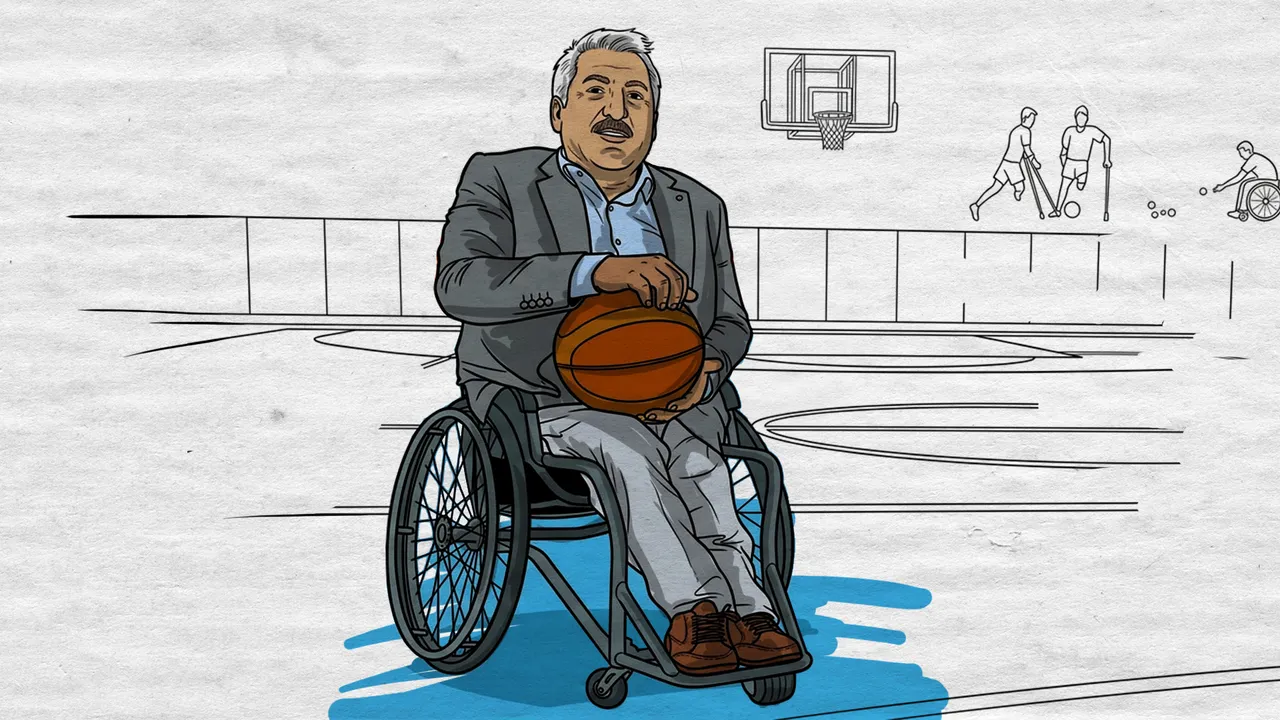
Serdar Yildirim grew up at a time when polio was still affecting children across Türkiye.
“I was born in 1971, and between 1965 and 1985 there were polio cases in the country”, Serdar, president of the Sanliurfa Disabled Sports Club, tells TRT Español. “It was especially common in southeastern Anatolia.”
He contracted the disease when he was just a year and a half old. At the time, polio - a highly contagious virus that attacks the nervous system and can lead to permanent paralysis, respiratory failure, or even death - was still at one of its most severe stages worldwide.
Serdar survived, but the aftermath shaped his entire childhood. Access to education was difficult, yet he never gave up. As a teenager, he came to learn that sport was more than physical activity - it was a refuge. By the age of 25, he had founded the Sanliurfa Disabled Sports Club.
What began as a wheelchair basketball team gradually expanded to include table tennis, weightlifting, archery, wrestling, and amputee football.
Under his leadership, the club has produced athletes who have won titles in both Türkiye and Europe, including the U22 Wheelchair Basketball Championship in Italy (2018), as well as arm-wrestling victories in Moldova (2024) and Kazakhstan (2023), alongside multiple national titles.
“Being able to positively impact people’s lives gave me real happiness,” he says. “It made me believe I should keep going and stay persistent, no matter the difficulties.”
Today, Serdar has become a reference in sport for people with disabilities, especially for young people seeking opportunity and direction.
A childhood shaped by barriers
Raised in a large family in southeastern Türkiye, Serdar says his disability was initially misunderstood. “They thought it was a wrongly administered injection,” he recalls, referring to the paralysis caused by polio, which was only later properly diagnosed.
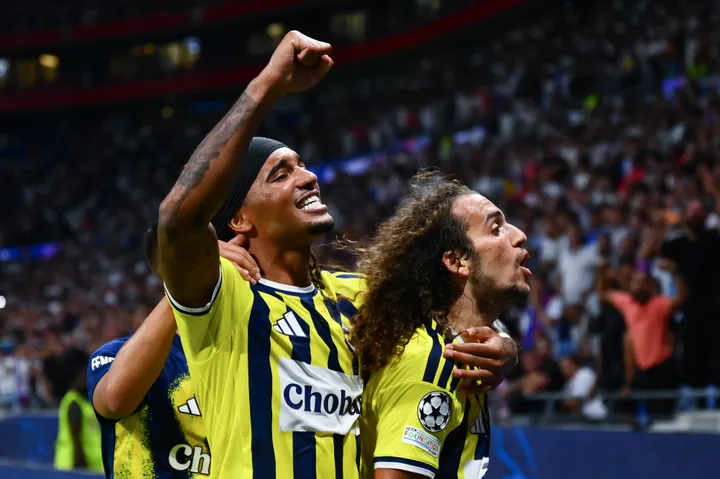
Growing up with limited financial means and no access to proper treatment or social support, he says he was essentially “left to fate”. Still, he was never excluded from daily life, playing with other children, even adapting football games to his condition. Around this time, TV first entered his home—and with it, his love for the club, Fenerbahce, was born.
But education proved to be a major struggle. Health issues and distance prevented him from attending regular school and he was later rejected from a boarding school in Şanlıurfa. “They told me I couldn’t go because I was disabled,” he says. With no other option, his father taught him at home and eventually he learnt to read.
His sporting journey also came to an abrupt end at 14, after surgery removed his left kneecap, leaving his leg stiff and forcing him to use crutches. “Leaving sport was deeply painful for me,” he recalls.
Even so, he later completed his education externally, attending primary, secondary school before finishing his exams at high school.
An inclusive club
His education eventually led to a job at the Sanliurfa Health Directorate, where he worked in the malaria department. But everything changed in 1997 after discovering a local disability association. “Seeing children with disabilities brought back my own childhood pain and strengthened my determination to do something,” he recalls.
Together with friends, it led to the group founding the Sanliurfa Engelliler Spor Kulubu in 2001.
“At first, I was only a founding member and could barely take part because of work pressure,” he explains. “They wanted to form a wheelchair basketball team, but they couldn’t afford the wheelchairs.”
Financial difficulties nearly stalled the project. But the following year, due to the insistence of then-president Ibrahim Tapsik and several friends, Serdar took over as club president and things began to change.
The club secured sports wheelchairs, entered a basketball team into the national league and gradually expanded into table tennis, football, weightlifting, and shooting – steadily building an inclusive sports hub.
“In these sports, we’ve produced champions of Türkiye, Europe, and even the world,” he says. “We don’t only work with athletes with physical disabilities, but also with athletes with Down syndrome and visual impairments.”




Among the athletes he highlights are Ali Aslan, 20, a champion in the 100m and 400m; Suleyman Aslan, 16, a promising wheelchair basketball player; and Mehmet Cetingoz, 31, a veteran athlete.
The challenges
Today, Serdar says the biggest challenge remains funding and access to equipment. “Athletes struggle to get the materials they need because these sports are expensive and high-quality equipment is usually imported, which increases the financial burden,” he explains.
Still, he believes Türkiye has made significant progress in infrastructure, awareness, institutional backing, and sponsorship. While the country has athletes competing at world level, he notes that the number of people with disabilities is also high - and sport remains one of the most effective tools for social, psychological and physical rehabilitation.
As such, he believes the state should play a stronger role by driving revenue streams for disability sports and that large budgets of professional football clubs could help bolster this progress. He suggests making it mandatory for clubs to establish disability sports divisions.
This, he says, would “create a qualitative leap” and produce more elite athletes. Clubs such as Fenerbahce, Galatasaray, and Besiktas already have such programs, but many others do not. “We would see many more world champions emerge,” he says.
Overcoming adversity
After nearly 25 years of service to his community, Serdar says more than 200 people with disabilities have passed through the club, with over 150 licensed athletes and 10 national team members.
“We became the club that produces the most young athletes in Türkiye,” he says. “At every stage, we’ve contributed players to youth national teams.”
He adds that nine wheelchair basketball players reached the national team, while others moved on to major clubs.
One of the most striking cases is Ali Kabakulekler, 27, born with spina bifida -a congenital condition affecting spinal development. Doctors once told his family he would be bedridden for life. Yet with the club’s support, he became an athlete within a few years and went on to captain Türkiye’s U22 wheelchair basketball team, winning European gold in Italy (2018) and a world silver medal in Canada (2017).
“Seeing him wear the national jersey with the crescent and star after such a diagnosis is one of my greatest rewards,” Serdar says.
He also points to Abdulsamet Ocakoglu, 25, born with a congenital deficiency in his right arm. After a childhood spent in isolation, he became a world arm-wrestling champion in Moldova in 2024.
Both athletes were trained at the club from a young age - something that resonates deeply with Serdar. “When I see them on the international stage, it takes me back to my own childhood. I feel pride and happiness seeing people with disabilities competing internationally, instead of facing the hardships we once did,” he adds.
At times, balancing work at the club and raising his three children: Ibrahim, Ilhan, and Anas, he has questioned whether the sacrifices were worth it.
“Yes, in some ways I failed as a father,” he admits, “but thank God my eldest son is a successful businessman, my middle son is a police officer, and my youngest is at university. I believe I was compensated with a good family for the time I dedicated to this path.”
Still, Serdar’s biggest dream remains unchanged: to see disability sports become more visible and widely followed.
“I don’t want matches played in front of just three or five relatives, but in front of full stands,” he says. “If I leave this world before seeing full stands in Şanlıurfa, something in my heart will remain unfinished. My dream is for stadiums filled with fans who come for the spirit of sport - not out of pity.”
This story was first published on TRT Español.