Behind the Screen: The Invisible Hand Shaping Popular Cinema
Have you ever noticed how seamlessly many Hollywood blockbusters blend spectacular action with a strong sense of American patriotism? For decades, audiences largely assumed this was simply part of a successful entertainment formula. Films such as Transformers, The Avengers, and Top Gun were seen as the products of creative writers, directors, and studios seeking to captivate mass audiences.
But what if some of the most influential forces shaping these stories existed outside Hollywood altogether?
Theaters of War, inspired by the investigative work of Dr. Matthew Alford and Tom Secker in their book National Security Cinema, explores the relationship between the American national security apparatus and the entertainment industry. The film examines how government agencies have participated in the development of film and television narratives, raising important questions about artistic independence, public perception, and state influence.
The Reality of Military Entertainment
For many years, agencies such as the Pentagon and the CIA characterized their involvement in Hollywood as largely technical in nature, limited to providing equipment, locations, expertise, or assistance in achieving realism.
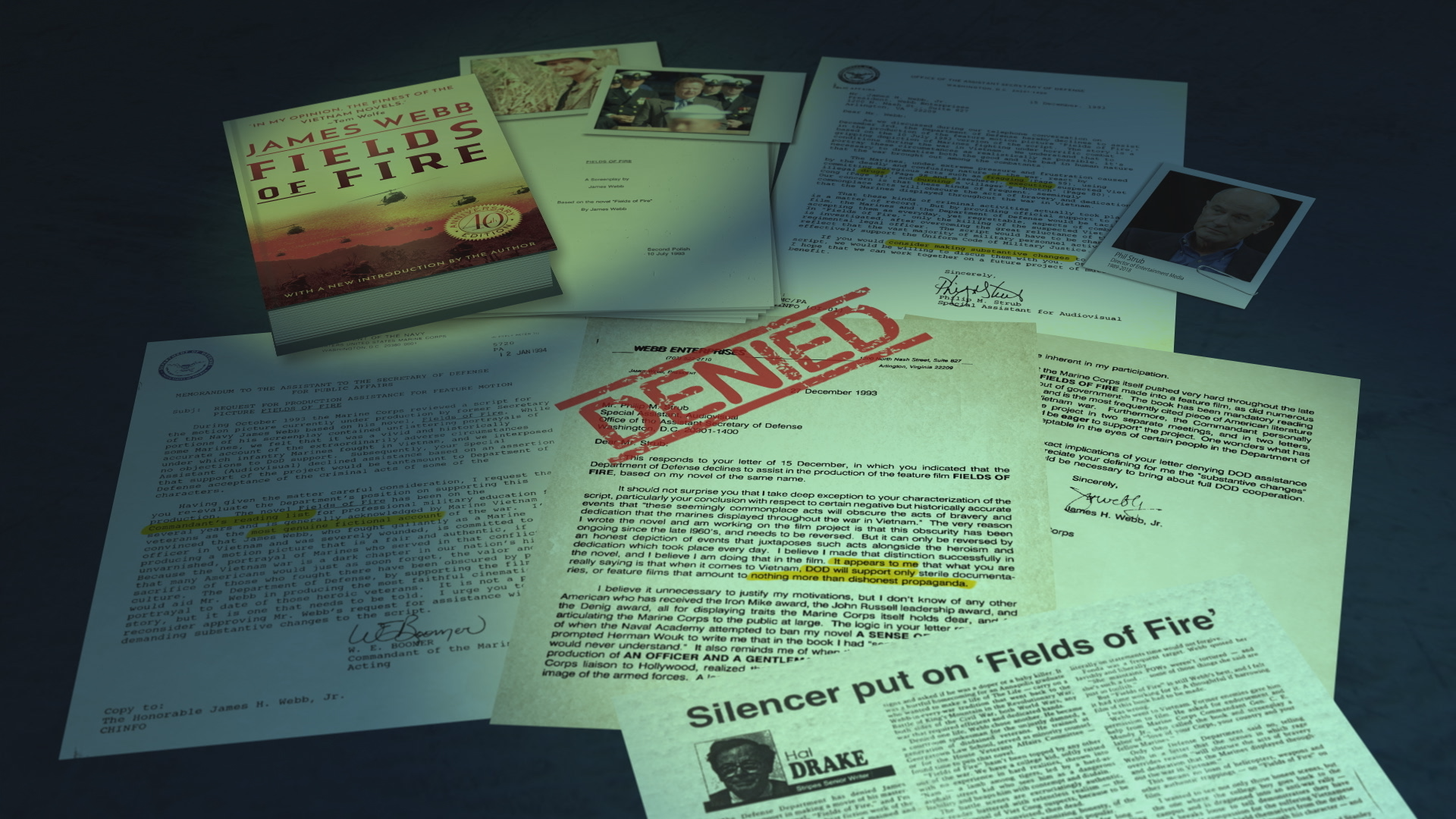
Research conducted by Matthew Alford and Tom Secker paints a more complex picture. Drawing on thousands of pages of documents obtained through the Freedom of Information Act (FOIA), including internal correspondence, production records, and script reviews, they argue that government agencies have influenced hundreds of films and television productions over several decades.
When filmmakers seek access to military assets such as aircraft, naval vessels, military bases, or active-duty personnel, scripts may be reviewed by government representatives. According to the evidence presented in the film, productions are sometimes asked to make changes before assistance is granted. This process can influence how military institutions, intelligence agencies, and historical events are portrayed on screen.







[NOTE: Theatres of War available until July 27, 2026.]
From Entertainment to Public Perception
The documentary examines changes requested during government script reviews and their wider implications. The film shows how these changes can include removing references to controversial military or intelligence operations, revising historical events to emphasize particular perspectives, and portraying military and national security institutions in ways that support recruitment and public relations goals. Films such as Zero Dark Thirty and Black Hawk Down are explored as case studies of how cooperation between filmmakers and government agencies can influence public perceptions of warfare, intelligence activities, and foreign policy.
Why This Matters
Public discussions about propaganda often focus on misinformation, social media, or digital manipulation. Less attention is given to entertainment media, despite its enormous cultural influence.
Films do more than tell stories. They shape collective memory, reinforce assumptions, and help audiences make sense of historical events. Because entertainment is consumed voluntarily and often emotionally, its messages can be especially powerful.
Theaters of War approaches these questions through documentary evidence, interviews, and archival records. Rather than relying on speculation, it examines the documented interactions between government agencies and the entertainment industry, inviting us to consider how narratives are constructed and whose interests they may serve.
At its core, the film raises broader questions about transparency, artistic freedom, and democratic accountability. If governments participate in shaping the stories a society tells about itself, where should the line be drawn between cooperation, influence, and propaganda?
These questions remain as relevant today as ever.