 Murat Sofuoglu
Since WWII, Germany adopted a migrant-friendly policy, supported European unification under NATO, and grew into Europe’s largest car manufacturer with a vibrant economy.
Reunified after the fall of the Berlin Wall, Germany has driven EU enlargement into Eastern Europe and supported the Western alliance through close US ties.
But recently, Germany’s fortunes and the EU's have declined as rising European populist movements oppose migration and EU expansion at the expense of sovereignty. Meanwhile, globalisation favours Chinese EVs over German cars.
In addition, the Trump administration pressured European countries, especially Germany, over NATO’s defence contributions, citing insufficient spending.
Germany, which severed energy ties with Russia after Ukraine, faces energy pressures and a more assertive Russia.
These problems — migration, security concerns, prolonged economic stagnation and energy pressures — have contributed to the rise of the country’s pro-Trump far-right Alternative for Germany (AfD), which advocates expelling migrants, opposes what it sees as EU measures that undermine national sovereignty and economic globalisation, and urges Berlin to re-establish ties with Russia.
Despite its illusory nature, AfD’s promises attract many Germans worried about rising migration and Chinese vehicles impacting Europe, threatening Berlin’s car industry and increasing unemployment, says Raoul Motika, a professor at Hamburg University.
“People do not trust politicians anymore,” Motika tells TRT World, saying many believe politicians cannot address these problems and therefore want to vote for a party that promises to make “radical changes”.
Is the Merz government in danger?
On Sunday, the AfD claimed a significant victory in Saxony-Anhalt, a state in the former communist East Germany.
Although the state election did not give the far-right party a majority, analysts say the AfD aims to use its strong showing in Saxony-Anhalt to expand its influence nationwide and deepen opposition to Chancellor Friedrich Merz’s coalition government.
While Motika does not want to exaggerate the AfD’s win in Saxony-Anhalt, a state with one of Germany’s oldest populations and a relatively small population for its size, he concedes that the far-right party is also gaining ground in western states such as Baden-Württemberg and Bavaria.
“In any case, it's a real sign of mistrust against the Merz government. That's obvious. The overwhelming majority of the population is not content with the work of the current government,” Motika tells TRT World.
But he also notes that an AfD-led government in Saxony-Anhalt would have “no influence to change anything on the federal level”.
Motika says the overall pressure on the government is “very high” because opposition to and disappointment with Merz are growing within his own Christian Democratic Union (CDU), partly due to U-turns on promises he made during the federal election campaign.
Merz had previously promised to limit state debt, but after becoming chancellor, he backed loosening Germany’s debt rules.
Germany’s social welfare system, among the largest in Europe, is another subject of debate in the country.
“German life expectancy is not better than in Italy or even worse than in Italy and in other European countries, and this means the system overall is ineffective,” Motika says.
Despite growing problems and what Motika sees as shortcomings in Merz’s leadership, opposition to the chancellor has not reached the point where his government is in immediate danger, the professor says.
But he warns that adopting parts of the far-right agenda might not help Merz politically.
“All kinds of populist propaganda he made before the elections turned out against him afterwards because now the AfD is using the term that he's a liar, that he betrayed the population, that he made wrong promises.”
Other experts also believe that adopting the AfD’s populist positions might not help the Merz government.
“While a strengthened AfD is seen as the genuine defender of populist ideas, Merz looks like a copycat,” says Bulent Guven, a Hamburg-based political scientist.







Can the AfD take over Germany?
The AfD’s victory at the state level marks a historic breakthrough for a country that has long grappled with its Nazi legacy since WWII.
Despite periodic bans on neo-Nazi groups, Germany’s far right has steadily gained ground over the past two decades, paving the way for the AfD’s rise in the early 2010s.
Today, the AfD holds around a quarter of the seats in the German parliament and has steadily increased its representation in the European Parliament.
Co-chaired by economist Alice Weidel, the party draws support not only from ordinary voters but also from parts of Germany’s intellectual circles.
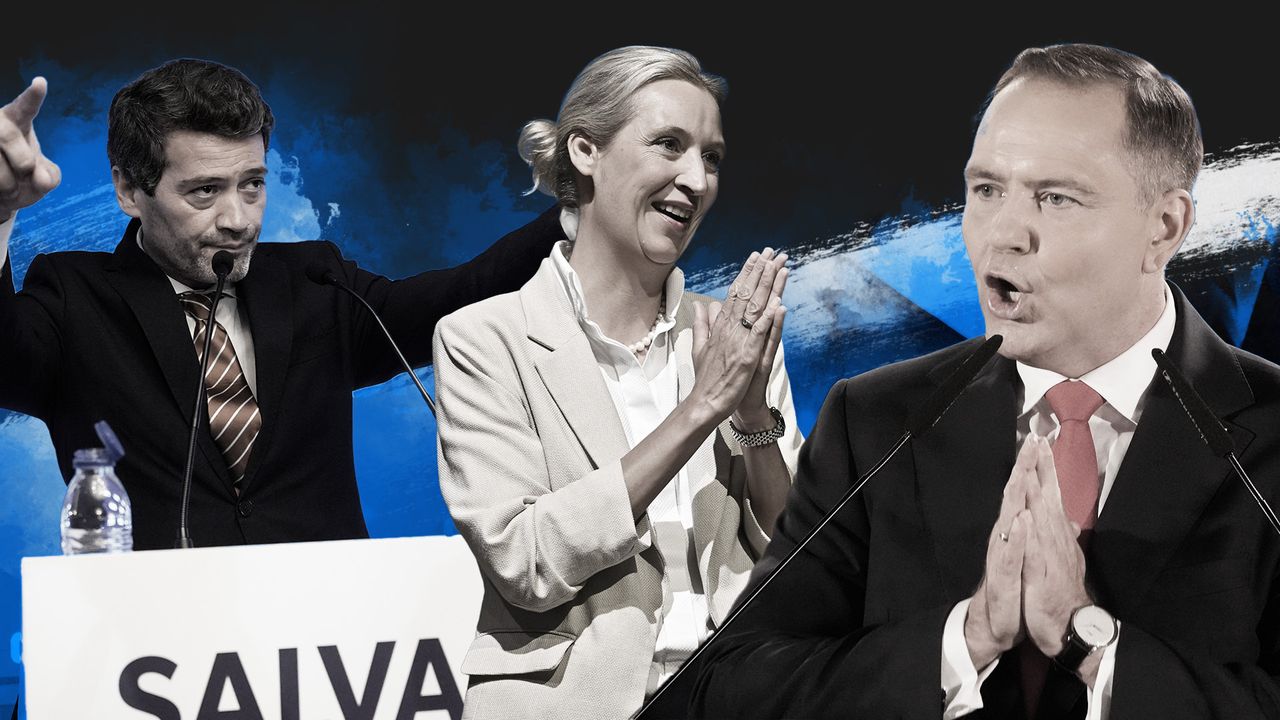
“Emerging signs show that they will eventually come to power” at the federal level, says Guven.
According to polls, the far-right party can claim nearly 30 percent of votes in upcoming federal elections.
“Not good days are ahead for us,” says Guven, a German citizen with Turkish ancestry, fearing that people like him with migrant backgrounds will be targeted under a potential AfD rule in a country, one-quarter of whose population from 21 to 25 million has non-German or immigrant roots.
“If we exclude voters with migrant backgrounds, we can say that the AfD has the potential to win the vote of nearly one in every two ethnic Germans on the street,” says the political analyst.
‘More radical than others’
Guven draws attention to the AfD’s increasingly “radicalised rhetoric”, contrasting it with other far-right parties, such as Giorgia Meloni’s Brothers of Italy and Marine Le Pen’s National Rally, which have considerably moderated their anti-EU and anti-migrant positions as they have gained political ground.
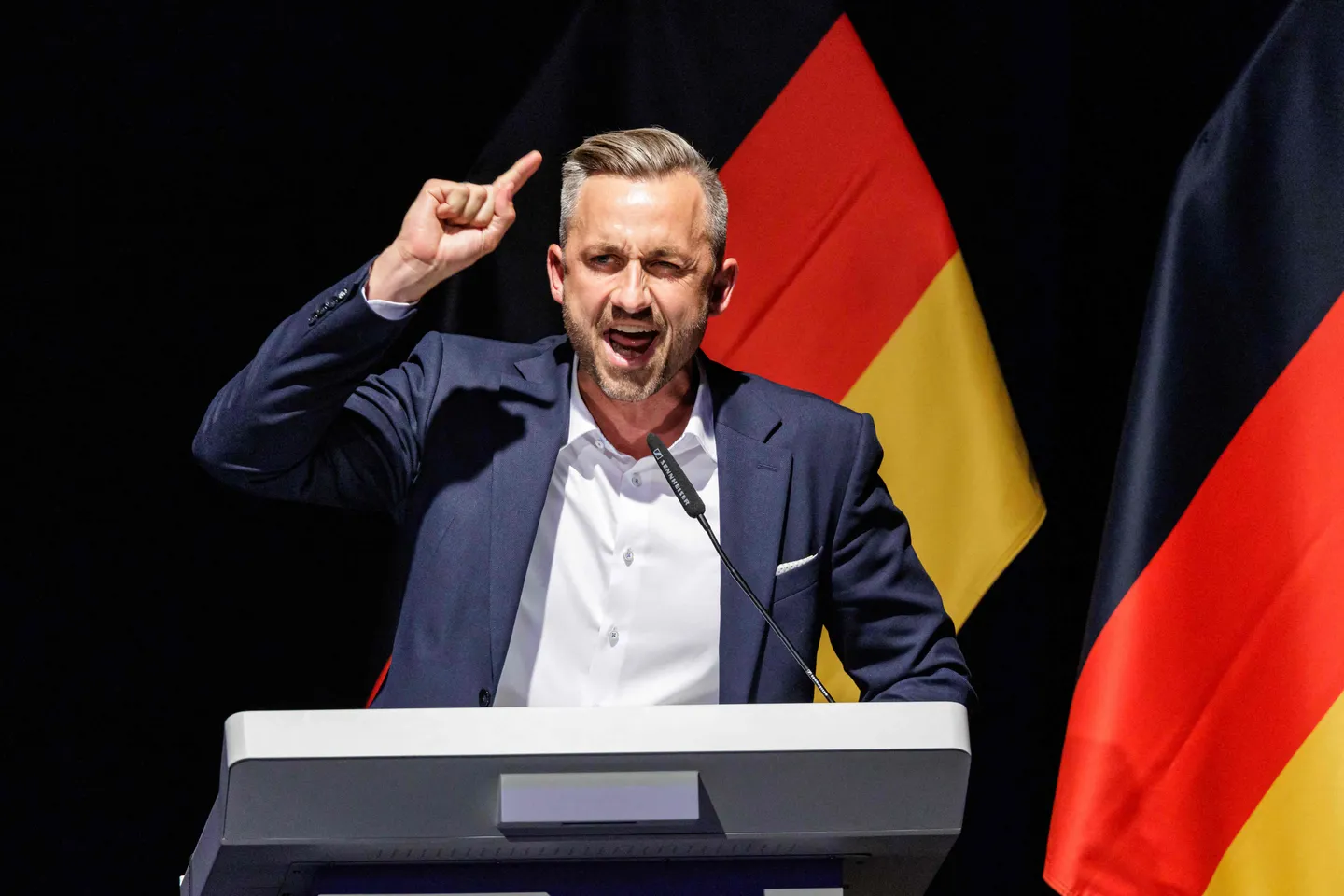
“We won’t bend and we will not water down our fundamental positions,” said Ulrich Siegmund, the AfD’s potential premier of Saxony-Anhalt, declaring its policy proposals from security to migration and energy policy as “nonnegotiable”.
The AfD has a broad agenda, ranging from cracking down on migration and changing the education system to strengthening local policing through a proposed volunteer militia, which the party says would help secure neighbourhoods.
Germany’s school curricula include extensive teaching about atrocities committed during the Nazi era.
The AfD wants to change how some of that history is addressed and cut funding for projects it considers to have “anti-German goals”.
“The AfD is not softening,” says Motika, who describes the party’s political evolution as “not comparable” with nationalist parties in Italy and France.
While the AfD does not have a long history, its trajectory shows that “they became more radical and more open to fascist groups,” he says.
The AfD’s Saxony-Anhalt branch has been classified as a confirmed right-wing extremist organisation by the state’s domestic intelligence agency, Motika adds.
“Some of the candidates who are now new members of parliament in Saxony-Anhalt are real neo-Nazis. This really means a complete shift for Germany.”
But Motika does not believe Saxony-Anhalt can serve as a laboratory for the AfD’s future plans for Germany, particularly because the party did not secure a majority in the eastern state.
Saxony-Anhalt, a state with a relatively small budget and high debt, cannot provide the AfD with the kind of testing ground some envisage, he says.
Guven, however, sees the AfD’s victory in Saxony-Anhalt as a sign of a dangerous path for Germany’s future.
“They see Saxony-Anhalt as a pilot project for their governance experience, designating critical posts in the state as their targets to implement their intended policies,” he tells TRT World.