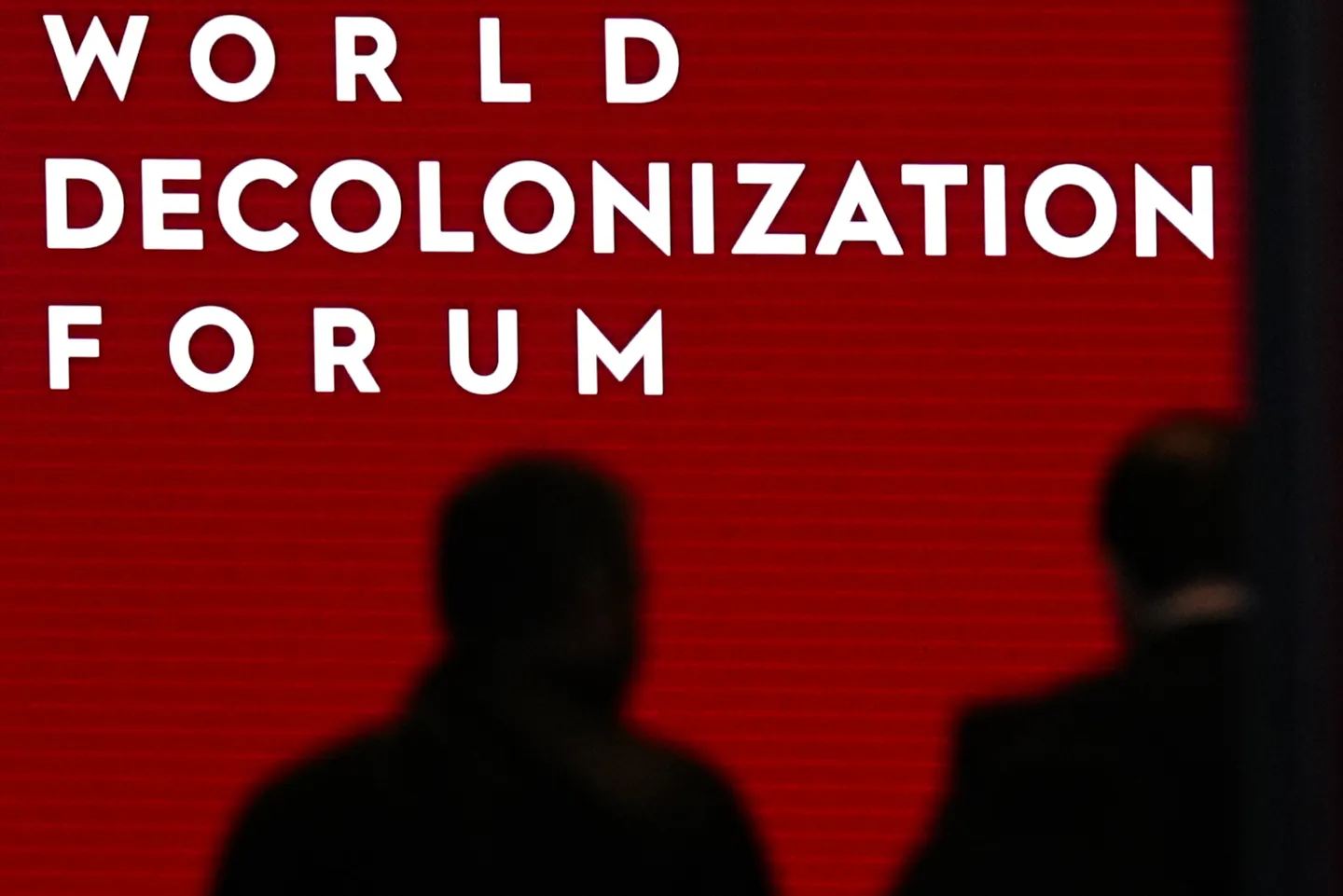
The opening session of the two-day World Decolonisation Forum, currently being held in Istanbul, brought together several well-known intellectuals and academics from different continents to question and challenge the colonial legacies that continue to burden the post-colonial era.
Under the theme of decolonising knowledge production and circulation, the two-day event – organised by the Turkish NGO NUN Foundation for Education and Culture – seeks to examine how colonial legacies continue to shape global politics, economics, technology, media and scholarship amid ongoing conflicts.
In her opening remarks, Esra Albayrak, a Turkish sociologist and chair of the NUN Foundation’s Board of Trustees, framed the event as an invitation to step outside familiar norms and “dream” new possibilities.
She urged participants to question the “predetermined acceptances” that societies inherit without giving them a second thought.
She traced the roots of the modern colonial order to 1492, the year that marked the first voyage of Christopher Columbus to the Americas on behalf of Spain, leading to the permanent European colonisation of the Western hemisphere.
She described it not merely as geographical discovery but as the launch of economic and ecological domination by one group of people over another.
“The European state… opposes us, accepting Christianity as a new form of discrimination,” Albayrak said, portraying modernity as a process that positioned Europe as the universal standard, while rendering everyone else as marginal and unimportant.
She said science is never neutral but geolocated, emerging from specific positions of power, class, and geography.
In universities, dominant philosophy and sociology often reflect the perspectives of the privileged, extending beyond textbooks into daily life, she said.
The best response to this colonial legacy lies in the resilience of the oppressed, she noted.
“The most powerful weapon in the history of science is in the mind of the oppressed.”
Colonialism may have seized land, altered languages and rewritten history, but decolonisation remains very much possible, she said.
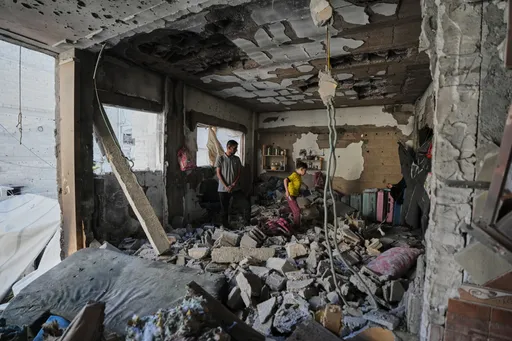
She pointed to the situation in Palestine, where lives are sacrificed under the pretexts of security and democracy.
It is a practice that echoes older justifications for colonialism like the “white man’s burden” or the portrayal of the colonised as “half devil, half child”, a phrase from Rudyard Kipling’s 1899 poem that dehumanisingly described indigenous people under colonial rule.






Albayrak called for concrete action on three levels.
The first level, she said, is epistemic – a philosophy term relating to the method of acquiring knowledge. She called for rewriting history from the vantage point of the colonised and the local, rather than that of the dominant countries.
The second level is institutional. Countries in the Global South must overhaul curricula, teaching models and research standards that perpetuate the colonial-era narratives.
The third level is political and economic: nations that suffered colonial rule must reject debt traps and unequal agreements that sustain dependency, while investing in sovereignty, she said.

Speaking on the occasion, Salman Sayyid, professor of decolonial thought and rhetoric at the University of Leeds, posed a provocative question: Do we need to “decolonise decolonisation” itself?
He noted that decolonial thought, like any intellectual current, risks developing its own orthodoxies and Eurocentric blind spots.
Much of it remains focused on the Atlantic world and European expansion since 1492, potentially limiting its global applicability, he said.
He cautioned against automatically equating every exercise of power with European-style colonial racism, arguing that this practice overlooks distinct histories.
Sayyid stressed the inseparability of anti-racist and anti-colonial struggles.
He pointed to Martin Luther King Jr, whose criticism of the Vietnam War showed how civil rights and anti-imperialism were once interconnected.
The category of “racism” itself emerged in the 1930s to describe Nazi policies in a way that preserved Europe’s self-image, separating it artificially from colonial practices elsewhere, he said.