 Kazim Alam
Ahead of the recent Eid celebrations, a minor neighbourhood disagreement over goats temporarily kept in a makeshift shed at a Mumbai residential complex escalated into a national controversy.
About 50 goats were brought in by Muslim residents for slaughter, prompting objections over hygiene and inconvenience within residential areas.
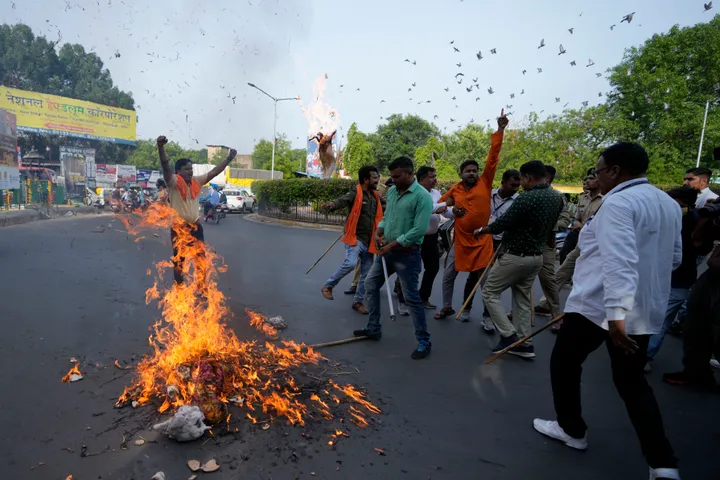
A wave of protests ensued, with people chanting slogans and reciting Hanuman Chalisa, Hindu devotional hymns.
The episode took an ugly turn with the introduction of a pig by people associated with groups like Bajrang Dal, a militant Hindu body aligned with India’s RSS organisation, the ideological fountainhead of Prime Minister Narendra Modi’s BJP party.
The police intervened and the Muslim residents of the neighbourhood eventually relocated their goats to a municipality-designated site.
The incident is not first of its kind: members of Hindutva organisations have previously used pigs, an animal considered taboo in Islam, as a tool of intimidation against the largest religious minority of India.
Analysts say the use of pigs in protests against Muslims’ religious practices constitutes systematic harassment under the shadow of majoritarian politics of Modi’s BJP party.
Ziya Us Salam, a New Delhi-based analyst and author of Being Muslim in Hindu India, tells TRT World that extremists bringing pigs to protest sites is reflective of the majoritarian agenda of Hindutva politics.
“It’s all a part of daily harassment and intimidation of Muslims,” he says.
Born and raised in Delhi, Salam notes that he had “never seen a single Hindu family keeping a pig as a pet”.
The current dispute began in New Delhi about a month before Eid, when some Hindus kept pigs at their doorsteps to keep Muslims away, he says.
The same intimidation tactic was used in Mumbai in late May, causing a two-day-long communal standoff.
“The mindset is always to intimidate and browbeat the minorities,” Salam says.

Amir Ali, professor of political science at Jawaharlal Nehru University in New Delhi, tells TRT World that the Mumbai pig incident did not have anything to do with Varaha Puja, a sacred Hindu ritual dedicated to Lord Varaha, the divine boar incarnation of Lord Vishnu.
Opposition to Muslim practices like Eid sacrifices and open-air prayers is increasingly framed around hygiene and public inconvenience by BJP affiliates, he says.
Yet, the use of pigs inflames communal tensions like nothing else.
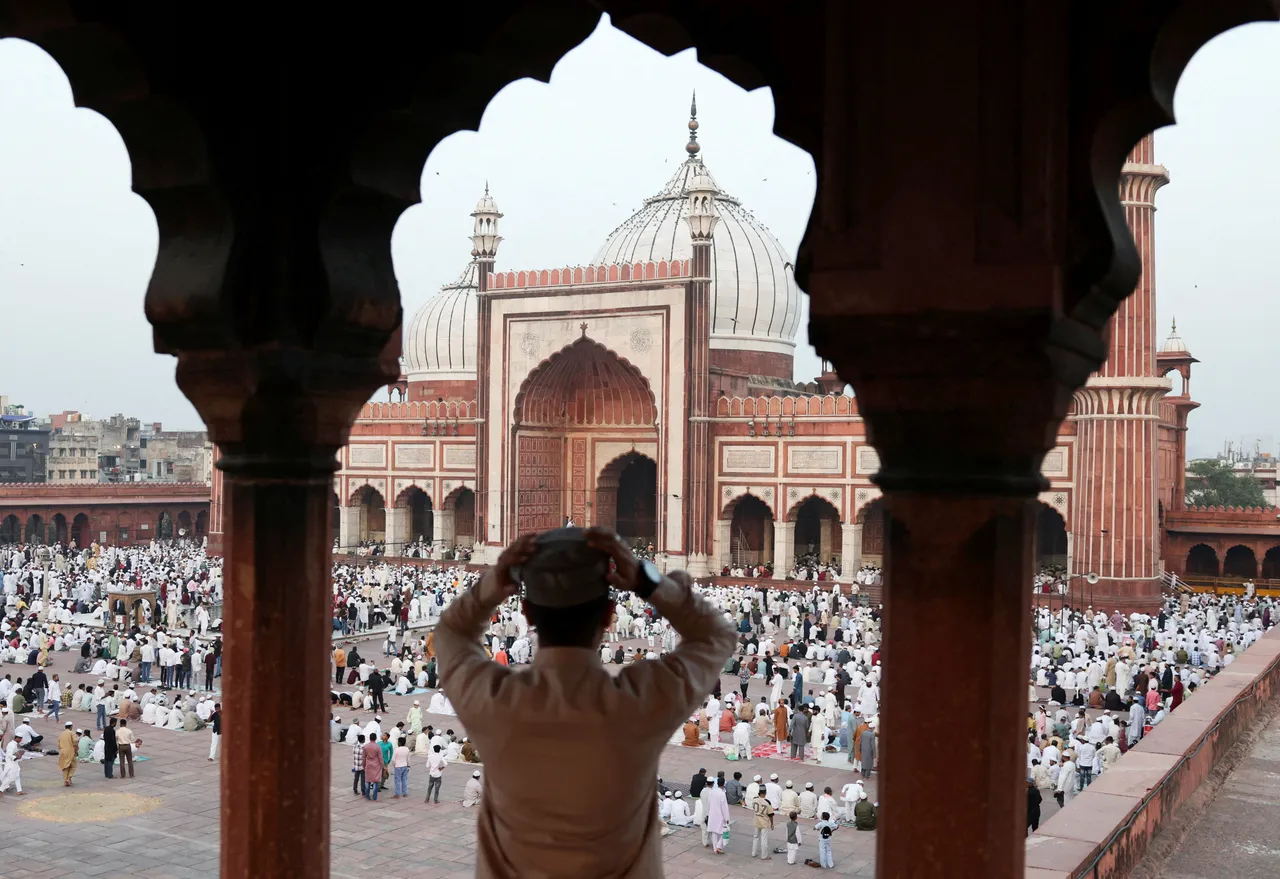
Muslims consider pigs impure and eating their meat is explicitly forbidden in the Quran.
Ali recalls the 1980 Moradabad incident, where a pig’s appearance during Eid prayers led to police firing on worshippers, causing at least 83 deaths in subsequent riots over the next few months. The unofficial death toll is 2,500.
“The (idea of the) deployment of pigs to inflame a communal situation is not that novel,” he says.
Aman Wadud, a spokesperson for the opposition Congress party in the Indian state of Assam, condemns the episode outright as “mischievous and shameful”.
Highlighting the involvement of Hindutva groups like the Bajrang Dal, he tells TRT World that the seemingly minor disagreement over a temporary legal shed “could have been solved amicably”.
Yet, it became international news, bringing an unfavourable spotlight to the country that is home to the third-largest concentration of Muslim population in the world.






“This speaks volumes of the times we live in,” Wadud says.
These provocations fit a broader pattern of escalating cycles of violence in mixed neighbourhoods: Counter-protests embolden majoritarian elements, turning everyday religious observances into communal battles.
The Mumbai incident led mainstream political figures like former BJP MP Kirit Somaiya to demand that a ban on sacrificing animals be imposed inside housing complexes.
Harsh Singh, a coordinator for the Vishwa Hindu Parishad, another RSS-linked Hindutva organisation, told the press that the presence of goats inside the housing complex had created problems for residents.
The cow parallel
Analysts view the pig incident in the larger political context around animal symbolism, particularly the cow protection movement.
Hindus consider the cow sacred and divine that must not be slaughtered.
Since 2014, when Modi’s government first came to power, vigilante cow protection groups have mushroomed in India, with frequent lynchings of Muslim men accused of cow slaughter.
Salam argues that while cow reverence has historical roots, the cow vigilantes of today are “actually a group of criminals” bent on exploiting the issue for political gain.
“They don’t love the cow. Rather, they use it to further their political careers,” he says.
He cites cases of alleged lynchers contesting elections and points to stray cows scavenging garbage as evidence of insincerity on the part of vigilantes.
Salam also endorses former Vice President Hamid Ansari’s suggestion to declare the cow India’s national animal.
Wadud acknowledges widespread reverence for cows among Indians, but asserts that the ruling BJP party has transformed the issue into a “political movement” against the Muslim minority.
In Assam, some have voluntarily forsworn cow sacrifice out of respect for Hindu sentiments, he notes.
Wadud says that practices breeding sectarian conflict should be reconsidered.
BJP-ruled states have enacted stringent cow protection laws, accompanied by “escalating levels of communal polarisation” and rhetoric warning Muslims to restrict observances, according to Ali.
“It is a little unfortunate to see that religious festivals like Eid al Adha – which have for many centuries of coexistence been celebrated without communal tension – have now increasingly become sources of communal anxiety,” he adds.
“Clearly, the BJP’s rhetoric has not helped in lowering this communal tension.”
Even though the claims of “Varaha Puja” invoking Lord Vishnu’s boar avatar to justify pigs’ presence in mixed neighbourhoods have surfaced, experts dismiss these as lacking evidence.
Salam views its use as strategic intimidation rather than tradition.
“Varaha is part of Vishnu's avatars. But I have never seen its puja anywhere. Certainly, nobody has kept pigs as pets at their homes,” Salam says.