 Noureldein Ghanem
Washington, DC — It is October 24, and Mexico has again failed to meet its water delivery obligations to the United States, as stipulated in their 1944 Water Treaty.
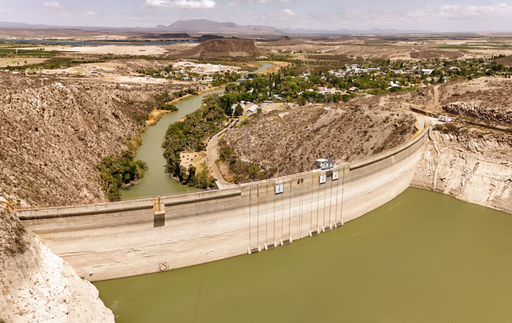
The treaty mandates Mexico to allocate 1.75 million acre-feet of Rio Grande River water to the US every five years — with the current five-year-cycle concluding on Friday — while the US transfers 1.5 million acre-feet from the Colorado River to Mexico annually.
Since the 1990s, Mexico has consistently recorded a deficit or narrowly avoided one each cycle.
Normally, when Mexico falls behind in its water commitments to the American state of Texas, the US grants a forbearance to Mexico, on the condition that the obligated amounts of water will be delivered in the following five-year-cycle.
But this time, things are different and past expectations no longer apply.
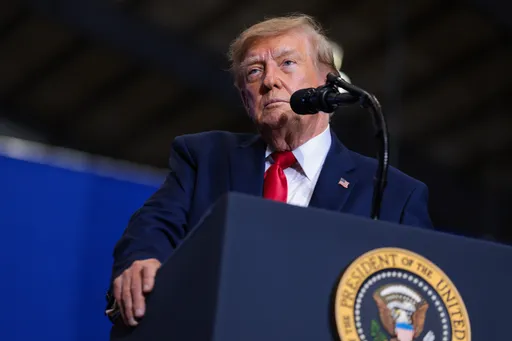
US President Donald Trump has accused Mexico of "stealing" water from Texas farmers. He has threatened tariffs and sanctions to force Mexico to release water. In April 2025, the US refused to send water to Tijuana from the Colorado River, for the first time in over 50 years in an effort to pressure Mexico.
It is unclear how Trump, who is leaving the country for a week-long Asia tour, will react to Mexico delivering around 800,000 acre-feet in the current cycle, short of the 1.75 million acre-feet it is obligated to deliver by Friday evening.
However, scientists, who previously predicted in interviews with TRT World that Mexico would fail to meet its water commitments, now suggest that the US is likely to grant Mexico another rollover.
The caveat, they say, is that this forbearance will come with conditions.
"Mexico is sure to be in arrears on Friday. The US will almost certainly grant a rollover, as it has done in the past," Stephen Mumme, a professor emeritus at Colorado State University, tells TRT World.
"But there is likely to be a set of conditions attached that focus on investments and improvements aimed at improving the reliability of deliveries in the second (five-year) cycle," he adds.
No simple postponement now?
The US and Mexico continue to disagree on tariffs, immigration, drug cartels, fentanyl, and arms trafficking.
Water-sharing tensions escalated in April after Trump accused Mexico of water theft from Texan farmers, threatening sanctions.
To avert a diplomatic issue, Mexico's President Claudia Sheinbaum agreed to temporarily share more water with the US from shared rivers.
The neighbours are now in the same situation as before.
The potential rollover will likely be conditional and it will be unlike past forbearances that were without substantive obligations, Hugo Luis Rojas, Coordinator of the Geoinformatics Program at Universidad Autonoma de Ciudad Juarez (UACJ) in Mexico, tells TRT World.
"The United States will not accept a simple postponement now, given the more tense political context and the severity of the water crisis. The implementation of specific cooperation measures defined in Minutes 331 (2024) will be related to the current extension," argues Rojas.
"This entails including new water resources, such as the Alamo and San Juan Rivers, on an exceptional basis. Consolidating technical collaboration and the design of binational plans, establishing permanent working teams to update water infrastructure, optimise efficiency, and locate new supply resources," he adds.
Rojas says this isn't a "blank cheque", but an extension tied to a binational plan addressing the deficit and averting future issues.
Other scientists suggest a deal was likely negotiated before Friday's deadline, given Mexico's outstanding water allocations to the US.
Rosario Sanchez, a research scientist at Texas A&M University who studies border waters, tells TRT World that, "Either Mexico negotiated something else before (gas for example) or we are about to enter a new negotiation where Mexico will be under pressure on all possible fronts."
"There might be a new Minute [agreement], where conditions for compliance get stricter for Mexico but totally infeasible to comply, or Mexico takes this topic seriously and propose a renegotiation of water allocations which will be more sustainable over time but potentially unfeasible at domestic level in the short term."
Rio Grande, an endangered river






The Rio Grande, a major North American river, stretches almost 3,000 km from southern Colorado, via New Mexico, to the Texas-Mexico border.
A crucial freshwater source for 16 million people in the US and Mexico, it's also among the world's 10 most endangered rivers.
Farmers on both sides are caught between the climate crisis and diplomatic disputes.
Texas farmers usually need bank loans to plant crops well in advance, requiring proof of a dependable water supply.
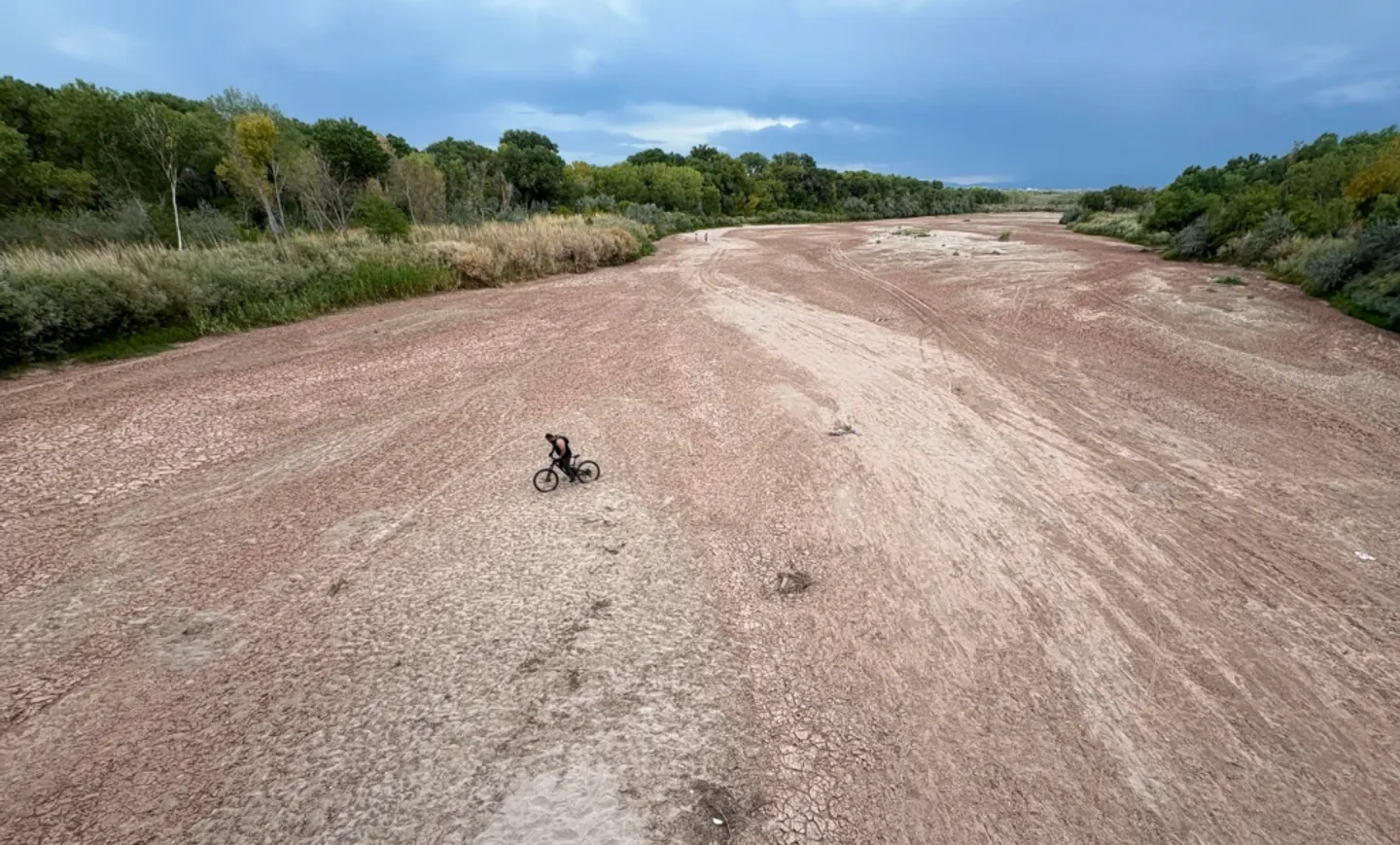
However, the ongoing drought in northern Mexico has exacerbated the situation.
Government data indicates over 64 percent of Mexico faces drought conditions, with northern states, notably Chihuahua, experiencing the most severe impacts. Drought, a result of the climate crisis, is forcing Mexican farmers to migrate and look elsewhere for water.
Mumme suggests a US rollover for Mexico would face Texan protests, but not cause a diplomatic crisis.
"The roll-over will be criticised by Texas, as it has been in the past," says Mumme, who has been studying the way the two countries share water.
He explains that procedures in the IBWC (International Boundary and Water Commission) Minute 331 will be enforced to ensure that any adverse impacts on Texas are mitigated.
What if the US denies forbearance?
Another potential scenario is that the US does not grant a rollover this cycle.
If this occurs, scientists say, it would be unprecedented and could potentially lead to a "diplomatic issue" between US and Mexico.
Rojas notes that a rollover denial is unlikely to nullify the 1944 Water Treaty, but could politicise water issues, leading to significant repercussions.
"Both countries have publicly stated that annulling the treaty is neither desirable nor likely, given that it favours Mexico more (since it receives four times more water from the Colorado River than it contributes through the Rio Grande)," Rojas says.
"However, there would be significant consequences, including politicisation of the water issue: US political actors (such as those in Texas, for example) could use noncompliance to link it to trade or border security issues (issue linkage), and economic and diplomatic pressures."
He also warns there is the possibility of "renewed risks of retaliation in terms of trade or unilateral water-related limitations (as previously occurred with deliveries to northern Baja California)."
Sanchez says the easiest way for Mexico is to get in deficit with the US "as it is technically allowed by the treaty (though politically not allowed anymore by the US) with the compromise to... not sure what Mexico will offer — or has already offered in exchange."
What if Mexico does not secure a rollover
Although the outcome will not improve, as the water is unavailable regardless, denying the rollover could ostensibly provide Mexico with several response options towards Washington.
Mumme says that the Trump administration "could rail at Mexico and threaten sanctions — most likely trade sanctions — but that would also come at a cost to US consumers and possibly backfire."
"I very much doubt the US would try to withhold water on the Colorado River, as that would upend delicate negotiations with Mexico on sharing future shortages on the Colorado River, where the US basin states really need Mexico's help with water conservation," he adds.
"Mexico could well decide not to participate in shortage sharing for the next five years, and that would put the Colorado basin states in a bind."
He also states that Mexico might delay the implementation of Minute 331 measures, which are designed to develop improved long-term solutions for water shortages on the Rio Grande River.
"The other option is legal: officially invoking the extraordinary drought clause, supported by solid technical evidence," Rojas explains.
"Another option is internal management: To demonstrate good faith and responsibility to the US counterpart, water saving and conservation measures (such as reuse, repairing leaks, or modernising irrigation) should be implemented more quickly," he adds.