 Mevlüt Onur VAROL
During the current war in the Middle East, G7 energy billionaires just made an extra $23.5 billion, thanks to exchanged missiles and air strikes, the closure of the Strait of Hormuz and the bombing of infrastructure across the region.
Ordinary households paid that "extra" through rising fuel and food prices, and that was quietly transferred into the pockets of the few who benefit from war.
The accumulation of wealth by the ultra-rich during wars and crises is not a 2026 phenomenon.
Since the onset of the COVID-19 pandemic in 2020, total billionaire wealth has surged by nearly $10 trillion in real terms, a 94 percent increase, according to a recent report by Oxfam titled Ending Impunity and Inequality.
During the same period, the number of people affected by humanitarian emergencies increased by 84 percent.
Between 2020 and today?
The COVID-19 pandemic. The debt crisis driven by rising interest rates. Russia's invasion of Ukraine and the food and energy shock that followed. Israel's ongoing military campaign across the occupied Palestinian territories, Lebanon, Syria and Yemen.
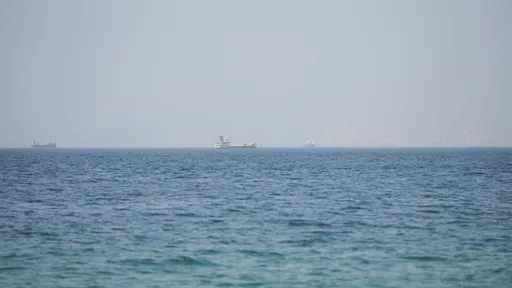
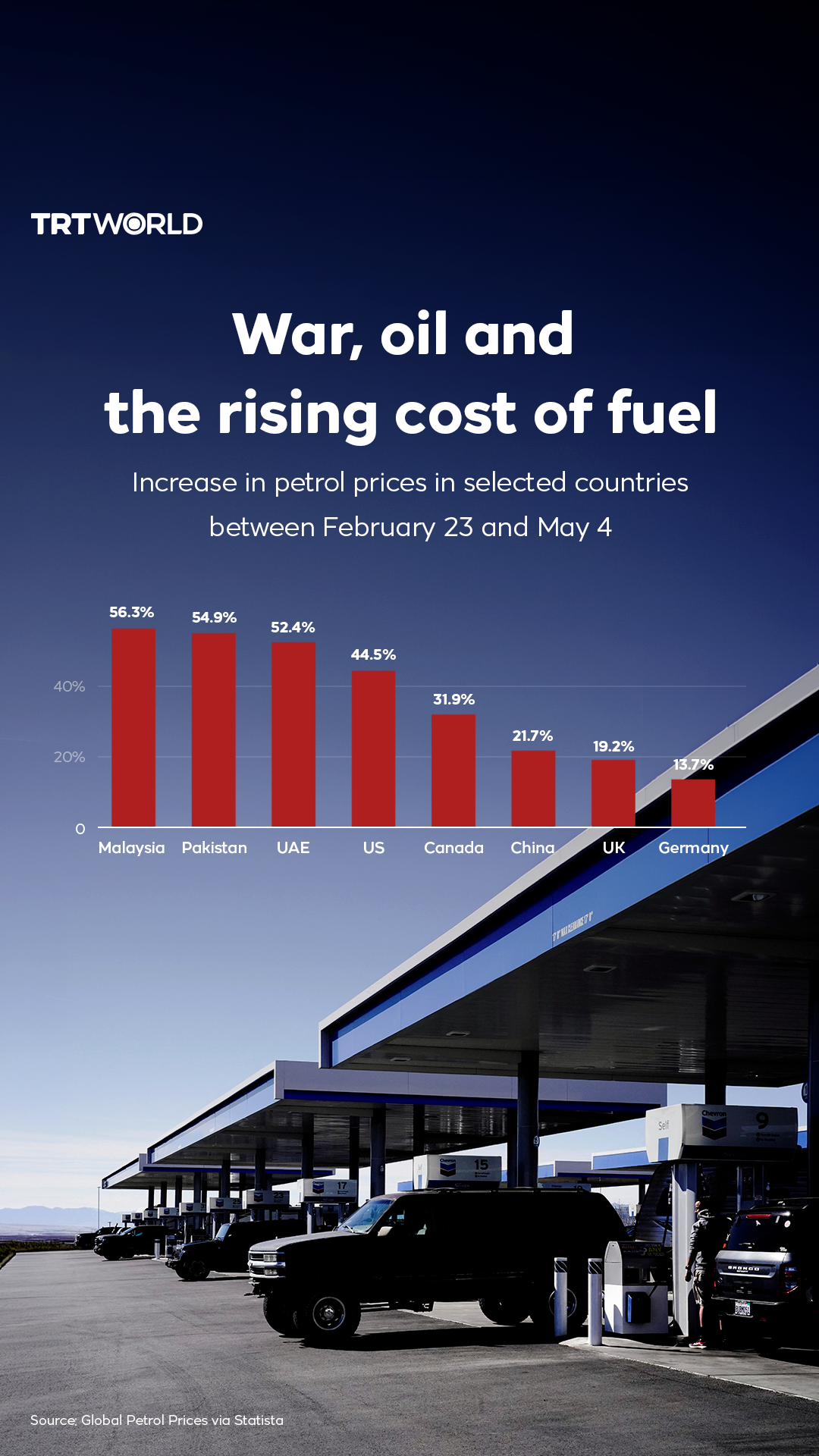
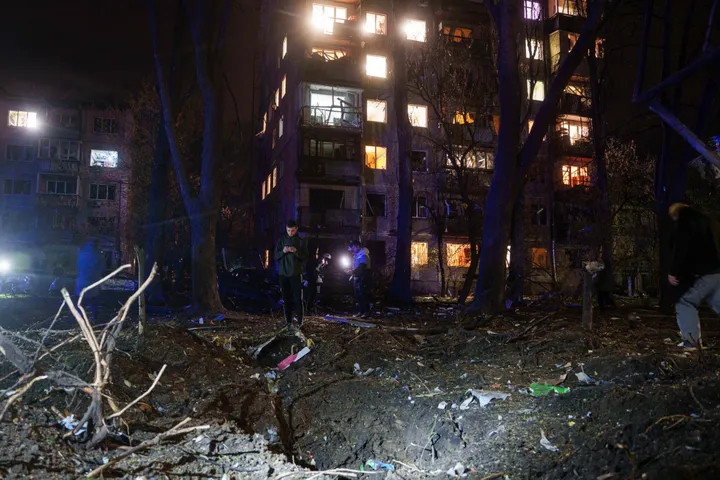
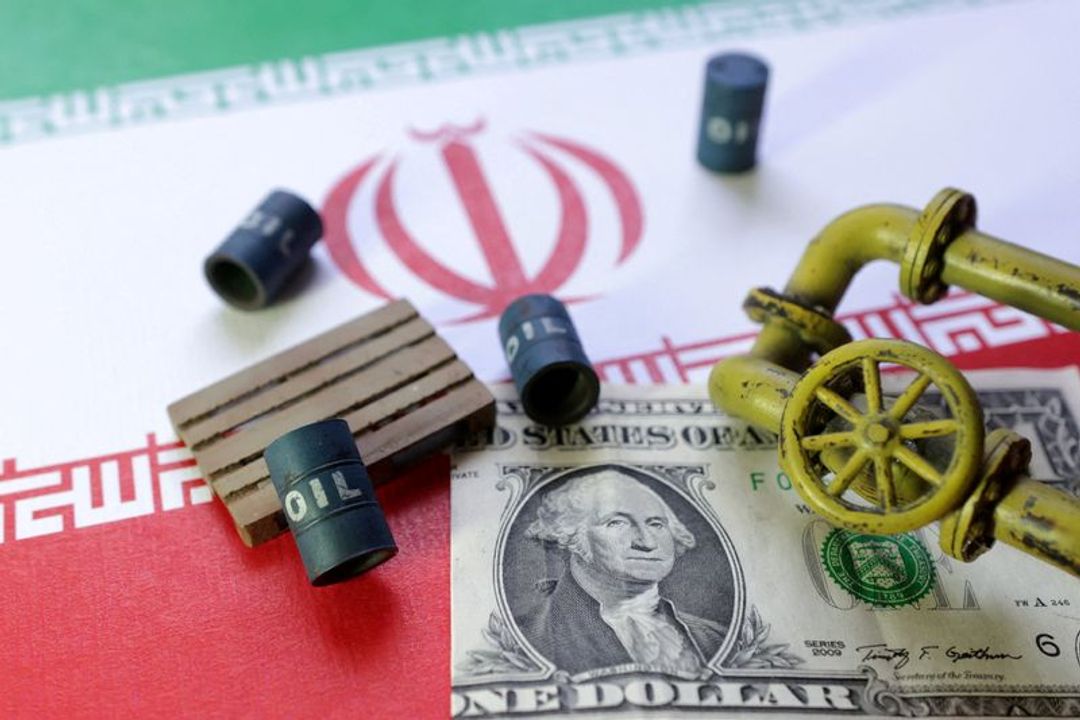
And now the US-Israel war against Iran, which has put the broader region - Qatar, Kuwait, Bahrain, the UAE, Oman and Iraq - in flames and has closed the passage through which roughly twenty percent of the world's oil flows.
The disruption in the Strait of Hormuz was, in the words of the International Energy Agency, "the largest supply disruption in the history of the global oil market".
Global oil supply crashed by over 10 million barrels per day in March alone. Brent crude, which had been trading around $70 a barrel before the war, surged past $100 and peaked at above $118.
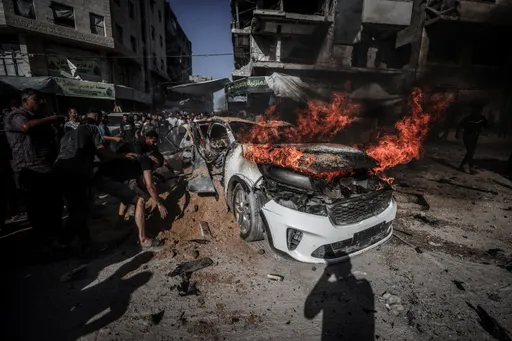
Behind the scenes, war destroys nations and costs countless lives. But for a select few at the top, these are extraordinarily profitable times.
According to Oxfam's analysis of Forbes' real-time billionaire-tracking data, 41 G7 energy billionaires increased their collective wealth by $23.5 billion between March 1 and May 18, 2026.
That makes $301 million per day.
Feeding the war machine
The same G7 countries - the United States, United Kingdom, Canada, France, Germany, Italy, and Japan - cut their Official Development Assistance to the world's poorest countries by $48 billion between 2024 and 2025.
A 29 percent reduction. The lowest level of foreign aid since 2015.
G7 billionaires accumulate the equivalent of that entire $48 billion cut in just nine days.
Each year, the windfall is even more dramatic. ExxonMobil, Chevron, Shell, TotalEnergies, BP, and Eni - the Big Six oil majors - are now projected to earn $152 billion in 2026.
That is an 80 percent increase over what analysts had forecast before the war began.
That doesn't end there. Three of the world's largest fertiliser corporations are expected to see profits jump 23 percent compared to pre-war forecasts. This matters more than it might appear.
Fertilisers account for nearly two-fifths of total farm production costs for staples such as maize and wheat. Food prices rose 3.4 times faster between February and April 2026 than in the same period in 2025.



The human cost of these price movements is not abstract. The UNDP estimates the war will push more than 32.5 million people into poverty by the end of 2026.
Moreover, as 720 million people already face hunger, 45 million more are projected to be pushed into extreme hunger with the current circumstances.
The war, in other words, produces not only bombs, displacement and shattered infrastructure, but also higher food prices, unaffordable fuel, rising debt, collapsing public services, and humanitarian programmes cut precisely when they are needed most.
So where do all the budget cuts go?
In 2025, G7 countries' combined military expenditure totalled $1.37 trillion.
Their combined humanitarian spending? $10.3 billion; just 0.75 percent of their military budgets.
In other words, G7 governments spent 133 times more on military capacity than on protecting human life from crisis. And 2026 is forcing war machines to be fed even more, that is, more spending on military budgets.
From small to bigger pockets
The same war that is filling the pockets of 41 G7 billionaires $301 million per day is also the reason oil prices went higher.
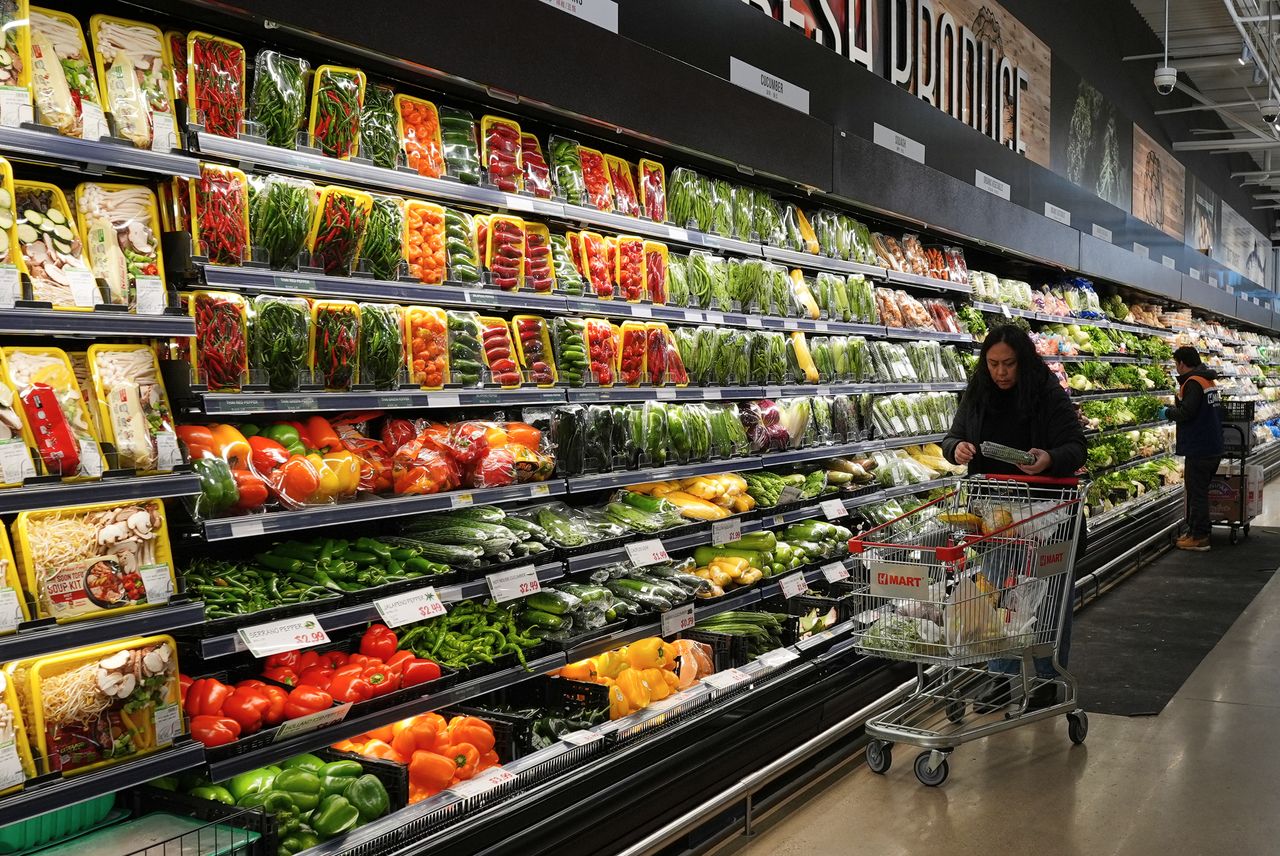
Higher oil prices mean higher transport costs, which in turn mean higher prices for every physical thing that moves through a supply chain: food, medicine, clothing, building materials.
On the other hand, the fertiliser shortage means more costly planting and smaller harvests, which drive food prices higher and affect anyone who has paused to check the price tag before buying their essential nutrients.
Every time a grocery receipt is higher than last month, every time a commute costs more, every time a household quietly adjusts its budget, that money does not disappear.
It travels upward through commodity markets and trading desks, arriving in the accounts of those already at the top.
Nobody voted for this war, but almost everyone is paying the price. There is a poverty line, but not a luxury line. The political architecture that enables wars without accountability is the same architecture that allows wealth to concentrate without limit.
In the United States, the wealthiest 1 percent own half of all corporate equities and mutual fund shares; the bottom 50 percent hold just 1 percent.
Governments allow wars without a vote, but veto progress towards peace.
Between 2014 and 2024, the five permanent members of the UN Security Council cast 27 vetoes on just three of the world's most protracted crises.
Russia and the United States accounted for the overwhelming majority.
Taken together, the data show that war is a feature of a system that pushes costs downwards and pulls gains upwards.
That forces us to ask whether the problem is structural, and whose interests politics actually serves.