 Abril Mulato
“Unbeatable weather,” “all of Mexico turning green,” and a wave of “passion, goals, and euphoria.”
This is how the country is promoting the arrival of the 2026 World Cup, a football festival promising packed stadiums and street celebrations. Mexico will be one of the main host countries for the tournament, the first to feature 48 teams and to be co-hosted by the United States and Canada.
The country will host 13 matches played in Mexico City, Guadalajara, and Monterrey.
With the World Cup just weeks away, Mexican authorities are presenting the tournament as an economic opportunity and a catalyst for urban modernisation.
The federal government has made multimillion-dollar investments in mobility, security, and infrastructure, while the Mexican Football Federation estimated an economic impact of around $3 billion in Mexico alone.
The Mexican Employers' Confederation (Coparmex) even raised that figure, citing investments of nearly $8 billion across the three host countries.
But official enthusiasm coexists with growing social discontent. In Mexico City and Guadalajara, protests have emerged from neighbourhood groups, environmentalists, cyclists, business owners, and families seeking refuge, all questioning the allocation of public resources.
They criticise what they consider to be urban price increases, gentrification, and touristification—the transformation of neighbourhoods to attract visitors—and the neglect of issues such as housing, water, transportation, and security.
The debate is not new in Latin America. Brazil experienced massive protests before and during the 2014 World Cup over stadium spending and the precarious state of public services. The mobilisations, which began in 2013, also denounced increases in public transportation fares, urban evictions, and the use of heavy security forces.
During the tournament, thousands of police and military personnel were deployed in the host cities while demands persisted that the football festival did not address the country's structural problems.
Now, with the countdown underway, an old regional debate is resurfacing in Mexico: whether mega sporting events leave lasting benefits or deepen existing inequalities.
Against a city for tourists
Since late 2025, residents and groups from southern Mexico City have been meeting under the bridge in front of Banorte Stadium to discuss the impacts they say are already accompanying the countdown to the World Cup.
From these meetings emerged the Anti-World Cup Assembly, comprising residents from towns and boroughs such as Santa Ursula, Coyoacan, Tlalpan, and Xochimilco, as well as merchants, cyclists, artists, and environmentalists.
Similar protests, focused on local problems considered ignored and that could be aggravated by the construction and the massive arrival of tourists, have also been registered in Guadalajara and Monterrey, the other host cities of the tournament.
“What we’re seeing isn’t just gentrification, but also this other phenomenon, which is overtourism,” said Lagrimas, a spokesperson for the collective, who prefers to remain anonymous for security reasons, in an interview with TRT Español.
Among her main concerns, she mentioned rising rents, the expansion of short-term rental platforms, and what she fears are imminent evictions.
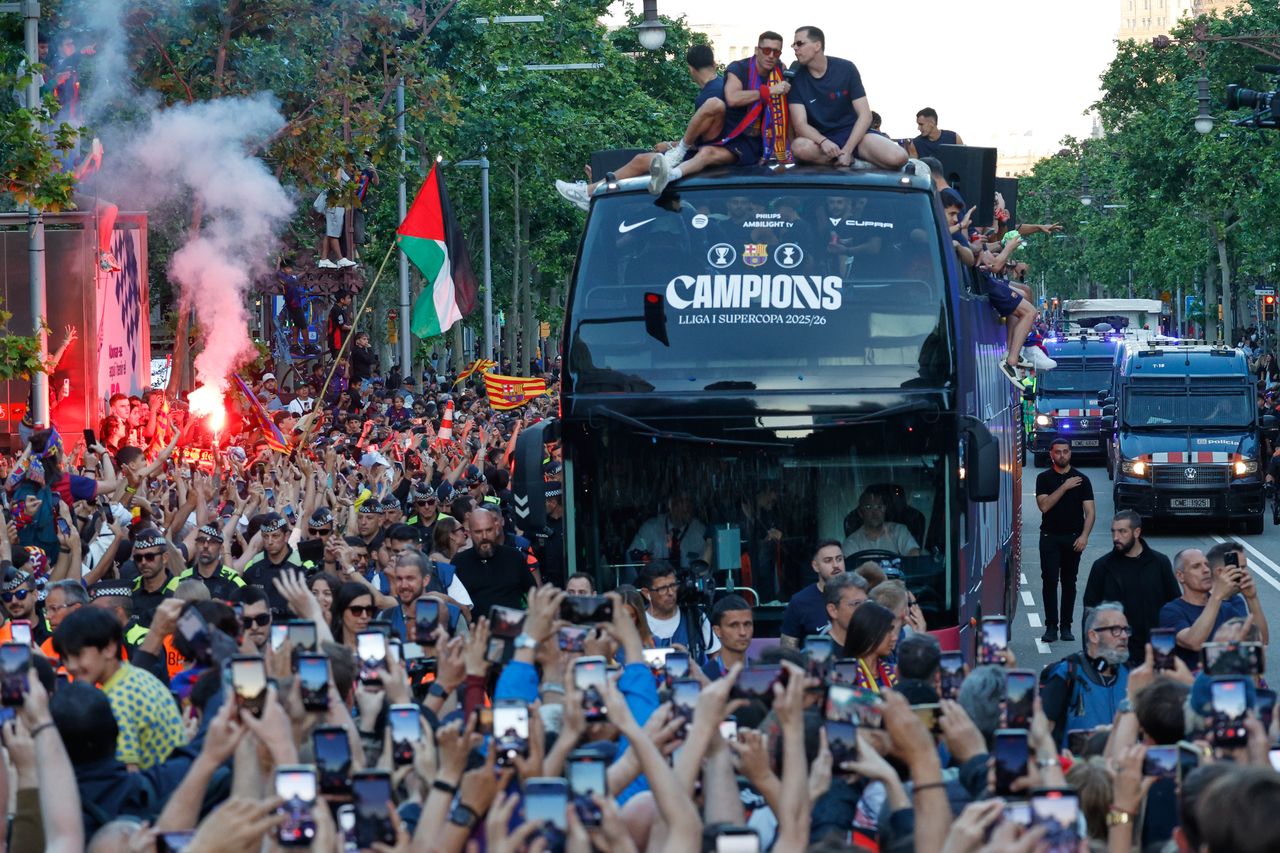
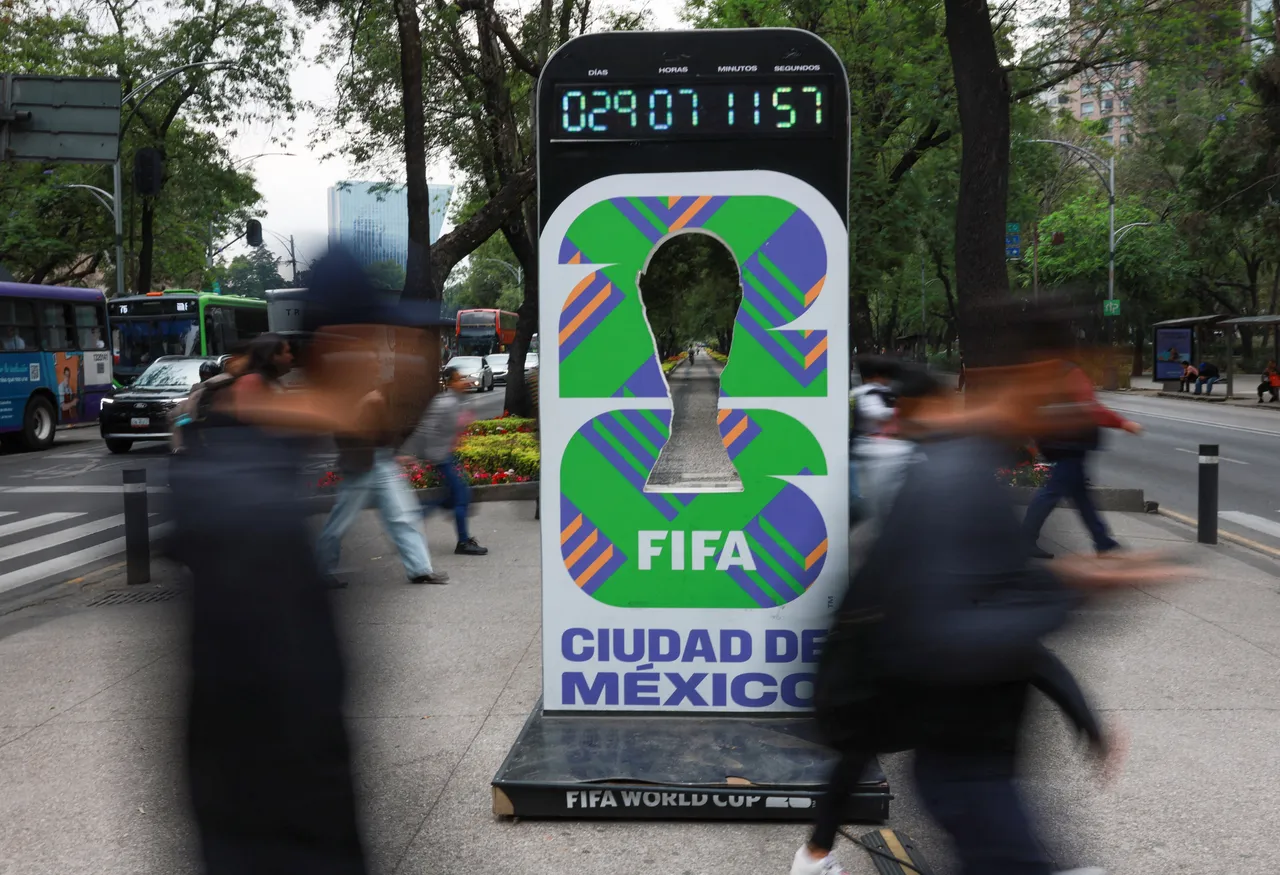
The assembly holds meetings, paints murals, and organises bike rides and street football games as forms of protest. They have also taken action at the official FIFA clock and in the vicinity of the stadium. “We love soccer, but not FIFA,” Lagrimas says.
According to the group, the effects of the World Cup are already being felt through construction, increased control over public space, and pressure from real estate developers.
They also denounce police surveillance at their demonstrations, actions they describe as evidence that “the only response has been repression.”
Water, the other dispute
For Natalia Laura Trejo, a resident of Coyoacan who lives a block from Banorte Stadium in Mexico City, the main impact of the World Cup in the area isn't football, but water.
She says the renovations aim to offer a refreshed urban image for visitors, while basic problems remain unresolved.
Trejo, also a member of the Anti-Globalisation Assembly, maintains that behind this new image lies a persistent daily water crisis. In his neighbourhood, she explained, the water supply is rationed, without a fixed schedule, and generally at night, forcing residents to store water in buckets.
“We can’t have water every day,” she says.
In contrast, she pointed out that Televisa, a long-time co-owner of Banorte Stadium and one of the largest Spanish-language media conglomerates, has a private well near the stadium that extracts approximately 50 liters per second.




For this reason, residents are demanding that this concession be transferred to public use and warn that the influx of visitors could exacerbate the pressure on the water supply.
At the end of April, members of the Anti-Globalisation Assembly held another meeting with the Mexico City government.
According to the group, the meeting ended without any signed agreements, despite the submission of demands regarding water, housing, and displacement.
As Mexico prepares to host the World Cup, families searching for their missing loved ones see the tournament as an opportunity to highlight another reality in the country: the crisis of disappearances.
Hector Flores, co-founder of the Luz de Esperanza Collective in Guadalajara, asserts that they are not opposed to football, but rather to the public spending allocated to urban beautification while thousands of families continue searching for their missing relatives.
“We are not against the sporting event; we are against excessive public spending when we are going through very serious crises,” he said.
He pointed out that in Jalisco, more than 23 million dollars were allocated to rehabilitate the Historic Center of Guadalajara, of which 12 million went to a single public square, while the State Search Commission operates with approximately 5.8 million dollars a year.
His son disappeared in May 2021, at the age of 19. Since then, he says, there has been no substantial progress in the investigation, a reality shared by thousands of Mexican families and the reason why she founded Luz de Esperanza, an organisation that today brings together more than 500 people.
In April, the UN Committee against Enforced Disappearances called for Mexico's situation to be brought before the General Assembly, citing well-founded indications of enforced disappearances that could constitute " crimes against humanity ."
It cited more than 130,000 registered disappearances, over 4,500 clandestine graves located, approximately 72,000 unidentified human remains, and a lack of substantial improvement despite measures taken in recent years.
Between rejection and promises
So far, the institutional response to the anti-World Cup protests and the demands of search collectives has been insufficient for sectors of Mexican society.
Faced with criticism of the construction work around the Banorte Stadium, the Head of Government, Clara Brugada, defended the official intervention.
She asserted that the water shortage in the area “was the first thing” her administration addressed and maintained that eight wells were rehabilitated.
However, residents like Trejo say that in surrounding neighbourhoods, the water supply continues to arrive irregularly and is insufficient, while concerns persist about the private well next to the stadium.
Mexican President Claudia Sheinbaum also rejected the recent UN Committee report. “The actions we have taken were not considered,” she responded.
Days later, she insisted: “We have acknowledged that enforced disappearances are a crime in our country; it concerns us, and we are addressing it.”
For activists like Flores, however, words have not yet translated into concrete results. “They don’t care about finding the victims; what they care about is managing this crisis politically and through the media.”
Edgar Guerra, a sociologist and researcher at Mexico's Ministry of Science, Humanities, Technology and Innovation, believes that these protests follow a familiar logic: taking advantage of a moment of maximum exposure to raise demands that are normally ignored.
In this case, he explains, various groups see the tournament as a “window of opportunity” to draw the government's and the international community's attention
“Collective action and social protest become, in these times of state neglect and institutional indifference, a mechanism for pressure and visibility,” he tells TRT Español.
The expert warns that these connections are often fragile, but even without immediate changes, they can have lasting effects on public discourse.
“This helps more people become aware of crises such as disappearances, unequal access to water, or urban displacement.”
While governments promote a global celebration and high-level projects, the narrative of those seeking to turn the World Cup into a mirror reflecting the country's unresolved issues is gaining traction in the streets.
As Guerra summarises: “Social protest becomes the mechanism through which citizens, civil society, and the people begin to organise to raise awareness and eventually bring about change.”
This story was originally published on TRT Español.