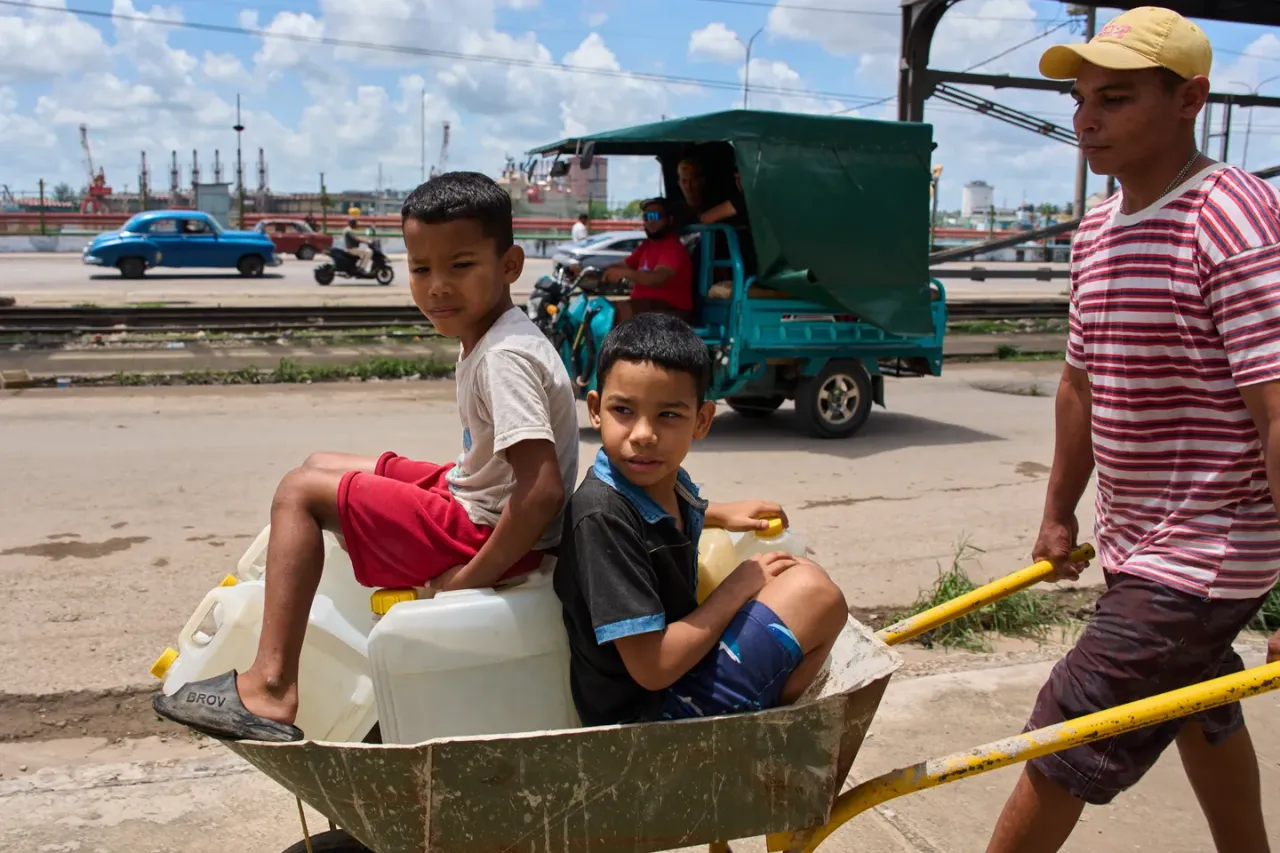
School playgrounds in Havana, Cuba, are eerily quiet this June.
Without transport or food for the cafeterias, the end of the school year has been brought forward as the crisis stemming from the US oil embargo intensifies.
“I am a grandmother of a 10-year-old boy, and we are already enjoying these rushed holidays,” Amalia Acosta, 65, tells the EFE news agency while walking along the Paseo del Prado mid-morning with her grandson.
Cuba’s academic year runs from September to July. But fuel shortages have forced the Cuban government to end the school year 15 days earlier than planned.
Cuba is confronting one of its worst energy crises after Washington imposed a blanket fuel blockade on the island in January, located about 150 kilometres from the US state of Florida.
An executive order by the US president imposes exorbitant duties on imports from any foreign country that directly or indirectly supplies oil to Cuba.
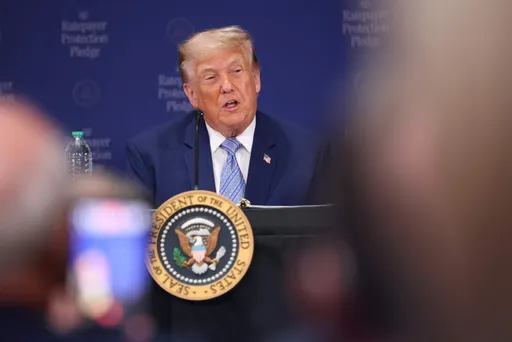
According to the country's energy minister, Cuba has run out of fuel reserves. US President Donald Trump has also publicly spoken about the possibility of conducting a “friendly takeover” of Cuba if it does not open its economy to US investment.
With the parents working, Acosta has been left in charge of the child.
She explains that the final evaluations had to be brought forward and took place in a very challenging environment, as "there was no electricity" or internet access to "look up the information”.
Her case is not an exception.
The Minister of Education, Naima Trujillo, recently explained that the end of the school year had to be brought forward in the current context and would take place "gradually from 15 to 30 June" due to the energy crisis.
But it seems that reality has taken hold at an accelerated pace.
The worsening energy crisis
The energy crisis, which began in mid-2024, has worsened in recent months due to the US oil embargo.
The state economy is almost entirely paralysed due to the US oil embargo and is estimated to contract by at least 6.5 precent this year (following a cumulative drop of more than 15 percent in the previous five years).
Public transport has disappeared. Rubbish is piling up in the streets due to a lack of collection. Industry is at a standstill. Hospitals are offering a few services, and government offices are operating under a contingency plan.
Education, one of the pillars of the social benefits offered by the Cuban system universally and free of charge, could not remain unaffected by the profound general deterioration.
"There's no electricity, no water, nothing," Norki Rigondeaux, a 57-year-old Havana resident, told the EFE news agency as she picked up her grandson early from a primary school in the Cuban capital.
"You can't hold classes like this," she says.


Some parents say that the blackouts, which last up to 22 hours a day in Havana and are even worse elsewhere in the country, prevent children from sleeping properly, especially in the heat, making it difficult for them to attend school the next day.
Rigondeaux says that educators often "arrive late because of the transportation problem", and if they don't disappear in the middle of the course by leaving the country and having to be replaced, as happened to his grandson's first-grade class.
According to figures compiled by the EFE news agency at the start of the current school year in September, no province on the island achieved 100% teacher coverage, and in some places, such as Sancti Spíritus (central) and Havana, the authorities failed to fill one in three teaching positions.
The state of the Cuban education system has raised alarms among international organisations such as UNESCO, which has already warned of a systemic risk to the learning and future of an entire generation on the island.
The director of the UNESCO Regional Office in Havana, Anne Lemaistre, warned on May 29 that "education in Cuba is at risk due to the current energy crisis" and that "this makes it difficult for teachers and students to attend classes, learn effectively and enjoy a normal social life with their friends”.
She stressed that, in this context, "the future of an entire generation is jeopardised, with long-term consequences," and warned that this future must be "protected for the good of all”.
‘Options all around’
US Secretary of War Pete Hegseth stated on Wednesday that "all options are on the table" when asked by the press whether the Pentagon was considering an operation to capture Cuban President Miguel Diaz-Canel.
"We have options all around," Hegseth responded during a visit to the United States Central Command (Centcom) in Florida, when asked if an operation to "capture and kill" Diaz-Canel was a possibility.
"In our building, we literally make a living planning. So, aside from the Pentagon, nobody plans better than US Central Command. To get back to the main point of why we're here, all of those options are on the table," he added.
The Pentagon chief also maintained that "there is a lot of pressure on the Cuban regime right now and with good reason" and assured that Cuban authorities face "big decisions" amid growing tension.
Even so, he avoided explicitly answering whether the US military is planning an operation similar to the one he said it carried out on January 3 in Caracas to capture then-Venezuelan ruler Nicolas Maduro.
"All I would say is: options, options, options. Our job is to present options at different scales, depending on where the commander-in-chief, the president of the United States, wants to go," he said.
During a visit to Guantanamo Bay, Hegseth also reiterated his message to Havana to "not engage in a game where it is threatening the United States" and declared that "it would be unwise for the Cuban government to attempt to acquire or gain access to weapons that could reach this base or US territory”.
The official stated that "there is always a risk," although he clarified that he was not referring to specific intelligence information when asked if Washington had detected that China or Russia were arming Cuba.
He also noted that "what happens in the future of Cuba is in the hands of the President of the United States," Donald Trump, and assured that the War Department will be prepared for any contingency.
Since January, the Trump administration has increased pressure on Cuba with an oil embargo and threats from the Republican president to seize control of the Caribbean nation.
Hegseth's visit also came a week after Washington announced new sanctions against Cuban President Miguel Diaz-Canel and other high-ranking officials in the Havana government.
(This story was first published on TRT Español)