 Johnny Ward
I’m in Bursa, and on sultry days like these, you quickly understand why locals plan around the sun. You look for shade, you move a little slower, and you appreciate anything that makes daily life easier — including, in my case today, an electric vehicle.
This is my first time driving an EV, and I’ll admit: I wasn’t expecting to be impressed so quickly. It’s quiet, smooth, and packed with technology — the kind of car that feels more like a moving living room than a machine.
And it matters that I’m trying it here, because Bursa sits at the heart of Türkiye’s automotive industry.
This is a city where manufacturing has shaped modern identity. It’s one of the reasons people often describe Bursa as both historic and industrial — a place with Ottoman-era landmarks, but also the infrastructure and workforce of a major production hub.
That’s why it feels fitting to test-drive TOGG, Türkiye’s domestically developed electric vehicle brand.
Whether you’re into cars or not, it tells you something about where the country wants to go next: cleaner technology, local production, and a new kind of mobility ecosystem built around software, services, and design.
But to understand where Türkiye is going, it also helps to see where it’s been.
So I head from this very modern EV experience straight into Bursa’s automotive museum, where the story moves backwards.
Classic cars, older engines, and even carriages remind you that transport has always shaped trade, cities, and daily life here — long before electric motors and touchscreen dashboards.
And then I step back into something even older: the historic commercial centre of Bursa.
Steeped in history
Because Bursa isn’t just important for industry. It’s one of the most significant cities in Ottoman history — the first capital of the Ottoman Empire, conquered in 1326.
That early period still defines the city’s architecture, its religious sites, and its identity as a place where imperial history and everyday commerce have always existed side by side.
One building captures that perfectly: Koza Han.
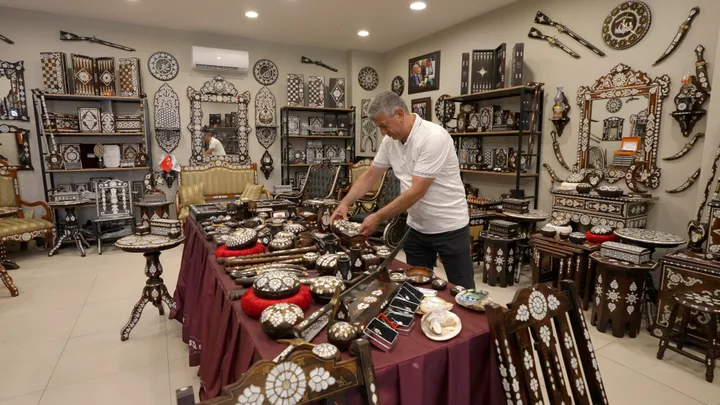
It’s not just a bazaar. It’s a working piece of history — a caravanserai built in the late 15th century during the reign of Sultan Bayezid II, designed as a trading hub for merchants arriving with goods, animals, and long journeys behind them.
And the product that made this place famous was silk.
Koza Han sits at the end of what many people think of as the Silk Road network — not a single route, but a web of trade connections linking East and West for centuries.
Bursa became a major centre for silk production and finishing, supported by local mulberry trees, which feed silkworms. Silk was produced here, processed here, and traded onward — including to European markets.
Today, the focus remains remarkably consistent. Most shops still sell silk products: scarves, textiles, gifts that connect modern visitors with a trade tradition that helped build the city’s wealth.
I meet a local businessman, Mesut, who walks me through the basics — what makes a good silk piece, why certain sizes and weaves sell best, and how Koza Han has shifted over centuries from a place where merchants slept and traded with caravans, into a dedicated marketplace.
It’s one of those places where commerce isn’t separate from culture. It is culture.
From there, I move into the historic heart of the city — among mosques, madrassas, and old caravan routes that still shape the street layout.
One landmark stands out immediately: the Grand Mosque of Bursa, known as Ulu Camii.
Built at the end of the 14th century, it’s an early masterpiece of Ottoman architecture. Unlike many later Ottoman mosques, which are dominated by a single large dome, Ulu Camii has multiple domes and a distinctive interior layout.
It’s also known for an interior fountain used for ablution — a detail that gives the space a sense of movement and calm even when it’s busy.
Places like this matter because they show the early Ottoman style before it evolved into the more monumental forms seen later in cities like Istanbul. You can feel the foundations of an empire’s visual language taking shape.
Not far away is another symbol of the city: the Tophane Clock Tower, rebuilt in 1905. It sits in an area with sweeping views over Bursa, and it’s also close to one of the most important sites in Ottoman memory: the tombs of the empire’s founders.
Up here, I meet an art historian who helps put Bursa into context.
He explains that before the Ottoman conquest, this was a fortified town — relatively small, with a population in the thousands. After 1326, Bursa became the Ottoman capital for roughly four decades, and that period shaped its development and its significance.
Then he points out the tombs: Osman Gazi, founder of the Ottoman state, and Orhan Gazi, his son and the conqueror of Bursa.
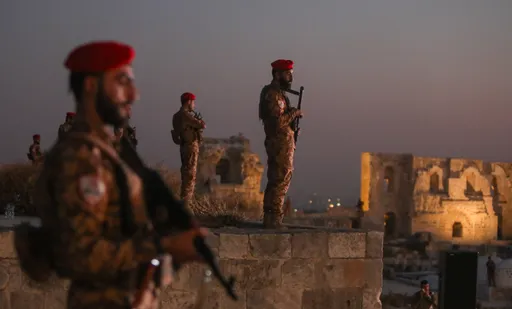
These are not simply historical monuments. For many visitors, they represent origin points — symbols of statehood, continuity, and identity. The ceremonial guards in traditional uniforms underline that meaning. Their presence isn’t just performance; it reflects how history is actively remembered and maintained.
Do you have a sweet tooth?
And of course, once you talk about history in Bursa, you eventually talk about food.
I admit it: I have a weakness for sweets. So I ask what Bursa is famous for on the dessert front, and the answer comes quickly: candied chestnuts, known locally as kestane sekeri.
This is one of those specialities that sounds simple until you taste it. Chestnuts are naturally earthy and soft, and candying them gives a gentle sweetness without losing the original texture.
I visit a producer whose family has been making them for generations. They explain the process — bringing chestnuts in from villages, peeling them, freezing them to manage production, then candying and packaging them. There are even chocolate-coated versions.
The result is exactly what you’d hope: the real chestnut flavour is still there, but with a clean sweetness that makes it feel like a proper local gift — something people genuinely bring home from Bursa, not just something made for visitors.
The next morning, I follow another local recommendation that I keep hearing again and again: tahinli pide.
This is a bakery speciality made with tahini — sesame paste — spread into dough and baked until it turns fragrant, slightly sweet, and deeply comforting.
It’s the kind of food that makes sense in a city where bakeries are part of everyday life: early mornings, warm ovens, regular customers, and traditions that don’t need explanation because they’ve never stopped.
And with breakfast sorted, I head to a local farmers’ market in the city centre.
Markets in Türkiye are more than shopping. They’re how you see what grows locally, what’s in season, and what people actually cook at home.
They’re also where you feel the pace of the city — bargaining, conversation, small routines repeated week after week.
Here, I’m joined by Adil, a wellness chef and nutrition-focused food writer who was born in Bursa. He explains something that’s easy to forget if you think of Turkish food only in terms of a few well-known dishes: Türkiye has enormous regional variety.
The Aegean region of Türkiye is famous for herbs, olive oil, vegetables, and lighter cooking. Eastern regions are more associated with meat, spices, and richer dishes.
And Bursa, sitting close to the sea but also near mountains, benefits from both worlds — fertile land, strong produce, and seasonal specialities like peaches when the timing is right.
Later, Adil takes me for dinner and uses the meal to show how Turkish food often works: lots of small plates, lots of colour, and a balance of textures and ingredients.
We start with artichokes and fennel topped with caramelised onions — a dish that leans Aegean in spirit. There are herb salads, peppers, and plates that use simple ingredients but keep the flavours distinct.
Adil points out the obvious but important principle: the more colour you see on the table, the more likely you’re eating a wider range of nutrients. Turkish cuisine, at its best, does this naturally — not as a wellness trend, but as a normal way of eating.
And that’s the point. Food here isn’t just delicious. It’s cultural knowledge — built over generations, shaped by geography, and still deeply connected to local farming.
Iznik calling
From Bursa, I head east toward another place with extraordinary historical weight: Iznik.
On the surface, Iznik looks like a small town by a lake. But historically, it’s one of the most layered places in Türkiye.
Known in antiquity as Nicaea, it witnessed Roman planning, Byzantine power, and later Ottoman influence. It’s a place where empires rose, struggled, and left traces that still sit side by side.
I meet a history professor, Luca Zavagno, who begins by showing me one of the key entrances — the Istanbul Gate, part of the city’s fortifications.
He explains how the urban layout was designed around major intersecting roads, built in the Roman period, and later incorporated into defensive walls.
Those walls, first built in the late 3rd century, were repaired and rebuilt repeatedly over centuries — after wars, earthquakes, and political shifts.
One especially dramatic chapter came after the Fourth Crusade in 1204, when Istanbul was taken and the Byzantine capital moved to Nicaea for a period.
That kind of history is hard to imagine when you’re standing in a quiet town, but Iznik holds it in its stonework.
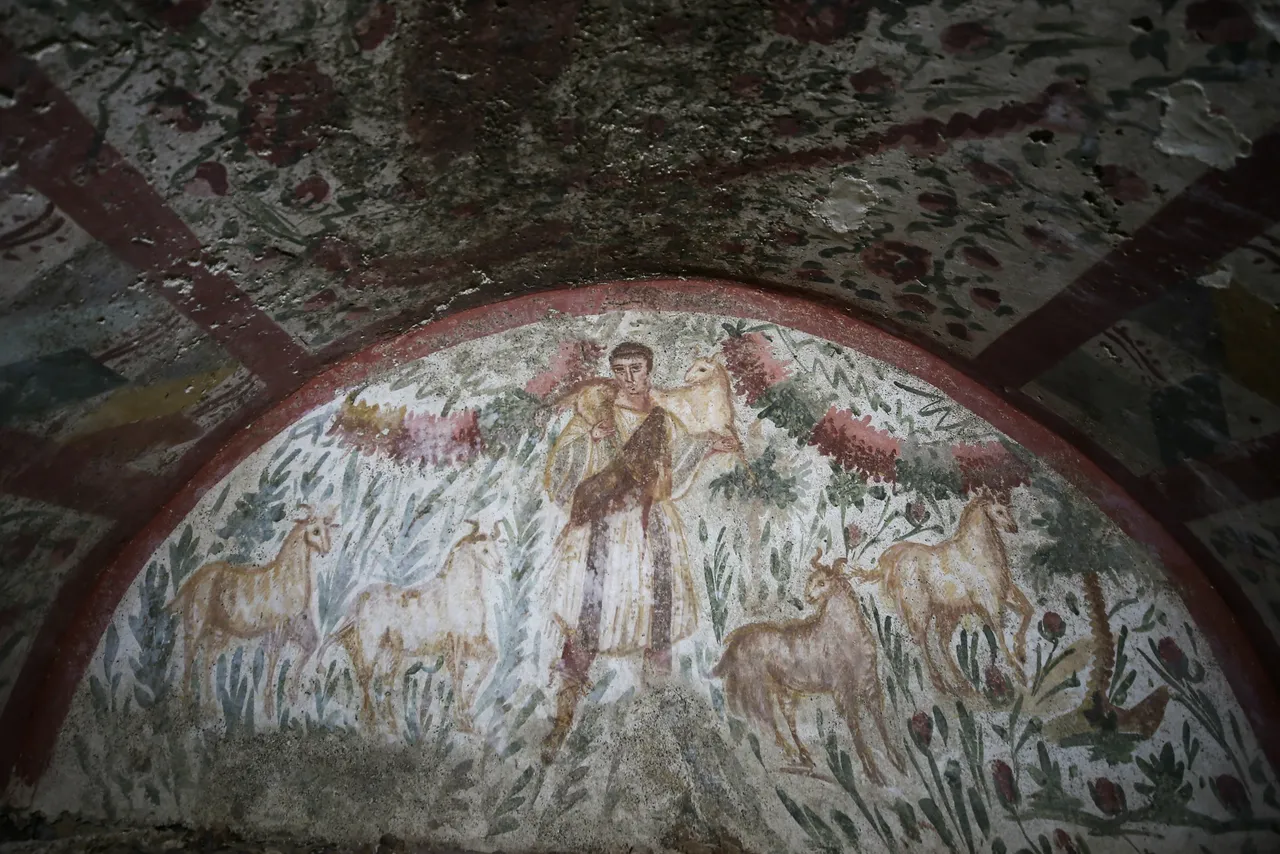
We also visit the remains of a lakeside basilica, an early Christian church discovered in the 2010s after water levels receded. It had been submerged for centuries.
Scholars believe it may be connected to early Christian history in the city — a reminder that Iznik was an important centre of religious debate and authority in late antiquity.
Finally, we step into the Roman theatre — a structure that, in many ways, summarises the city’s long timeline. A Roman entertainment space that later included a Christian chapel, and later still became a place where debris accumulated and burials were made.
In a town like Iznik, history isn’t one story. It’s many stories layered on top of each other — Roman, Byzantine, Ottoman — sometimes clearly visible, sometimes difficult to separate, but always present.
And that’s what makes travelling in Türkiye so consistently surprising. You arrive expecting one thing — a city, a market, a meal — and you leave with a much deeper sense of how places carry time.
Bursa shows you a country building its future through industry and design, while still living inside Ottoman-era streets and trade routes. Iznik reminds you that even small towns can sit at the crossroads of world history.
And once you start noticing that, you can’t really stop.
So… where to next?