 Onur Dogan
A country that once imported almost all its energy is now selling jet fuel to its neighbours, building underground gas vaults the size of small cities, drilling for oil in its own mountains, and searching for reserves in East Africa.
The transformation didn’t happen overnight — but a global energy crisis has put it on full display.
When the Strait of Hormuz became a flashpoint this spring, most countries began scrambling for fuel. Türkiye did not.
On April 22, Transport Minister Abdulkadir Uraloglu made a statement that would have been unthinkable a decade ago: Türkiye, he said, faces “no jet fuel shortage” — and is in fact a net exporter.
The same week, Energy and Natural Resources Minister Alparslan Bayraktar confirmed there were no supply problems in fuel, natural gas, or electricity, despite the crisis triggered by the blockade of the Strait of Hormuz.
Meanwhile, across Europe, the picture looked very different.
KLM cancelled 160 flights. SAS suspended thousands more.
The International Energy Agency warned of potential jet fuel shortages across the continent within weeks — a region that had met 75 percent of its aviation fuel needs from Middle Eastern sources.
Türkiye watched all of this from a very different vantage point.
A country that built its own buffer
The contrast wasn’t a matter of luck. It was the result of deliberate, years-long investment in refining capacity, supply diversification, and underground storage — pursued precisely because Ankara understood how exposed it was.
Although Türkiye imports more than 83 percent of its crude oil, it processes that crude domestically.
TUPRAS and SOCAR’s STAR Refinery lead jet fuel production, and data from Türkiye’s energy market regulatory authority EMRA shows Türkiye exported nearly 402,000 tonnes of aviation fuel in February alone, while importing just 59,000 tonnes.
TUPRAS signed a five-year supply agreement with Istanbul Airport for 1.8 million tonnes per year, while STAR Refinery committed a further 700,000 tonnes annually — securing more than 2.5 million tonnes of domestic supply for Istanbul Airport alone.
The result: while European hubs grappled with cancellations and dry pumps, Istanbul Airport recorded the highest air traffic of any hub in Europe in the week of April 30 to May 6, according to EUROCONTROL data.
Foreign carriers began routing through Turkish airports specifically to refuel — a technical stop born of necessity that reflects a new strategic reality.
The gas story is just as striking — even if less visible.
Beneath the dry plains of central Anatolia, near Sultanhani in Aksaray province, lies the Tuz Golu Underground Gas Storage Facility — a network of enormous artificial caverns drilled into the salt formations below one of the world’s largest salt lakes.
On the European shore of the Marmara, Silivri serves as Türkiye’s second-largest storage hub, commissioned in 2007 with a capacity now being expanded to 4.6 billion cubic metres.
Together, these two facilities form the backbone of Türkiye’s gas security.
Energy and Natural Resources Minister Bayraktar announced that the two sites together had reached a combined capacity of 6.3 billion cubic metres, with both entering the current period at 100 percent capacity.
But the expansion plans go much further.
Bayraktar has said the target is to take Tuz Golu to 5.4 billion cubic metres and Silivri to 6 billion — bringing total national storage to around 12 billion cubic metres by 2028, equivalent to roughly 20 percent of Türkiye’s annual consumption.
And crucially: once these expansions are complete, Türkiye will be able to supply all residential gas needs on its coldest winter day from storage and domestic Black Sea production alone — without a single cubic metre of imported gas.
Hydropower from the mountains of the southeast
Beyond gas storage, Türkiye has spent two decades harnessing its rivers.
The Ilisu Dam on the Tigris River in southeastern Türkiye — among the largest dams in the world by fill volume and the country’s fourth-largest hydroelectric facility — has produced 14.9 billion kilowatt-hours of electricity since coming online in 2020, contributing tens of billions of lira to the national economy.
With 1,200 megawatts of installed capacity, the dam produces enough electricity annually to power a city the size of Ankara.
The Ilisu project sits alongside the older giants of the Euphrates — Ataturk, Karakaya, and Keban — within a hydroelectric network that forms the clean-energy backbone of the country’s southeast, a region that for decades saw its underground wealth remain untapped because of security conditions that have now fundamentally changed.
Fossil fuels and water are only part of the story. Türkiye is in the midst of one of the most significant renewable energy build-outs in its history.
As of March 2026, Türkiye’s total installed electricity capacity reached 125,000 megawatts, with renewable energy sources accounting for 62.4 percent of the total.
Solar alone had reached 26,478 megawatts — over 21 percent of total installed capacity — while wind accounted for 15,039 megawatts.


In 2025, wind and solar together generated more than 22 percent of Türkiye’s electricity for the first time — making Türkiye the only country among 16 nations in the Middle East, Caucasus, and Central Asia to cross the 20 percent threshold.
The long-term ambition is larger still. Türkiye’s official strategy calls for solar and wind installed capacity to reach 120 gigawatts by 2035, up from around 41,5 gigawatts today.
Bayraktar framed it clearly: “We are working with all our strength to reach our target of 120,000 megawatts of installed capacity in solar and wind by 2035.”
What has changed most fundamentally in recent years is that Türkiye is no longer content to process other countries’ crude. It is finding its own.
The discovery at Gabar Mountain in Sirnak province — declared the largest onshore oil find in Türkiye’s republican history — has been transforming the country’s energy profile.
By March 2025, Türkiye’s total daily oil production had reached 136,000 barrels, with 81,000 of those coming from Gabar alone.
The target is 200,000 barrels per day — enough to meet around 20 percent of Türkiye’s domestic needs.
In Zonguldak on the Black Sea coast, Türkiye’s long-standing coal production continues to be invested in as part of the push to reduce dependence on energy imports across all fuel types.
To the north, the Sakarya Gas Field is on track to produce 20 million cubic metres per day by mid-2026, with a second floating production platform being deployed.
By 2028, the target is 45 million cubic metres daily — enough to cover all of Türkiye’s residential gas consumption from a single domestic source.
That ambition now extends well beyond Türkiye’s borders.
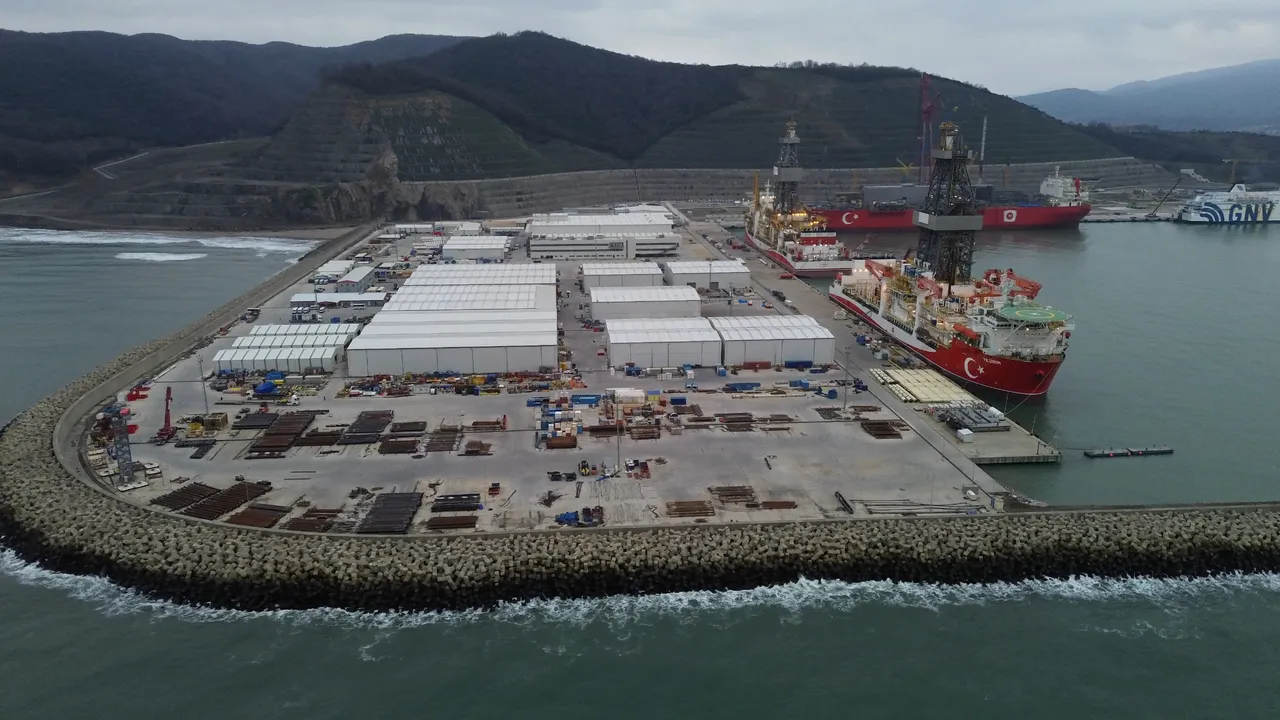
The drilling vessel Cagri Bey continues to survey oil and natural gas deposits off the coast of Somalia, where the ministry believes there are strong signs of oil reserves.
On Libya, Bayraktar said Türkiye is actively seeking new partnerships for both onshore and offshore energy projects, with talks ongoing to secure a stronger operational foothold.
As Bayraktar put it: “We are now a country that searches for oil in its own seas with its own ships. There will not be a single place Türkiye leaves undrilled.”
Diplomacy as infrastructure
None of this happens in a vacuum. Türkiye’s energy pivot is inseparable from its foreign policy — and that is by design.
Türkiye has long pursued what it calls a “multi-dimensional foreign policy”: simultaneously a NATO member, an active player in the Middle East, a key node in Eurasian geopolitics, and a growing partner for the Global South.
In the energy context, this approach pays dividends that purely commercial strategies cannot.
Foreign Minister Hakan Fidan has framed Türkiye’s role in terms of the Middle Corridor — the overland trade and energy route running from China through Central Asia and the Caucasus to Türkiye and on to Europe — as a direct expression of Türkiye’s multi-dimensional strategic vision.
This matters for energy in concrete ways.
Türkiye’s deepening ties with Algeria, for example, are rooted in a 1988 LNG supply agreement, renewed in 2020 and extended to 2027, covering up to 4.4 billion cubic metres of LNG annually — a deal that has become more valuable as Türkiye diversifies away from single-source dependence.
Relationships with Gulf producers, Azerbaijani pipeline partners, African frontier markets, and even Russia — which Türkiye simultaneously hosts gas flows from and competes with as a transit alternative — all reflect a diplomatic posture calibrated to keep multiple energy relationships functional at once.
Bayraktar has put the logic plainly: “We see energy and mining as tools of cooperation. The right energy projects must be on a win-win basis.
Our goal is to build regional stability through energy diplomacy, to increase prosperity in the region, and to prevent conflicts”.
That is a different kind of energy strategy — one where pipelines and drilling contracts are diplomatic instruments as much as commercial ones.
And it is precisely this combination of domestic investment and international engagement that has enabled Türkiye to build the kind of energy depth that most of its neighbours and many of its allies currently lack.
The bigger picture
What is emerging is not simply an energy policy. It is a grand strategy in which geography, domestic investment, and diplomatic relationships are all pointed in the same direction.
The country that once imported nearly all of its energy is now exporting jet fuel, filling underground caverns with gas reserves, drilling in its own mountain ranges and in the waters off East Africa, and building solar and wind capacity at a pace that is reshaping its electricity grid.
The journey is not complete. Import dependence remains high across several fuel types, prices remain volatile, and the renewable build-out faces infrastructure bottlenecks that will take years to resolve.
But the direction is clear — and the crisis in the Strait of Hormuz this spring has done more than any policy document to show how far Türkiye has already come.
Bayraktar has said it himself: “There are no overnight solutions to energy problems. This requires long-term planning, political will, and execution”.
The decisions made over the past decade — the caverns carved beneath Tuz Golu, the platforms anchored in the Black Sea, the wells sunk in Gabar and beyond — are exactly that kind of planning, now paying off in a world that can no longer afford to take energy security for granted.