Far-right Israeli ministers are using the Falkland Islands dispute to hit back at the UK by framing the South Atlantic archipelago as “occupied Argentine territory”.
The latest barrage of criticism follows expected restrictions by the British government on goods from illegal Israeli settlements in the occupied West Bank.
Israel’s National Security Minister Itamar Ben-Gvir posted on X in Spanish that it was time for Israel to “publicly recognise that the Malvinas Islands (otherwise known as Falkland Islands) are Argentine territory under occupation, which the British violently steal from the Argentine people”.
He accused Britain of oil drilling that “steals money from the Argentine people” and called on Prime Minister Benjamin Netanyahu to recognise Argentine sovereignty and impose sanctions “as long as the occupation continues”.
Israel’s Finance Minister Bezalel Smotrich also demanded the British ambassador’s expulsion, declaring the British Mandate over “the Land of Israel is over”.
The sharply critical remarks by top ministers further weaken Tel Aviv’s already deteriorating relationship with London as far-right politicians look for maximum domestic political mileage in the run-up to the general election next month.
Why is Falkland suddenly in the news?
Argentina recently demanded that Britain hand over the islands to the Latin American country, a similar move to London transferring Hong Kong to China in 1997.
But what triggered the critical statements by the Israeli ministers was the prospect of a ban by Britain on trade in goods from illegal Israeli settlements in the occupied West Bank.
The planned restrictions will be in line with a 2024 International Court of Justice advisory opinion, which requires that governments worldwide must not help Israel with its occupation of Palestinian territories.
British Foreign Secretary Ed Miliband is also expected to “reassert” support for a two-state solution, which has ruffled feathers among right-wing Israeli politicians.
Ben-Gvir and Smotrich have already been sanctioned by the UK, Australia, Canada, New Zealand and Norway in 2025 for repeated incitement of violence against Palestinians in the occupied West Bank and elsewhere.
The same ministers have aimed their guns at Britain on the so-called occupation of the Falkland Islands, even though Israel keeps expanding its own settlements in the occupied West Bank in clear violation of international law.
Analysts say that far-right politicians in Israel are competing for electoral support from voters who want to shift the international focus away from illegal Israeli settlements in the occupied West Bank.
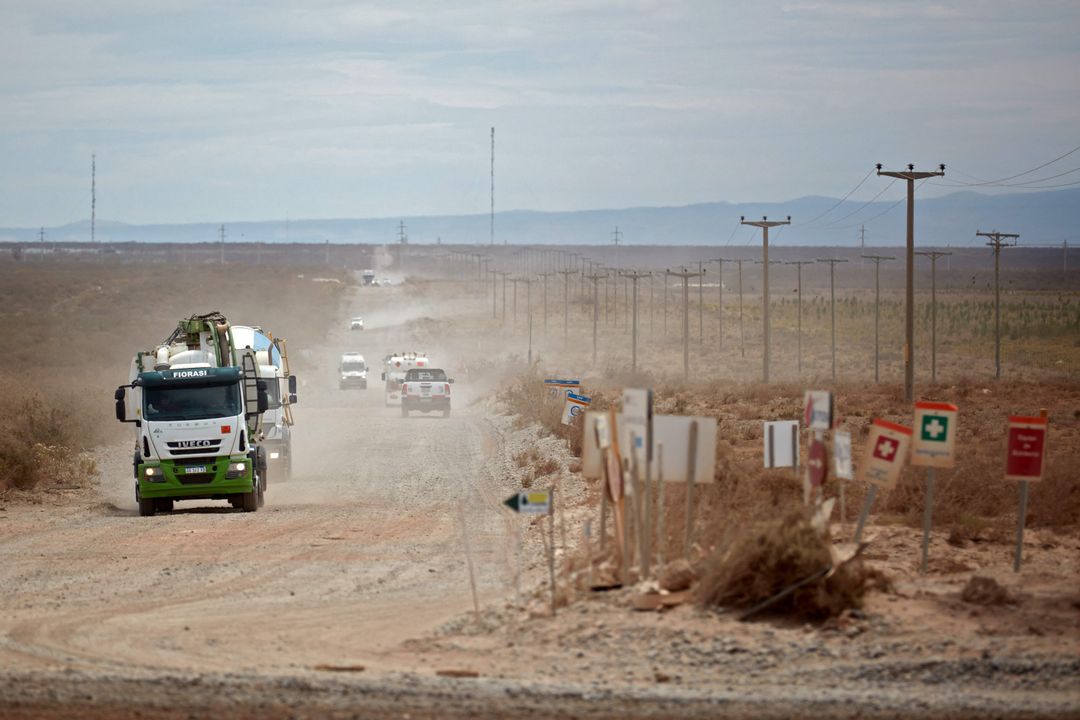
There is also a commercial angle. An Israeli-linked company, Navitas Petroleum, holds 65 percent shares in the Sea Lion oil project north of the islands. Argentine President Javier Milei has announced sanctions targeting firms, shareholders and suppliers involved in the project.
What is at stake?
Falklands consist of two main islands: East Falkland and West Falkland, apart from the archipelago of more than 700 smaller islands.
These are located about 480 kilometres east of the Argentine mainland.
Britain has administered them since 1833. Argentina says it inherited the islands from Spain after independence and that Britain occupied them by force.
But Britain insists that the islanders have the right to self-determination.
In 1982, Argentina moved into the islands. A fight ensued when Britain intervened, resulting in the deaths of 649 Argentine military personnel, 255 British military personnel and three islanders in the next 74 days.








Even though Argentina surrendered, it never dropped its claim to the territory.
A 2013 referendum showed 99.8 percent of islanders wanted the archipelago to remain a British Overseas Territory.
Argentina dismissed the vote, arguing the population was implanted after 1833, the year Britain assumed control of the area.
The islands are important for many reasons. For example, the Sea Lion oilfield is estimated to hold 1.7 billion barrels of oil, with first production targeted for 2028.

Is Israel diplomatically alone on this issue?
Most governments around the world either stay silent or recognise the islands as British-administered while calling for negotiations.
The UN lists the Falklands as a non-self-governing territory and does not recognise either claim as definitive.
But Latin American states usually back Argentina’s claim at the UN.
The US, however, has traditionally recognised British administration of the islands. But that neutrality is now in question.
According to a leaked Pentagon email, the US may be reviewing its support for Britain’s claim to the Falkland Islands. The possible change in the US stance is apparently in reaction to Britain’s lack of support for Trump’s war against Iran.
Analysts say any change in the US stance on the Falkland Islands will be a psychological blow to Britain’s sovereignty claim over the territories.
Britain midwifed Israel’s birth
The irony in Israel calling out Britain for “occupying” the Falkland Islands is sharp. After all, it was Britain that issued the 1917 Balfour Declaration that called for a “national home for the Jewish people” in Palestine.
The League of Nations later granted Britain the Mandate for Palestine. Afterwards, Jewish immigration increased to Palestine despite Palestinian Arab opposition.
Britain eventually withdrew in 1948 when Israel declared independence, amid an ongoing Arab-Israeli war and the mass displacement of Palestinians from their ancestral lands.
For decades, Britain has remained one of Israel’s most consistent Western supporters. But that relationship has somewhat frayed over Israel’s genocidal war on Gaza, illegal settlement expansion in the occupied West Bank and the recognition of a Palestinian state.
How Britain, others have reacted
London’s position on the Falkland Islands remains “unwavering”.
So far, there has been no direct official rebuke of Ben-Gvir’s latest post. However, the two ministers are already persona non grata in Britain for their involvement in incitement of violence towards Palestinians.
US President Donald Trump has said he is reviewing “every position”, reflecting his dissatisfaction with Britain’s hesitation to join the recent US-led war against Iran.
Foreign policy analysts view the statements by the Israeli ministers as transactional rather than principled. They say that sovereignty disputes offer politicians an easy “rally-around-the-flag” opportunity.