The modern incarnation of the East India Company – the legendary English trading firm that once ruled vast parts of India with a private army twice the size of the British military – has filed for bankruptcy in England.
Revived as a luxury goods brand in 2010, the modern version of the old trading behemoth has sought protection under insolvency laws, citing mounting debts.
Despite the prestige associated with a high-end retail business, the 21st-century version of the East India Company was only a shadow of its original self.
The reincarnated form of the East India Company sold teas, chocolates, spices, and nostalgia-invoking replicas of historic ships, a far cry from the time when its forebearer raised an army of its own to maintain a monopoly over the trade of tea, cotton, and spices from Asia to Europe and the Americas.
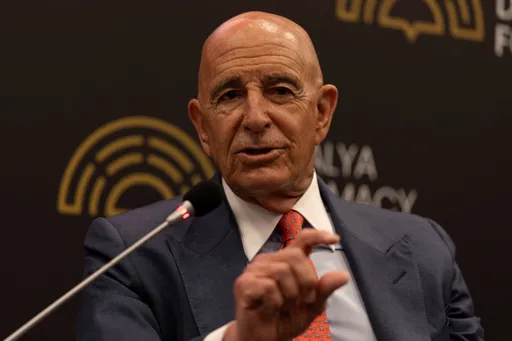
Indian businessman Sanjiv Mehta acquired the dormant trademark in the 2000s for a reported £10 million in a move seen as a form of revenge for the colonised.
The high price was solely for the nostalgia-evoking nametag, as the British Parliament dissolved the original East India Company back in 1874.
In other words, the purchase of the unique name was meant to revive the empire's glamour without actual imperialism, that too in the heart of London, by a businessman of Indian origin.
“A company which once owned India is now owned by an Indian... a feeling of the empire striking back,” Mehta said in 2020.
But the brand struggled for years and eventually crashed under the weight of debt.
A financial innovation of its time
In the late 1500s, Europe was abuzz with tales of the Spice Islands, or modern-day Indonesia.
Consumers in Europe were willing to pay handsomely for nutmeg, cloves, and pepper, which grew like weeds on Southeast Asian islands.
The popularity of these spices in Europe was for many reasons.
They enhanced the flavour and preserved food for later use before the invention of refrigerators.
The use of these spices also masked the taste of rotting meat.
But the Portuguese and Dutch controlled the sea routes at the time, leaving little space for English merchants to operate.
A group of London businessmen petitioned Queen Elizabeth I for a charter, which she granted on December 31, 1600.
What made the newly formed business entity unique was its structure: the East India Company was set up as one of the world's first joint-stock companies, a financial innovation at the time.
Until that point, business entities had no mechanism to protect their owners from losing everything in the event of a business failure.
But the joint-stock company introduced the concept of limited liability.
The new structure allowed a considerably large number of investors to own shares in a perpetually running business.
That meant every investor faced a business risk proportional to their investment and received a corresponding share in the net profit.
Investors in the East India Company reaped profits as high as 400 percent on the trade of exotic items like nutmegs and cloves.
Within decades, the East India Company raised huge amounts of money through stock sales to fund its ever-expanding fleets that rivalled those of national navies.
The company's stock was traded on what became the London Stock Exchange 200 years later.
An army of its own
The East India Company started facing cutthroat competition from competitors like the Dutch East India Company, founded two years later.
The competition became so intense that the rival company from the Netherlands captured and beheaded English traders in the 1623 Amboyna Massacre over spice monopolies.
This nudged the East India Company towards raising its own private army.



By the mid-1700s, the company maintained a force of over 250,000 soldiers, twice the size of the British army at home.
To fund its military expenses, the trading firm levied taxes on territories it controlled.
The soldiers swore allegiance to the East India Company, not to the British Crown, which made the trading firm a state within a state.
This company’s army famously won the Battle of Plassey in 1757 against the Nawab of Bengal and his French allies.
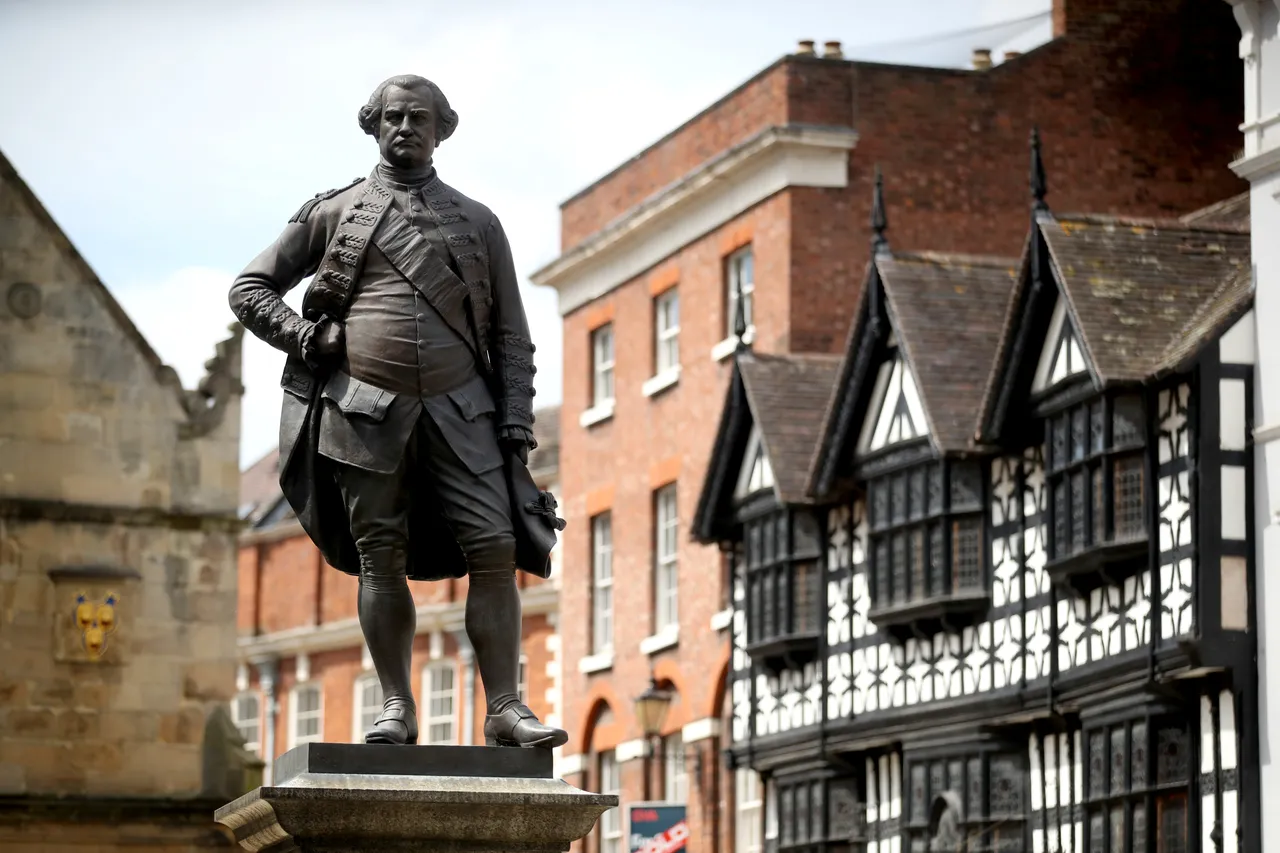
Under Robert Clive, a former clerk-turned-military genius, the East India Company’s 3,000 troops defeated 50,000 troops of the Bengal army through bribery and betrayal.
Clive pocketed a fortune equivalent to millions of pounds in today’s value, something he described as being “not contrary to accepted company practice”.
The East Company soon controlled more than half of global trade in the mid-1700s and early 1800s.
It monopolised the flow of goods between Asia and Europe, shipping tea from China and cotton from India.
The company supplied most of Britain's tea. It also sought and gained access to the tea market in the American colonies.
The East India Company’s tea trade in the present-day United States created resentment among the residents of the American colonies.
In 1773, some Americans staged the Boston Tea Party, in which members threw chests of tea taken from ships in the city's harbour into the sea in protest of the British Parliament's Tea Act.
The legislation minimised the tax that the company paid on tea to the British government, a move that granted the business entity a “de facto monopoly” on the American tea trade.
The protest is considered one of the loudest expressions of public resentment in the run-up to the US Declaration of Independence in 1776.
The Bengal Famine
The East India Company pioneered the concept of global supply chains, albeit at a steep human cost.
In India, it forced farmers to grow cash crops like indigo for British dyes, often at the expense of food security.
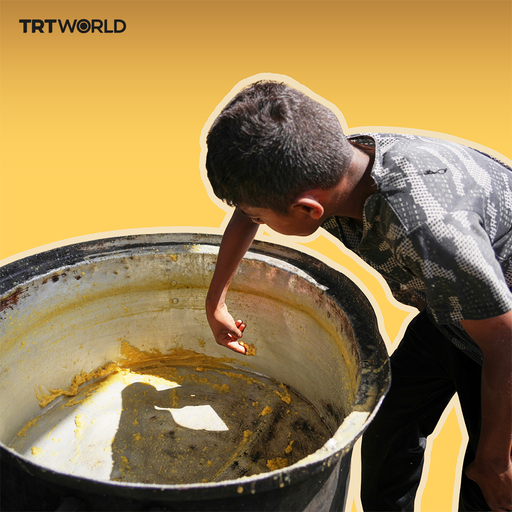
But the most horrifying crime committed by the East India Company was the Bengal Famine of 1769-1770.
As de facto ruler of Bengal, the East India Company collected taxes after the Battle of Plassey, pushing the peasants into extreme poverty.
When Bengal suffered a drought in 1769, stockpiles that could have fed the starving residents of Bengal were exported for profit instead.
Eyewitness accounts show horrific conditions with people resorting to cannibalism. Estimates vary, but economists like Nobel Prize winner Amartya Sen say the death toll was around 10 million, roughly equal to the population of London today.
Over time, scandals and corruption allegations led to British parliamentary inquiries.
The company's monopoly ended in 1813 for the India trade and in 1833 for the China trade, opening the door to competitors.
But the real death knell for the East India Company came with the Indian Rebellion of 1857, often called the Sepoy Mutiny.
Sparked by rumours of rifle cartridges greased with cow and pig fat, offensive to both Hindu and Muslim soldiers, it erupted into an uprising against the rule of the East India Company.
Extreme acts of violence by the British followed, before the widespread chaos forced Queen Victoria's government to step in.
The British parliament passed the Government of India Act 1858, which transferred control of India to the Crown.
Afterwards, the East India Company became a mere administrator, while its army merged into the British military.
In 1874, the East India Stock Dividend Redemption Act dissolved the company entirely, paying off shareholders and closing the books on an entity that had governed 200 million people.