Trump denies relief offer as reports say he may ease Iran sanctions
Oil climbs after Trump says he is not easing sanctions on Tehran
Iran ready for diplomacy but 'fully prepared' for war if US attacks
Hezbollah chief says Israel unable to 'break the resistance'
2 hours ago
Iran threatens to hit regional infrastructure if its security not ensured
SUMMARY
Oil climbs after Trump denies he is willing to ease sanctions on Iran
Oil prices rose on Wednesday after US President Donald Trump said he would not ease sanctions on Iran, while Qatar pushed for peace talks, after falling in the previous session on a recovery in crude supply from the Middle East.
Brent crude futures rose $1.14, or 1.11%, to $103.73 a barrel. US West Texas Intermediate crude 34 cents, or 0.38%, to $89.72.
Araghchi reaffirms commitment to diplomacy
Iranian Foreign Minister Abbas Araghchi has said Tehran would use all means to defend its sovereignty and territorial integrity while continuing to pursue diplomacy to protect its national interests.
He told Iran’s IRIB that Iranians would never abandon their demand for justice and accountability for what he described as “US and Israeli war crimes”.
“Iran has always remained committed to using diplomacy to safeguard its national interests and ensure peace in the region,” Araghchi said.


US puts $15m bounty on information to disrupt IRGC finances
Washington is renewing attention on a $15 million reward for information that could disrupt the financial networks of Iran’s Islamic Revolutionary Guard Corps (IRGC), as it steps up economic pressure on Tehran.
State Department spokesman Tommy Pigott highlighted the existing offer, part of a broader US effort to obtain information on the IRGC through multimillion-dollar incentives.
In August, Washington offered $10 million for information leading to the identification of five senior IRGC commanders.
Pakistan vows to defend Saudi Arabia against Houthis
Pakistan will use “whatever means are available” to defend Saudi Arabia against Houthis, the country’s defence minister said.
Defence Minister Khawaja Muhammad Asif declined to say whether Pakistani forces had already participated in airstrikes.
He said, however, that Pakistan’s military capabilities would be available to Saudi Arabia.
Fire breaks out on vessel hit by projectile in Strait of Hormuz: UK maritime agency
A fire broke out aboard a vessel after it was struck by an unidentified projectile while transiting the Strait of Hormuz on Monday evening, the UK Maritime Trade Operations agency said.
“The fire has since been extinguished and the vessel is under way. Crew is safe,” UKMTO said in a statement.
It said there has been no reported environmental impact or damage assessment.
Iranian rial hits fresh record low as US dollar tops 2.5M in free market
Iran’s rial fell to a fresh record low against the US dollar, with the free-market rate crossing 2.5 million rials per dollar.
The dollar was quoted at 2.542 million rials, up 3.84 percent from the previous day, according to Pashizi, a website tracking Iran’s free foreign exchange market. It reached an intraday high of 2.548 million rials.
Lebanese army gets 47 Humvees, 5 trucks under US assistance programs
The Lebanese army said that it had received 47 Humvee military vehicles and five trucks as part of US assistance programs for the armed forces.
A military statement said that the vehicles were delivered at Beirut port.
“This grant comes within the framework of US authorities’ support for the military institution, with the aim of strengthening its operational capabilities and raising the readiness of its units,” the statement said.
Saudi Arabia resumes Yanbu oil loading after pipeline restart
Saudi Arabia has resumed oil tanker loadings from its Red Sea port of Yanbu after restarting operations on the East-West Pipeline, according to trade sources and shipping data, improving the outlook for oil exports from the Middle East.
The resumption of Yanbu loadings, halted earlier this month after a drone attack on the pipeline, weighed on global oil prices on Monday as it added to signs of increased flows from the Middle East, from which the US war with Iran has throttled oil shipments.
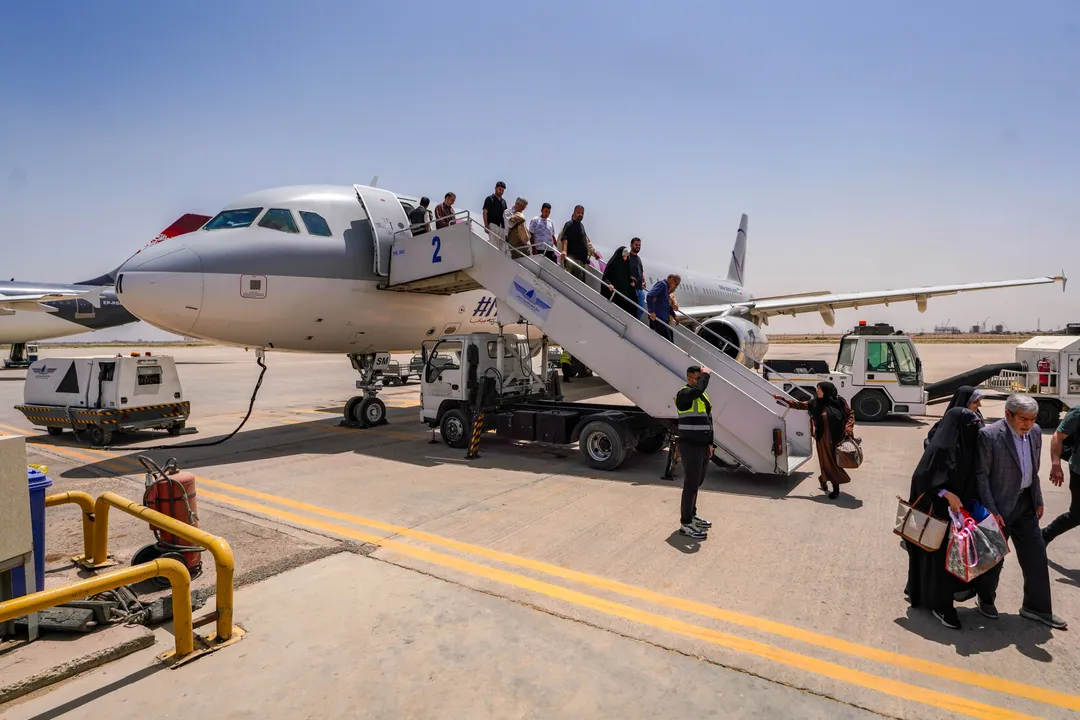
Iraqi Airways to resume Iran flights in October under US exemption
The move follows reports that Washington will grant a one-month Treasury waiver allowing Iraqi Airways to fly the Iran–Najaf route, with a permanent exemption possibly next.
Qatar confirms relaying messages between US, Iran to end war
Qatar said it is relaying messages between the US and Iran as part of its mediation efforts to end their war.
“Qatar’s mediation efforts are ongoing, and we are currently relaying messages between the American and Iranian sides,” Qatari foreign ministry spokesperson Majed Al-Ansari told a press conference in Doha.
Asked about the possibility of a large-scale US military attack on Iran, Ansari said: “We are concerned about any escalation in the region and are working to find a peaceful solution.”
SUMMARY
Trump denies relief offer as reports say he may ease Iran sanctions
Oil climbs after Trump says he is not easing sanctions on Tehran
Iran ready for diplomacy but 'fully prepared' for war if US attacks
Hezbollah chief says Israel unable to 'break the resistance'