Pezeshkian unveils new economic measures to counter sanctions
Iraq transports 2 million barrels of crude through Strait of Hormuz
Houthis claim missile attack on Saudi Aramco in Riyadh
US moves around 9,000 troops aboard ships to Middle East
US sends additional Patriot batteries to Saudi Arabia

10 hours ago
Pezeshkian unveils sanctions measures as Iraq ships oil through Hormuz
SUMMARY
Iran's top diplomat says conflict with US has no military solution
Iran's Foreign Minister Abbas Araghchi has said that there is no military solution to his country's conflict with the United States, with talks on ending the war apparently at an impasse.
"If our enemies again choose the path of military confrontation, our response will be stronger than before, and we will defend ourselves with even more force," Araghchi said at a gathering of foreign ambassadors.
"There is no military solution, nor any solution based on new sanctions."
Bangladesh condemns Houthi attack near Prophet's Mosque in Medina
Bangladesh has condemned last week’s drone attack on a power station in the Saudi city of Medina that has been blamed on the Houthis.
In a statement, Bangladesh’s Foreign Ministry said the “deliberate targeting of vital civilian infrastructure that serves the Prophet's Mosque is an unacceptable assault on the sanctity of Islam's holiest sites.”
Blaming the Houthis for the attack, the statement said Bangladesh stands in full solidarity with Saudi Arabia in defending its security and sovereignty.
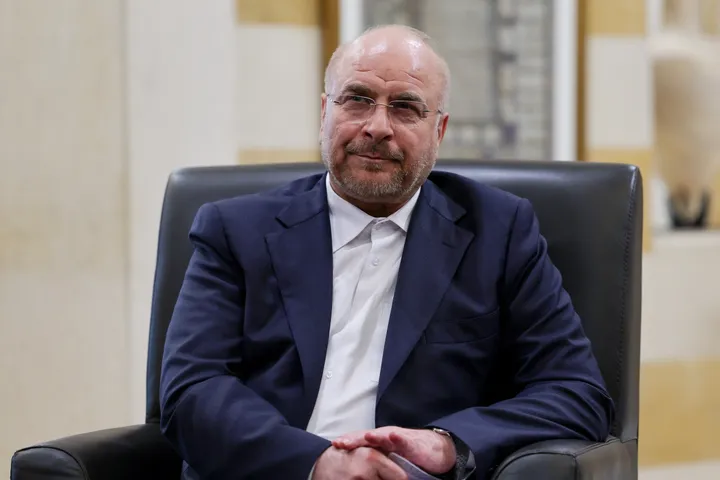


Iran's Ghalibaf says Hormuz won't reopen until conditions are met: report
The Strait of Hormuz will not reopen until seven Iranian conditions set out in a June interim agreement with the US are met, Nournews reported Iran's parliament speaker Mohammad Bagher Ghalibaf as saying, a few days after Tehran received Washington's reply to its diplomatic proposal.
“The Americans, who say something different in the media, have recently put forward proposals through a mediator. But they must understand that the period of dragging out the process and dictating one-sided demands is over," Ghalibaf was quoted as saying.
Ghalibaf said the position of Iran is firm, “the Strait of Hormuz will not be opened until our seven conditions, based on the Islamabad Memorandum of Understanding, are met."
US carrier visits Thailand after 6-month Mideast deployment
The US aircraft carrier George HW Bush arrived in Thailand's resort island of Phuket with about 4,800 personnel aboard for a rest-and-recreation break after six months supporting the US-Israel war in the Middle East.
For the last six months, the Nimitz-class aircraft carrier and its strike group supported ‘Operation Epic Fury’ and the US naval blockade in the US Central Command area of responsibility to secure maritime security and stability in the Middle East, according to the US Navy.
Trump says Iran has ‘virtually given up’ nuclear arms plans
US President Donald Trump has said that Iran has “virtually given up” any plans to develop nuclear weapons.
Trump also claimed oil prices were currently decreasing, long elevated after Israel and the US launched strikes against Iran on Feb. 28.
“By the way, Iran, as you know, has virtually given up any plans of a nuclear weapon,” Trump told reporters as he departed the White House to attend a rally in the state of Ohio.
Russia will never sacrifice Iran ties for another country, Medvedev says
Russia will never sacrifice its ties with Iran for relations with another country, Security Council Deputy Chairman Dmitry Medvedev said, according to a post on X by Iran’s Fars News Agency.
“We and Iran are strategic partners and will remain so forever,” Medvedev said.
Yemen's Houthi-run media reports Saudi attack on Sanaa
Yemen's Houthi-run Al Masirah TV has reported an attack carried out by Saudi Arabia on the capital Sanaa.
There was no immediate Saudi confirmation on the early Saturday attack.
Iranian UN delegation duo 'kicked out' of US
The United States has "kicked out" two members of the Iranian delegation who attended the recent UN General Assembly after they ignored an order to leave the country, the State Department said.
"Two more members of the Iranian delegation were found still in (New York) long after the United Nations General Assembly had passed. They have now been kicked out of the US," a US official told AFP news agency, adding that Secretary of State Marco Rubio "means business."
Israeli bid to assassinate Hamas leader despite truce fails — media
Israeli assessments indicated that an attempt to assassinate acting Hamas leader Ali al-Amoudi in an air strike on Gaza City likely failed, Israeli Army Radio has said.
The attack on a residential flat killed five Palestinians, including four women, whilst al-Amoudi's fate remains unconfirmed.
Pezeshkian unveils measures to counter sanctions
Iranian President Masoud Pezeshkian confirmed that Tehran adopted new economic measures to counter intensifying sanctions. Writing on X, Pezeshkian stated that government actions and public resilience prevented the enemy from severing the country’s vital economic arteries.
Iraq says transported 2 million barrels of crude through Hormuz
Iraq’s state-owned Oil Tanker Company transported two million barrels of crude through the Strait of Hormuz on a supertanker, marking its first such transit in decades.
The breakthrough moves exports beyond Basra port, providing state marketer SOMO greater flexibility over where and how it sells national oil supplies.
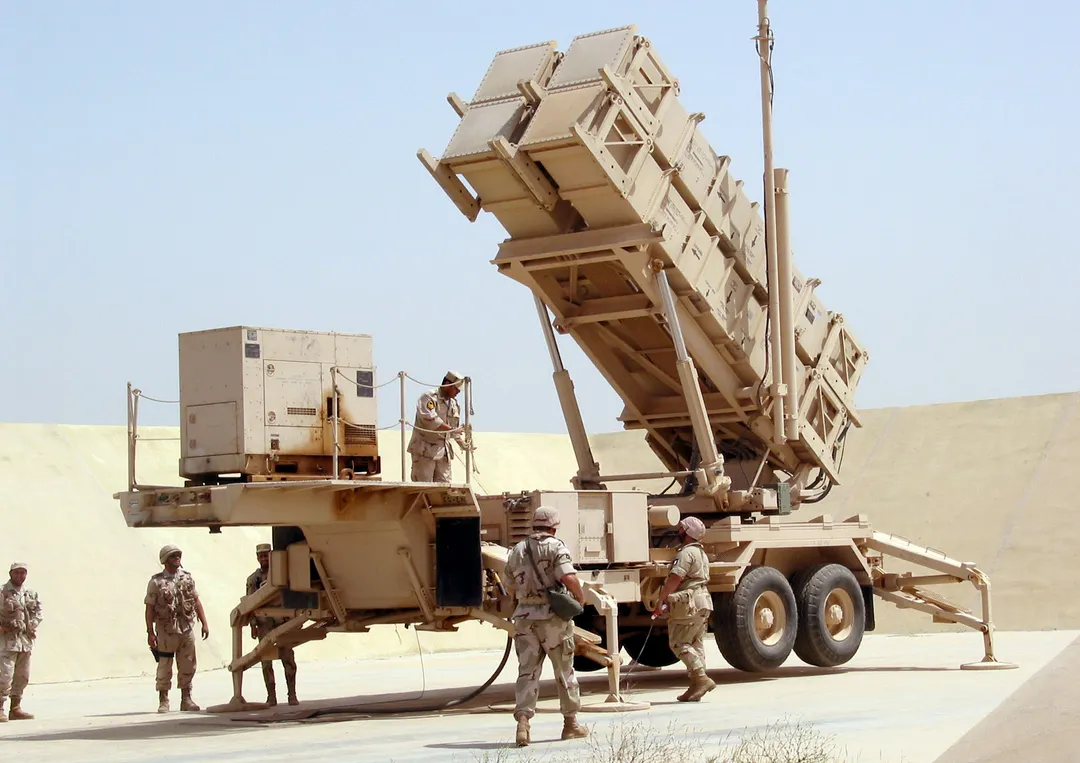
US sends additional Patriot batteries to Saudi, Qatar to protect energy sites: report
The deployments aim to reassure allies amid the possible resumption of major US attacks on Iran, according to an Axios report.
Yemen's Houthis say they attacked Aramco facility in Riyadh
Yemen's Houthis said that they attacked an Aramco facility in Saudi Arabia's capital, Riyadh, with ballistic missiles and drones.
There was no immediate confirmation from Saudi Arabia.
Israeli army blows up school, shells towns in southern Lebanon despite ceasefire: Report
The Israeli army blew up a school, burned homes and carried out airstrikes and artillery shelling across southern Lebanon, according to the official Lebanese National News Agency.
In Houla, in the Marjayoun district, Israeli forces planted explosives in a private school building and detonated them, destroying the structure, the agency reported.
Troops also set fire to homes in the town, it said.
Over 80 percent of emergency oil release already delivered, says International Energy Agency
More than 80 percent of the emergency oil stocks pledged by International Energy Agency (IEA) members in March have already been released, the head of the agency said.
"Around 325 million barrels of the IEA collective action announced on 11 March have so far been released," Executive Director Fatih Birol told G7 leaders, according to an agency statement. Birol added this represented more than 80 percent of the 400 million barrels originally pledged.
Energy markets continued to face significant pressure from the Strait of Hormuz crisis, particularly in diesel supplies, Birol said.
Iranian rial at new low, as cenbank sells dollars to support currency
Iran's rial continued its decline, as the central bank announced an injection of up to $2 billion to support the currency while the economy faces US sanctions and a naval blockade.
The US dollar was sold around 2.688 million rials, up from 2.632 million on Friday, according to free-market tracking website bon-bast.com, while alanchand.com reported 2.695 million rials per dollar.
State television said state banks began selling up to $2 billion to support the currency, which has lost more than half of its value in the past year.
Portugal investigates US use of Lajes Air Base ahead of Iran war
Portugal’s Public Prosecutor’s Office has opened an inquiry into the legality of US military use of Lajes Air Base ahead of its war against Iran, according to media reports.
The inquiry follows a complaint filed by the Left Bloc in April, which called for an investigation into whether the use of the base violated domestic and international law, broadcaster RTP reported.
Flights between Iran and Iraq’s Najaf to resume on Sunday
Flights between Iran and Iraq’s Najaf will resume on Sunday, the Iraqi state news agency reported.
Iraq had suspended flights amid US sanctions before securing an exemption allowing air links between Najaf and Iranian airports.
Dual UK-Iranian national arrested over suspected RAF Fairford plot released on bail
A 25-year-old dual British-Iranian national arrested earlier this week as part of an investigation into a suspected plot involving Royal Air Force Fairford has been released on bail, police said.
In a statement, Counter Terrorism Policing said the suspect was arrested in Westminster on Thursday "on suspicion of preparation of terrorist acts under Section 5 of the Terrorism Act 2006."
It said the suspect has been released on bail, adding that searches of two properties in the same area have concluded.
Fire, smoke seen near Aramco facility in Riyadh, witness says
A large plume of smoke and fire was seen rising in the vicinity of an Aramco facility in Riyadh, a witness told Reuters.
There was no immediate confirmation from Saudi authorities about the fire. Aramco did not immediately respond to a request for comment.
The fire comes amid escalating hostilities between Saudi Arabia and Yemen's Iran-aligned Houthis, who have stepped up attacks on Saudi cities and energy infrastructure.
Houthis claim Saudi air strikes targeted Sanaa, telecom network in Yemen
The Houthi group claimed Saturday that Saudi air strikes targeted the Yemeni capital, Sanaa, and the northern Saada province amid escalation in the Arab country.
In a post on the US social media company X, the group's Al-Masirah TV said Saudi aircraft fired missiles at a telecommunications network in Saqain district in Saada as well as Maran in the same province.
Yemeni army says it hit 71 Houthi positions in Taiz province
Yemeni army spokesman Col. Majed Abdullah al Nuzaili said on Saturday that government forces carried out 71 “precise targeting operations” against Houthi positions in Taiz province.
He said the operations targeted combat gatherings, military buildups and reinforcements across 10 areas, including al Aqrood, Sama’, al-Ahkum and Jabal Rasin.
According to al Nuzaili, the operations “resulted in the destruction” of several transport and support vehicles and the “neutralisation of militia members.”
He did not provide casualty figures.
The Houthis did not comment on the statement.
US DoD orders military stand-down for voting, including troops serving overseas
US Defense Secretary Pete Hegseth directed military commanders and supervisors to hold a one-day standdown by October 15, giving service members time to vote in this year’s midterm elections.
Similar pauses will take place during future election years.
Hegseth said troops stationed outside their home states can face difficulties obtaining, completing and returning absentee ballots.
“We’re not telling you who to vote for,” he said, adding that the day could be used to complete absentee ballots, assist family members or vote at polling places.
Trump’s top aides reportedly hold Iran, Yemen talks at Camp David
US President Donald Trump’s senior national security officials met for several hours at Camp David to discuss next steps in the Iran war and ongoing conflict in Yemen, Axios reported, citing three US officials.
Vice President JD Vance chaired the meeting on Friday, which the administration had not publicly announced, according to the report.
Participants included Secretary of State Marco Rubio, Defence Secretary Pete Hegseth, White House envoy Steve Witkoff, CIA Director John Ratcliffe and Joint Chiefs of Staff Chairman General Dan Caine.
“Things were decided or at least deeply discussed,” one official told Axios, referring to the Middle East crisis. The report did not specify any decisions.
Russia’s IAEA envoy rejects US call for Iran to abandon nuclear programme
Russia’s envoy to the IAEA, Mikhail Ulyanov, has pushed back against US Ambassador to the United Nations Mike Waltz’s demand that Iran give up its nuclear programme.
“Iran is not obliged to abandon its nuclear programme. It is Iran’s inalienable right,” Ulyanov wrote on X.
He accused the Trump administration of grounding its position in “wrong assumptions” about nuclear non-proliferation norms and the IAEA’s role.
Crude oil tanker hit by unknown projectile off Oman
A crude oil tanker was struck by an unknown projectile four nautical miles east of Oman, the United Kingdom Maritime Trade Operations (UKMTO) said.
The tanker’s master reported that the projectile hit the vessel’s port side. All crew members were reported safe.
UKMTO said no environmental impact has been reported so far.
Yemen clashes kill 80 near key energy shipping route: AFP
Yemen's government forces and Houthis fought over an area near a waterway crucial to global energy flows, killing 80 combatants over the past day, sources on both sides told AFP on Friday.
Fighting in Taiz has raged since Houthis began a lightning offensive against the internationally recognised Yemeni government.
On Friday afternoon, the Houthis said that Saudi forces had launched 94 strikes against areas under their control in the past 24 hours, bringing the total number of strikes to 1,350 since the start of the renewed fighting.
Houthi projectile hits school in Saudi Arabia’s Najran
A Houthi projectile has hit a school in Saudi Arabia’s Najran, causing material damage, the Saudi civil defence has said.
Yemeni army says 1,540 Houthis killed or wounded over past 24 hours
The Yemeni army has said that it carried out 474 operations against Houthi targets across several fronts over the past 24 hours, killing or wounding 1,540 members of the group.
Military spokesperson Majed Abdullah al-Nazili said the operations used warplanes, drones, artillery, missiles and rocket launchers to target Houthi positions, movements, reinforcements and military capabilities.
The operations covered fronts from southern Haradh and the coast to Kitaf, Al-Jawf, Marib, Al-Bayda, Lahj, Sanaa and Saada, with a particular focus on Taiz, Nazili said.
Saudi-led coalition says it destroyed 3 Houthi ballistic missiles
The Saudi-led coalition supporting Yemen’s internationally recognised government has said that it intercepted and destroyed three ballistic missiles launched by Yemen’s Houthi group towards the southern Saudi city of Khamis Mushait.
The coalition announced the interceptions in a brief statement by its spokesperson, without providing further details on casualties or damage.
The latest launches came a day after the coalition said it intercepted and destroyed two ballistic missiles over Khamis Mushait and Jazan, as well as four drones over Khamis Mushait.
SUMMARY
Pezeshkian unveils new economic measures to counter sanctions
Iraq transports 2 million barrels of crude through Strait of Hormuz
Houthis claim missile attack on Saudi Aramco in Riyadh
US moves around 9,000 troops aboard ships to Middle East
US sends additional Patriot batteries to Saudi Arabia