Saudi-led coalition says it intercepted drone in Riyadh region
Saudi-led coalition forces shot down missiles in Khamis Mushait
Lebanon to take part in US-backed trilateral talks with Israel
Hormuz transits remain 70% below pre-conflict levels
Yemen captures Houthi drone operations team in Taiz
3 hours ago
Saudi pilots killed in helicopter crash as coalition intercepts drones
SUMMARY
Six injured as ‘hostile projectile’ hits Saudi Arabia’s Najran
Six people have been injured after a “hostile projectile” fell in the southern Saudi city of Najran.
Saudi Civil Defence said the incident also damaged three homes and three vehicles.
Saudi skyscraper closes offices as Houthi disruption spreads
Riyadh's landmark Kingdom Centre skyscraper ordered remote working for office tenants as disruption spread from Houthi militia attacks and the Saudi-led coalition announced its first military deaths since the war reignited.
The 99-storey tower, one of Saudi Arabia's tallest buildings, announced "mandatory" remote working until further notice. No reason was given for the order, but it follows a fresh security alert and two drone interceptions around the capital.
Schools in the capital and surrounding areas extended online learning into a second week, while Riyadh's King Khalid International Airport remains closed after 13 people were killed in a major attack last week.
RECOMMENDED




Vance acknowledges ‘failures’ in US handling of Iran war
During a CBS News town hall, Joey Amor demanded accountability over reports of inadequate security at the military facility in Kuwait where his wife, Master Sgt. Nicole Amor, was killed. “There were a lot of mistakes and a lot of fundamental failures,” Amor said.
“Sometimes information doesn't filter up to me,” US Vice President JD Vance replied, pledging to “take every single failure extremely seriously.”
Egypt parliament delays vote on military support to Saudi Arabia
A second session to discuss the matter will be held on Monday, Egypt’s Al Qahera News channel reported, without revealing further details.
Pakistani, Egyptian FMs condemn Houthi militia attacks in Saudi Arabia
Pakistan and Egypt reiterated their condemnation of the Yemeni Houthi militia’s attacks on Saudi Arabia, reaffirming full solidarity with the Kingdom.
The reaffirmation was made during a telephone call between Pakistan's Foreign Minister Ishaq Dar and his Egyptian counterpart Badr Abdelatty, Islamabad's Foreign Ministry said.
Russia backs GCC efforts to prevent return to full-scale war in Mideast
Russian Foreign Minister Sergey Lavrov proposed an updated framework for collective security in the Gulf, saying regional states should have the decisive say in shaping their security.
Speaking at the Russia-GCC Strategic Dialogue in Bahrain, he called for direct dialogue among Gulf states and neighbouring countries, including Iraq and Jordan, with support from the Arab League, the Organisation of Islamic Cooperation and, if desired, permanent UN Security Council members.
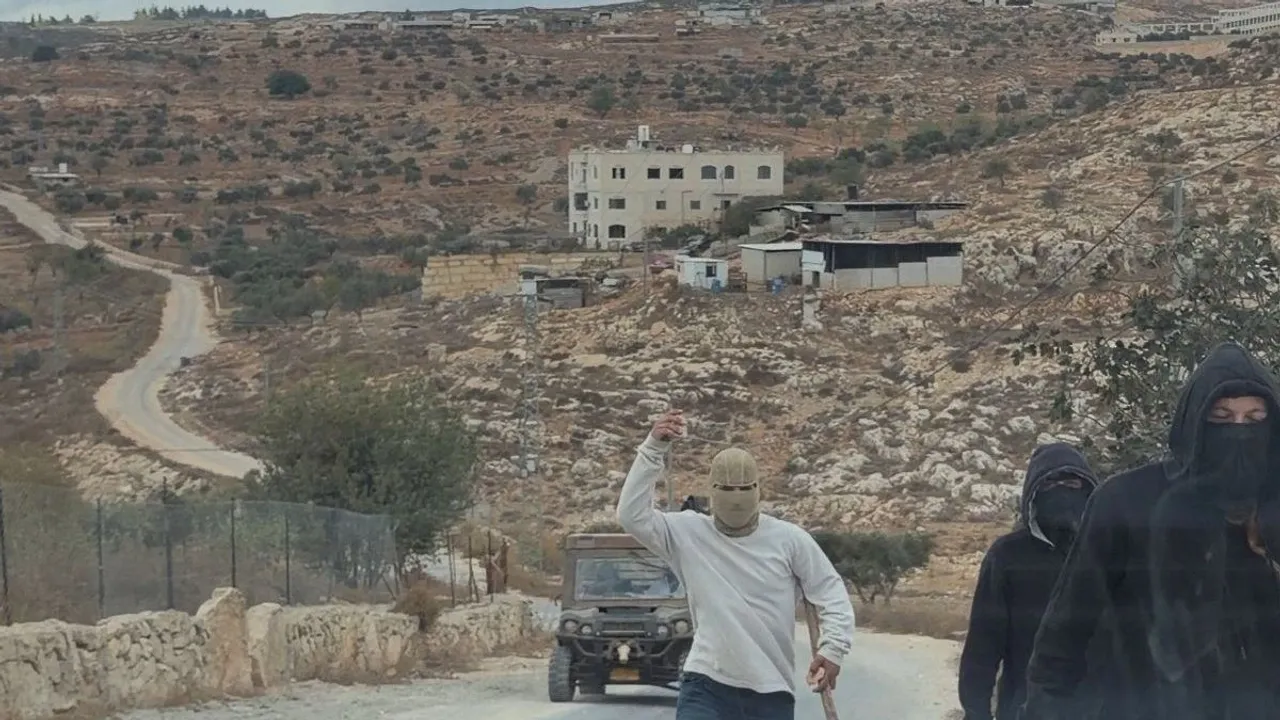
'Violence has truly reached new heights': Belgian envoy on Israeli settler attack on diplomats
Belgium’s consul general says masked settlers assaulted a French mayor and smashed a car window as an international delegation joined Palestinian olive farmers.
Saudi Civil Defence lifts danger alerts in Najran and As Sulayyil
Saudi Arabia’s Civil Defence has announced that danger has passed in Najran and As Sulayyil governorate after issuing emergency alerts warning of potential risks, state television reports. The authorities have not provided further details about the nature of the danger.
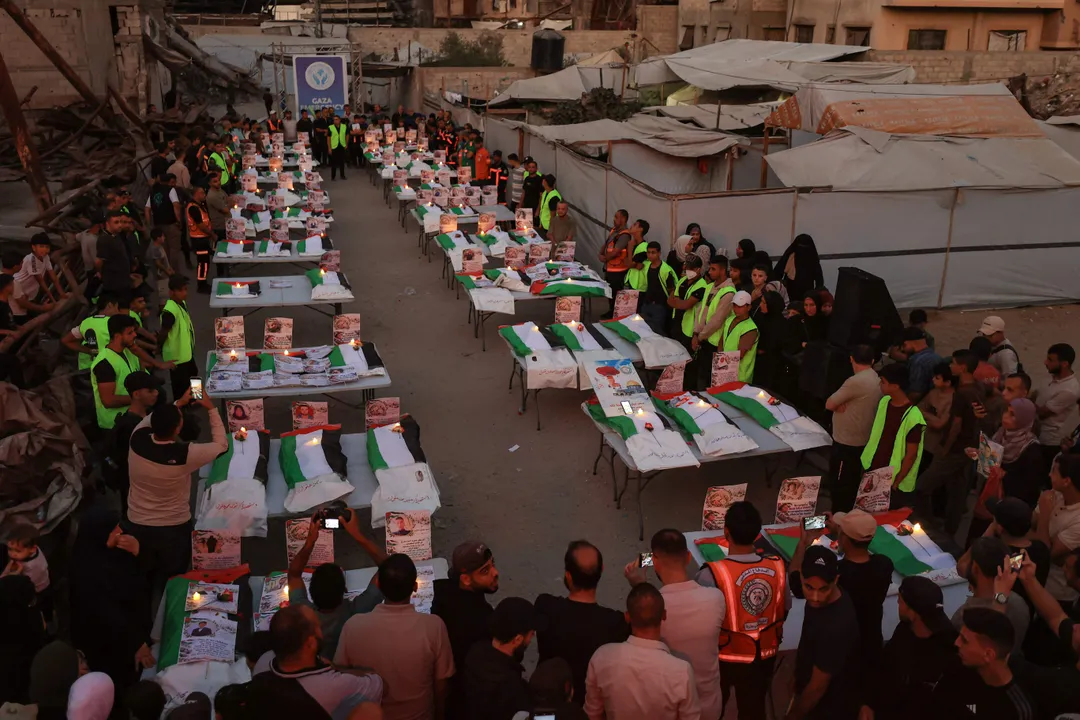
Gaza buries remains of 75 Palestinians recovered from rubble of Israeli-bombed homes
Hundreds attend funeral for victims, including women and children, recovered from destroyed homes in Gaza's Daraj neighbourhood as rescue teams struggle to retrieve thousands more bodies trapped beneath the rubble.
Iran urges US to accept proposal to reopen Strait of Hormuz
Iran's offer to the United States to reopen the Strait of Hormuz within seven days is still on the table, Foreign Minister Abbas Araqchi told Iranian media outlets.
Iran presented its proposal in mid-September after an interim ceasefire collapsed. Tehran later acknowledged receiving a US response but Iran’s security chief said last week negotiations have stalled because Washington failed to address all seven conditions for reopening the strait.
"Our situation is clear and based on the seven-days proposal presented to the US. They shared comments which we are reviewing, but our proposal is still on the table and if there is any honesty on the US part, which there isn't, the way to reopening the Strait of Hormuz is obvious," Araqchi said while in Baghdad for a meeting of the Organisation of Islamic Cooperation.
Egypt’s defence council pledges ‘all forms of support’ to defend Saudi Arabia
Egypt’s National Defence Council pledged to provide Saudi Arabia with “all necessary and possible forms of support” to defend its security and stability amid escalating Houthi attacks on the kingdom.
The council, chaired by President Abdel Fattah al-Sisi at the presidential palace in Cairo, reviewed “dangerous” regional developments, particularly the escalating attacks on Saudi Arabia, Egypt’s State Information Service (SIS) said in a statement.
It declared Egypt’s “full solidarity” with Saudi Arabia, citing the historical ties between the two countries and stressing that Saudi national security is linked to Egyptian and Arab national security.
The council decided to provide “all necessary and possible forms of support” to Saudi Arabia to defend its security and stability, protect its resources and territorial integrity, and safeguard Islamic holy sites.
Iran's new defence minister threatens 'enormous damage' if US attacks
Newly appointed Iranian defence minister Mehrdad Akhlaghi threatened to inflict "enormous damage" on the United States and its allies in the Middle East if Washington resumes its military campaign against the country.
"People can rest assured that they will most likely not dare to attack us," Akhlaghi told reporters shortly after securing the vote of confidence. "If they (the US) do, they themselves and the region will suffer enormous damage."
Iran parliament approves new defence minister: state media
Iranian lawmakers approved Mehrdad Akhlaghi as the country's new defence minister, replacing his predecessor who was killed on the first day of the war with the United States.
"Members of the Islamic Consultative Assembly today gave vote of confidence to Mehrdad Akhlaghi, the nominee for minister of defence and armed forces logistics," state television reported, nearly eight months after the initial US-Israeli strikes that sparked the conflict.
Landmark Riyadh skyscraper orders remote working after Houthi attacks on Saudi
Riyadh's Kingdom Centre skyscraper, one of the city's major landmarks, ordered its office tenants to work remotely "until further notice", after repeated Houthi attacks on Saudi Arabia.
"Kindly refrain from attending the offices during this period," the office management said in an email to tenants seen by AFP. The mall at the foot of the 99-storey building remains open.
Palestinian girl killed by Israeli army fire in central Gaza
A Palestinian girl was killed by Israeli army fire in central Gaza, the official Palestinian news agency WAFA reported.
Medical sources said Misk Hazem al-Dalou died from wounds sustained when Israeli forces opened fire toward tents housing displaced Palestinians in the Maghazi refugee camp.
Separately, Israeli military vehicles opened heavy fire toward tents sheltering displaced Palestinians in the al-Mawasi area of Rafah in southern Gaza. Israeli artillery also shelled areas northeast of Khan Younis.
Tugboat struck by 2 unknown projectiles off UAE, 1 injured: UK maritime agency
A tugboat traveling southbound was struck by two unknown projectiles northeast of Khor Fakkan in the UAE, leaving one person with minor injuries, the UK Maritime Trade Operations (UKMTO) said.
The UKMTO said the vessel sustained damage but was able to continue on its route.
“One minor casualty has been reported,” it said, without providing further details about the injured person or the extent of the damage.
Two officers killed as Saudi National Guard helicopter crashes in Najran
Two officers killed after a Saudi National Guard reconnaissance helicopter crashed in the Najran region due to a technical malfunction, the Saudi-led coalition said.
The coalition's spokesperson confirmed that the AH-6i helicopter crashed inside Saudi territory, killing both crew members.
Eight Yemeni soldiers killed in clashes with Houthis militia in Lahj province
Eight Yemeni soldiers killed in fighting with Houthis militia in the southern province of Lahj, the Yemeni internationally recognised government forces said.
The army-affiliated Tur al-Bahah Military Axis said the soldiers died on the al-Maqatirah front, without providing further details.
Earlier, Houthi militia shelling killed three civilians, including two women, and injured five others in neighbouring Taiz province, according to a government office.
Saudi-led coalition intercepts and destroys drones in Riyadh and Eastern Province
The Saudi-led coalition intercepted and destroyed drones in the Riyadh region and Eastern Province, its spokesperson said.
The coalition confirmed the interceptions but provided no further details about the drones' origins or intended targets.
Rubio urges Israel to crack down on occupied West Bank violence after attack on US journalist
US Secretary of State Marco Rubio expressed concern over an attack on American photojournalist Heidi Levine in the occupied West Bank, urging Israel to "crack down" on violence in the territory.
"We're very disturbed by those images and what we're seeing," Rubio said on Saturday.
Saudi-led coalition intercepts and destroys drone in Riyadh region
The Saudi-led coalition intercepted and destroyed a drone in the Riyadh region, its spokesperson said.
The coalition confirmed the interception and destruction of the unmanned aircraft.
Palestine demands action after illegal Israeli settlers attack European diplomats
Palestine called for urgent international action after illegal Israeli settlers attacked European diplomats and church representatives near Taybeh, east of Ramallah, in the occupied West Bank.
The Palestinian Foreign Ministry said the delegation included French and Belgian consuls, a Polish representative and Catholic Church officials.
A French mayor was assaulted and a Belgian consular vehicle was damaged, the ministry said. It condemned the incident as “organised settler terrorism,” saying Israel is protecting the attackers and calling for international accountability.
Saudi Arabia says danger passes in two cities after Riyadh aerial threat alert
Saudi Civil Defence announced that the danger has passed in Abha and Khamis Mushait, as residents of Riyadh received a mobile alert early Sunday warning of a "hostile aerial threat" following days of Houthi militia attacks from Yemen.
The alert urged residents to stay indoors and away from windows and doors before being lifted minutes later.
US envoy demands prosecution over illegal settler's attack on journalist in occupied West Bank
US Ambassador Mike Huckabee called on Israel to arrest and prosecute those responsible for attacking Washington Post photographer Heidi Levine in the occupied West Bank, describing the assault as a "despicable act of terror".
Levine was hospitalised with broken vertebrae after being beaten while covering the Palestinian olive harvest.
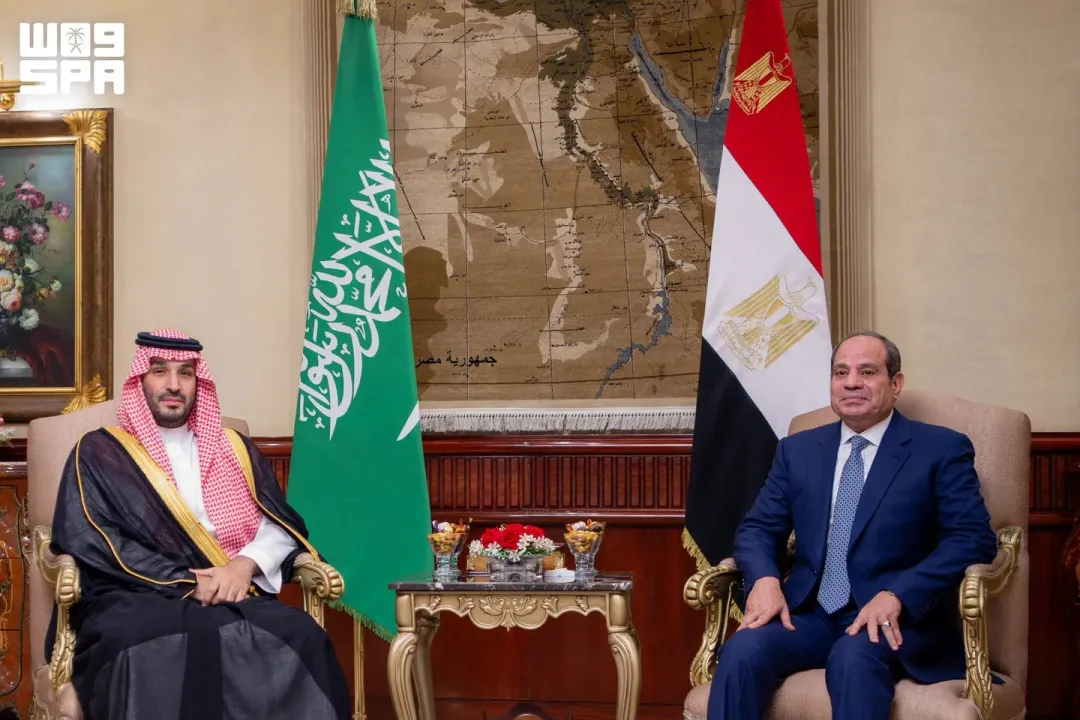
Egypt's Sisi asks parliament to authorise support for Saudi
Egypt's parliament will hold an emergency session on Sunday after President Abdel Fattah el Sisi asked lawmakers to authorise support for Saudi defences against attacks by Houthi militias if the kingdom requests it.
Saudi Arabia leads a military coalition supporting Yemen's internationally recognised government in its civil war with the Houthi militia.
Cairo ready to defend Saudi Arabia if requested: Egyptian President Sisi
Egyptian president says any deployment would require parliamentary approval as fighting intensifies between Saudi Arabia and Yemen’s Houthi militia.
Yemen coalition says it downed four drones over Riyadh, eastern, southern Saudi Arabia
The Saudi-led coalition in Yemen said that its forces intercepted and destroyed four drones.
"We intercepted and destroyed four drones over the past few hours in the Riyadh, Eastern and Southern regions," spokesperson Turki al-Maliki wrote on X.
Illegal Israeli settlers attack European diplomats, beating French mayor
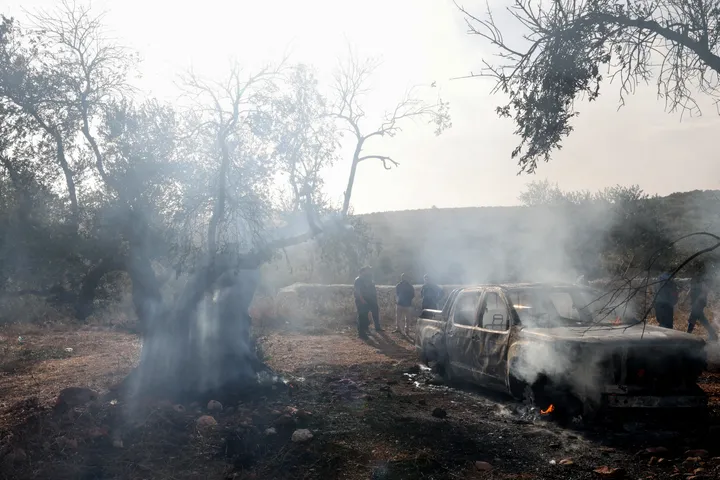
Illegal Israeli settlers attacked a convoy of European diplomats and beat up a visiting French mayor, in a new escalation of violence during the Palestinian olive harvest, witnesses and diplomats said.
The 78-year-old mayor said masked settlers yelled defamatory comments about France, kicked him and hit him with iron bars as he joined Palestinian olive farmers in the occupied West Bank alongside the top French and Belgian representatives as well as a Polish diplomat.
Hegseth threatens Iran to reach nuclear deal or face ‘devastation’
Washington is prepared to act swiftly if Tehran does not abandon its “nuclear ambitions” through negotiations, the US defence secretary says.

Explosion at Iraqi paramilitary alliance base kills one member, sources say
An explosion at the Popular Mobilisation Forces headquarters in Baghdad killed one member of the Iraqi paramilitary group and wounded four others, according to a security and a medical source.
The group earlier said a stockpile of obsolete ammunition had exploded.
SUMMARY
Saudi-led coalition says it intercepted drone in Riyadh region
Saudi-led coalition forces shot down missiles in Khamis Mushait
Lebanon to take part in US-backed trilateral talks with Israel
Hormuz transits remain 70% below pre-conflict levels
Yemen captures Houthi drone operations team in Taiz
RECOMMENDED