Iran signals new restrictions near Strait of Hormuz
US says it struck three Iranian tankers
Lebanon says three people killed in Israeli drone attack
Iran slams US strikes on oil tankers as 'illegal, aggressive'
8 hours ago
Tehran plans restricted zone near strategic Strait of Hormuz
SUMMARY
1 killed, 2 injured in Israeli strike on ambulance in southern Lebanon
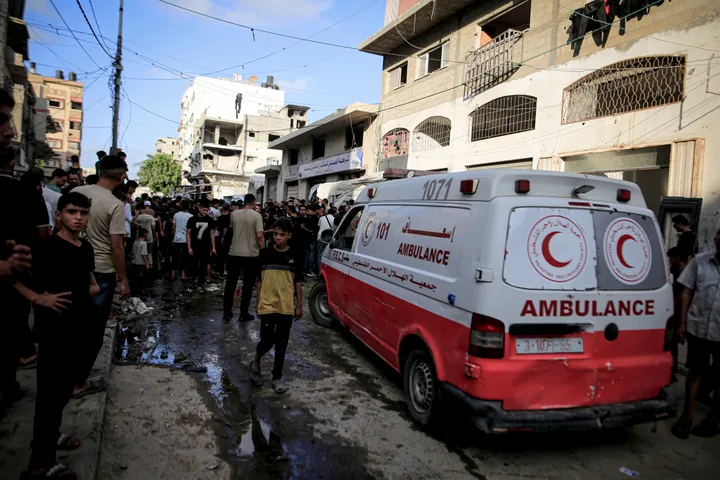
One paramedic was killed and two people were injured in an Israeli airstrike targeting an ambulance in southern Lebanon, local media reported early Monday.
The Israeli military directly targeted the moving ambulance in the town of Kfar Rumman in Nabatieh governorate, Lebanon-based Al Mayadeen television reported.
Local media identified the slain paramedic as Ali Shahrour.
Emergency teams were dispatched to the area following the strike and transported the injured to a hospital.
Canada urges Iran to end 'destabilising activities' amid Strait of Hormuz tensions
Canada has called on Tehran to end what Ottawa described as “destabilising activities” and warned about threats to shipping through the Strait of Hormuz.
Canadian Minister of Foreign Affairs Anita Anand and Finance Minister Francois-Philippe Champagne urged Iran to immediately cease its "destabilising activities in the Middle East," pointing specifically to its "continued threats to vessels seeking to transit the Strait of Hormuz," its "pursuit of illicit nuclear activities" and its "support for regional proxy groups.”
They said Ottawa is working closely with G7 partners, including France and the UK, to support US-led efforts to reopen the Strait of Hormuz.

Israeli army issues evacuation warning to residents in south Lebanon
The Israeli army has issued an urgent evacuation warning to residents of Deir al-Zahrani in southern Lebanon ahead of a planned strike.
Israeli military Arabic-language spokesperson Ella Waweya called on people inside a designated building and nearby structures to evacuate immediately and move at least 300 meters (984 feet) away, early on Monday.
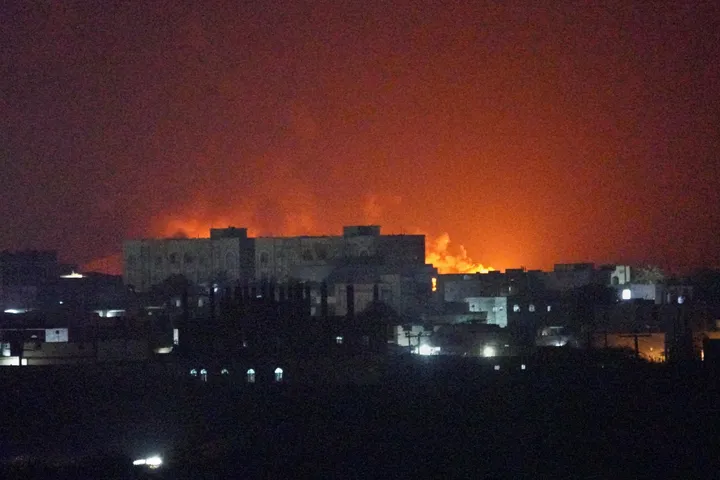
At least seven people were killed and more than 20 others injured Sunday in Israeli airstrikes across several areas of southern Lebanon, according to the Lebanese Health Ministry.
Oil prices surge as US-Iran strikes threaten Strait of Hormuz supply
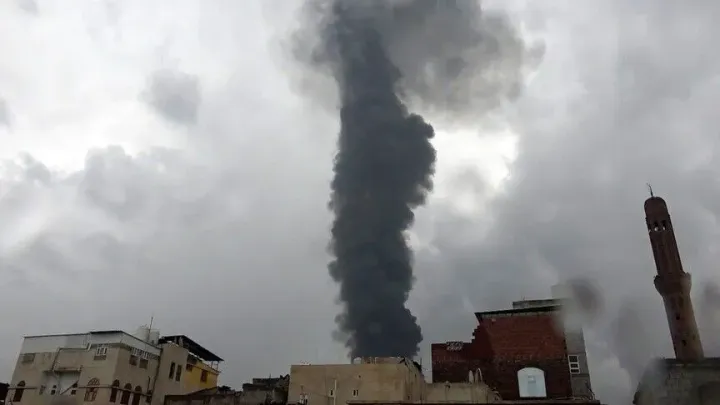
Oil prices have extended gains as tit-for-tat strikes between the US and Iran on vessels sailing in the Strait of Hormuz and other areas heightened concerns of a prolonged supply disruption from the Middle East.
Brent crude futures climbed 52 cents, or 0.54%, to $96.80 a barrel while US West Texas Intermediate crude was at $92.14 a barrel, up 66 cents, or 0.72%.
Brent rose 7.8% last week while WTI gained nearly 10% after the US and Iran resumed attacks and caused a reduction in oil flows through the Hormuz strait where a fifth of the world's oil supply used to transit.
US says it is 'strangling' Iran’s economy to force change
US Energy Secretary Chris Wright has said Washington is seeking to put economic pressure on Iran to encourage the government to change its policies or potentially lead to a change in government.
Wright told CBS News’ Face the Nation that the US military’s main role was to prevent Iran from exporting crude oil, petroleum products, natural gas and other energy-related goods.
He said Washington remained open to reaching an agreement with Tehran, adding that President Donald Trump’s preference was for a negotiated solution and that military action would be considered only when “absolutely necessary.”
Iran blames US for Strait of Hormuz disruption
Iranian Foreign Ministry spokesman Esmaeil Baghaei has said the Strait of Hormuz was “wide open” until the US and Israel attacked Iran on February 28.
In a post on X, Baghaei accused Washington of disrupting commercial shipping, saying tankers have been halted, trade disrupted, and energy prices driven higher. He said the US was trying to make Iran bear the consequences of a war Washington started.
“America started the war but expects the whole world to pay the bill,” Baghaei wrote.
Iran to announce new 'restricted zone' in the Gulf
A restricted zone will be announced outside the Strait of Hormuz in the coming days, Mohsen Rezaei, the Secretary of Iran's Supreme National Security Council, said, according to state media.
He added that the zone would include areas in the Gulf.
Netanyahu vows to strike Iran as popularity declines 50 days before elections
Israeli Prime Minister Benjamin Netanyahu threatened to strike Iran if it attacks Israel.
His remarks came during the Israeli government’s weekly meeting, according to a statement issued by his office, about 50 days before Knesset elections scheduled for October 27 amid declining poll numbers for Netanyahu and his Likud party.
Israeli officials believe Netanyahu is escalating militarily on several fronts in an attempt to appease far-right parties ahead of the elections. “If Iran makes a mistake and attacks us, it will receive a blow it cannot even imagine,” Netanyahu said. “It refrains from attacking Israel, and it knows why.”
WATCH: CSIS: War has cost Washington $40B as of July
Iran's government to raise fuel price for heavy users
Iran will raise the price of gasoline for users surpassing 110 litres per month starting on Tuesday, a government spokesperson said, as it steps up efforts to tackle problems created by the war and crippling US economic sanctions.
The price of the first and second quotas, which include 110 litres, will remain unchanged, but the price of the third quota will be raised to 100,000 Iranian rials per litre (around 4 US cents based on the free-market rate), Fatemeh Mohajerani said in comments carried by state media.
SUMMARY
Iran signals new restrictions near Strait of Hormuz
US says it struck three Iranian tankers
Lebanon says three people killed in Israeli drone attack
Iran slams US strikes on oil tankers as 'illegal, aggressive'