Iran proposes plan to reopen Hormuz within seven days
Trump doubts Iran deal, plans strikes after midterms: WSJ
80 countries call for full restoration of Gulf maritime navigation
Saudi coalition says it intercepted six Houthi ballistic missiles
Iran may expand war to Indian Ocean if US attacks again
9 hours ago
Iran proposes deal to reopen Strait of Hormuz in 7 days
SUMMARY
Iraq seeks exemption from US ban on Iran airlines
Iraq is engaged in direct talks with the US to exempt some Iraqi airports from US sanctions targeting Iranian airlines operating flights to regional hubs, officials said.
The talks aim to secure an exemption “to allow flights to resume on humanitarian grounds related to medical treatment, education, religious visits, and interests of civilians," Iraqi Prime Minister Ali al-Zaidi's office said in a statement on Facebook.
Earlier this week, US Treasury Secretary Scott Bessent said operations of Iranian airlines worldwide would come to a halt as of September 23 under new sanctions. As part of the measure, Iranian flights were barred from operating in regional countries, including Oman, the UAE and Iraq.
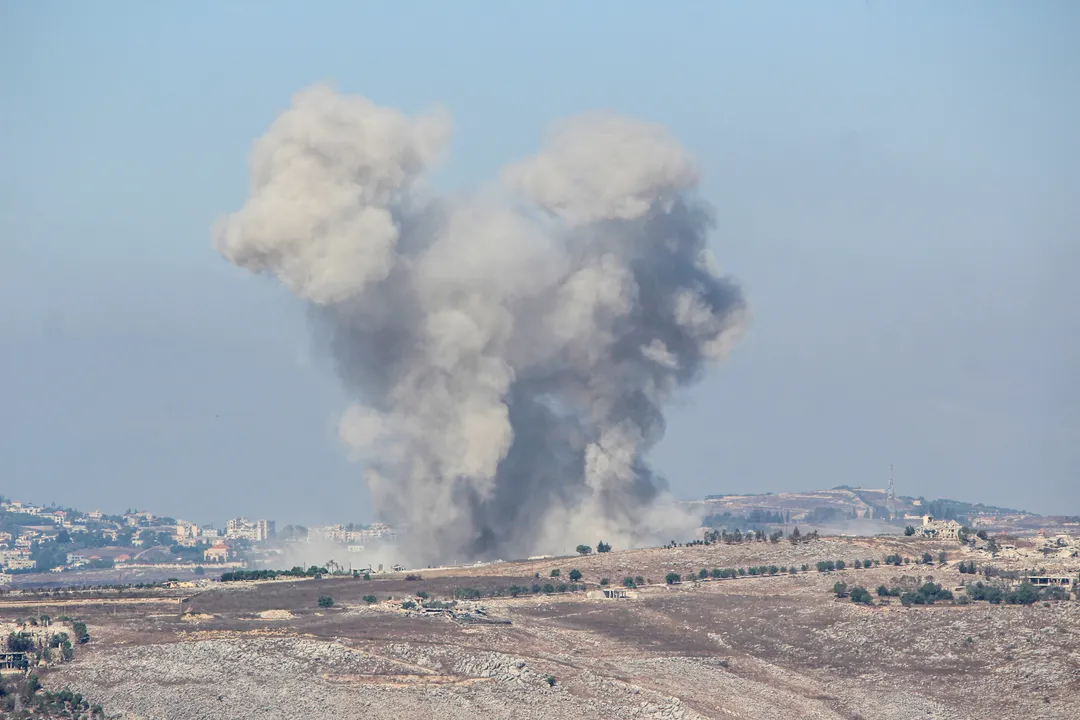
Israeli forces use phosphorus munitions in southern Lebanon attacks: Lebanese media
Artillery fire hits areas in Nabatieh, Tyre districts as Lebanese army clears unexploded Israeli bombs.


Yemeni forces strike Houthi positions, supply lines in Taiz
Yemeni government forces say they struck Houthi positions and supply lines in the southwestern province of Taiz.
Military spokesman Majid Abdullah al-Nazili published footage on US social media platform X that he said showed strikes on Houthi fighters and supply routes in Dhubab and other parts of Taiz.
Trump rejects Iran ceasefire proposal, expects strikes to resume after midterms: WSJ
The Wall Street Journal, citing US officials, reports that US President Donald Trump has rejected Iran’s proposal for a seven-day ceasefire and told aides he expects US strikes on Iran to resume after the November midterm elections.
Under Tehran’s proposal, the Strait of Hormuz would reopen, and nuclear talks would resume in exchange for Washington lifting its blockade of Iranian ports.
Trump has publicly said Iran is seeking a deal, but privately remains sceptical that Tehran would meet US demands, according to the WSJ report.
Saudi-led coalition intercepts Houthi missile targeting Khamis Mushait
The Saudi-led coalition says it intercepted a ballistic missile launched by Yemen’s Houthis towards Khamis Mushait in southwestern Saudi Arabia.
The interception comes amid renewed fighting between Saudi Arabia and the Houthis.
EU warns Iran war is fuelling energy ‘price crisis’
The European Union’s energy chief has warned that the Iran war is driving an energy “price crisis” across the bloc as disruptions put pressure on oil and gas markets, Reuters reported, citing a letter to EU energy ministers.
European Commissioner for Energy and Housing Dan Jorgensen urged member states to consider measures to curb gas and electricity demand and support gas storage levels for as long as necessary.
“We are facing a price crisis linking to a supply crisis,” Jorgensen wrote, calling on governments to take or maintain steps that could sustain gas storage injections or reduce energy consumption.
Saudi says it intercepted drones launched by Houthis towards Riyadh
Yemen's Saudi-led coalition said early on Saturday it had intercepted two drones launched by the Houthis towards the Saudi capital Riyadh.
The coalition posted on X that it was monitoring missile threats and drones launched at the kingdom.
Saudi civil defence sent alerts overnight for Khamis Mushait and Abha, but not for the capital.
Bahrain rejects permit, fee regime for Strait of Hormuz passage
Bahrain has rejected any permit or fee system for passage through the Strait of Hormuz, saying transit through the international waterway cannot be suspended or subjected to unilateral conditions.
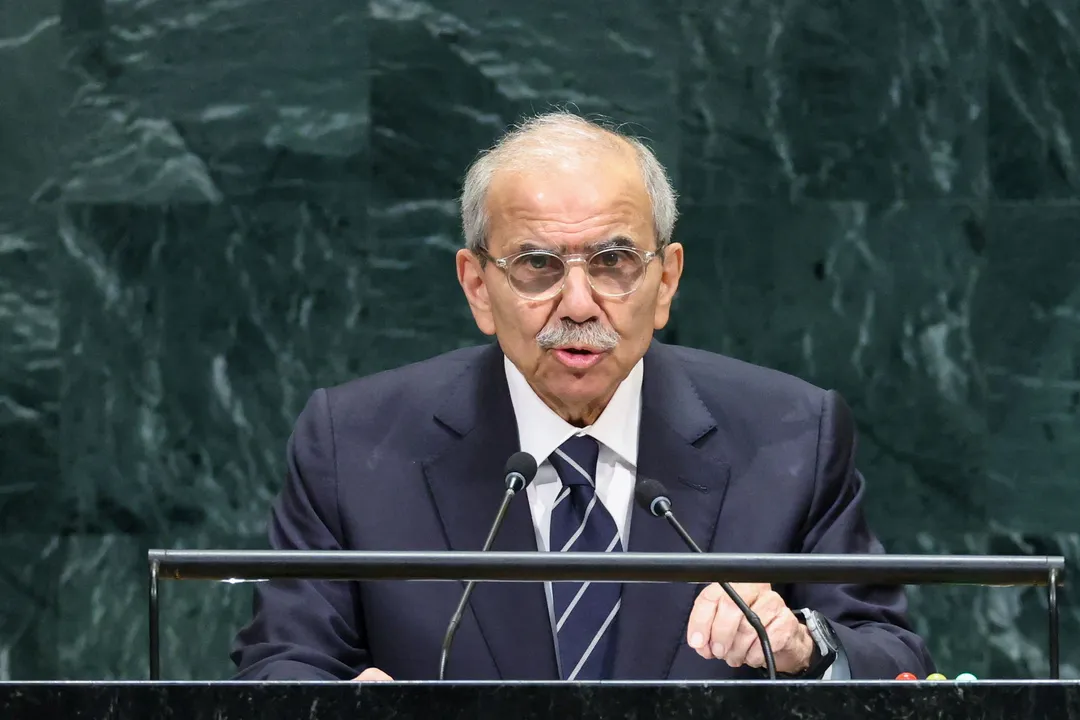
Foreign Minister Abdullatif bin Rashid Al Zayani said international law guarantees the right of transit through the strait for vessels of all states.
“The kingdom categorically rejects any permit or fee regime imposed on passage,” Al Zayani told the 81st UN General Assembly in New York.
Tehran warns regional air travel could be halted because of ban on its airlines
Iran has warned that air travel across the region could be disrupted if Iranian airlines continue to be denied access to flights and airport services.
Tehran will not accept regional countries “aligning themselves with hostile US policies against Iran,” Mohammad Mokhber, a senior adviser to Iran’s supreme leader, said in a post on US social media company X.
“Our strategy on this matter is clear: Either air travel in the region is available to everyone or to no one,” said Mokhber.
UN chief Guterres meets Iran’s Pezeshkian, discuss diplomacy
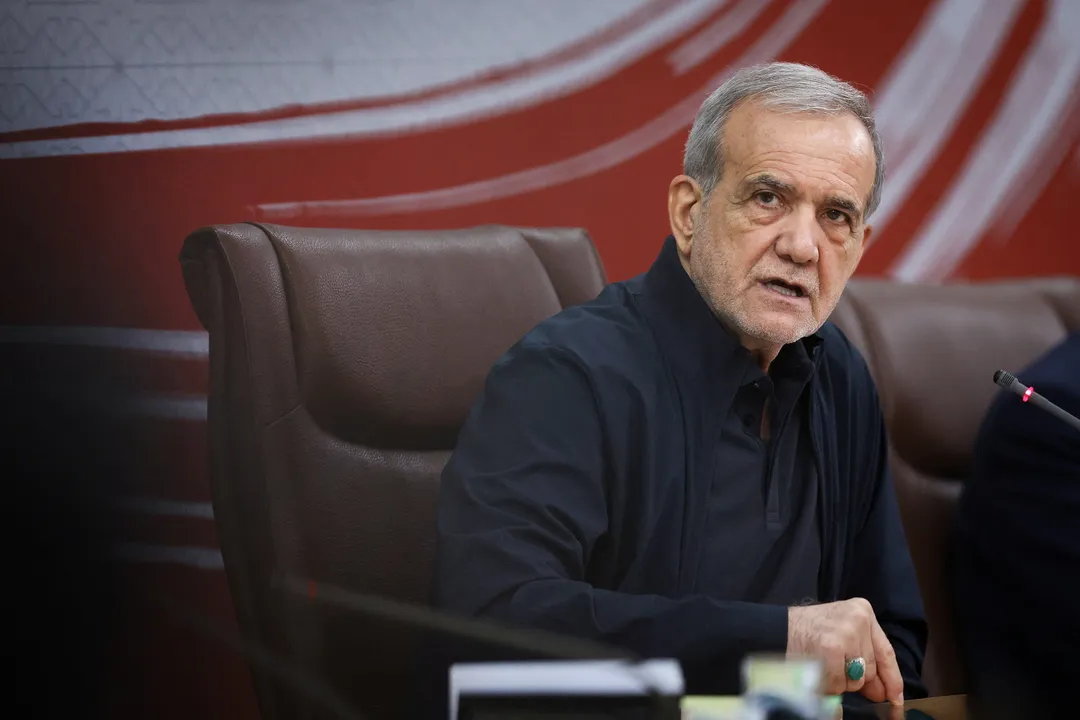
UN Secretary-General Antonio Guterres has met Iranian President Masoud Pezeshkian and stressed the need to resolve the war in the Middle East through dialogue and negotiations.
"The Secretary-General stressed the urgent need to resolve the conflict in the Middle East through dialogue and negotiations, with full respect for international law, including international navigational rights and freedoms in and around the Strait of Hormuz," a UN statement said on Friday.
Guterres also reaffirmed the UN's commitment to "support all diplomatic efforts."
Turkish foreign minister meets Iranian counterpart in New York
Turkish Foreign Minister Hakan Fidan met his Iranian counterpart Abbas Araghchi on the sidelines of the high-level week of the 81st session of the UN General Assembly.
According to Turkish Foreign Ministry sources, Fidan and Araghchi held talks in New York, where UN headquarters is located.
Iran accuses Bogota of being under 'Zionist' influence
Tehran has rejected Colombia's accusations against Iran after Colombia decided to sever diplomatic relations.
Iran's Foreign Ministry described Colombia's allegations against Iran and part of its armed forces as "baseless," saying the decision to break ties violated the principle of mutual respect and the interests of both countries.
The ministry said Colombia's decision was made "solely under the influence of the Zionist regime,” meaning Israel.
Iran proposes plan to reopen Hormuz within seven days
Iran's Foreign Minister Abbas Araghchi has said Tehran offered Washington a plan to reopen the Strait of Hormuz to maritime navigation within seven days once agreed.
Araghchi met on Tuesday with US President Donald Trump's envoy Steve Witkoff and previously set out conditions for ending the war and reopening the vital energy shipping channel.
"Iran has conveyed to the United States, through Qatar, a concrete seven-day plan. If the necessary conditions are met, the strait can be reopened, and normal maritime passage restored within seven days," Araghchi said at the UN on Friday.
Yemeni leader calls for general mobilisation
The head of Yemen's governing body called for a general mobilisation to counter the Houthis, as the group ramps up attacks on government forces.
His call comes as Yemen's government continues efforts to counter the Houthis, who seized control of the country's entire Red Sea coast and are still fighting its forces in Yemen and attacking Saudi ships and territory.
"I call upon the sons of our great people to engage in general mobilisation and national mobilisation, to rally around their armed and security forces," Rashad al-Alimi, who heads the Presidential Leadership Council and is also Supreme Commander of the Yemeni Armed Forces, said in a speech.
Lebanon PM urges action to ‘avert vacuum’ if UN force leaves
Salam calls for Israel’s full withdrawal, exclusive state control of weapons and a replacement international force to prevent a security vacuum.
Iran will make no nuclear concessions, Iranian official says
Iran will show no flexibility over its nuclear program even if the United States accepts its proposal to reopen the Strait of Hormuz, which calls for steps including the lifting of a US naval blockade on Iranian ports, a senior Iranian official told Reuters.
The official, speaking on condition of anonymity, said the waterway would remain closed until “all of Iran’s conditions are met” by the United States.
EU warns of energy 'price crisis,' asks countries to consider curbing demand, letter shows
The European Union is facing an energy price crisis as a result of the Iran war fallout in oil and gas markets, the bloc's energy chief said in a letter seen by Reuters, which urged countries to consider measures to curb energy demand.
"We are facing a price crisis linking to a supply crisis," EU energy commissioner Dan Jorgensen said in a letter to EU countries' energy ministers.
Straits of Hormuz, Bab al Mandab 'must remain open,' US-Iran mediator Pakistan tells UN
The critical Strait of Hormuz and the Bab al Mandab Strait "must remain" open, US-Iran mediator Pakistan's Prime Minister Shehbaz Sharif told the UN General Assembly in New York.
"Amid the roar of missiles, drones, and guns, the voice for diplomacy must echo even louder and stronger," Sharif said, calling both straits "arteries" of the global economy.
They "must remain open," connecting nations rather than becoming chokepoints of confrontation, he said.
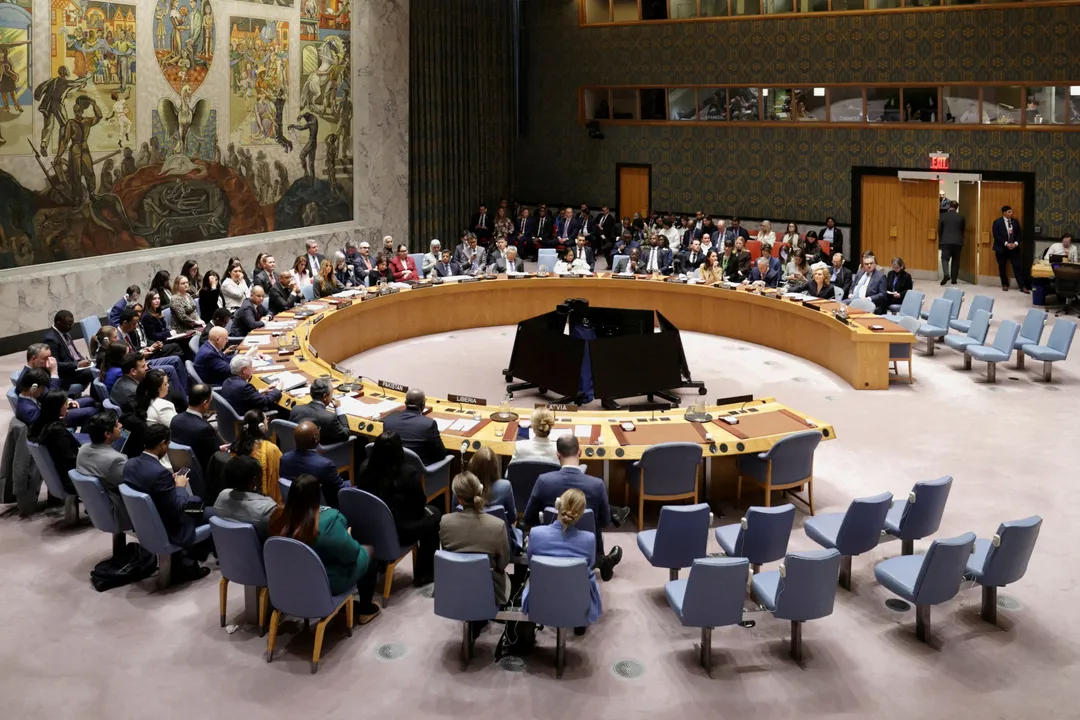
UN Security Council condemns Houthi attacks on Saudi energy infrastructure
Council members call for an end to attacks on civilians and shipping, while warning that renewed fighting risks worsening Yemen’s humanitarian crisis.
Egypt urges resumption of US-Iran talks, regional de-escalation
Egypt stressed the need to resume negotiations between the US and Iran and halt escalation in the straits of Hormuz and Bab al Mandab during separate meetings between Egyptian Foreign Minister Badr Abdelatty and his Iranian and Omani counterparts.
The meetings were held on the sidelines of the UN General Assembly, according to two statements by the Egyptian Foreign Ministry.
Abdelatty and Iranian Foreign Minister Abbas Araghchi discussed efforts and proposals aimed at reaching an agreement that would contain tensions and reduce escalation.
“The utmost importance of every country fulfilling its responsibilities to ensure the movement and freedom of international navigation, limiting the negative repercussions of the crisis on the global economy,” the Egyptian foreign minister stressed.
Pope Leo urges leaders not to remain ‘indifferent’ to Mideast suffering
Pope Leo XIV urged leaders not to remain indifferent to suffering in the Middle East, calling for dialogue and diplomacy amid the war in Iran and Lebanon.
“We cannot remain indifferent to such suffering that wounds human dignity and cries out to God for justice,” Leo XIV said, referring to the situation in the Middle East.
“The gravity” of what is happening in the region should “call each person to a true conversion of heart and a change in attitude,” the pope said.
“I therefore urge you never to resign yourselves to the prospect of war by considering it inevitable, but to tirelessly promote dialogue and diplomacy,” he added.
Iraq's shia holy city suspends Iranian airlines, enforcing US sanctions
Iraq's Najaf airport, a top destination for Shia pilgrims, suspended all Iranian flights, enforcing US sanctions and leaving travellers scrambling for solutions.
Airport director Hussein Muhanna told AFP that "all flights were halted between Iran and Najaf airport following a directive from the prime minister's office to the governor" of Najaf.
The airport in the city of Najaf, south of Baghdad, is a major hub for Iranian flights and their main destination in Iraq.
Saudi grand mufti urges front-line troops to unite against Houthis
Saudi Grand Mufti Sheikh Saleh bin Fawzan Al-Fawzan urged the Saudi-led coalition in Yemen and Saudi soldiers stationed along the front line to remain united in confronting the Houthis and defend Saudi territory and Muslim holy sites.
In a statement carried by the Saudi Press Agency on Thursday and addressed to coalition forces and Saudi soldiers stationed along the border, Al-Fawzan called the Houthis “a misguided faction and deviant group,” urging the soldiers to “cooperate with one another and unite your word.”
Guarding the country's borders, “repelling aggression against them and punishing anyone who seeks to harm even an inch of it are among the greatest duties,” he said.
Mediator Qatar says held talks with Iran on conditions for 'dialogue'
Qatar's foreign ministry said top diplomat Sheikh Mohammed bin Abdulrahman Al Thani, a mediator in the Middle East war, spoke with Iranian President Masoud Pezeshkian about de-escalation and conditions for dialogue.
The pair met on the sidelines of the United Nations General Assembly in New York.
Pezeshkian invited Sheikh Mohammed to his residence, where they "reviewed the latest developments in the region and the efforts being made to de-escalate tensions and create a conducive environment for dialogue", the foreign ministry said in a statement.
Iran proposes reopening Hormuz within seven days: media
Iran has submitted a proposal to the United States to end the war and reopen the Strait of Hormuz within seven days, its foreign minister told media outlets in New York.
"If certain conditions are met, the strait will be open within seven days, and talks will start," Abbas Araghchi, who is in the US for the UN General Assembly, told media outlets including the New York Times and The Guardian.
Japanese news agency Kyodo was the first to report the proposal, citing a senior Iranian official on Tuesday. Iranian media, however, denied the Kyodo report, while authorities in Tehran have not clarified their position.
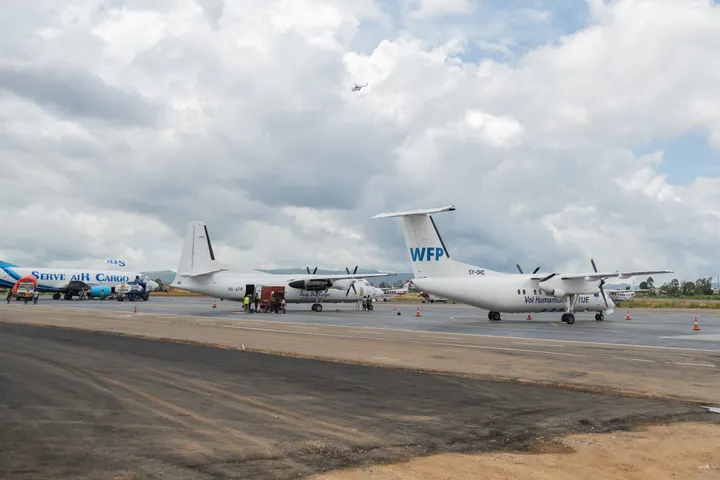
WATCH: New US sanctions on Iranian airlines take a toll on civilians
Iraq's Najaf airport suspends all flights to and from Iran
Iraq's Najaf International Airport has suspended all flights to and from Iran starting on Friday, the state news agency reported.
Two sources told Reuters earlier that Iraq was discussing diverting Iranian flights from Baghdad to Najaf after ordering its civil aviation authority to suspend Iranian flights to Baghdad airport from Wednesday, following a US threat to sanction any airport that services Iranian carriers.
Top Russian diplomat meets Iranian counterpart, UN chief on sidelines of General Assembly
Russian Foreign Minister Sergey Lavrov held talks with his Iranian counterpart Abbas Araghchi and UN Secretary-General Antonio Guterres on the sidelines of the 81st General Assembly session in New York, according to official statements.
During the meeting between Lavrov and Araghchi, the two parties discussed pressing regional and international issues, focusing on the evolving situation surrounding Iran, a statement by the Russian foreign ministry said.
“They emphasised that there is no alternative to a diplomatic resolution of the crisis triggered by the unlawful actions of the United States and Israel,” it said.
Turkish army chief to visit Saudi Arabia to attend Mecca defense pact chiefs of staff meeting
The Turkish chief of general staff is set to travel to Saudi Arabia to attend the Mecca Defence Alliance Chiefs of Staff Meeting.
"Chief of General Staff General Selcuk Bayraktaroglu will travel to Saudi Arabia today to attend the Mecca Defence Alliance Chiefs of Staff Meeting," the country's National Defence Ministry said in a statement.
No further details on the planned meeting were provided by officials.
WATCH: Yemen conflict disrupts education for over 137,000 students
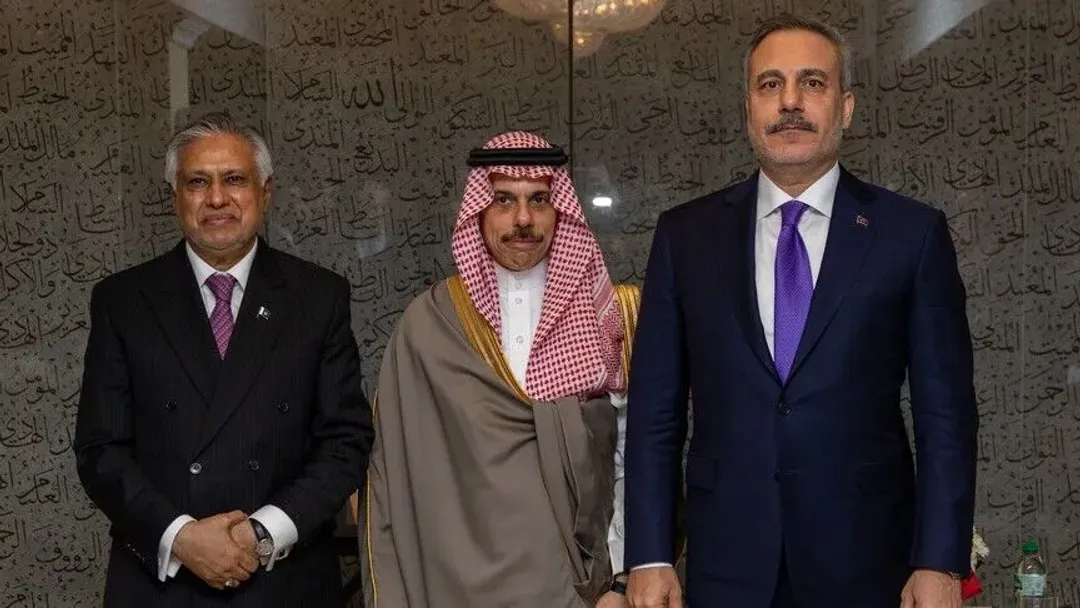
Mecca defence pact ministers discuss urgent meeting to support Saudi Arabia
Foreign ministers from the three countries discussed ongoing preparations for the chiefs of staff meeting, which will examine mechanisms to support Saudi Arabia in line with commitments under the defence pact.
WATCH: 80 countries call for restoration of maritime navigation at UN
Strait of Hormuz commodity ship transits fall to single digits, ship-tracking data shows
Vessel transits at the Strait of Hormuz fell to nine, down from 14 the previous day, preliminary ship-tracking data showed on Friday, and were also below the 10-day average of around 18.
Out of these nine, eight ships exited and one entered, according to the data.
Some vessels may be sailing through the waterways with their transponders turned off, and they are not considered in the counts.
Colombia cuts diplomatic ties with Iran
Colombia has said that it formally severed diplomatic relations with Iran due to "national and hemispheric security concerns" and alleged links to international terrorist and narcoterrorist groups.
In a statement, the Foreign Ministry said the decision took effect on September 19 and was based on the government's foreign policy priorities, including "the fight against transnational crime and the protection of national security."
Iran's president says Tehran seeks deal with US, not war
In an interview with Fox News, President Masoud Pezeshkian says Iran didn't choose the war; rather, it was forced on them.
Pakistan's PM reaffirms his country's support for Lebanon's sovereignty
Pakistani Prime Minister Shehbaz Sharif has reaffirmed Islamabad's "steadfast support" for Lebanon's sovereignty and territorial integrity during talks with his Lebanese counterpart, Nawaf Salam, in New York, his office said.
The two leaders met on the sidelines of the 81st session of the UN General Assembly and reviewed bilateral relations as well as developments in the Middle East and the wider region.
Sharif reiterated Pakistan's support for Lebanon's "sovereignty, political independence, unity and territorial integrity," according to a statement posted on his official account on X.
Yemen Houthis 'don't take direction' from Tehran, Iran president tells Fox News
Yemen's Houthi, widely seen to be Iran-backed, does not take its direction from Tehran's government, Iranian President Masoud Pezeshkian told Fox News in an interview.
"The Houthis are responsible for their own actions. They don't take directions from us, as those who are resisting in the region, based on the situations that have been imposed on them," Pezeshkian said, according to the broadcaster's translation of his remarks.
"We have contacts with them. There is no systematic relationship," he added.
Several fronts in Yemen see clashes amid diplomatic push against Houthis
Several fronts in Yemen saw military developments, including clashes in Taiz and air strikes in Hudaidah and Saada, as the Yemeni government stepped up diplomatic efforts over Houthi escalation and its repercussions for national and regional security and freedom of international navigation.
The developments came as fighting continued across several Yemeni fronts amid mutual escalation between government forces and the Houthi group, extending to areas near the Red Sea and vital maritime routes.
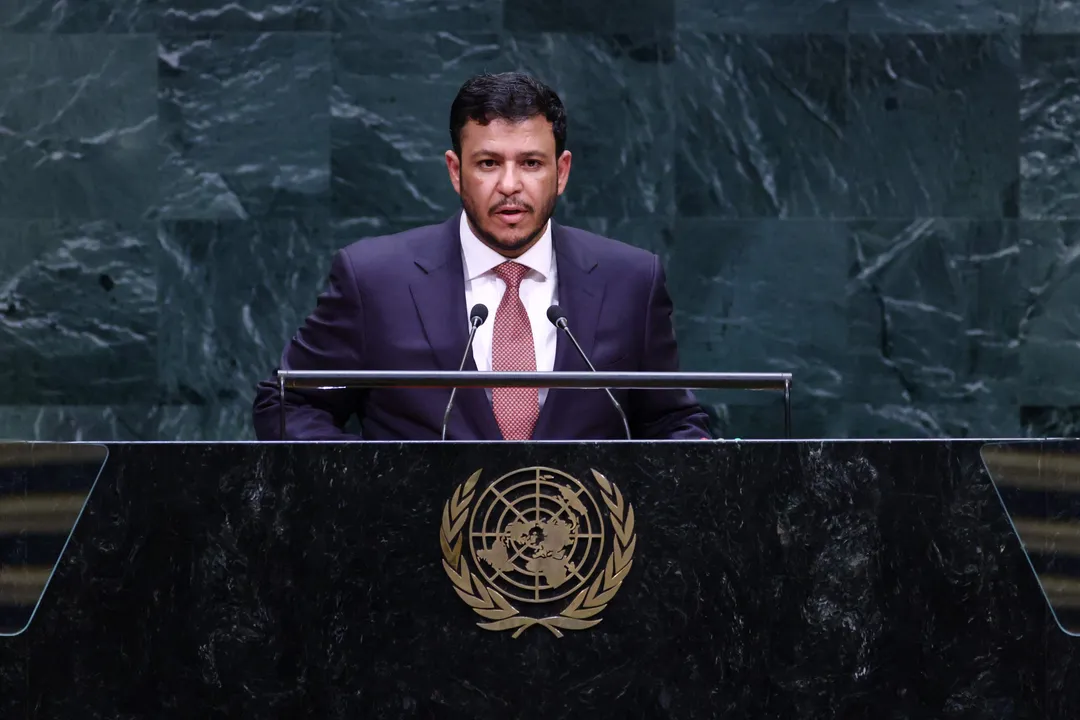
Protecting Bab al Mandab shared regional, international responsibility — Yemen tells UNGA
Presidential Leadership Council Vice President Abdullah al-Alimi says Houthis are being strengthened by "the absence of an effective and decisive international position."
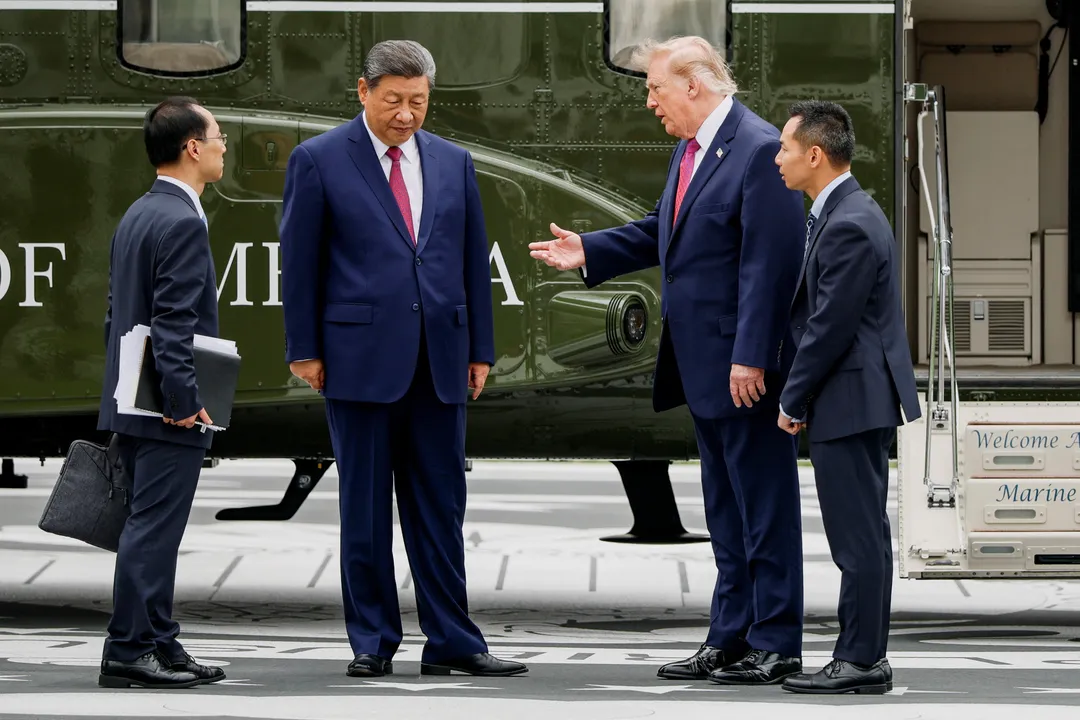
China's Xi urges US, Iran return to negotiations as Trump hails 'great meeting'
Trump says he and Xi had a "great meeting" after the two leaders met at the White House.
SUMMARY
Iran proposes plan to reopen Hormuz within seven days
Trump doubts Iran deal, plans strikes after midterms: WSJ
80 countries call for full restoration of Gulf maritime navigation
Saudi coalition says it intercepted six Houthi ballistic missiles
Iran may expand war to Indian Ocean if US attacks again