PM Netanyahu's political survival on the line as Israel votes
More than 7.3M people eligible to vote
Netanyahu’s opponents promise a new direction for the country
Most first-time voters lean towards right-wing parties
an hour ago
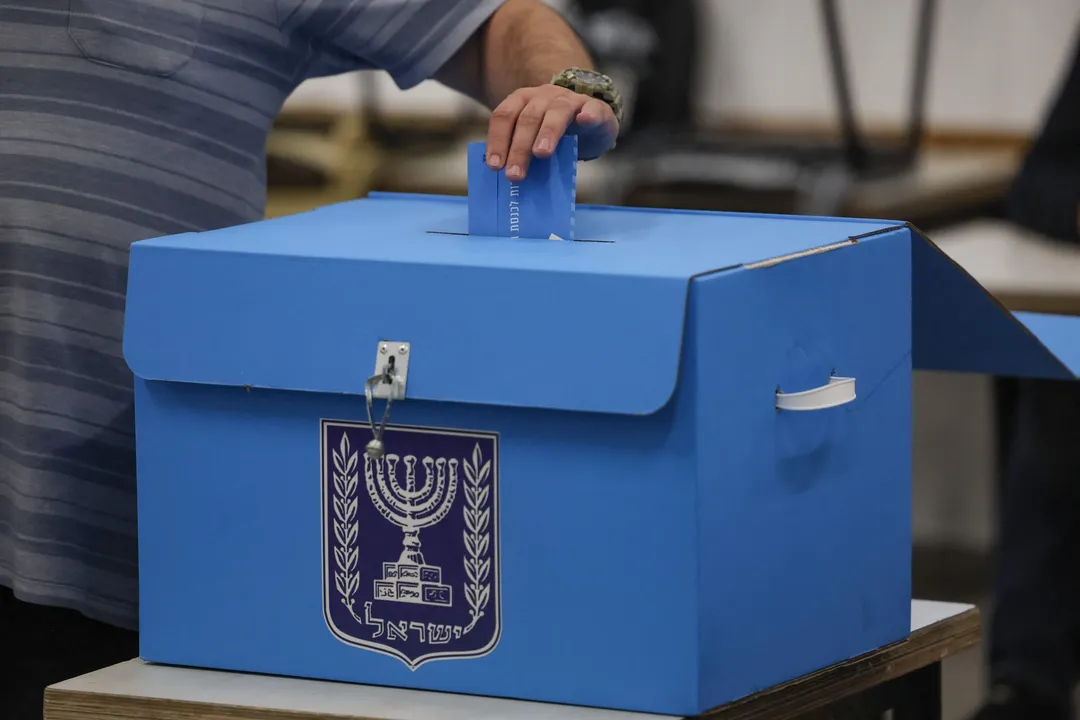
Israelis vote in first election after three years of Gaza genocide
SUMMARY
Yashar party rejects Likud’s bid to extend voting hours
Gadi Eisenkot’s Yashar party, the main challenger to Netanyahu, said it “firmly opposes” Likud’s request to extend voting hours, accusing the ruling party of preparing to challenge the election’s legitimacy.
“No exceptional incident has occurred that would justify granting this request, which is intended to lay the groundwork for allegations challenging the integrity of the election, continuing the lies Netanyahu has been spreading since this morning,” the party said.
Voter turnout hits 55.7% nine hours into polling
Voter turnout in Israel’s hard-fought legislative elections reached 55.7 percent by 0500 PM local, the highest figure recorded for that hour since 1973, when records began, according to the Central Elections Committee.
Din Livneh, the committee’s acting chair, said over 4.08 million voters had cast their ballots, compared with a turnout rate of 47.5 percent at the same time in the previous elections, according to Israeli daily Yedioth Ahronoth.
RECOMMENDED




Netanyahu's Likud seeks extension of voting hours
Likud party requested an extension of voting hours beyond the scheduled 2000GMT closing time, as turnout in the country's parliamentary elections reached a record high for the time of day, Israeli media reported.
Central Elections Committee Chairman Justice Noam Solberg will decide on the request, according to Israeli daily Yedioth Ahronoth.
The committee clarified that anyone arriving at a polling station by 2000GMT would be allowed to vote, even if they cast their ballot after that time.
Umm al Fahm sees early turnout rise compared with 2022 elections
Preliminary figures show 19.5 percent turnout by noon, compared with 5.78 percent at 12:30 pm on election day in 2022, further data will determine whether the trend continues until polling stations close.
Eisenkot’s party warns Netanyahu may dispute election results
The party of Gadi Eisenkot, the main challenger to Israeli Prime Minister Benjamin Netanyahu, warned the premier was preparing to challenge the results of the election by claiming it was being stolen.
"Netanyahu is in a panic - and he's laying the groundwork to challenge the results," Eisenkot's Yashar party said. "We have to be ahead of Likud by a huge margin; only then will there be no room to sow doubt about the results."
Ben-Gvir blasts Netanyahu over reported US-backed plan to form gov't without him
Israel's National Security Minister Itamar Ben-Gvir accused Netanyahu of planning to form a US-backed government that excludes him.
In a post on X, Ben-Gvir said Netanyahu had "promised the US administration that, following the election, he would form a unity government with Gadi Eisenkot -- and without Ben-Gvir."
Arab alliance accuses Netanyahu of using fake image to exaggerate voter turnout
The Joint List, an alliance of three Arab parties in Israel, accused Netanyahu of using a fake image generated by AI to exaggerate Arab voter turnout in parliamentary elections.
Arab lawmaker Ahmad Tibi also challenged Netanyahu’s claims, saying turnout in Jewish towns remained significantly higher than in Arab communities.
Arab vote could shape Israel's election
Eisenkot urges voters to unseat 'worst gov't' in Israeli history
"I call on all citizens of Israel to go vote, not to buckle under the heat or the disruptions, to stick to the mission: to replace tonight the worst government since the state was established," said Gadi Eisenkot, the main election challenger of Prime Minister Benjamin Netanyahu.
'Apartheid at the ballot box': Amnesty UK slams Israeli elections
Amnesty International UK condemned Israel’s elections as “apartheid at the ballot box,” saying millions of Palestinians under occupation cannot vote while Israeli settlers on Palestinian land can.
Its crisis response manager, Kristyan Benedict, cited the lockdown in Hebron, forced displacement and more than 1,500 people killed in Gaza since the October 2025 ceasefire.
“No election result will change what the UK government must do,” he said, urging London to halt arms transfers to Israel, sanction officials implicated in international crimes and demand unrestricted aid access and an end to Gaza’s blockade.
SUMMARY
PM Netanyahu's political survival on the line as Israel votes
More than 7.3M people eligible to vote
Netanyahu’s opponents promise a new direction for the country
Most first-time voters lean towards right-wing parties
RECOMMENDED