Qatar rejects 'ridiculous' accusations of interference in Israeli elections
Nearly 50% of double-envelope ballots counted in Israeli election
Herzog urges Israeli parties to avert fresh election
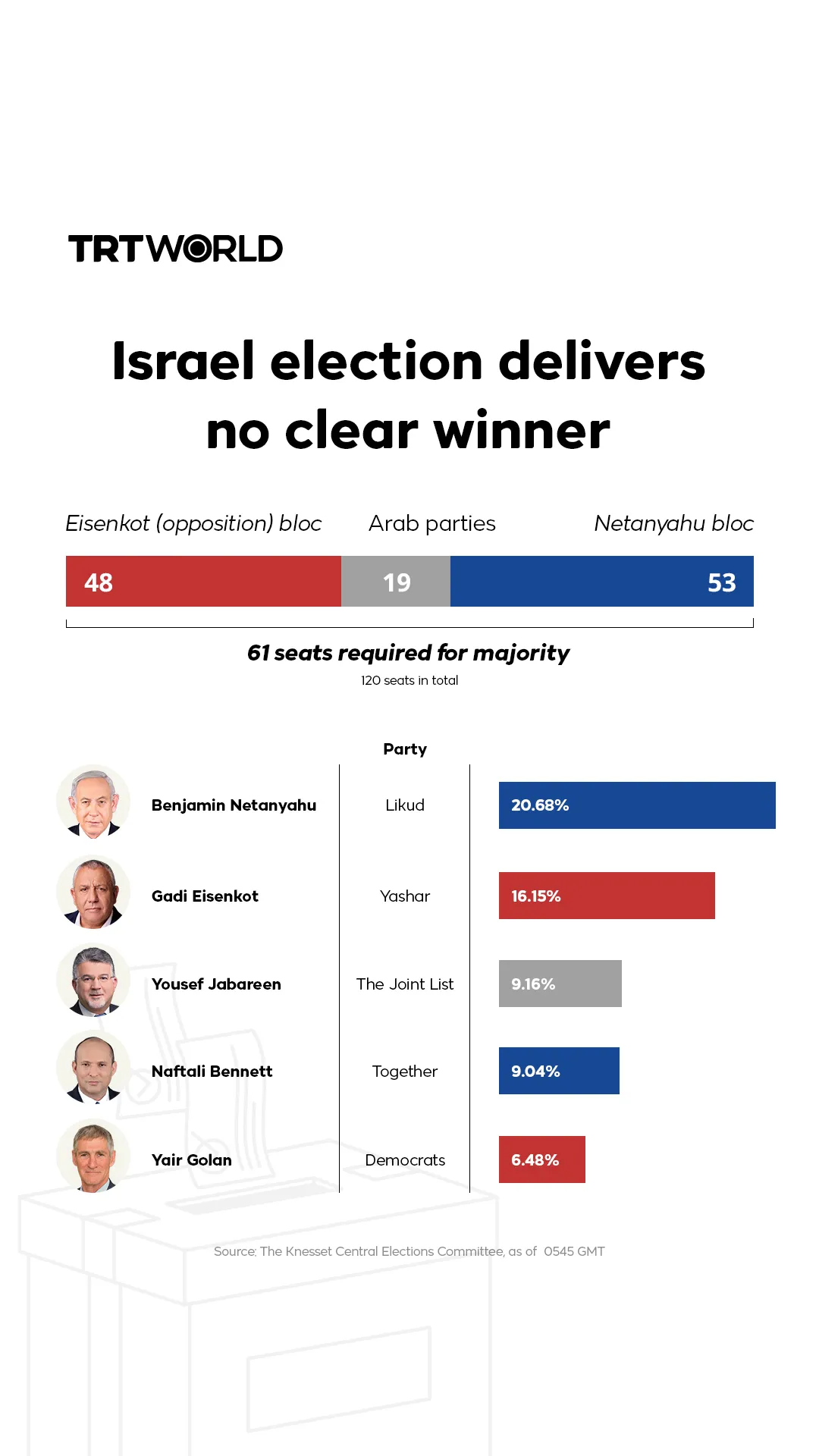
Netanyahu’s bloc secures 53 seats, opposition parties 48, Arab parties 19
a minute ago
Türkiye, Qatar reject 'baseless, ridiculous' accusations of interference in Israeli elections
SUMMARY
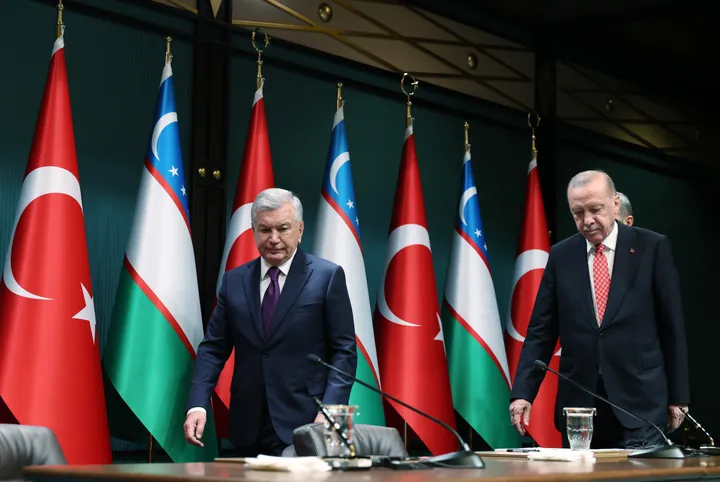
Türkiye rejects 'baseless' claims of interference in Israel's elections
Türkiye has rejected allegations in certain international media outlets and on social media that Türkiye had interfered in Israel's recent elections, calling them “entirely baseless".
“These allegations are part of a deliberate and blatant disinformation campaign aimed at manipulating public opinion,” the Communications Directorate's Centre for Countering Disinformation said on the Turkish social media platform NSosyal.
The centre urged the public not to give credence to these false reports and allegations intended to mislead.
Netanyahu’s bloc wins 53 seats, opposition 48, Arab parties 19
Israel’s election committee has said counting of all votes is complete, and Netanyahu’s bloc has won 53 seats, the opposition 48, and Arab parties 19, according to Israeli media.
RECOMMENDED


Palestinian president hopes for renewed ‘political dialogue’ with Israel after new government formed
Palestinian President Mahmoud Abbas has expressed hope that the formation of a new Israeli government would provide an opportunity to resume “serious political dialogue” aimed at reaching peace in line with international resolutions.
“The Palestinian side is seeking peace through adherence to international resolutions and principles, including UN Security Council and General Assembly resolutions, as well as international law and human rights principles,” he said, according to the official Palestinian news agency Wafa.
“The key to security, peace and stability in the region lies in implementing international legitimacy resolutions,” Abbas added.
He reiterated the Palestinian leadership’s commitment to peaceful popular resistance and said Palestinians would continue pursuing their rights through peaceful, legal, and diplomatic means.
Minor seat shifts in Netanyahu bloc as counting of special ballots continues
A minor change emerged in Israel’s election results as the counting of special “double-envelope” ballots continues, with Prime Minister Benjamin Netanyahu’s Likud party gaining one seat at the expense of its bloc ally Shas, according to Israeli media.
The overall seat count between the main political blocs remained unchanged, however, The Times of Israel reported, citing partial results released by the Central Elections Committee.
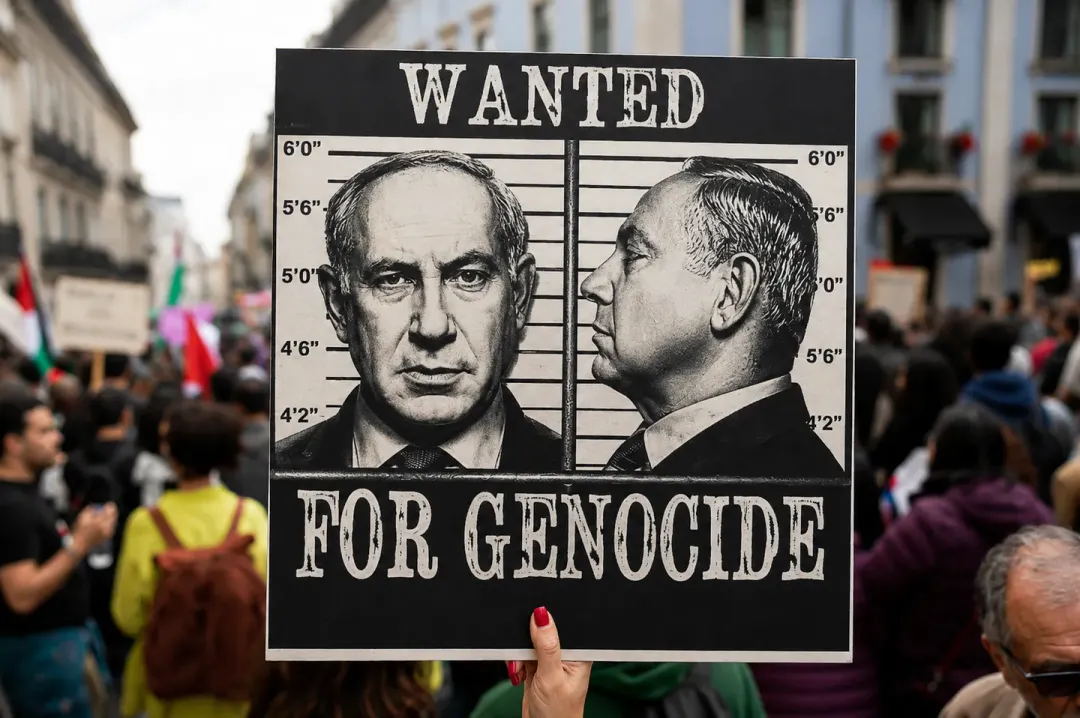
Netanyahu’s bloc remained at 53 seats in the 120-member Knesset, while the bloc led by Yashar leader Gadi Eisenkot held 48 seats – both falling short of a governing majority of 61.
The change occurred within Netanyahu’s bloc, with Likud gaining one seat while the ultra-Orthodox Shas party lost one, leaving the bloc’s overall total unchanged.
“The Arab parties are steady at 19 seats, a record high,” the outlet said.
Israeli opposition, Arab party slam Netanyahu for stoking election chaos
Eisenkot accuses Netanyahu of responding to political developments with "lies, manipulation of public opinion, and the spread of chaos".
Nearly 50% of double-envelope ballots counted in Israeli election
More than 233,000 double-envelope ballots, nearly 50 percent of the total, have been counted in Israel’s elections, Israeli media reported.
A total of 233,815 double-envelope ballots have been counted out of nearly 500,000, the daily Yedioth Ahronoth reported.
Double-envelope ballots are used by voters casting their ballots away from their registered polling stations, including soldiers, diplomats, police officers, and displaced residents.
Officials check identification details on the outer envelope to prevent duplicate voting, then separate it from the anonymous ballot before counting.
The remaining votes could change individual parties’ seat totals and the balance between the rival blocs.
Qatar rejects 'ridiculous' accusations of interference in Israeli elections
Qatar's foreign ministry spokesperson has rejected accusations "made by certain Israeli politicians and their contacts in the media" that his country had interfered in the Israeli elections.
"We categorically deny allegations that Qatar has interfered in Israeli elections or funded any activities intended to influence their outcome," said Majed Al Ansari.
"They accuse Qatar of buying off Benjamin Netanyahu, the Israeli political left, and now, in this latest campaign, the Arab vote. These accusations are ridiculous and dangerous in equal measure."
Arab-Israeli party leader rejects electoral fraud allegations
The head of one of Israel's Arab parties has rejected allegations of electoral fraud and welcomed an investigation, saying his Raam party had "no connection" to the matter.
"Raam has no connection whatsoever to the affair in question or to any other affairs, and we declare that we will fully cooperate with all law enforcement authorities to uncover the truth," Mansour Abbas said, according to a spokesperson for his party.
Israel piles pressure on Arab parties as Netanyahu seeks government
Prime Minister Benjamin Netanyahu's bloc has piled pressure on Arab Israeli leaders over unproven accusations of foreign funding in a push to neuter parties that could hold the key to forming a government after an inconclusive election.
Israeli President Isaac Herzog called for an investigation into allegations of fraud but cautioned against stigmatising the entire Palestinian Israeli community, who voted at unprecedented rates.
Israelis await final election results as Netanyahu faces uncertain path to power
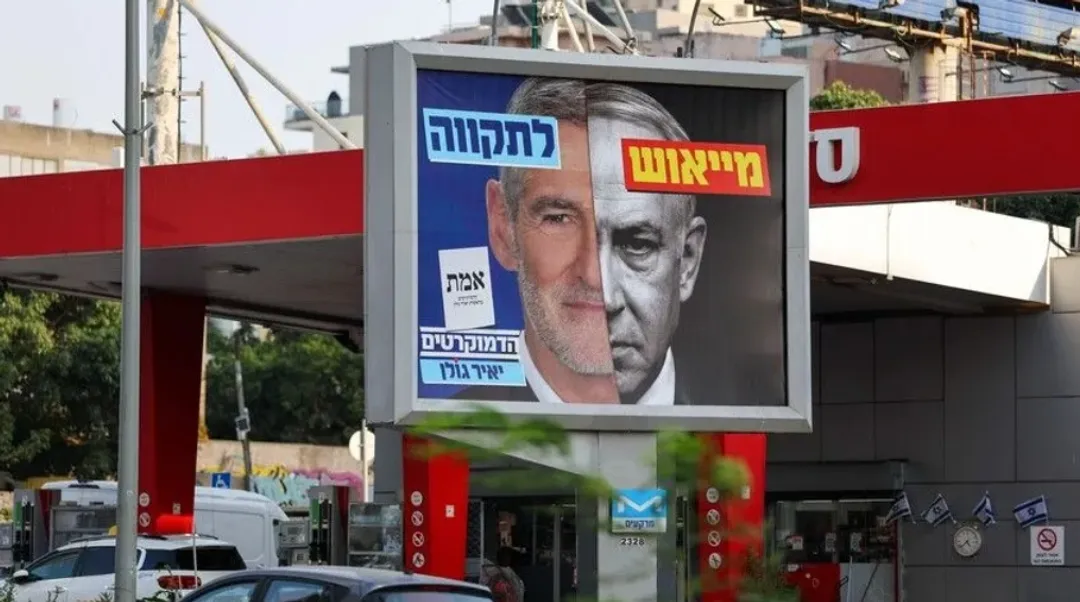
With neither Netanyahu’s bloc nor the parties seeking to oust him securing a clear parliamentary majority, Israel faces weeks of difficult coalition negotiations, with potential alliances between Jewish and Arab parties.
Over 29,000 double-envelope ballots counted in Israeli election, around 6 percent of total
More than 29,000 double-envelope ballots, around 6 percent of the total, have been counted in Israel’s elections, with the Central Elections Committee expecting the count to conclude by the afternoon, Israeli media reported.
A total of 29,253 double-envelope ballots have been counted out of nearly 500,000, according to the daily Yedioth Ahronoth.
Double-envelope ballots are used by voters casting their votes away from their registered polling stations, including soldiers, diplomats, police officers and displaced residents.
Israeli opposition leader vows to replace Netanyahu’s government after election
The leader of Israel’s Yashar party said that voters had rejected Prime Minister Benjamin Netanyahu’s government, pledging to form a new administration committed to military conscription, as neither of the two main blocs appeared set to secure a parliamentary majority.
In a post on X, Gadi Eisenkot said he was concluding a long day of meetings and discussions aimed at carrying out voters’ wishes.
“Long working days still lie ahead, but we are focused on the weighty task entrusted to us: bringing change to Israel and forming a Zionist government committed to conscription,” he wrote.
Far-right Israeli minister seeks arrest of Arab party leaders
Israel's far-right national security minister has called for the arrest of Arab leaders whose parties made strong gains in this week's election, citing unproven accusations of foreign funding.
Israel's security agency Shin Bet "must order, already this morning, the arrests of the heads of Arab parties suspected of involvement in Qatari money", Itamar Ben-Gvir wrote on X.
Israel begins counting over 500,000 double-envelope ballots
Israel began counting double-envelope ballots, with more than 500,000 votes potentially affecting the final distribution of parliamentary seats.
The count was expected to finish by Thursday evening, Israel's public broadcaster reported.
Voters casting their ballots away from their registered polling stations, including soldiers, diplomats, police officers use double-envelope ballots.
Israeli police find no evidence backing Netanyahu party's election fraud claims — report
Israeli police have found no evidence supporting election fraud allegations by Prime Minister Benjamin Netanyahu's Likud party, while the Central Elections Committee sees no current grounds for concern over the integrity of the vote, the Israel Hayom daily reported.
Citing unnamed sources, the newspaper said the committee's assessment contradicted Likud's allegations of fraud at polling stations in Palestinian-Israeli communities. Police likewise said there was no evidence to substantiate the allegations, according to the report.
Netanyahu's son targets Palestinian-Israeli voters, claims election results prove support for 'terrorism'
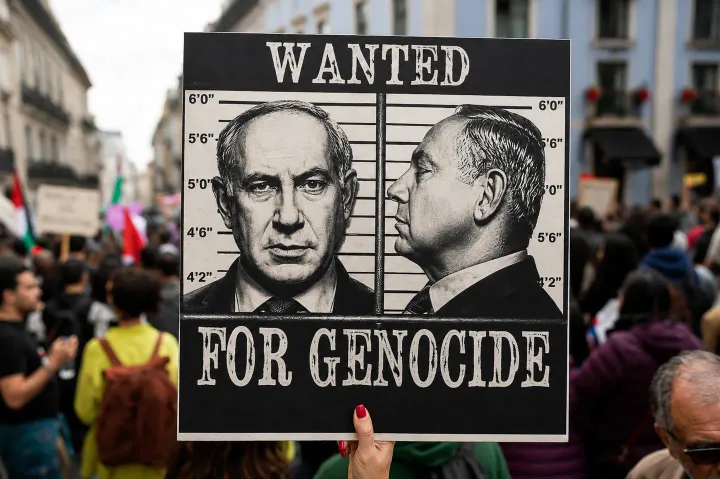
Yair Netanyahu, son of Israeli Prime Minister Benjamin Netanyahu, who is wanted by the ICC over war crimes and crimes against humanity, has claimed that election results prove that Palestinians "justify terrorism against us."
"This is an existential problem no less than the Iranian nuclear threat," Yair Netanyahu wrote on X, casting Palestinian political participation as a threat to Israel’s existence.
"The reason they (Palestinians and Arabs) are in the Knesset is that the High Court of Justice has emptied the law of substance and enabled their candidacy in violation of the law," he added, alleging that the court had unlawfully allowed their candidacies under legislation prohibiting support for terrorism.
Israel's Joint List says Palestinian Israeli turnout denied Netanyahu a majority
Israel's predominantly Arab Joint List political alliance said that mass participation by Palestinian-Israeli voters had kept Prime Minister Benjamin Netanyahu's bloc short of a parliamentary majority, pledging to use its projected gains to help remove his government.
In a statement following Tuesday's election, the alliance said preliminary figures showed that the Palestinian-Israeli turnout had played a decisive role in preventing Netanyahu and his "fascist camp" from reaching the 61 seats needed for a governing majority.
Voters answered incitement and intimidation at the ballot box, it said, rejecting a "government of butchers" and its policies of home demolitions, racism and war crimes.
Israeli channel reports proposed Netanyahu-Eisenkot power-sharing deal
An Israeli television channel reported that a power-sharing deal is taking shape under which Prime Minister Benjamin Netanyahu would lead the next government for two years before handing power to opposition leader Gadi Eisenkot in exchange for retiring from politics and receiving a full pardon in connection with his ongoing corruption cases.
Israel's Channel 14 reported that President Isaac Herzog is currently seeking to advance the proposed arrangement, which could pave the way for the formation of the next government following Tuesday's inconclusive parliamentary elections.
According to Channel 14, Herzog has been promoting the arrangement for two years, well before the election campaign and the announcement of the results.
UN rights chief wants next Israeli govt to 'change course massively'
UN rights chief Volker Turk has said he hopes a new Israeli government will "change course massively" and respect international law.
"The message is: don't continue the current course of warfare where you think you are above international law, because I think that's what we have frankly seen in the current environment," he told reporters in New York.
"Israel has its obligations under international law, international humanitarian law, international human rights law, and they need to respect them, and I hope that the next government will do precisely that and change course massively," the Austrian diplomat added.
SUMMARY
Qatar rejects 'ridiculous' accusations of interference in Israeli elections
Nearly 50% of double-envelope ballots counted in Israeli election
Herzog urges Israeli parties to avert fresh election
Netanyahu’s bloc secures 53 seats, opposition parties 48, Arab parties 19
RECOMMENDED