 Shah Rukh Hashmi
The inception of modern Türkiye has witnessed more than a century of transformation, from the once-mighty Ottoman Empire to the ever-rising state in the heart of the Mediterranean region at the crossroads of Europe, Asia, and Africa.
The birth of Pakistan, on the other hand, in the aftermath of the decolonisation of British India, marked the beginning of eight decades of an ever-growing, strong bond of friendship and cooperation with Türkiye.
This blend of unique brotherly and friendly connections is based on historical ties of spirituality, mutual respect, a sense of shared responsibility towards the broader Islamic world, as well as the need for strategic partnership.
This bond was celebrated as the Pak-Turk Friendship Week, starting at the end of October and marked by colourful events across Pakistan.
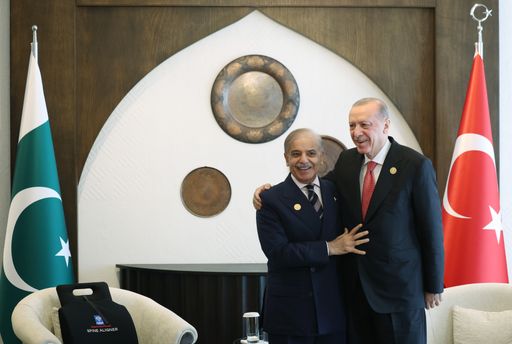
The celebrations mirrored various areas of shared values based on religious, ethnic, spiritual, economic, and strategic ties between the two nations.
In continuity with the legacy of their founding fathers, Pakistan and Türkiye should dominate in their geographic regions and offer a ray of hope and leadership to the broader Islamic world.
Historical and spiritual ties
The historical connection between the Ottomans and the sultans of Deccan in undivided India dates back to the 16th century, a connection which deepened with the foundation of the Mughal empire.
In 1517, Emperor Selim I defeated the Mamluks and took control of Mecca and Madina as Ottoman protectorates, and asserted his claim on the Caliphate. Just a few years later, in 1526, Babur’s defeat of Ibrahim Lodhi marked the establishment of Mughal rule in India.
But it was Babur’s son Humayun, who set the ball rolling on Mughal-Ottoman ties in the mid-16th century, writing to Suleiman the Magnificent and accepting his title of Caliph.
The spiritual connection between the two lands, however, runs deeper and older.
In 2008, Konya in Türkiye and Multan in Pakistan were declared sister-cities, in recognition of their spiritual bonds through the Sufi tradition, represented by Muhammad Jalaluddin Rumi and Bahauddin Zakariya.
While Konya is the home of the 13th-century poet-philosopher Rumi, the Multan-based Bahauddin Zakariya founded the Suhrawardi order in South Asia.
Centuries later, Pakistan’s national poet Muhammad Iqbal proudly called Rumi his ‘murshid’ (spiritual guide) and gave himself the title of Mureed-e-Hindi (disciple from India).
Iqbal’s philosophy of ‘khudi’ (selfhood) is inspired by Rumi’s passionate dedication to divine love and transformation.
The personal anecdotes indicate how the intellectual consciousness of Muslims of South Asia is deeply connected with the Turkish version of Muslim consciousness and Sufism.
Being a claimant of the Islamic identity of Muslim India, Pakistan does not shy away from tracing these linkages of history with the Ottoman Empire as its own history.
Today, the South Asian nation proudly asserts that the Khilafat movement, medical missions, and donations were a reflection of the value that Muslims of India had for the Ottoman Caliphate. The Deobandis, adherents of a school of thought within Sunni Islam dominant in the Subcontinent, led from the front by issuing a fatwa for financial support, and the other schools of thought followed too.
Modern days
The change of Turkish national consciousness towards a new identity of being a modern nation-state was well adapted by the Indian Muslims.
Many volunteered and fought side by side along with the fellow Turks in the war of Turkish Independence, in particular at the coastal city of Izmir against the Greek army.
Many of those who embraced martyrdom were from areas that are now part of Pakistan.

When Pakistan was born in 1947, the new nation was warmly welcomed by Türkiye in the comity of nations, and diplomatic ties began immediately.
The world theatre was then divided into two blocs, and dark clouds of the Cold War hung heavy over the world.
As a newly formed nation seeking a foothold in the global order, Pakistan found the support of Türkiye, both in CENTO and RCD, two regional groupings of like-minded countries.
Though the blocs did not transform into successful groupings like the EU or ASEAN, the commitment between them remained strong.
The ECO, as the successor of RCD, has a wider range of issues in its ambit of cooperation and development agenda with 10 members. Though the actual potential of the economic body has yet to be materialised, it offers a good platform to start with.
One of the most significant features of Pak-Turk diplomacy is unprecedented reciprocal support on various political issues of national unity, political sensitivity, and geographic realities.
For instance, Türkiye has always stood by Pakistan on the Kashmir issue and emphasised the need for the resolution of the contentious issue under the UN Security Council resolution mechanism.
Similarly, Pakistan is among the very few nations to stand affirmatively with Türkiye on the issue of the Turkish Republic of Northern Cyprus and supports Türkiye's position on the Cyprus issue.
Both nations are together to raise their voice for suppressed peoples across the globe, be it the UN, OIC, or any other forum of the international community.
Arguably, in the 21st century, the relationship transformed into a strategic partnership, with cooperation across defence, trade, education, and culture.
A new level of engagement by leaders and people has been witnessed, and both nations are ready to collaborate on more fronts of the 21st century.
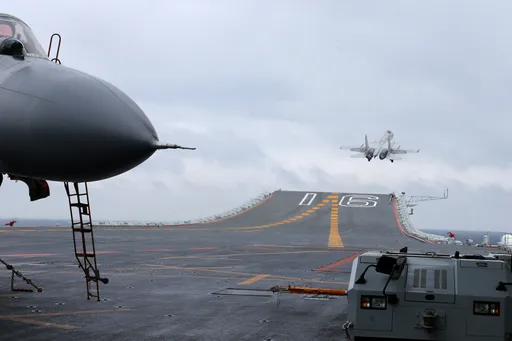
One of the loudest-sounding episodes of such cooperation is the KAAN 5th-generation fighter jet project, with the two nations set to establish a joint production factory.
The Pakistan Aeronautical Complex (PAC) Kamra and Turkish Aerospace Industries (TAI) are cooperating on various aspects of the jet, including aeronautical design and avionics.
This mutual collaboration on the strategic front and synergy showcases the reliance and confidence of the two nations.
On the people front, it's easy to identify Turkish fervour in Pakistani society and vice versa.
Turkish television series – such as Dirilis and Ertugrul – are a craze in Pakistan, with huge fan followings.
Urdu, the widely spoken national language of Pakistan, also has a great historical connection with Turkish. The word Urdu, in fact, is believed to have come from ‘ordu’, the Turkish word for army.
Sharing the Arabic and the Persian linguistic historical connection, there are numerous words commonly used in both Urdu and Turkish.
Evidently, many universities from both countries are collaborating on student exchange programmes, research, and skills development, and are exploring other options for potential cooperation.
Rarely do nations share such a unique pattern of history, religion, ethnic ties, and other cultural domains despite being apart by thousands of miles geographically.