 Ahmet Serdar Gunaydin
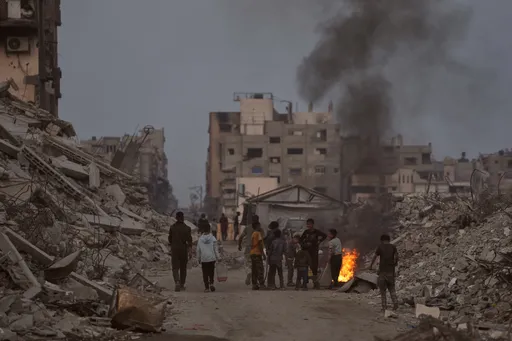
Since the beginning of Israel’s war and genocide in Gaza, Dutch society has exerted increasing pressure on its government to end the Netherlands’ complicity through its support for Israel.
Civil society organisations and universities have played a crucial role in keeping Gaza in the public eye and mobilising for action.
Public discourse has shifted markedly in favour of Palestine, with Gaza becoming a central concern in national debates.
Yet, despite sustained public pressure, the impact on government decision-making has so far been limited.
Amid the recent Dutch general elections, divisions over Gaza within the political spectrum have come into sharper focus.
A review by The Rights Forum shows that left-wing and centre-left parties, such as BIJ1, DENK, the Party for the Animals (PvdD), the Socialist Party (SP), the Green Left-Labour Party (GroenLinks-PvdA), Volt, and Democrats 66 (D66), tend to uphold international law and human rights in their approach towards Israeli crimes against Palestinians.
Conversely, right-wing parties – including the Party for Freedom (PVV), JA21, the Farmer-Citizen Movement (BBB), and the Reformed Political Party (SGP) – have voted against parliamentary motions criticising Israel’s occupation and the genocide.
Centre-right parties such as the People’s Party for Freedom and Democracy (VVD), New Social Contract (NSC), Christian Union (CU), and Christian Democratic Appeal (CDA), as well as the far-right Forum for Democracy (FvD), have similarly failed to support motions recognising Israel’s actions as genocide or apartheid.
Polls conducted before the elections have shown a growing gap between government policy and public opinion, where a majority of Dutch citizens wanted their government to adopt a more critical stance toward Israel, including economic sanctions and a ban on trade with illegal Jewish settlements in occupied Palestine.
While the polls indicated Gaza as an emerging factor influencing voter behaviour, its impact on the election results was not entirely straightforward.
The centre-left D66’s surprise lead in the elections resulted in parties supporting Palestinian rights collectively increasing their seats in parliament, even though they did not achieve a majority.
The far-right PVV, led by Geert Wilders, known for its anti-Muslim and pro-Israel stance, narrowly came in second but lost a significant number of seats compared to previous elections.
However, the overall number of seats held by right-wing parties remained largely unchanged.
The Hague’s contradiction
The Netherlands hosts two of the world’s most important international courts, the International Court of Justice (ICJ) and the International Criminal Court (ICC), both based in The Hague.
The ICJ has yet to issue a final ruling in South Africa’s genocide case against Israel, but has ordered provisional measures requiring Israel to prevent acts of genocide.
Despite this, the Dutch government’s position has diverged from the concerns raised by human rights organisations and scholars who concluded that Israel’s actions in Gaza amount to genocide.
Official Dutch statements on Gaza and entire Palestine have generally leaned toward Israel, often condemning Hamas’s attacks while omitting any mention of Israel’s ongoing killings, and placing the blame on Hamas for the “enormous human suffering in Gaza”.
Although the Netherlands claims to support “an independent, viable Palestinian state existing alongside a secure Israel”, it has so far declined to recognise Palestine, despite recognising Israel decades ago.
While countries such as France, the United Kingdom, and Belgium have recently moved toward recognition, the Dutch government has fallen short of taking such a step.
Over the past two years, several moments have sparked particular public outrage, exposing the contradictions in the Dutch government’s stance on Gaza and Israel.
In March 2024, the Netherlands formally welcomed Israeli President Isaac Herzog for the opening of the National Holocaust Museum, an event inaugurated by King Willem-Alexander.
The Dutch organisation, The Rights Forum, called the king’s reception of Herzog “a slap in the face of Palestinians who must watch helplessly as Israel murders their loved ones and destroys their land”, noting that the ICJ had included Herzog’s own incitement to genocide in its ruling.
Controversy has also extended into sports, as matches involving Israeli teams have become flashpoints of tension.
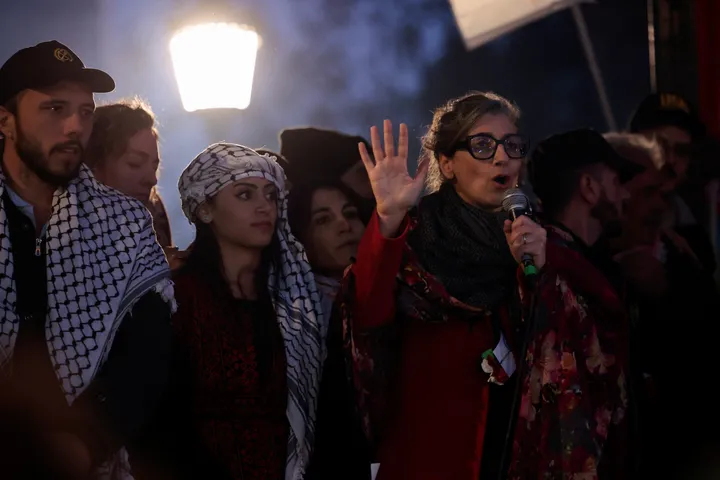
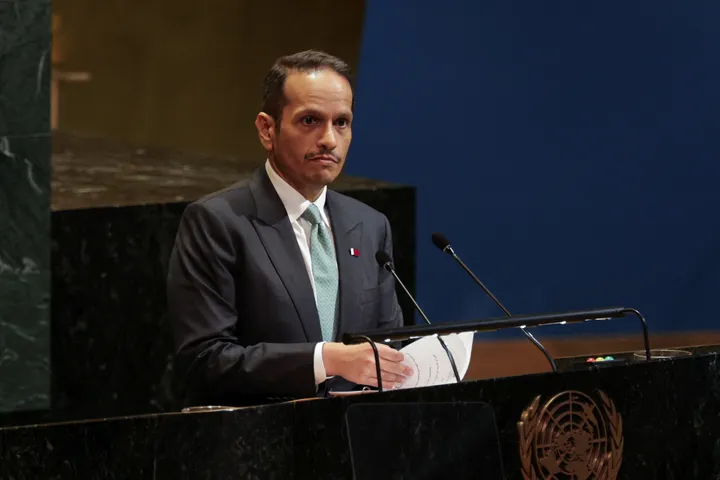

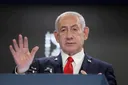
In a UEFA Europa League match between Ajax and Maccabi Tel Aviv in Amsterdam in November 2024, clashes broke out between Maccabi fans and pro-Palestinian demonstrators.
The repercussions of that incident continue to this day, with Maccabi fans recently barred from a Europa League match in the United Kingdom.
King Willem-Alexander condemned the Amsterdam riots as “antisemitic”, despite reports later revealing that Maccabi fans had provoked violence by chanting anti-Arab slogans, attacking residential buildings, and burning a Palestinian flag.
In August 2025, the Dutch parliament voted against a series of proposed measures aimed at holding Israel accountable, such as halting arms purchases from Israel, boycotting products from illegal West Bank settlements, and recognising an independent Palestinian state.
In this parliamentary session, the only point of consensus among lawmakers was a call for the “total destruction” of Hamas. After failing to secure cabinet support for further sanctions on Israel, caretaker foreign minister Caspar Veldkamp and foreign trade minister Hanneke Boerma resigned.
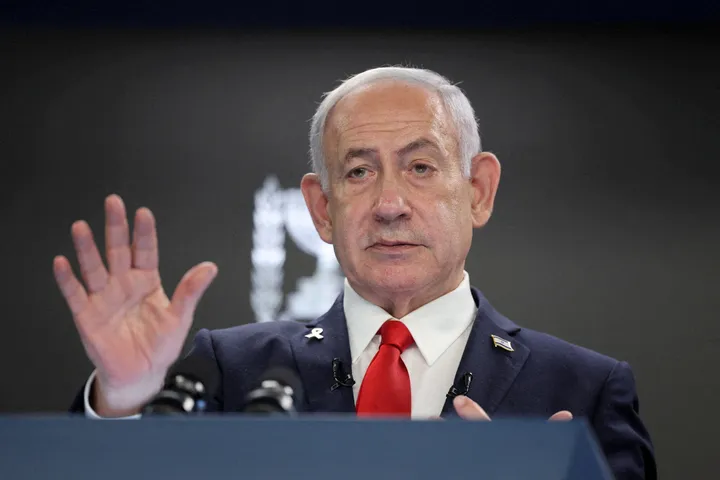
As host of the ICC, the Netherlands declared that it would comply with the Court’s arrest warrants for Israeli Prime Minister Benjamin Netanyahu and former defence minister Yoav Gallant.
Later, the government imposed travel bans on Israeli National Security Minister Itamar Ben-Gvir and Finance Minister Bezalel Smotrich, citing human rights violations against Palestinians. This measure came after similar actions by the United Kingdom, Australia, Canada, New Zealand, and Norway.
Meanwhile, the Dutch National Coordinator for Security and Counterterrorism (NCTV) has, for the first time, listed Israel among foreign states posing a threat to the Netherlands, accusing it of attempting to influence public opinion and political decision-making through disinformation campaigns.
The NCTV report cited instances including Israel’s joint threats with the United States against the ICC in The Hague, and its dissemination of disinformation during the Ajax-Maccabi riots, when an Israeli ministry sent a document to Dutch politicians and journalists outside official channels.
Public pressure
The shifting public mood has also begun to influence public platforms and events. The Dutch broadcaster for the Eurovision Song Contest announced it would not participate in 2026 if Israel remained in the competition, citing “the ongoing and severe human suffering in Gaza”.
This decision followed similar boycotts by other European countries, including Slovenia, Iceland, Spain, and Ireland.
The growing wave of public mobilisation has also entered the legal arena.
The Dutch non-profit research organisation SOMO (Centre for Research on Multinational Corporations), along with nine Palestinian and Dutch organisations, has filed a lawsuit against the Dutch state for allegedly failing to prevent genocide and uphold international law in its relations with Israel.
The case is currently before the Court of Appeal, with a written ruling still pending.
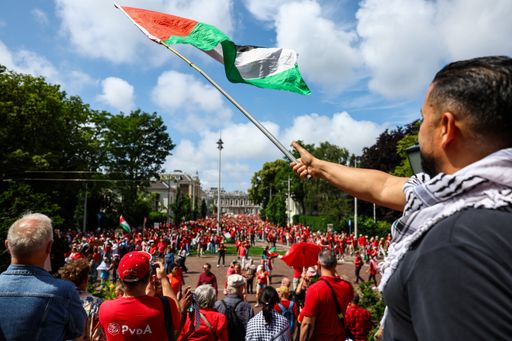
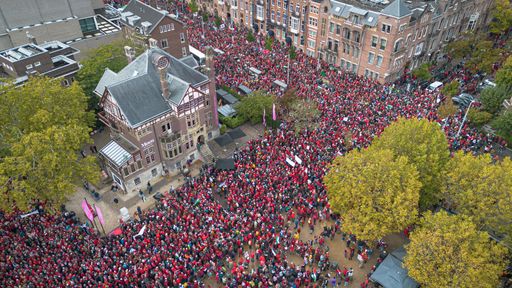
The nationwide ‘Red Line’ protests, organised by dozens of major civil society groups and drawing as many as 250,000 participants, have intensified pressure on the government to end the Dutch complicity in Israel’s genocide in Gaza.
Protesters have called for concrete political, economic, and diplomatic measures, including a complete arms embargo, the suspension of trade that contributes to the occupation of Palestine, and the cessation of military cooperation.
Pro-Palestinian demonstrations have continued across the country, including university protests demanding that institutions cut ties with Israeli organisations, along with sit-ins and solidarity actions held in cities throughout the Netherlands.
By resisting this mounting public pressure, the Dutch parliament and the outgoing caretaker government have weakened their own legitimacy.
It remains to be seen how the formation of a new government will shape the Netherlands’ stance on Israeli crimes in Gaza and Palestine, and how that stance will align with, or diverge from, that of its European counterparts.
Whether the next government aligns with international law or continues the path of complicity will shape the Netherlands’ moral and political standing for years to come.