 David Schutz
With roughly 6,000 archaeological sites in the occupied West Bank, nearly every Palestinian village inhabits antiquity. Archaeology carries as much meaning for the future as the past, but as Israel advances its annexation, it is about erasing history — stripping away every non-Jewish layer; excising Palestinians from their past — in clear violation of international law, which forbids an occupying power from appropriating land or cultural heritage.
After 2023, when civilian councils seized military authority, Finance Minister Bezalel Smotrich’s defence-based “Settlements Administration” took control of planning, land deeds, infrastructure, and archaeology. With settlers embedded in the Civil Administration’s chain of command, the aim is permanent Israeli control.
Since the 1967 occupation—deemed illegal by the ICJ—Israel has expanded settlements through land seizures, roads, military zones, and reserves, confining Palestinians to fragmented enclaves.
The Applied Research Institute Jerusalem (ARIJ) — a Palestinian research organisation focused on land, water, and heritage rights — estimates 2,400 occupied sites have been rebranded as Israeli through zoning, excavations, and tours, representing more than 40 percent of occupied West Bank heritage sites. The Civil Administration’s archaeology unit adds dozens annually.
In 2024, Israel’s cabinet extended Civil Administration control into the occupied West Bank Area B, while reports note settlers informally managing additional sites under army guard.
On August 10, 2025, the Civil Administration designated 63 new “Jewish heritage sites”: 59 in Nablus, three in Ramallah, and one in Salfit. About half were new; the rest had long been signed but undeclared. Once declared, the archaeology unit can freeze buildings, levy fines, draw borders, even raze homes—making archaeological jurisdiction a centrepiece of Israel’s illegal annexation.
A violent predilection
Excavation is inherently destructive. To reveal antiquity, archaeologists erase later layers—Palestinian life wiped irretrievably—leaving only a curated past. What is preserved is selective.
Emek Shaveh, an archaeology watchdog NGO, notes Israel’s Antiquities Law limits protection to artefacts made before 1700 AD, excluding Ottoman and later eras and leaving modern history unprotected.
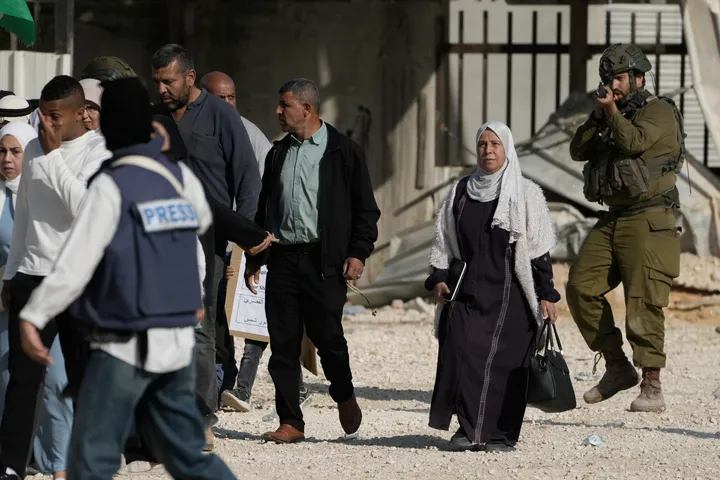
Khirbet el-Marjame, one of the 63 sites declared in August 2025, crowns a hill near Ramallah in Area C. Documented since the 1970s, it holds Iron Age fortifications with deeper Middle Bronze layers. The new archaeological zone envelops all existing homes; residents have faced settler harassment and assaults.
“The moment the army or settlers come with their archaeologists, it puts a target on our backs,” said Basel, 45, from the nearby village of al-Mughayer. “We know the attacks will follow, and the soldiers will stand aside until we give up and leave.”
Settler militias secure both declared and undeclared sites in the area. At Ibsiq in the northern Jordan Valley, masked gunmen assaulted an Israeli activist—hospitalising him—and forced his elderly Palestinian hosts to kneel, threatening to burn them out within 48 hours.
“I asked if they were criminals,” the activist recalled. “One answered ‘yes,’ then kicked me again.”
Heritage under guard
The push to seize Palestinian heritage relies on settler lobbies, foreign donors, army protection, and state ministries.
Groups like Regavim—co-founded by Smotrich—and projects like Beshvilei Shomron run tours, digs, and campaigns casting occupied West Bank sites as Jewish heritage. These groups advocate for Jewish-only claims to heritage and often operate under military protection.
In the 1980s, settler archaeologist Adam Zertal claimed Mount Ebal held “Joshua’s Altar,” near Nablus—sparking further digs many experts dismissed as spurious.
His student Ze’ev Erlich guided IDF tours and civilian digs in the occupied West Bank until his 2024 death in Lebanon, killed by Hezbollah while chasing what he deemed a Jewish site beyond Israel’s borders.
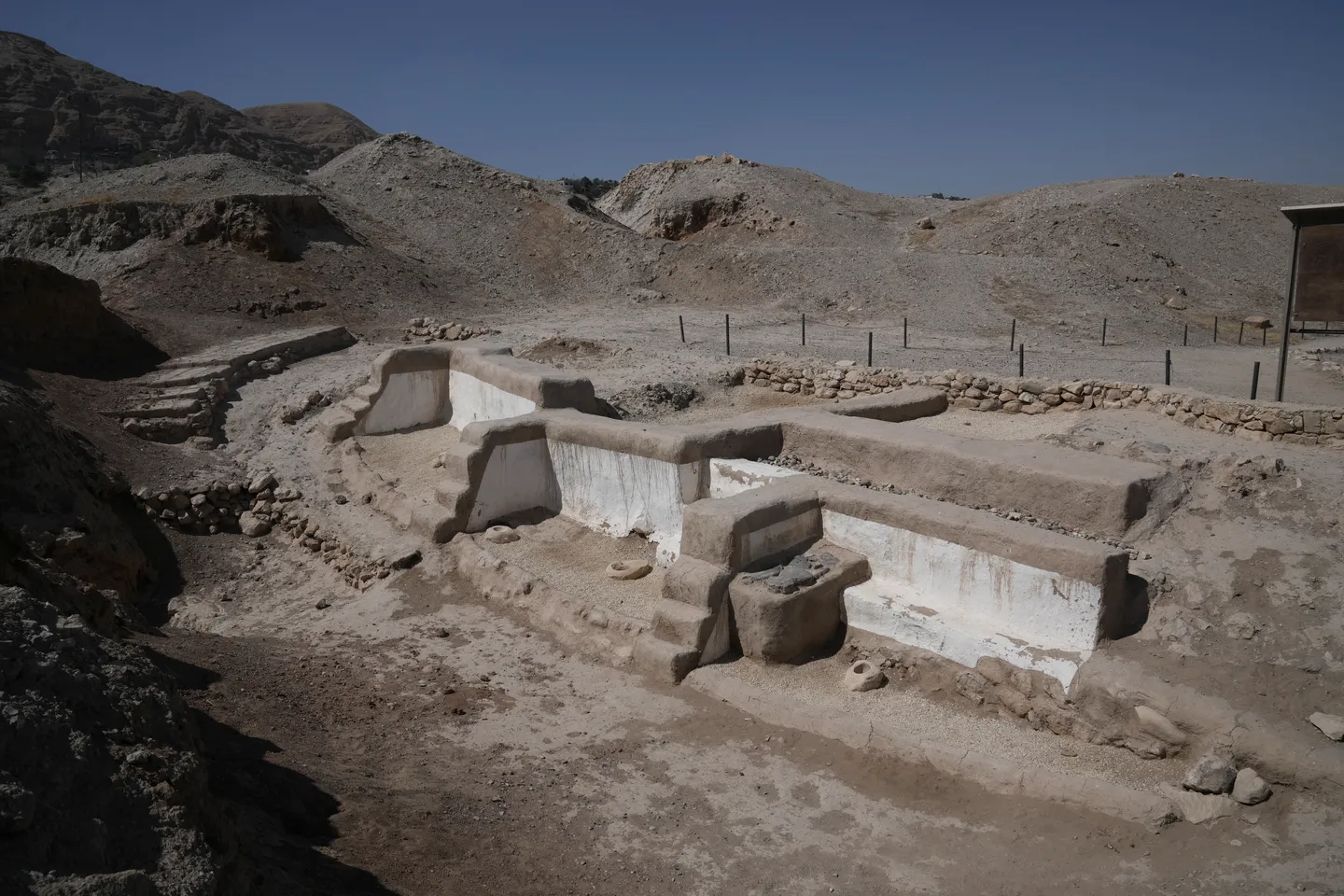
In al-Karmil, a town of 17,000 in Area A, a declared heritage zone covers an ancient late Roman era pool, now fenced and gated, with Palestinian access blocked by settler roads and military closures.
Mahmoud Nawaja holds a Council license to run the Pool as an amusement park: “Three Fridays in a row they came, opened the gate, stationed guards for an hour. Now there are four or five gates.”
Locals pay modestly for the pool and rides. But on Jewish holidays, organised groups of zionists break in under army guard to perform Jewish ritual washings. “If someone tries to stop them, they just go in,” Nawaja said.
“One time they short-circuited the rides on purpose,” he said. “Someone clearly rigged it — it doesn’t break on its own.”
When asked why not charge settlers equally at his amusement park, Nawaja said he once tried. “They told me, ask [PA Chairman] Abu Mazen,” he recalled. Smotrich has since cut off PA funding.
Archaeology as annexation
Behind the scenes, Israeli ministries have waged turf wars over control of occupied West Bank antiquities. Under Smotrich’s 2022 coalition deal, the Israel Antiquities Authority was moved from the Culture Ministry to the new Heritage Ministry, led by Amichai Eliyahu of Religious Zionism.
A bid to fold the IDF Civil Administration’s archaeology unit (KAMAT) into the Authority failed, so staff were rebranded as Heritage Ministry officials and in 2024 appeared at an occupied West Bank archaeology conference, which was denounced for excluding Palestinians. A new Likud proposal would place KAMAT under a dedicated Heritage Ministry body.
Al-Karmil’s local council chairman Zuhair Abu Taha said his town is sealed off on holidays in what he termed a “settler assault” since 2023, with access “entirely reserved for settlers under heavy military protection.” He pointed to a new settler road cut straight up the archaeological hill of Tel Ma‘in in Area B from the nearby Avigail outpost.





“Without any prior warning, two or three weeks ago, the Israeli Minister of Internal Security Itamar Ben Gvir came here,” Abu Taha said. “Days later, settlers began opening the road that leads up to the archaeological summit — completely without notice.”
Hilltop ruins lie amid Palestinian homes and a bee farm. Tel Ma‘in’s absence from official lists suggests the roadworks are extrajudicial—tolerated if not sanctioned. The army withholds a full site list, and Emek Shaveh says archaeologists’ and rights groups’ information requests have gone unanswered.
The mayor told TRT World not to climb the hill, warning it would summon soldiers and settlers.
“When we confronted them on the first day, the settlers said it had already been declared an archaeological zone and told us to refer to the Israeli Ministry of Antiquities,” the mayor added. “But when our residents went to file complaints at the Kiryat Arba (settlement) police station, they were prevented from doing so.”
Across the road in a-Tuwani, villagers won long-delayed approval for water pipes, but the Civil Administration froze the project and declared an archaeological site over a supposed synagogue amid Roman-Islamic ruins. Council head Muhammed Rabai showed TRT World scholarship disputing it. Though later exempted from new digs, the village center still hosts armed settler pilgrimages that repeatedly shut it down.
Resident Juma’a Rabai told TRT World that on the first inspection day an official said, “If a car has no driver, it’s mine.”
Digging through loopholes
The 1995 Oslo II accords proposed a joint archaeology committee that never formed; only a few occupied West Bank religious sites received special arrangements. Thus, most sites remained under unilateral Israeli control.
International law — the 1907 Hague Regulations and the 1954 Hague Convention with its protocols — obliges Israel as occupier to protect cultural property and uphold local law. Excavations are allowed only as “rescue digs” for sites in imminent danger. After Oslo collapsed, right-wing groups campaigned to “save” sites from alleged looting, giving the army cover to guard digs conducted without Palestinian involvement.
“International law is supposed to protect these sites, but it also makes it easy because you can call anything a threat,” an Emek Shaveh spokesperson said. “And once it’s a threat, you can do whatever you want — dig, station soldiers there.”
Some describe Israel’s archaeology as epistemicide—erasing Palestinian history. In 2013, geneticist Eran Elhaik told Globes the Hebrew language paper that Israel rests on “one of the world’s oldest, most crowded cemeteries,” where DNA could test settler claims of heritage. Such studies, he said, are stifled because remains would match Palestinians more than Israelis.
“Today, the idea is simple,” Emek Shaveh says. “If a Palestinian lives near an archaeological site, he’s the threat.”
Ethnic cleansing is often cloaked in a biblical, messianic veneer. In 2010, Israel’s National Heritage Sites Project invested 400 million shekels in 150 sites, 37 of them archaeological, including six in the occupied West Bank. The Antiquities Authority website lists only Jewish archaeological projects.
Tel Shiloh, north of Ramallah, emerged as the Heritage Project’s flagship site. The occupied West Bank’s first “biblical park” is run by the settler Shiloh Association and promoted by the Civil Administration and Heritage Ministry as a “national attraction” with ruins allegedly linked to the biblical Tabernacle, multimedia displays, and reconstructed rituals.
Palestinians are excluded from planning or revenue and restricted from travel during Jewish festivals, while similar parks rise at Sebastia—a Palestinian UNESCO site—and beyond.
“At Tel Shiloh you have churches and mosques built on top of each other; Canaanite remains documented by Israel Finkelstein. Now, red heifers are paraded there as symbols of messianic return,” the Emek Shaveh spokesperson said.
Settler groups claim biblical names prove Jewish destiny and genealogical continuity.
Emek Shaveh notes that by the 2nd–3rd centuries, Jews clustered in villages while Romans and later Christians ruled Palestinian cities. Biblical names were re-imposed on rural sites, often disregarding prior usage, then preserved in Arabic by Muslim communities.
“The reason so many biblical names survive in Arabic today is because after [the late Roman era process of re-ascription and later Islamic appropriation] Muslims kept using them.”
With all Israeli universities excavating the West Bank under military protection, Emek Shaveh sees court orders against unlawful digs as mostly cosmetic and increasingly infrequent.
“It’s the essence of colonialism,” the spokesperson said. “These are multilayered sites. Why should the current layer be unimportant? Maybe in a thousand years, people will want to study the Palestinian layer.”
This article was produced in collaboration with Egab.