 Alfonso Insuasty Rodriguez
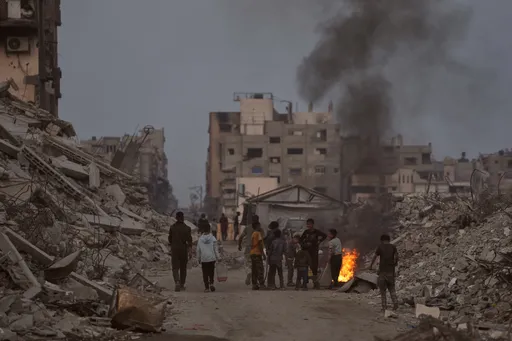
Faced with the loss of its global hegemony and the consolidation of emerging powers such as China, Russia and India, Washington has chosen to reactivate its imperial policy based on coercion, threats, and the imposition of chaos as a method of regional control.
What we are witnessing is not diplomacy, but rather the diplomacy of non-diplomacy: a foreign policy sustained by deceit, blackmail, and media manipulation.
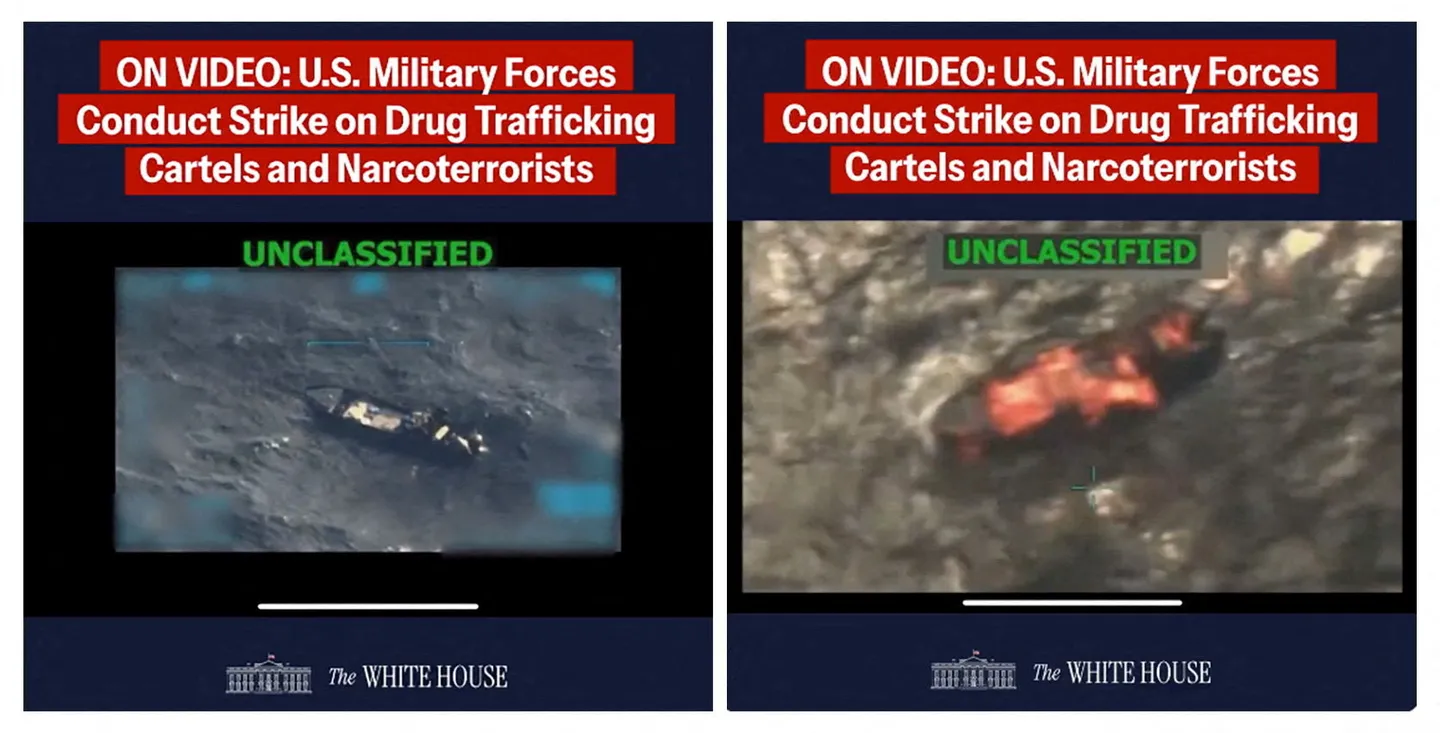
The United States justifies its actions through narratives of “defending democracy” or “fighting drug trafficking”, yet behind these discourses lie the real interests — control over strategic resources such as oil, gold, copper, gas and lithium, and the maintenance of its influence in what it has historically regarded as its “backyard”.
Venezuela is at the centre of this dispute. Its vast oil reserves, together with the mineral wealth of the Orinoco Mining Arc, the gold deposits of the Guiana Shield and the immense water resources of the Amazon, are top priorities for transnational capital.
The aggression is not ideological but economic and geostrategic.
Similarly, the United States’ interest in controlling Guyana — a nation rich in gas and oil resources and currently engaged in a territorial dispute with Venezuela — serves its aim of encircling Caracas and consolidating an energy and military corridor of domination across northern South America.
This offensive is complemented by the military and political repositioning in Colombia, a country of strategic importance for Washington’s interests.
Since the launch of Plan Colombia, now marking its 25th anniversary, a model of structural subordination has been consolidated across security, intelligence and military doctrine.
Under the guise of “anti-drug cooperation”, the US established a vast network of territorial, logistical and political control, which today serves as a platform for its broader containment strategy towards the south — to dominate the Caribbean, the Amazon, and the region’s energy flows.
It is also important to highlight the role of Brazil, a country increasingly encircled and pressured under the same narrative of “fighting drug trafficking”.
We are once again witnessing how chaos is deliberately provoked and sustained through this rhetoric to justify intervention.
US aggressiveness is further expressed in the expansion of military bases, covert operations, and disinformation campaigns.
To this must be added the backing of compliant governments and the destabilisation of those pursuing an autonomous path.
We see this clearly in Ecuador, Peru, Argentina, and Chile, countries where Washington has reasserted its influence through alliances with local political and business elites, spreading chaos as a means of domination.
For the United States, instability is not a problem but a functional tool to justify intervention and perpetuate control.



Within this context, Colombia and Venezuela are pivotal pieces. The former serves as a platform for military and political projection; the latter, as a target for dispossession and energy control.
In both cases, the script is the same: generate vulnerability, incite internal conflict, and employ the discourse of the “war on drugs” or the “defence of human rights” as a pretext to violate national sovereignty.
The underlying logic of this strategy is clear: the United States does not tolerate autonomous, dignified or sovereign governments. Regardless of which party occupies the White House, Washington’s foreign policy maintains a constant line of intervention and coercion.
In Colombia, ahead of the 2026 elections, there is growing evidence of US efforts to influence the process and ensure that the next administration aligns fully with its geopolitical interests.
Paradoxically, this aggressive policy has accelerated the emergence of an alternative order.
Latin America is beginning to look towards other alliances, the BRICS bloc, cooperation agreements with China and Russia, and new South–South mechanisms.
The sanctions, blockades and pressures against Venezuela have produced the opposite of what Washington intended: they have strengthened its sovereign resolve and its rapprochement with other global power centres.
In this scenario, the region faces a historic challenge. It must build deep political, economic and cultural coordination that allows it to resist external aggression and assert its own vision of development and coexistence.
This is not merely an alliance of governments, but a unity arising from the peoples, organisations and communities defending life, sovereignty, and the right to self-determination.
Recent history demonstrates that wherever the United States intervenes, chaos and institutional collapse follow.
Conversely, wherever people manage to assert their autonomy, the possibility arises for lasting peace, genuine social justice, and solidarity-based regional integration.
Today, more than ever, Nuestra America needs unity, clarity and firmness.
Venezuela resists with dignity, Colombia seeks emancipation from foreign tutelage, and the peoples of the continent rise against the dictatorships of the market and imperial domination.
The defence of territory, natural resources and sovereignty is not merely a national cause; it is a shared continental task.
Only through a strong ethical, political and popular articulation can we put an end to the perpetual war imposed by the North and open the path towards a peace grounded in justice, dignity and self-determination for Latin America.