 Sadiq S Bhat
Washington, DC, — After forty-one days of deadlock, the US Senate has finally moved a step closer to reopening the government.
In a rare display of bipartisanship, several Democrats joined Republicans to advance a stopgap measure aimed at restoring federal funding.
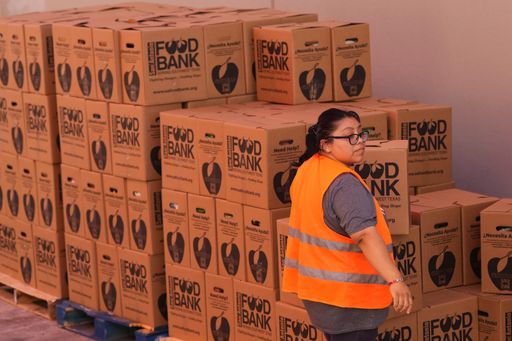
The vote marks the first real movement in weeks, offering a ray of relief as the shutdown’s toll continues to ripple through the US: grounded flights, unpaid workers, and delayed food assistance for millions reliant on Supplemental Nutrition Assistance Programme (SNAP) benefits.
Where things stand now
US Senate is reconvening after a deal was passed late on Sunday night.
The key procedural hurdle on a bipartisan funding bill, voting 60-40, was overcome, and the bill now advances toward final passage.
This means the federal government could reopen after 41 days or so — the longest shutdown in US history.
If it passes the Senate intact, the bill will then head to the House of Representatives, where Speaker Mike Johnson has signalled support but faces pushback from some Democrats and hardline Republicans.
Johnson called the breakthrough "long overdue" and a relief after the stalemate drained an estimated $18 billion from the US economy and left hundreds of thousands of federal workers without paychecks.
The Speaker said the goal is to pass the resolution as quickly as possible to get it to President Donald Trump's desk, whom he says is "very anxious" to get the government reopened after 41 days.
How the deal came together
The shutdown started on October 1, 2025, when the US Congress failed to pass full-year spending bills amid disputes over immigration enforcement funding and disaster aid.
Republicans, holding slim majorities in both chambers, pushed for steeper cuts to non-defence programmes, while Democrats demanded protections for health programmes.
Talks dragged for weeks, with Senate Minority Leader Chuck Schumer rejecting short-term "clean" funding bills unless they included a one-year extension of Affordable Care Act premium subsidies set to expire December 31.
A breakthrough came over the weekend after Senate Majority Leader John Thune floated a compromise: a short-term funding patch plus commitments for future votes on Democratic priorities.
Eight Democrats Senators Catherine Cortez Masto, Dick Durbin, John Fetterman, Maggie Hassan, Jacky Rosen, Tim Kaine, Angus King, and Jeanne Shaheen, crossed the aisle to provide the 60 votes needed to overcome a filibuster.
Thune credited "cooler heads" in private negotiations, while Schumer called it a "necessary evil" to avoid deeper economic pain.
Trump blamed Democrats for the prolonged shutdown but added that he stands ready to work with both parties to solve this problem once the government is open.
What's in the Bill and what's missing?
The package funds the government through January 30, 2026, buying time for full appropriations next year.
Here are the key inclusions:
*Full-year funding for Veterans Affairs, agriculture, and energy departments.
*Emergency disaster aid for hurricane-hit states like Florida and North Carolina.
*Reversal of recent federal worker furloughs and back pay guarantees.
*A three-month extension for highway and transportation programmes to prevent infrastructure delays.
Notably absent: The ACA subsidy extension Democrats sought, which would have capped out-of-pocket premiums for 9 million lower-income enrollees.







Republicans blocked it, arguing it props up "Obamacare" without offsets.
The deal also skips new Ukraine military aid, another big Democratic ask, and limits immigration-related spending to current levels, dodging Trump's demand for wall funding.
Why this moment matters
This isn't just about lights staying on in Washington, DC. It is a preview of the 2026 budget wars.
The shutdown affected air travel, delayed Social Security checks, and spooked markets, which rallied today with the Dow up 240 points on deal hopes.
Politically, it exposes GOP vulnerabilities: Trump's base cheered the leverage play, but moderates like Sens. Susan Collins and Lisa Murkowski warned of voter backlash in swing states.
For Democrats, the split, eight defectors versus 42 holdouts, signals internal rifts ahead of midterms, with progressives like Rep. Alexandria Ocasio-Cortez saying it is not a matter of appealing to a base. “It’s about people’s lives.”
If the House stalls, shutdown 2.0 looms by December, risking holiday chaos and a fresh round of blame games.
Why Democrats relented
Exhaustion won out. By day 41, polls showed 52% of Americans blaming Republicans, but Democrats faced heat from their own ranks: unions, federal workers in red states, and health advocates, as subsidy cliffs loomed for enrollees.
The shutdown has resulted in about 750,000 federal employees being furloughed, according to the Congressional Budget Office (CBO).
Schumer's team floated the extension as a must-have just days ago, but Trump's veto threat and GOP unity killed it.
Analysts say the eight crossovers, mostly moderates from battleground states, prioritised ending the pain over a lost cause; Manchin called it "putting country over caucus."
Progressives fumed, with Sen. Bernie Sanders saying, “To my mind, this was a very, very bad vote.”
“What it does, first of all, is it raises health care premiums for over 20 million Americans by doubling, in some cases, tripling, or quadrupling. People can’t afford that when we are already paying the highest prices of the world for health care.”
Did elections in New York, elsewhere play a role?
Yes, but it backfired for the Democrats' hardline stance.
Off-year races on November 4 delivered a "blue sweep": Democrats flipped two New Jersey legislative seats, held a Virginia state senate majority, and saw Zohran Mamdani (D) win New York City's mayoral race in an upset, energising the base on progressive issues and health care.
Polls post-election showed Dem confidence spiking — Schumer's team felt public momentum to hold firm on subsidies, with one strategist telling Politico it "gave us the edge."
But the high faded fast. Trump railed against the shutdown, and economic jitters (like stock dips last week) increased pressure.
By Sunday, the eight defectors cited "real-world fallout" trumping electoral wins: Mamdani's victory, for instance, highlighted ACA vulnerabilities in urban districts, but couldn't sway the math in Washington, DC.
“This bill is not perfect, but it takes important steps to reduce shutdown’s hurt,” Senator Richard J. Durbin of Illinois, top Democrat, said in a statement explaining why they backed the deal.