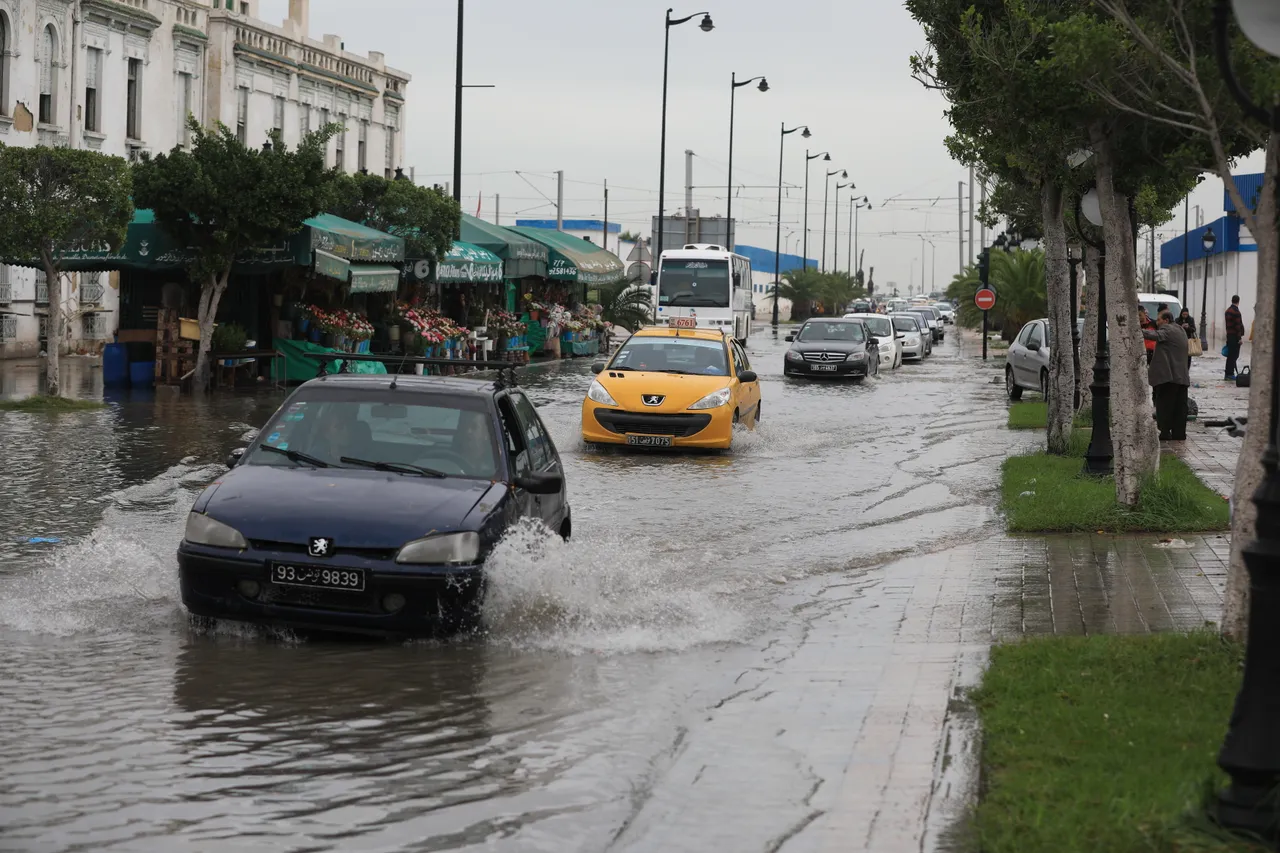
Severe flooding across northern and eastern Tunisia has killed at least five people, left several others missing, and caused widespread disruption to transport and public services since early this week, authorities and experts said on Thursday.
Heavy rainfall beginning late Monday led to rising water levels in multiple cities, paralysing traffic, suspending classes in several provinces and prompting emergency interventions by civil protection teams.
Four of the fatalities were reported in the coastal city of Moknine in Monastir province. At the same time, a fifth person died in the town of El Haouaria in Nabeul province, according to official figures.
Search operations are ongoing for four fishermen who went missing after their boat capsized off the coast of Monastir.
The fishermen had departed from the port of Teboulba on Monday morning, but were caught by sudden and severe weather conditions. One fisherman survived and managed to reach the shores of the Kuriat Islands, around 15 kilometres offshore.
Major disruptions
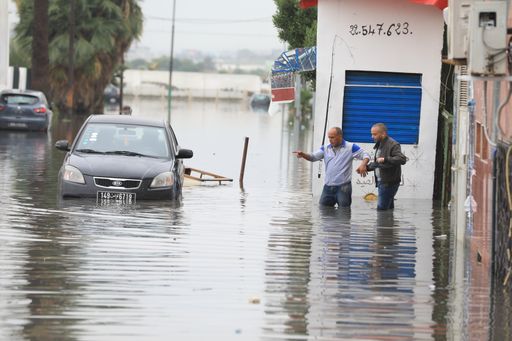
The extreme weather caused major disruptions to daily life, with public transport suspended in parts of the capital after floodwaters submerged roads and tram lines.
Authorities also suspended classes on Tuesday and Wednesday in 15 of Tunisia’s 24 provinces, citing safety concerns and transportation difficulties.







Civil protection teams, supported by the army, were deployed to clear roads, pump floodwater from residential areas, and assist affected residents.
Climate researcher Amer Bahba said the flooding was caused by a powerful desert low-pressure system, describing it as one of the strongest Tunisia has experienced in decades.
Speaking to Anadolu, Bahba compared the system to the historic floods of 1969, which killed more than 540 people, destroyed over 70,000 homes and displaced nearly 300,000 others.
He said the system formed in southern Tunisia before moving northward towards the Gulf of Gabes and the eastern coastline, eventually reaching the Strait of Sicily.
Rainfall hits record levels
Warm sea temperatures, he explained, intensified atmospheric instability, producing dense storm clouds and exceptionally heavy rainfall.
Bahba stressed that the event does not meet the scientific criteria of a Mediterranean cyclone, as it lacked “a defined eye,” despite the strength of the winds and precipitation.
Some areas recorded more than 300 millimetres of rain over two days, with at least one private weather station reporting totals exceeding 400 millimetres, he added.
While additional low-pressure systems are expected later this week, Bahba said they are forecast to be less intense, with rainfall concentrated mainly in northwestern regions and unlikely to cause widespread flooding.