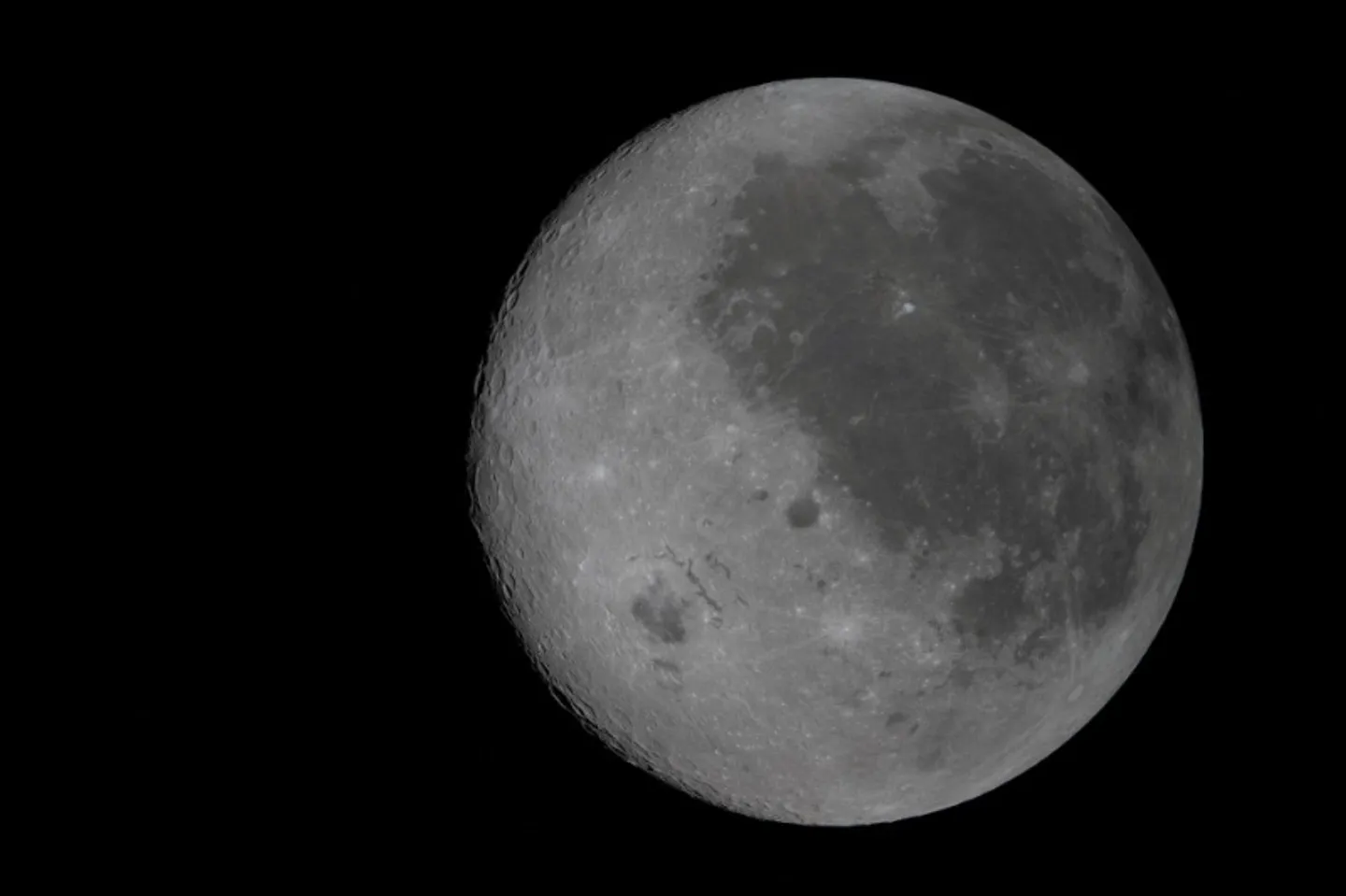
An almost five-tonne discarded piece of rocket from SpaceX – Elon Musk’s space company – is hurtling towards the Moon at a pace several times faster than the speed of sound.
The massive piece of space junk will hit the lunar surface on August 5, presenting a rare opportunity for scientists: No artificial or natural impact flash has ever been confirmed on the Moon’s lit surface before.
The space junk racing towards the Moon is the “upper stage” of a Falcon 9, one of the 600 similar SpaceX rockets that serve as partially reusable launch vehicles to transport payloads, satellites, and crew into outer space.
Once in orbit, the “upper stage” of the rocket provides the in-space propulsion to set the spacecraft on a precise trajectory.
The object heading towards the Moon is leftover junk from a January 2025 launch that transported two commercial lunar landers.
It was supposed to burn into fine dust on re-entry in Earth’s atmosphere after ferrying the two landers to the Moon. But not everything went according to plan.
Instead, it entered a high and irregular orbit around Earth “at distances similar to that of the Moon”, according to independent astronomer Bill Gray, who first spotted the meandering spacecraft.
The object weighing 4,899 kilograms has been orbiting Earth for a little over a year, Gray wrote in a blog post.
The errant piece of junk is expected to strike the lunar surface near Einstein Crater, an area along the western edge of the Moon, while moving at a speed of 8,690 kilometres an hour. For context, sound travels 1,235 kilometres an hour on Earth.
The resulting collision will release energy equivalent to 3,000 kilograms of TNT, a common military and industrial explosive.
Gray says the exact path of the hurtling object is tricky to predict because it is being “pushed around by sunlight” – an extremely gentle force that is not entirely predictable.
A recent research paper co-authored by 23 astronomers, including Gray, urges the scientific community to observe the event closely.
The research paper, covered in simpler language by Scientific American, highlights that the impact offers a chance to study what happens in the immediate aftermath of a major strike on the lunar surface.
Gray says the predicted strike site lies on the sunlit side of the Moon, near the ‘limb’ or the edge of the visible surface, which can work in observers’ favour.
“Rocks ejected by the impact may form a plume that will be visible against the dark background once they're off the Moon. As with much in science, the answer is ‘we don't know; let's find out’,” he says.
“Maybe we'll see the flash. Maybe we'll see rocks ejected from the crater. Maybe we'll even see both,” Gray says.
NASA’s Lunar Reconnaissance Orbiter – which is a “sort of spy satellite for the moon” – will take photographs of the lunar site before and after the collision.








South Korea’s Pathfinder Lunar Orbiter will also attempt to capture the impact and its aftermath.
Why the event matters
This event matters because it is expected to advance human understanding of lunar conditions.
Observing the flash, the resulting cloud of dust, gas, and rocky debris, and the crater likely measuring 16 to 18 metres can improve scientific knowledge about the behaviour of lunar material under high-speed collisions.
Even though the idea of external objects crashing into the Moon's surface is not novel, controlled or carefully recordable events of this nature are uncommon on the Moon.
One example is the 2019 deliberate crashing of an upper stage of a rocket into the Moon. NASA staged that crash to check if the splash would “kick up water ice” that could be observed from another spacecraft.
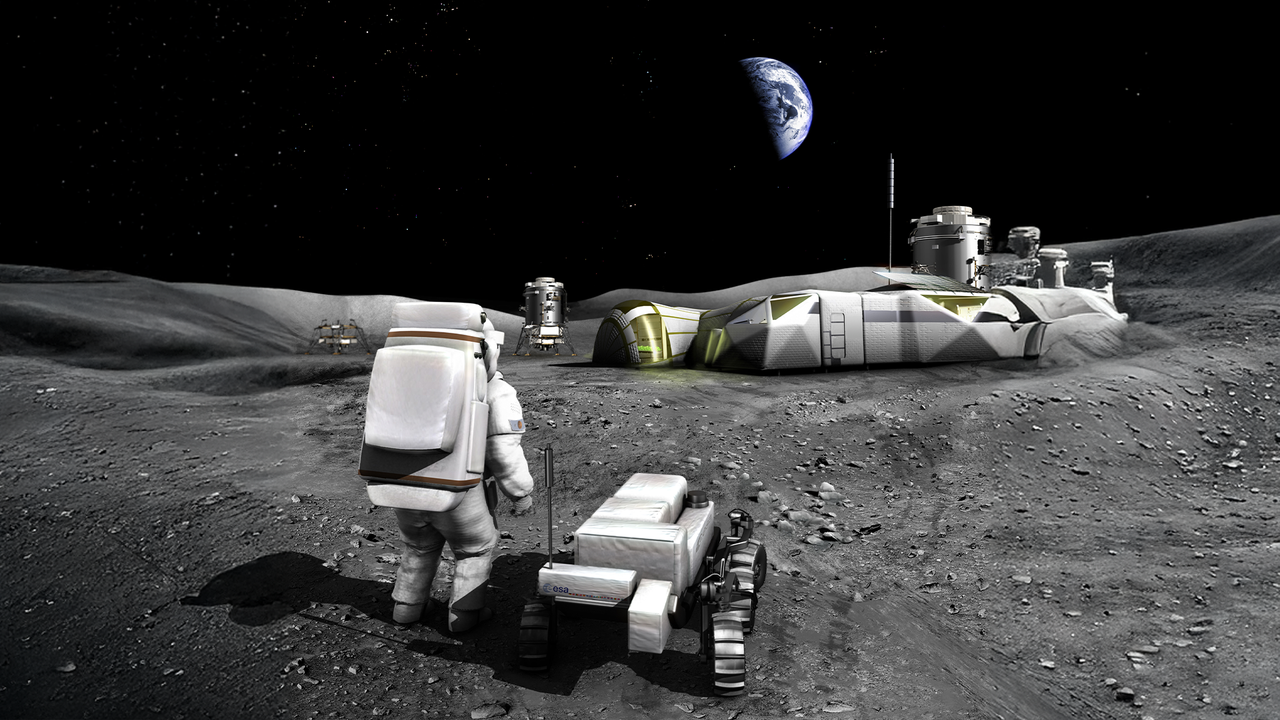
Experts say the crash-landing of a manmade item of such huge size into the lunar surface highlights the growing challenge of space junk.
Any abandoned hardware that fails to re-enter Earth’s atmosphere – where it naturally burns into very small particles – can become a long-term hazard.
That concern has become more relevant as human activity on and near the Moon is set to increase.
NASA’s Artemis programme aims to send astronauts to the Moon. The increased space traffic makes the ability to track and predict the paths of debris essential for protecting astronauts and spacecraft.
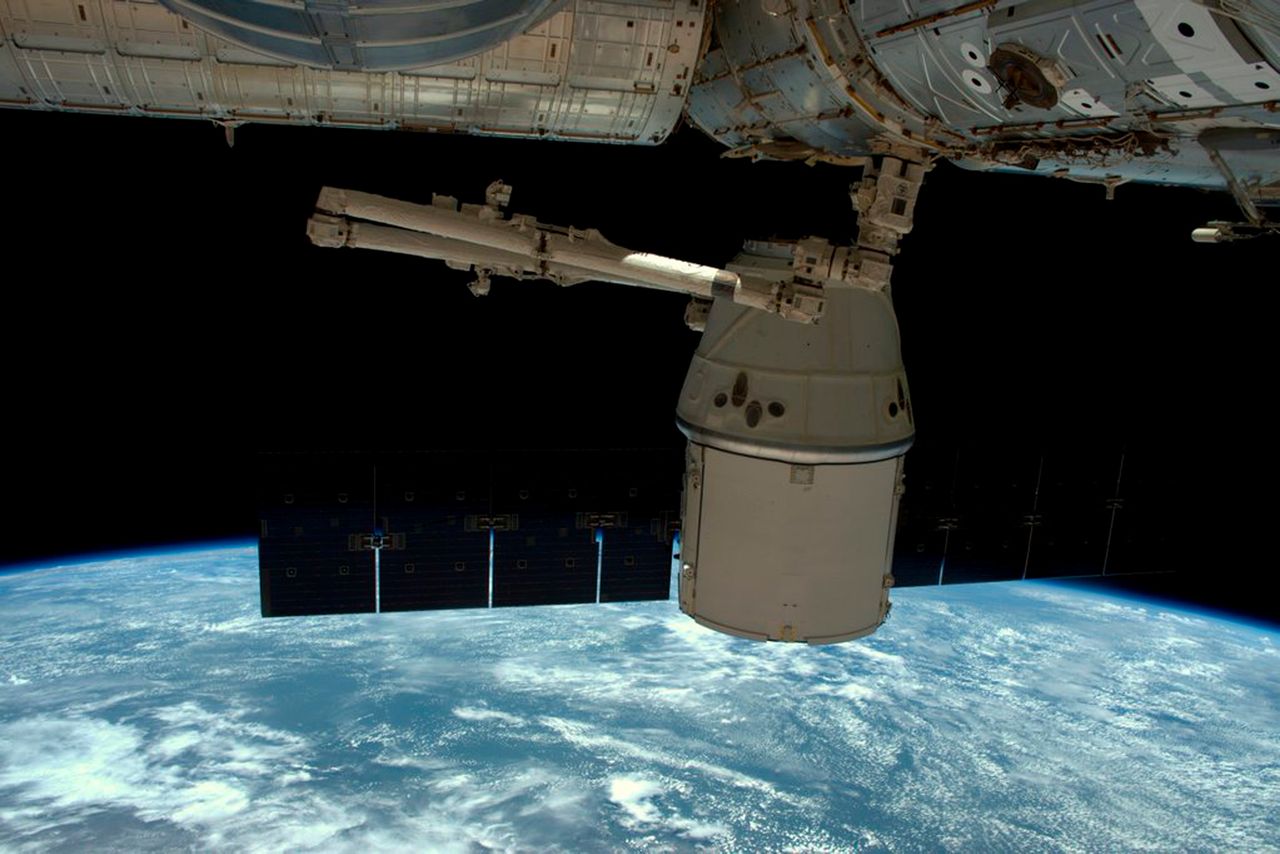
Even the International Space Station, humanity’s home in space orbiting about 400 kilometres above the Earth, has had to dodge space debris “dozens of times” since 1998.
The Moon has also become a frontier for harnessing energy sources. The US, China, and Russia are vying to establish nuclear power plants on the lunar surface, promising to fuel future bases, mining operations, and even permanent human settlements.
Elon Musk has also publicly described the Moon as a potential site for large-scale AI infrastructure.
Perhaps the most visible consequence of growing amounts of space debris is that it is making it increasingly hard for ordinary people to go out on a clear night without seeing a few satellites drifting away as ‘stars’ across the sky.
“If this continues, the experience of going out and looking up at a starry sky is never going to be the same again,” Gray says.