 Kazim Alam
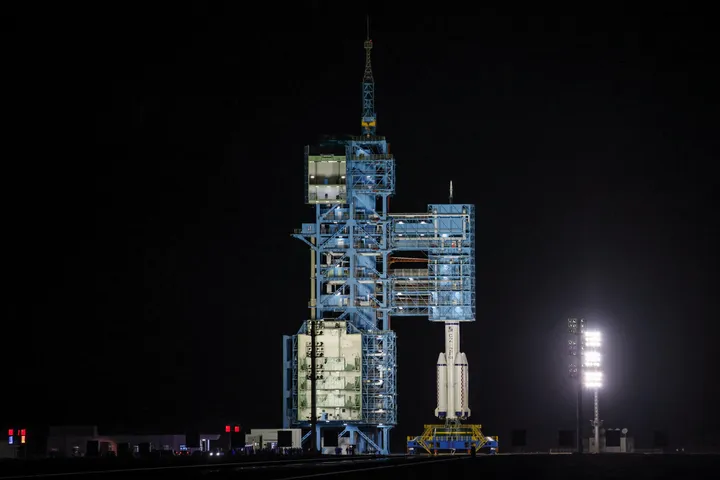
China last month announced an ambitious five-year plan to deploy data centres that float 800km above Earth.
This week, US billionaire Elon Musk unveiled similar plans – aggressively raising funds to fuel SpaceX's orbital data centre ambitions, with a recent merger and an impending public offering of shares.
Analysts have interpreted the latest developments as a strategic move to build data centres in space, where AI infrastructure can scale without the constraints of Earth.
As AI demand soars, companies like SpaceX and Google are racing to launch computing infrastructure into orbit. The shift of energy-guzzling AI infrastructure from Earth to orbit promises unlimited solar power and cooler operations in the vacuum of space.
The push stems from a simple problem: Earth’s data centres are already operating under immense pressure because of AI's insatiable hunger for energy.
Training massive AI models requires enormous electricity that is enough to power hundreds of thousands of homes annually. This forces AI firms to rely on vast data centres that take away electric grid capacity while consuming large quantities of water for cooling operations.
For consumers in areas near data centres, the price of electricity increased 267 percent in the last five years.
Similarly, an average 100-megawatt data centre in the US devours about two million litres of water per day, which is equivalent to the daily water consumption of about 6,500 households.
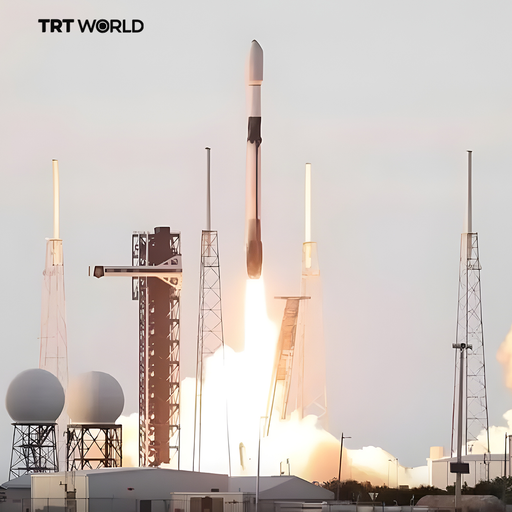
Musk has been vocal about space-based data centres. In late 2025, he declared on X that SpaceX “will be doing” data centres in space by scaling up its next-generation Starlink V3 satellites, which use high-speed laser links for data transfer.
Launched by the massive Starship rocket, these satellites will form constellations in outer space and serve as floating supercomputers.
Musk envisions delivering 100 gigawatts of power to high-earth orbit within four to five years, potentially scaling to 100 terawatts from a lunar base.
He plans to achieve this ambition by raising $25 billion through the sale of shares in SpaceX in the coming months.
Besides Musk’s SpaceX, Google is also aiming to set up data centres in space with Project Suncatcher, a research initiative exploring solar-powered satellite networks equipped with AI chips.
In sun-synchronous orbits, which are paths that keep satellites in near-constant sunlight, these satellite networks can harvest energy up to eight times more efficiently than ground-based solar panels in the absence of night-time darkness or clouds.

Google plans to launch two prototype satellites in early 2027. Calling it a “moonshot”, Google CEO Sundar Pichai has predicted that space-based data centres will feel as normal as today's cloud servers within a decade.
A dozen or so other players, including ChatGPT developer OpenAI, are also betting on orbital data centres to power their growth in the age of AI.
Orbiting data centres will bring enormous benefits to AI firms. Space offers passive cooling as heat will radiate directly into the void without fans or water. Similarly, lasers transfer data between satellites faster than fibre optics on Earth.
For AI firms, this means breaking free from terrestrial limits, enabling quicker training of AI models that are central to growth and innovation.
Challenges abound
Despite optimism shown by big AI firms, many analysts say the road to orbital AI is fraught with hurdles.
Jermaine Gutierrez, a research fellow at the European Space Policy Institute in Austria, tells TRT World that thermal management in space is the “headline challenge” that AI firms are expected to face.
AI chips generate intense heat. In the vacuum of space, it becomes a challenge to blow air over them to bring down their temperature.
In other words, data centres in space will need powerful radiators to beam that heat away from AI chips.
“In orbit, you must reject heat by radiating it away,” Gutierrez says.
At AI-training power densities, radiating that heat away becomes a “megastructure” problem that can’t be resolved by using a bigger heatsink, he says.
ESPI teams are “heavily focused” on solving the radiator challenge, he adds.
Launch costs add another layer of challenges for orbital data centres.
Gutierrez says that until the launch prices drop to around $200 per kilogramme, thanks to reusable rockets like Starship, the launch affordability will remain a problem.




Ozan Ahmet Cetin, an emerging technologies expert and non-resident research fellow at the SETA think tank in Washington DC, also feels that the heat dissipation is the “central constraint” in establishing orbital data centres.
He says that power generation demands vast solar arrays and batteries to handle orbital eclipses, while radiation degrades electronics, forcing extra shielding and error-tolerant software.
“These challenges are not insurmountable, but they are demanding to solve at once,” Cetin tells TRT World.
On timelines, both experts temper the hype.
Gutierrez predicts small demos and first services by 2027, like edge computing, which involves processing data right in orbit to avoid slow earth transmissions.
But true hyperscale AI training facilities are decades away, he says.
He outlines a phased rollout: sub-megawatt platforms in the late 2020s to early 2030s for specialised tasks, tens to hundreds of megawatts by the mid-2030s if launch costs plummet, and gigawatt-scale only in the 2040s or beyond.
“All in all, however, gigawatt-scale space-based data centres are still decades away, even before you factor in policy/finance and industrialisation,” Gutierrez cautions.
Cetin echoes this view, forecasting small orbital nodes by the end of the 2020s for niche workloads. But larger farms resembling what we have on earth remain unlikely in the near future, he says.
“Orbital data centres that meaningfully resemble terrestrial hyperscale AI facilities are unlikely within the next five years,” he says, as thermal, power, assembly, and servicing technologies “don’t mature that fast together”.
The timeline projections match industry views.
Google's 2027 prototypes are tests, not full deployments, and experts like those at Northeastern University see operational data centres as years away.
Not an environmental panacea
Environmentally, space data centres promise substantial relief given the massive energy needs of conventional facilities on Earth.
Gutierrez points to three “environmental pressure valves”: continuous solar power will avoid straining Earth grids, radiative cooling will eliminate freshwater use, and orbital setups will free up large tracts of land for other uses.
Yet orbital data centres do not present any environmental panacea.
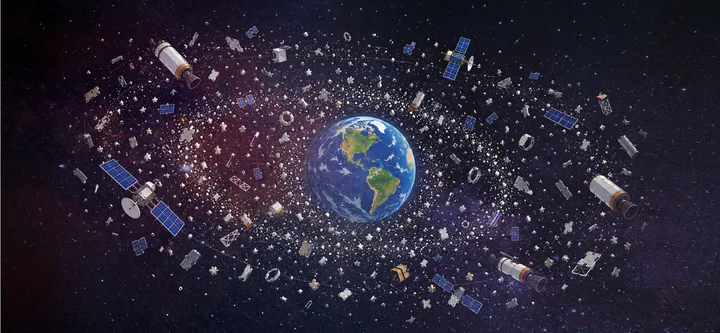
Gutierrez warns of shifted environmental impacts, like upfront emissions caused by rocket manufacturing, an increased number of launches, and space debris.
“If terrestrial data centres are already on clean power plus advanced cooling, the marginal benefit of moving compute off-planet narrows,” he says.
Cetin notes that even though orbital systems sidestep water-intensive cooling and grid strain, they introduce lifecycle costs from rockets and replacements.
He highlights concerns over non-climatic issues like orbital congestion.
“As a wholesale replacement for terrestrial AI infrastructure, their environmental advantage remains uncertain,” he says.
Gutierrez lists low-cost, heavy-lift reusability, advanced radiators, and in-orbit robotics for assembly and servicing as critical.
Gutierrez says potential innovations, like Musk’s much-touted foldable radiators, are transferable, but they diffuse slowly due to testing cycles, export controls, and integration challenges.
Cetin agrees, saying replication in the space sector is “rarely immediate” because of barriers to instant technology transfers in the form of intellectual property rights, export controls, and supply-chain maturity.
He estimates that well-capitalised players can mimic designs in two to four years, while broader adoption may take over five to 10 years.
“Execution quality and integration expertise remain durable differentiators,” he says.