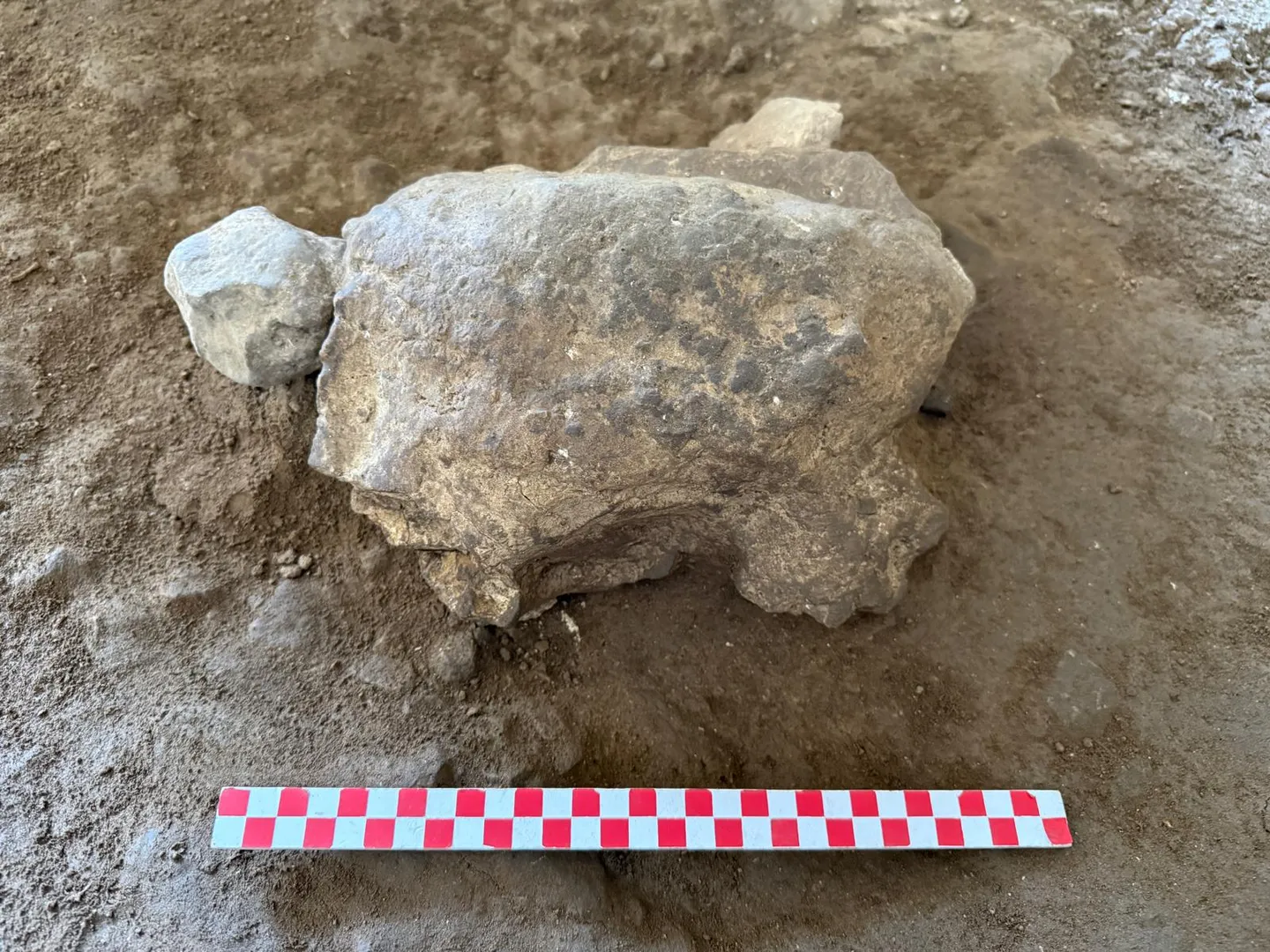
Archaeologists have discovered around 25 turtle figurines believed to be up to 16,500 years old at an excavation site in northwestern Türkiye.
The objects were uncovered at the Gedikkaya Hill and In Cave Archaeological Excavation Site in the Inhisar district of Bilecik province, where researchers believe prehistoric communities may have used the cave for ritual purposes.
The figurines were made from limestone, with some covered in clay. The largest measures about 30 centimetres long and 20 centimetres wide.
Radiocarbon dating of the archaeological context has placed the finds between 14,500 and 11,200 BCE, during the Epipaleolithic period.
Excavations were conducted between May 18 and July 18 by a 14-member team led by Professor Deniz Sari of Bilecik Seyh Edebali University’s Department of Archaeology on behalf of the Culture and Tourism Ministry.
An important cult and ritual site
Sari said archaeological material inside the cave was first identified during surface surveys in 2017.
Rescue excavations were subsequently carried out by the Bilecik Museum between 2019 and 2023, before the university began work at the site this year under a presidential decree.








“The artifacts show us that this was an important cult and ritual area,” Sari said. “The turtle figurines we discovered this year have added a new dimension to the ritual context of the cave.”
Most of the figurines were roughly shaped, which researchers believe supports the theory that they were produced specifically for rituals rather than as finely crafted decorative objects.
Sari said the figurines were found around a circular architectural arrangement, with many incomplete or roughly shaped examples inserted upright into the soil.
Researchers are also examining whether prehistoric communities may have believed that Gedikkaya Hill itself resembled a turtle, potentially contributing to a form of mountain worship. Sari cautioned that it is too early to definitively describe the site as evidence of a mountain cult.
She added that turtle symbolism was widespread in the Natufian culture of the Near East and among earlier Upper Paleolithic communities. Turtles have also represented longevity and endurance in many cultures, which could have contributed to their ritual significance at the site.
The figurines have been transferred to the Bilecik Museum and Bilecik Seyh Edebali University for examination and restoration.