Tom Hussain
For the first time since the September 11, 2001 terrorist attacks, Pakistan is not a foreign policy priority for an incoming US administration.
Washington is pretty much resigned to the inevitability of Taliban dominance in Afghanistan, despite the noise generated by Washington think tanks amid the Biden administration's review of the US agreement with the insurgents.
Even if intra-Afghan talks were to break down, America is pulling its troops out of its longest war.
Pakistan's role in Afghanistan is now a short-term project as far as Washington is concerned. It expects Islamabad to persuade the Taliban to throttle down its military campaign against the Afghan government and end its association with Al Qaeda, so as to facilitate a negotiated transition of power, and the withdrawal of US troops.
Afghanistan and counterterrorism has thus dominated the few remarks made so far about Pakistan by members of Biden's cabinet. They have spoken about reinstating some military-to-military programmes, but there has been no response to Pakistan's calls for developing a broader, economy-based relationship.
For Islamabad, it is a catch-22 situation. The diplomatic mainstreaming of the Taliban has made it increasingly less susceptible to pressure from both Pakistan and the US. So Islamabad stands to receive little credit if the peace process works out and will make a convenient scapegoat for blame-shifting American officials if it does not.
Similarly, Biden and his experienced team of ex-Obama administration officials are likely to press Pakistan to tighten the squeeze on India-focused extremist groups.
This was evident after Pakistan's Supreme Court's recently acquitted British-Pakistani Al Qaeda operative Omar Saeed Sheikh on the charge of murdering Wall Street Journal reporter Daniel Pearl in 2002.
Unsurprisingly, it evoked the strongest criticism of any country so far issued by the Biden administration, and it was repeated by all involved branches of the executive.
These issues, whilst short-term in nature, are already feeding tensions between Pakistan and the US in two other geopolitical theatres where Islamabad has precious little leverage.
Islamabad’s existential concerns
The first is the "severe competition" between the US and China, Pakistan's closest ally. In its early diplomatic interactions with Asian powers, the Biden administration clearly stated its intention to develop its quadrilateral alliance with Japan, Australia and India into a full blown mini-NATO in the so-called Indo-Pacific region.
This is a huge problem for Pakistan. It needs Beijing's support more than ever to keep its floundering economy afloat and its armed forces technologically competitive with India.
Likewise, Pakistan breathed a deep sigh of relief after China's intrusion into Ladakh last year, because it effectively shelved Modi's plans to seize Azad Kashmir (Pakistan-administered Kashmir) and Gilgit-Baltistan.
The standoff coincided with Islamabad's decision last year to involve China in building three major hydropower projects in territory claimed by India. In doing so, it effectively redefined the China-Pakistan Economic Corridor (CPEC) as a strategic project, rather than just a development programme.
This was tantamount to blowing raspberries at the Hindutva administration in New Delhi. Serves them right for unilaterally trashing the status quo in Kashmir in August 2019, right?







Likewise, it might have been expected to trumpet the fact that Modi's premature muscularity in Kashmir has proven to be a strategic disaster for India.
Instead of a glorious victory, it gave birth to a two-front threat that India is powerless to do much about - and now desperately needs the help of the Western powers and their Quad partners to balance the terms of engagement with China.
Islamabad was uncharacteristically quiet, however, because it does not want its alliance with China to be branded as a threat to broader US national security interests.
The seismic shift in the Middle East triggered by the Abraham Accords is also likely to have major consequences for the US-Pakistan relationship.
Following the so-called normalisation of relations between Israel and the UAE and several of its Arab allies, the Pentagon shifted Israel from its European Command to Central Command, which includes Pakistan.
In doing so, it heightened Pakistan's deep-seated anxiety about being jointly targeted by India and Israel - and therefore of being caught in a strategic pincer by the Abraham Accords allies and the Quad.
Were that situation ever to transpire, it would constitute a grave threat to Pakistan's sovereignty.
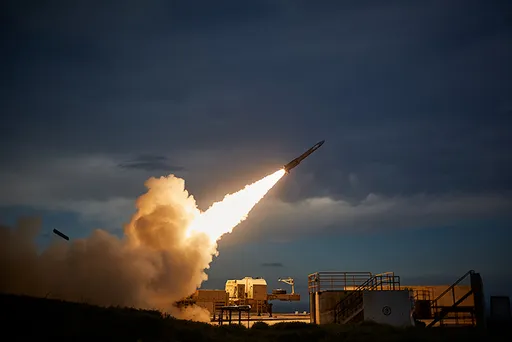
Apparently, those existential concerns were signalled to the Biden camp hours before his inauguration: for the first time since the Obama administration, Pakistan tested its nuclear-capable Shaheen 3 ballistic missile, which has the range capability to strike Israel.
Then its army chief of staff General Qamar Javed Bajwa spoke about Pakistan's willingness to engage in talks with India, for the first time since it annexed Kashmir and Ladakh.
Faced with the prospect of no-win situations as far as its relationship with Washington is concerned, Islamabad did the right thing by clearly defining its red lines. It has made clear that its foreign and economic policy goals, while aligned with Beijing's, are neither defined by it nor led by it.
Afghanistan is a good example: China is seen by decision makers in Kabul as a fair arbiter in relations with Islamabad, and that ultimately proved instrumental in bringing about a sustained dialogue with the Taliban.
Viewed from that perspective, the onus is now on the Biden administration to find a navigable path forward for its relationship with Islamabad.
Whether it has the political will to do so is another matter.
Pakistan has no friends in the Biden administration nor any political capital on Capitol Hill. Its policies, meanwhile, have yet to be updated to take into account the US-led strategic alliances being built on all its flanks. So far, it has just issued holding statements with which to buy some time.
This will require the kind of out-of-the-box thinking that Pakistan's decision makers, frankly, do not like and, therefore, are no good at.