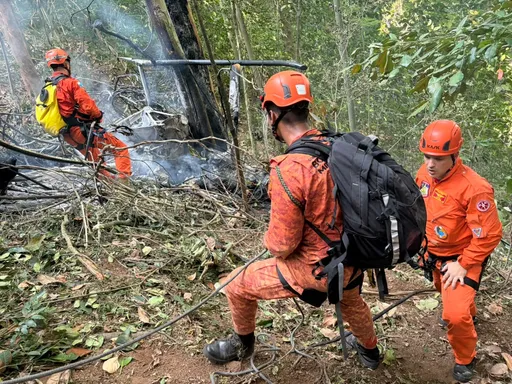
The relatives of two missing Mexican environmentalists, whose bullet-riddled vehicle was found abandoned, have lashed out at a transnational mining company, alleging the steel company Ternium has role in the men's disappearance.
Ricardo Lagunes, a lawyer, and Antonio Diaz, an Indigenous leader, were last seen attending an anti-mining gathering on Sunday in the town of San Miguel Aquila — a dangerous area controlled by rival drug cartels in the southern Michoacan state, home to a contentious iron ore mine.
Despite an urgent appeal by UN to find them, the activists remain unaccounted for.
Ternium is "one of the most powerful actors in the region," said Lucia Lagunes Gasca, sister of Lagunes, calling for fair investigation into the company's role in the alleged abductions.
She alleged the mining company's operations have not only harmed the environment but the community's "social fabric, generating conflicts and violence."
“We believe that the company could be involved, and that's why we are asking for the company to come clean," said Maraa de Jesus Lagunes, aunt of the missing lawyer.
Ternium strongly denied the allegations and expressed "solidarity" with the affected families.
In a statement carried by local news outlet SinEmbargo, Ternium said it stands "against any type of violence and categorically rejects any speculation and/or defamation that tries to associate it with any type of illegal activity."
Ternium said its mining operation in the municipality of Aquila "has all the valid permits from the corresponding authorities and according to agreements reached with the community of San Miguel de Aquila for more than ten years."
Lagunes reportedly played a key role in providing legal representation to the community of Aquila amid the negotiations concerning the operation of the Aquila mine in relation to its environmental, social and health effects on the community.






'Backdrop of tension'
SinEmbargoreported Sunday's meeting had centred on the legal conflict relating to mining royalties signed with Ternium, with the financial issue provoking strong divisions among the community.
Witnesses alleged that both men were threatened and followed after the gathering. Their car was later found abandoned with bullet-marks in the neighbouring state of Colima.
Locals have since held roadblocks in both Michoacan and Colima states while authorities have deployed soldiers and an airplane to comb the area.
Front Line Defenders, a rights group, alleged the disappearances took place amid "a backdrop of tension due to the upcoming local elections and in the context of negotiations between members of the community and a local mining company."
"The presence of the mining activity in Aquila has been a source of conflict since it began operating in 1998 due to the non-compliance with agreements between the mining company and the community, which has resulted in threats against, detention, and deaths of members of the community," it said.
"It's unacceptable that those who defend our rights have to do so at the cost of their freedom, their integrity or their lives," the UN said, demanding Mexican authorities find the activists without wasting more time.
Mexico is considered one of the world's most dangerous countries for human rights defenders, particularly those involved in disputes over land and mining.
In 2021, 54 environmental activists were killed in the Latin American nation, the most in the world, and impunity "remains rife," according to the London-based watchdog Global Witness.
READ MORE: 2022 marked as deadliest year on record for Mexican journalists